First They Killed My Father 2017


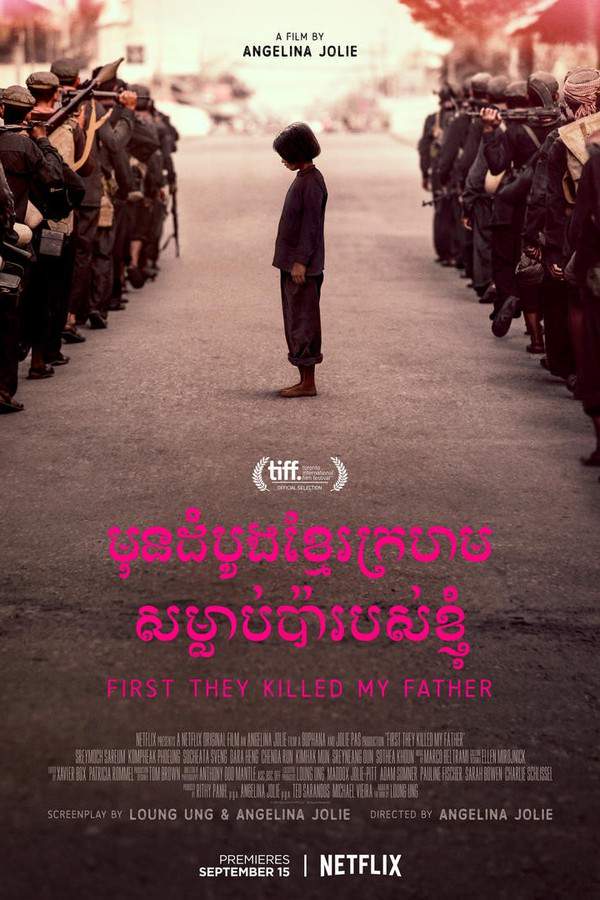
During Cambodia's horrific Khmer Rouge regime, a young girl experiences unimaginable trauma. Based on Loung Ung’s memoir, the film depicts her desperate struggle for survival from age five to nine. She and her family are torn apart, facing the brutal realities of war, forced labor, and the devastating effects of genocide as they fight to stay alive.

Does First They Killed My Father have end credit scenes?
No!
First They Killed My Father does not have end credit scenes. You can leave when the credits roll.
Where to Watch First They Killed My Father
See current US streaming, rental, and purchase options for First They Killed My Father (2017) via JustWatch.


Streaming availability powered by 
Meet the Full Cast and Actors of First They Killed My Father
Explore the complete cast of First They Killed My Father, including both lead and supporting actors. Learn who plays each character, discover their past roles and achievements, and find out what makes this ensemble cast stand out in the world of film and television.

External Links and Streaming Options
Discover where to watch First They Killed My Father online, including streaming platforms, rental options, and official sources. Compare reviews, ratings, and in-depth movie information across sites like IMDb, TMDb, Wikipedia or Rotten Tomatoes.










Ratings and Reviews for First They Killed My Father
See how First They Killed My Father is rated across major platforms like IMDb, Metacritic, and TMDb. Compare audience scores and critic reviews to understand where First They Killed My Father stands among top-rated movies in its genre.

The Movie Echo Score
In terms of overall assessment, First They Killed My Father excels in visual articulation and emotional performance but exhibits occasional narrative slowdowns. Critics and viewers commend its deliberate composition and intimate portrayals while noting that its measured pacing and heavy subject matter can impede engagement. The film’s immersive sensory dimensions and sincere characterizations sustain interest, even as some find its length burdensome. Ultimately, this is a rigorously crafted drama that resonates through its visuals and performances, though it may challenge repeat viewings.
The Movie Echo Score Breakdown for First They Killed My Father

Art & Craft
In terms of art and craft, Jolie’s direction and the cinematography stand out for their expansive drone shots and composed framing. Reviewers highlight the film’s singular aesthetic and the use of visual quietude to evoke emotional weight. Production design and editing support a cohesive tableau, though some critics note moments where composition may feel overextended. Overall, the art direction contributes to a visually arresting experience.

Character & Emotion
When it comes to character and emotion, the film’s performances receive consistent praise for their naturalism and restraint. Reviewers commend the lead’s nuanced portrayal of childhood innocence and the supporting cast’s stoic resilience. Emotional resonance arises through understated exchanges rather than overt drama. While some viewers find the emotional tone quietly intense, the collective acting effort ensures that each character’s arc is conveyed with authenticity and depth.

Story & Flow
In terms of story and flow, the film offers a compelling firsthand perspective on wartime experiences through measured pacing and immersive detail. Critics note its coherent narrative structure but also point to a bogged-down middle section and an extended runtime that can disrupt momentum. The plot’s originality emerges from its child’s-eye viewpoint, fostering engagement despite moments of narrative stall. Overall, the storytelling balances clarity with occasional pacing hurdles.

Sensory Experience
When considering the sensory experience, the film’s visual style and sound design work in tandem to create an immersive atmosphere. Reviewers emphasize the understated score and ambient audio that complement the muted color palette. Visual cohesion is maintained through disciplined compositional choices, while soundscapes underscore tension without resorting to overt cues. Together, these elements reinforce the film’s somber tone and maintain a cohesive sensory landscape throughout.

Rewatch Factor
In terms of rewatch factor, the film’s weighty subject matter and deliberate pacing may limit its repeat appeal for some viewers. While the faithful adaptation and emotional depth encourage reflection, the heavy thematic focus and extended length suggest it may not be readily revisited as light entertainment. Nevertheless, its historical importance and visual moments invite further contemplation, granting it moderate lasting appeal beyond an initial viewing.

72
Metascore
7.3
User Score


88%
TOMATOMETER

81%
User Score

7.2 /10
IMDb Rating

74
%
User Score

3.7
From 127 fan ratings

2.20/5
From 5 fan ratings
Take the Ultimate First They Killed My Father Movie Quiz
Challenge your knowledge of First They Killed My Father with this fun and interactive movie quiz. Test yourself on key plot points, iconic characters, hidden details, and memorable moments to see how well you really know the film.
First They Killed My Father Quiz: Test your knowledge on the poignant story of Loung Ung and the harrowing experiences during the Khmer Rouge regime in Cambodia.
In which year does the story of 'First They Killed My Father' begin?
Awards & Nominations for First They Killed My Father
Discover all the awards and nominations received by First They Killed My Father, from Oscars to film festival honors. Learn how First They Killed My Father and its cast and crew have been recognized by critics and the industry alike.

Full Plot Summary and Ending Explained for First They Killed My Father
Read the complete plot summary of First They Killed My Father, including all major events, twists, and the full ending explained in detail. Explore key characters, themes, hidden meanings, and everything you need to understand the story from beginning to end.
In the turbulent year of 1975, amidst the chaos of the Khmer Republic, we meet Loung Ung, a five-year-old girl and the daughter of a dedicated officer known affectionately as Pa to his seven children. The backdrop of the narrative unfolds during the Vietnam War, where the conflict spills over into tranquil Cambodia as the U.S. military starts targeting North Vietnamese forces seeking refuge within the country’s borders. This tumultuous situation ignites the Cambodian Civil War, leading to a severe evacuation of the U.S. embassy in the area.
As the oppressive grip of the Khmer Rouge tightens, they seize control of Phnom Penh, forcefully expelling families under the guise of impending bombings by the Americans. In a desperate bid for survival, Pa Ung maintains that he does not work for the government when confronted by Khmer Rouge soldiers, fully aware that the truth would cost him his life. They are able to find temporary shelter with Uncle (Loung’s maternal uncle), who provides refuge until Aunt’s nagging fear of repercussions for harboring them drives Loung’s family into a perilous journey.
Days of grueling travel ensue, culminating in their capture by the Khmer Rouge soldiers who transport them to a labor camp. Here, families are subjected to forced labor while they must construct their own shelters amidst dire living conditions. The oppressive regime confiscates their belongings, and with scant food available—most of which is redirected to sustenance for soldiers—desperation sets in, leading to brutal punishments for those seeking additional nourishment. Tragically, Loung is forced to bear witness to the horrific beatings of her siblings in their struggle for survival.
The labor camp becomes a breeding ground for propaganda, with foreign items—including life-saving medications—strictly forbidden and punishable by death. Loung’s world becomes even bleaker when her two oldest brothers, along with her sister Keav, are moved to different camps, ultimately receiving the devastating news of Keav’s death from dysentery.
In a heart-wrenching farewell, Loung witnesses her father being taken by Khmer Rouge officials under the pretense of repairing a bridge. His grim prediction looms over their family as he bids goodbye to his beloved wife and children. This haunting moment plunges Loung into a nightmare where she envisions her father meeting a tragic end, buried within the cruel confines of a mass grave. It isn’t long before Ma instructs Loung, her brothers Kim and Chou, to flee in disparate directions, adopting false identities as orphans. Together, Loung and Chou manage to escape to a different camp, separated from Kim.
At the new camp, Loung finds herself enlisted as a child soldier for the Khmer Rouge, amid ongoing border skirmishes with the Vietnamese, where she is trained in hand-to-hand combat and the preparations for laying minefields against the opposing forces. Although the conditions are less harsh than in the labor camps—where children are nourished and treated with slightly more compassion—the indoctrination into bitterness and hatred against the Vietnamese is relentless. In a moment of fleeting reprieve, Loung receives permission to visit her sister in the labor camp, but instead, she travels to the site where her mother and youngest sister Geak are believed to be. To her horror, she discovers their hut empty, left only with the chilling news from an elderly woman: her family has been taken by the Khmer Rouge soldiers. That night, her dreams torment her with visions of her mother and Geak meeting tragic fates in mass graves.
The turmoil escalates further as Loung’s camp falls victim to Vietnamese shelling, compelling her to flee alongside fellow civilians. During this harrowing escape, she reunites with her siblings at a temporary refugee camp managed by Vietnamese forces. As they settle in, the calm is shattered when Khmer Rouge forces launch an attack the following morning, forcing the children to slip behind the protective Vietnamese lines and into the perilous depths of the jungle. There, Loung finds herself isolated from her beloved siblings, haunted by the horrors of seeing fellow refugees mutilated by landmines she had helped to set up.
Eventually, the three siblings are joyfully reunited at another Red Cross-run refugee camp. However, the scars of violence linger; Loung is shaken when she witnesses the public beating of a captured Khmer Rouge soldier, triggering a flood of memories and flashbacks to her tumultuous past. As the war draws to a close, the siblings are joyously reunited with their surviving brothers, who have also withstood the harrowing experiences of the camps. The movie reaches its poignant conclusion with the adult Loung and her siblings, united once more, kneeling in prayer with the monks amidst the ruins of a Buddhist temple, honoring the memory of their lost family members.

Coming soon on iOS and Android
The Plot Explained Mobile App
From blockbusters to hidden gems — dive into movie stories anytime, anywhere. Save your favorites, discover plots faster, and never miss a twist again.
Sign up to be the first to know when we launch. Your email stays private — always.
Explore the mobile appWatch Trailers, Clips & Behind-the-Scenes for First They Killed My Father
Watch official trailers, exclusive clips, cast interviews, and behind-the-scenes footage from First They Killed My Father. Dive deeper into the making of the film, its standout moments, and key production insights.
First They Killed My Father Themes and Keywords
Discover the central themes, ideas, and keywords that define the movie’s story, tone, and message. Analyze the film’s deeper meanings, genre influences, and recurring concepts.
First They Killed My Father Other Names and Titles
Explore the various alternative titles, translations, and other names used for First They Killed My Father across different regions and languages. Understand how the film is marketed and recognized worldwide.
Similar Movies To First They Killed My Father You Should Know About
Browse a curated list of movies similar in genre, tone, characters, or story structure. Discover new titles like the one you're watching, perfect for fans of related plots, vibes, or cinematic styles.


Quick Links: Summary, Cast, Ratings, More

What's After the Movie?
Not sure whether to stay after the credits? Find out!
Check out our other apps:

SAT Sphere
Build confidence for the Digital SAT.

Mori Atlas
Discover wild places worth protecting.

Luntero
Search smarter for a home in Amsterdam.

Plot Explained
Unravel movie endings and hidden clues.

Pokechamp
Dive into Pokémon data and battle logic.

Driving Theory
Get ready for your European theory test.

Movie Dust
Plan your next cinema trip with ease.

Musemap
Find art and culture as you travel.

Selkobase
Compare credentials before committing.

Local Manual
Turn an unfamiliar country into practical next steps.

Lernavi
Compare school systems before your next move.

GymRoam
Find a workout stop wherever your plans take you.
Explore Our Movie Platform
New Movie Releases (2026)
Famous Movie Actors
Top Film Production Studios
Movie Plot Summaries & Endings
Major Movie Awards & Winners
Best Concert Films & Music Documentaries
Movie Collections and Curated Lists
© 2026 What's After the Movie. All rights reserved.
Privacy Policy