Dawshom Awbotaar 2023

A chilling presence stalks Kolkata as a serial killer’s gruesome methods mimic the ten avatars of Vishnu from Hindu mythology. The killings are intricately linked, creating a terrifying puzzle for investigators. This film serves as a prequel and crossover event, connecting to the narratives of Baishe Srabon and Vinci Da, and exploring the origins of a dark and complex mystery.

Does Dawshom Awbotaar have end credit scenes?
No!
Dawshom Awbotaar does not have end credit scenes. You can leave when the credits roll.
Meet the Full Cast and Actors of Dawshom Awbotaar
Explore the complete cast of Dawshom Awbotaar, including both lead and supporting actors. Learn who plays each character, discover their past roles and achievements, and find out what makes this ensemble cast stand out in the world of film and television.
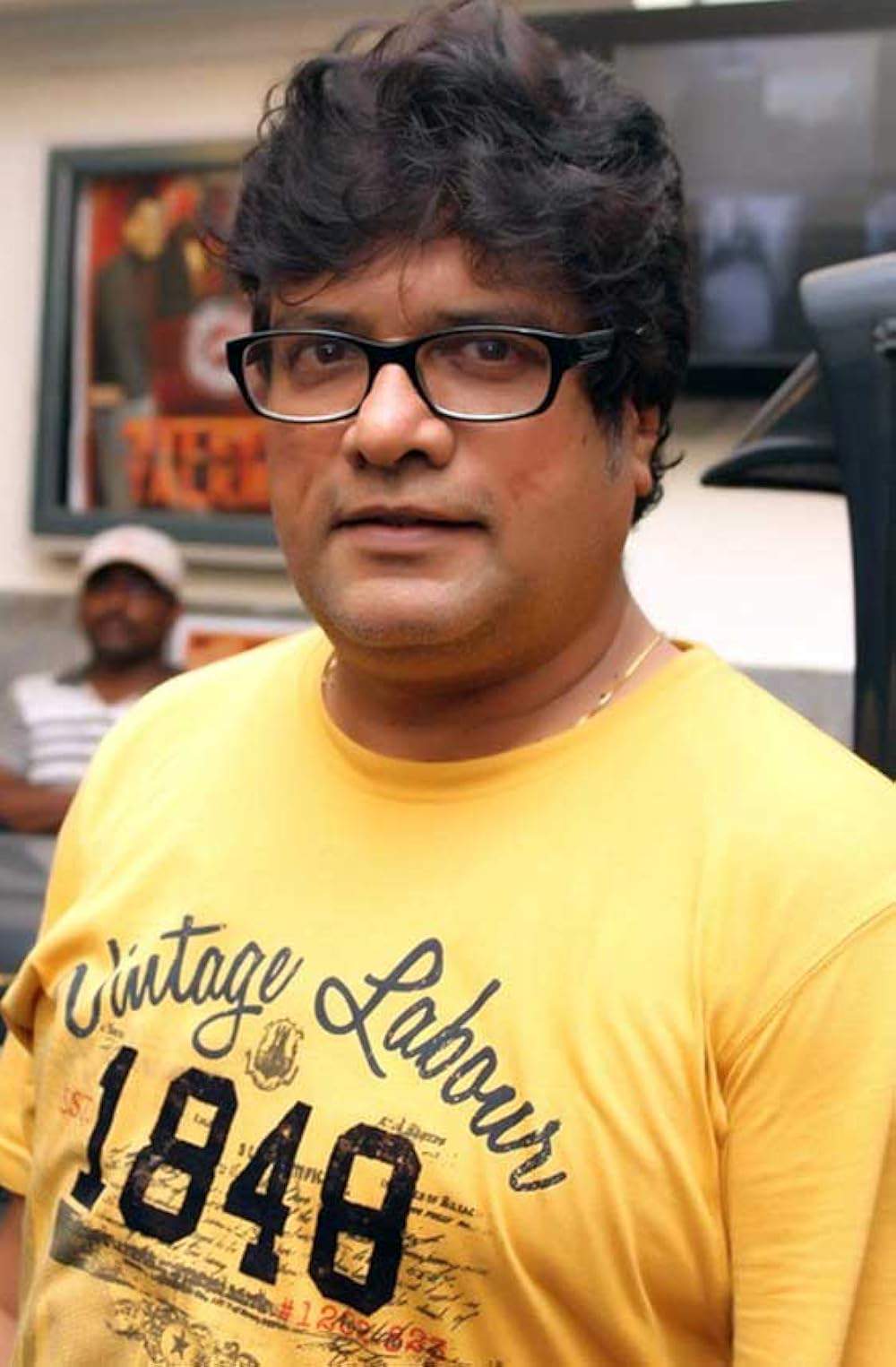
Rajesh Sharma
Amit Kr. Srivastav

Rajat Ganguly
Commissioner of Police
Jisshu Sengupta
Bishwaroop Bardhan
Prosenjit Chatterjee
Probir Roy Chowdhury
Srijit Mukherji
Pet Shop Owner
Jaya Ahsan
Moitreyee Ghatak
Sumit Samaddar
Swapan / Kanai
June Maliah
Probir's wife
Anirban Bhattacharya
ACP Poddar
Animesh Bhaduri
Bishwaroop's father
Dulal Sarkar
Self (uncredited)
Indrajit Ghosh
Tuhin Mukherjee
Ankit Majumder
Shankhadeep Banerjee
Sudip Mitra
Ritesh Sinha
karthik bera
External Links and Streaming Options
Discover where to watch Dawshom Awbotaar online, including streaming platforms, rental options, and official sources. Compare reviews, ratings, and in-depth movie information across sites like IMDb, TMDb, Wikipedia or Rotten Tomatoes.






Ratings and Reviews for Dawshom Awbotaar
See how Dawshom Awbotaar is rated across major platforms like IMDb, Metacritic, and TMDb. Compare audience scores and critic reviews to understand where Dawshom Awbotaar stands among top-rated movies in its genre.

The Movie Echo Score
Dasham Avatar delivers a visually compelling experience anchored by strong lead performances and witty banter, yet its narrative cohesion suffers from a rushed third act and inconsistent editing. Reviewers commend the cinematography and chemistry between the protagonists, but repeatedly cite plot holes, an underdeveloped antagonist, and an unsatisfying climax. The soundtrack receives mixed feedback, and the film's slow‑motion stylings are divisive. Consequently, the movie entertains in parts but falls short of a fully satisfying thriller, resulting in a modest overall rating.
The Movie Echo Score Breakdown for Dawshom Awbotaar

Art & Craft
In terms of direction and visual craft, critics highlight the film's striking cinematography, noting vivid cityscapes and atmospheric lighting that enrich the setting. However, editing choices receive criticism for excessive slow‑motion and a disjointed climax, which undermine pacing. Production design is described as competent but not distinctive. Overall, the technical execution is solid with notable strengths, tempered by noticeable flaws in editing consistency.

Character & Emotion
When evaluating character work, reviewers consistently praise the chemistry and nuanced performances of Prosenjit Chatterjee and Anirban Bhattacharya, describing their interplay as a highlight. Supporting acting, particularly Jisshu Sengupta, is noted as strong despite limited screen time, while Jaya Ahsan is viewed as mixed. Emotional resonance stems chiefly from the lead duo’s banter, establishing a compelling dynamic that compensates for weaker peripheral character development.

Story & Flow
The story receives the most criticism, with multiple reviewers labeling the plot weak, riddled with loopholes, and suffering from an unsatisfying, rushed third act. The premise of a mythologically themed serial‑killer thriller is praised initially, yet the narrative progression is described as uneven and the climax half‑baked. Plot twists are seen as predictable, resulting in a fragmented and underwhelming overall storyline.

Sensory Experience
Sensory elements such as sound and visual style draw mixed reactions. Cinematography is lauded for its atmospheric portrayal of Kolkata, while the soundtrack receives both commendation for emotional depth and criticism for inconsistent quality. Sound design is generally acceptable, but the overuse of slow‑motion sequences is flagged as grating. The overall sensory impression leans positive due to strong visual craftsmanship despite auditory inconsistencies.

Rewatch Factor
Rewatch value is limited according to reviewers, who cite the film's uneven pacing and unsatisfying conclusion as detractors to repeat viewings. While the early acts and lead performances provide some enjoyment, the narrative shortcomings and gimmicky editing reduce lasting appeal. Some suggest the movie is better suited for a single OTT viewing rather than a theatrical revisit, indicating modest replay potential.
Take the Ultimate Dawshom Awbotaar Movie Quiz
Challenge your knowledge of Dawshom Awbotaar with this fun and interactive movie quiz. Test yourself on key plot points, iconic characters, hidden details, and memorable moments to see how well you really know the film.
Dawshom Awbotaar Quiz: Test your knowledge of the 2023 film Dawshom Awbotaar with these ten questions ranging from easy to difficult.
Who is the serial‑killer expert assigned by the Kolkata Police to investigate the myth‑themed murders?
Full Plot Summary and Ending Explained for Dawshom Awbotaar
Read the complete plot summary of Dawshom Awbotaar, including all major events, twists, and the full ending explained in detail. Explore key characters, themes, hidden meanings, and everything you need to understand the story from beginning to end.
2003 unfolds in Kolkata with Probir Roy Chowdhury, Prosenjit Chatterjee, a renowned serial-killings expert who is notoriously ill-tempered and blunt. He narrowly dodged suspension in 1999 thanks to a special allowance granted because of his stance against custodial deaths. At work, Amit Kumar Srivastav, Rajesh Sharma, his colleague, counsels him to keep a tighter rein on his temper. In a smoky bar, Probir crosses paths with a young, energetic, and hot-tempered inspector, Bijoy Poddar, Anirban Bhattacharya, who soon becomes his uneasy ally in a city-wide hunt.
Kolkata becomes the stage for a string of grisly serial killings, each mirroring the ten avatars of Vishnu. The victims are influential figures, all accused of crimes or corruption, and the killer’s method hints at a calculated mythology-driven philosophy. The Kolkata Police assign Probir to take the lead, while Poddar—whose fascination with serial killings runs deep—joins the probe at Probir’s request. The two men plunge into a mystery that blends murder with ancient myth, trying to decipher a motive tied to a distorted sense of justice.
As the investigation unfolds, Poddar’s backstory emerges: he was born in a Kalighat brothel and is implied to be the lookalike half-brother of Paltan from Dwitiyo Purush, while he tutors children from red-light areas, a detail that adds a troubling layer to his character. The body count continues to rise—ranging from a promoter and a mafia-linked businessman to a doctor accused of negligence and a criminal lawyer who once saved a terrorist—and the police struggle to gain traction.
A pivotal breakthrough comes when a young psychiatrist, Moitreyee Ghatak, Jaya Ahsan, reaches out to Probir and Poddar, claiming to know the killer’s identity. One of her patients, Biswaroop Bardhan, Jisshu Sengupta, is a man with a severe god complex who believes himself Kalki, the tenth avatar of Vishnu. Biswaroop justifies the killings as a moral cleansing, targeting those he deems evil. This revelation sharpens the hunt, and the two detectives, together with Moitreyee, deepen their efforts to understand Biswaroop’s psychology and the driving myth behind the murders.
Meanwhile, Poddar and Moitreyee form a close bond as she assists the police with Biswaroop’s case, much to Probir’s chagrin. Probir’s personal history—his wife and son were murdered years earlier—has left him broken, deranged, and alcoholic, a wound that colors every interaction and decision. In a controversial turn, Probir contemplates using Moitreyee as bait to trap Biswaroop, mocking her in the process, and Poddar denounces him as sadistic. After a heated confrontation, Moitreyee’s insistence on a more nuanced approach leads to a fragile reconciliation between Probir and Poddar.
With another murder on the books—a sleazy teacher—the investigation stalls, and the two men clash again over a potentially dangerous tactic that could put Moitreyee at risk. Despite Poddar’s misgivings, Moitreyee agrees to the plan, and the police keep a wary vigil as the killer contacts her. One night, Bijoy leaves Moitreyee at her home, and Biswaroop arrives, accusing her of betraying him and exposing his identity to the police. Probir and Poddar rush back to intervene, only to find Biswaroop holding Moitreyee at gunpoint.
Biswaroop reveals the depths of his fanaticism, detailing his father’s brutal murder by a businessman and the impact it had on him. He declares that his mission to morally cleanse society will continue, and that the police are among his intended targets. In a brutal struggle, Probir taunts him as not an avatar but pure evil, and Biswaroop lunges with an axe—yet Probir manages to free himself and fires a concealed pistol, ending Biswaroop’s rampage.
In a staggering twist, Moitreyee is revealed to be Biswaroop’s sister. During a vacation following the formalities of royal witness, Moitreyee confesses to Poddar how the brutal murder of her father and her own rape by the businessman had driven Biswaroop to seek revenge. The siblings had plotted to murder the promoter to cover the businessman’s killing, a plan designed to resemble a sequence of righteous executions that would thwart the investigators. Moitreyee, aware of her brother’s fixation on myth, had orchestrated the killings to shield them from suspicion.
The revelation shatters Poddar, who feels he was merely a pawn used by Moitreyee. As Probir files the final reports, he senses something is wrong and struggles to reach Poddar, but Moitreyee’s guilt and fear drive her to seek help from the police. Overwhelmed by despair, she climbs to a cliff and dies, leaving Poddar powerless to intervene. When Probir finally retrieves Poddar, it’s too late; the case closes in cold, sympathetic terms, and Poddar returns to his routine with a bottle in hand.
The film closes with a sense of unfinished business in 2004: Poddar, still haunted by Moitreyee’s loss, is shown continuing to confront a new serial killer case in Kolkata, signaling that the city’s dark undercurrents and the pursuit of truth go on, long after the headlines fade.

Coming soon on iOS and Android
The Plot Explained Mobile App
From blockbusters to hidden gems — dive into movie stories anytime, anywhere. Save your favorites, discover plots faster, and never miss a twist again.
Sign up to be the first to know when we launch. Your email stays private — always.
Explore the mobile appWatch Trailers, Clips & Behind-the-Scenes for Dawshom Awbotaar
Watch official trailers, exclusive clips, cast interviews, and behind-the-scenes footage from Dawshom Awbotaar. Dive deeper into the making of the film, its standout moments, and key production insights.
Dawshom Awbotaar Other Names and Titles
Explore the various alternative titles, translations, and other names used for Dawshom Awbotaar across different regions and languages. Understand how the film is marketed and recognized worldwide.
Quick Links: Summary, Cast, Ratings, More

What's After the Movie?
Not sure whether to stay after the credits? Find out!
Check out our other apps:

SAT Sphere
Build confidence for the Digital SAT.

Mori Atlas
Discover wild places worth protecting.

Luntero
Search smarter for a home in Amsterdam.

Plot Explained
Unravel movie endings and hidden clues.

Pokechamp
Dive into Pokémon data and battle logic.

Driving Theory
Get ready for your European theory test.

Movie Dust
Plan your next cinema trip with ease.

Musemap
Find art and culture as you travel.

Selkobase
Compare credentials before committing.

Local Manual
Turn an unfamiliar country into practical next steps.

Lernavi
Compare school systems before your next move.

GymRoam
Find a workout stop wherever your plans take you.
Explore Our Movie Platform
New Movie Releases (2026)
Famous Movie Actors
Top Film Production Studios
Movie Plot Summaries & Endings
Major Movie Awards & Winners
Best Concert Films & Music Documentaries
Movie Collections and Curated Lists
© 2026 What's After the Movie. All rights reserved.
Privacy Policy