Daughter's Daughter 2025
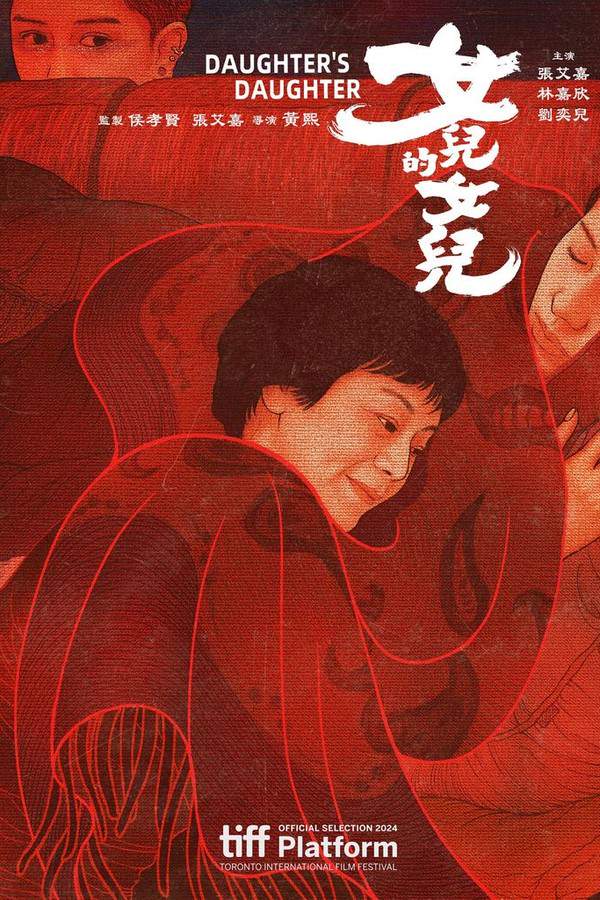
Jin Aixia (Sylvia Chang) raises two daughters who grow up apart—Emma (Karena Lam) in New York and Fan Zuer (Eugenie Liu) in Taipei—and they remain strangers well into adulthood. When Zuer and her partner pursue in‑vitro fertilization, they travel to the United States for treatment, a journey that finally brings the sisters together and forces the family to confront long‑kept secrets, culminating in a heartbreaking revelation.


Does Daughter's Daughter have end credit scenes?
No!
Daughter's Daughter does not have end credit scenes. You can leave when the credits roll.
Where to Watch Daughter's Daughter
See current US streaming, rental, and purchase options for Daughter's Daughter (2025) via JustWatch.

Streaming availability powered by 
Meet the Full Cast and Actors of Daughter's Daughter
Explore the complete cast of Daughter's Daughter, including both lead and supporting actors. Learn who plays each character, discover their past roles and achievements, and find out what makes this ensemble cast stand out in the world of film and television.
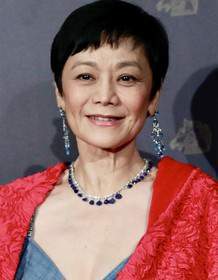
Sylvia Chang
Aixia Jin

Winston Chao
Old Johnny

Ting-Ni Ma
Wang Li-fen
Alannah Ong
Shen Yan-Hua
Jia-Yin Tsai
Dr. Chen
Eugenie Liu
Fan Zuer
Tracy Chou
Chow Jia-Yi
Kevin B. Ploth
Bartender
Erin Adele Clark
Nurse
Telle Thomas
Bar Janitor
Ariella Hyman-Fessler
Homeless Woman
John Tabaniag
Deli Customer
Sharon Lyn Chalkin
Deli Customer
Rob Legacy
Deli Customer
Tom Jackobs
Customs Officer
Joanne Liu
Deli Owner
Denny Fisher
Deli Customer
Linda Key-Kanuteh
Deli Customer
Bridgette Wray
Deli Customer
Karena Kar-Yan Lam
Emma
External Links and Streaming Options
Discover where to watch Daughter's Daughter online, including streaming platforms, rental options, and official sources. Compare reviews, ratings, and in-depth movie information across sites like IMDb, Wikipedia, Rotten Tomatoes or Metacritic.






Full Plot Summary and Ending Explained for Daughter's Daughter
Read the complete plot summary of Daughter's Daughter, including all major events, twists, and the full ending explained in detail. Explore key characters, themes, hidden meanings, and everything you need to understand the story from beginning to end.
Ai, played by Sylvia Chang, breaks her leg and is admitted to the hospital. During her stay, her mother Shen, Ting-Ni Ma, who has just returned to Taipei from New York, comes by for a visit. She is followed by her estranged daughter Emma, Karena Kar-Yan Lam, whom she sent away to an acquaintance in Chinatown years earlier. Zuer, Ai’s daughter from a later chapter of Ai’s life and described as Ai’s lesbian daughter born after she left America and came back to Taiwan with her now-divorced husband, arrives next with her girlfriend Jiayi, Tracy Chou, meeting Emma for the first time. The moment is delicate, a tangle of reunions, unspoken histories, and the quiet tremor of futures that may or may not resemble the past.
Five years glide by, and Zuer travels to New York with Jiayi for intrauterine insemination. The visit is punctuated by sharp disagreements with Ai, who insists that she is not ready to care for another child and views the choice as immature. Zuer misses her mother and calls Ai in tears just before the procedure, a moment that underscores the ache beneath their fragile bond. The trio—Ai, Emma, and Zuer—reunite for dinner with Emma’s paternal father Johnny, Old Johnny, Winston Chao, and the mood hints at fragile peace built on shared ghosts. On the way to New Jersey, joy gives way to tragedy as the couple’s car collides with another vehicle. Jiayi dies at the scene, and Zuer sustains serious injuries. Ai immediately flies to America after learning the news, but Zuer has already passed away by the time Ai reaches the hospital. Stricken, Ai asks Johnny to leave her alone, and she falters as grief dislocates her sense of self.
After the funeral, Ai’s bearings are lost in a strange city and she drifts through Chinatown, where she and Emma encounter the echoes of a life that feels partly not theirs. They discover Zuer’s Airbnb and share a moment of haunting stillness, yet Ai urges Emma not to tidy away Zuer’s things—she is still too heartbroken to do so. The next day, Ai accompanies Emma back to the fertility clinic and discovers something unexpected: Zuer and Jiayi have left behind a healthy frozen embryo, of which Ai is now the legal guardian. Ai is overwhelmed by the prospect and initially decides to terminate the embryo, feeling unprepared for such a responsibility and uncertain about the future.
Back at Zuer’s Airbnb, a wall is covered with graffiti—messages from residents and remnants of the community that once surrounded Zuer. Emma searches for Zuer’s words, while Ai insists that Zuer would not simply conform to the majority. Emma’s heart breaks as she recognizes the risk Ai is taking with a life that could be theirs to shape together. In the quiet after the confrontation and Zuer’s funeral, Emma reveals her wish to keep Zuer’s baby and Ai contends with the fear of becoming another mother who cannot live up to a child’s expectations. Yet Emma’s words strike a deeper chord: she accuses Ai of considering the child as something to be given away, a mirror of Ai’s past abandonment of Emma as a child.
Gradually, Ai’s resolve shifts. She steps back from the brink and opens herself to the possibility of life, choosing to pursue the child’s birth through a surrogate arrangement rather than terminating the embryo. The decision is not simple; it is tempered by Ai’s own fears about maturity and responsibility, and by Emma’s belief that love can endure even in the hardest seasons. Before leaving America, Ai shares a dinner with Emma, a private moment in which Emma asks what Ai was thinking when she disappeared from her life years ago. Ai answers honestly: she was frightened, fearing that she would be unable to bear the weight of motherhood at that moment. She tells Emma that she is grateful Emma is still willing to see her, and the two share a heartfelt hug before parting ways.
Two years later, Ai is raising Zuer’s daughter in Taipei, a life forged in grief and stubborn, hopeful love. Shen, now severely demented, repeatedly mistakes the present for the past and tells Ai that she is still too immature to be a parent, suggesting she abandon the child to a friend in Chinatown. The warning echoes Ai’s own memories and tests the strength of the family’s fragile reconciliation. Yet Ai presses forward, informed by the memory of Zuer’s window graffiti—an intimate plea that had once asked, “Why do I not have my mother’s name?” Ai’s memory of that message accompanies her as she continues to build a family, balancing care for Shen with her growing responsibilities as mother and guardian.
In this intimate, intergenerational drama, the film threads together themes of motherhood, identity, and the weight of choices across borders and time. The relationships are tested by loss, illness, and the stubborn persistence of love, while the cityscapes of Taipei and New York frame a journey from grief to tentative hope. The narrative is steady in its commitment to truth, never sensationalizing hardship, but rather revealing how forgiveness and willingness to grow can alter the course of a family.
Notes on cast appearances:
- Ai is embodied by [Sylvia Chang].
- Shen is portrayed by [Ting-Ni Ma].
- Emma is portrayed by [Karena Kar-Yan Lam].
- Zuer is portrayed by [Eugenie Liu].
- Jiayi is portrayed by [Tracy Chou].
- Old Johnny is portrayed by [Winston Chao].
- The story anchors its emotional core in these performances, with supporting turns that deepen the sense of place and lineage.
This reimagined take preserves the emotional core and major plot milestones of the original while expanding the connective tissue between characters, their histories, and the choices that shape their futures. The tone remains steady, compassionate, and thoughtfully observed, inviting the reader to reflect on how families bend and mend through time, distance, and the shared longing to belong.

Coming soon on iOS and Android
The Plot Explained Mobile App
From blockbusters to hidden gems — dive into movie stories anytime, anywhere. Save your favorites, discover plots faster, and never miss a twist again.
Sign up to be the first to know when we launch. Your email stays private — always.
Explore the mobile appDiscover Film Music Concerts Near You – Live Orchestras Performing Iconic Movie Soundtracks
Immerse yourself in the magic of cinema with live orchestral performances of your favorite film scores. From sweeping Hollywood blockbusters and animated classics to epic fantasy soundtracks, our curated listings connect you to upcoming film music events worldwide.
Explore concert film screenings paired with full orchestra concerts, read detailed event information, and secure your tickets for unforgettable evenings celebrating legendary composers like John Williams, Hans Zimmer, and more.


Daughter's Daughter Other Names and Titles
Explore the various alternative titles, translations, and other names used for Daughter's Daughter across different regions and languages. Understand how the film is marketed and recognized worldwide.
Quick Links: Summary, Cast, Ratings, More

What's After the Movie?
Not sure whether to stay after the credits? Find out!
Check out our other apps:

SAT Sphere
Build confidence for the Digital SAT.

Mori Atlas
Discover wild places worth protecting.

Luntero
Search smarter for a home in Amsterdam.

Plot Explained
Unravel movie endings and hidden clues.

Pokechamp
Dive into Pokémon data and battle logic.

Driving Theory
Get ready for your European theory test.

Movie Dust
Plan your next cinema trip with ease.

Musemap
Find art and culture as you travel.

Selkobase
Compare credentials before committing.

Local Manual
Turn an unfamiliar country into practical next steps.

Lernavi
Compare school systems before your next move.

GymRoam
Find a workout stop wherever your plans take you.
Explore Our Movie Platform
New Movie Releases (2026)
Famous Movie Actors
Top Film Production Studios
Movie Plot Summaries & Endings
Major Movie Awards & Winners
Best Concert Films & Music Documentaries
Movie Collections and Curated Lists
© 2026 What's After the Movie. All rights reserved.
Privacy Policy