Camila 1984

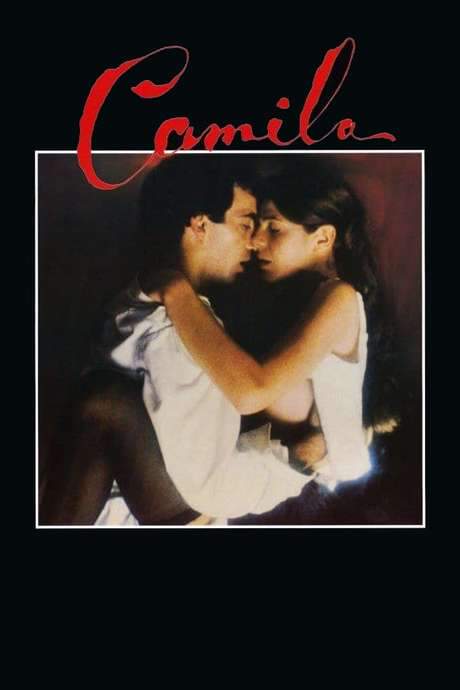
Love against all odds In 1847 Buenos Aires, a young noblewoman and a young Jesuit fall in love, much to the disapproval of her family and the Church.


Does Camila have end credit scenes?
No!
Camila does not have end credit scenes. You can leave when the credits roll.
Meet the Full Cast and Actors of Camila
Explore the complete cast of Camila, including both lead and supporting actors. Learn who plays each character, discover their past roles and achievements, and find out what makes this ensemble cast stand out in the world of film and television.

Héctor Alterio
Adolfo O'Gorman
Manuel Vicente
Juan Leyrado
José María
Juan Manuel Tenuta
Imanol Arias
Ladislao Gutiérrez
Susú Pecoraro
Camila O'Gorman
Claudio Gallardou
Eduardo O'Gorman
Roxana Berco
Carmen O'Gorman
Jorge Ochoa
Padre Félix
Carlos Rivkin
Lidia Catalano
Hortensia
Martín Coria
Alberto Busaid
Capitán
Boris Rubaja
Ignacio
Oscar Núñez
Mariano
Jean Pierre Reguerraz
Alejandra Colunga
Clara O'Gorman
Héctor Pellegrini
Commandant Soto
Jorge Hacker
Padre Gannon
Elena Tasisto
Joaquina O'Gorman
Armando Capo
Fernando «Tacholas» Iglesias
Carlos Muñoz Arosa
Monsignor Elortondo
Cecilio Madanes
Zelmar Gueñol
Carlos Marchi
Alejandro Marcial
Mona Maris
La Perichona
Olga Veyra
Cido Vianna
Yanina Amato
Mariana Cuello
Alejandro Valls
Luciano Castellano
Juan Carlos Galbarsanini
Lelio Incrocci
Ladislao Gutiérrez (voz)
External Links and Streaming Options
Discover where to watch Camila online, including streaming platforms, rental options, and official sources. Compare reviews, ratings, and in-depth movie information across sites like IMDb, TMDb, Wikipedia or JustWatch.





Take the Ultimate Camila Movie Quiz
Challenge your knowledge of Camila with this fun and interactive movie quiz. Test yourself on key plot points, iconic characters, hidden details, and memorable moments to see how well you really know the film.
Camila (1984) Quiz: Test your knowledge of the 1984 Argentine film *Camila*, covering characters, plot points, and historical context.
Who portrayed Camila O'Gorman in the film?
Full Plot Summary and Ending Explained for Camila
Read the complete plot summary of Camila, including all major events, twists, and the full ending explained in detail. Explore key characters, themes, hidden meanings, and everything you need to understand the story from beginning to end.
In memory of Camila O’Gorman and Ladislao Gutiérrez.
In 1827, Ana Perichon de O’Gorman is kept under house arrest in the sprawling hacienda that belongs to her estranged son, Adolfo O’Gorman [Héctor Alterio]. He treats her with thinly veiled contempt, a tension that shadows the uneasy family history. Camila, the grandmother’s beloved granddaughter, arrives as a baby who barely knows her, and even as a child she resists the idea that love can be simply coaxed by duty or appearance. When Ana asks Camila if she enjoys love stories, the girl honestly confesses that she does not know any, a line that hints at a life she has yet to fully imagine.
By 1847, Camila O’Gorman [Susú Pecoraro] has grown into a dazzling Buenos Aires socialite, her days shaped by the glittering circles of the city and the whispered legends of her grandmother’s past romance with the former Colonial Viceroy Santiago de Liniers. The world around her urges marriage for status rather than for affection. She is courted by Ignacio [Boris Rubaja], a wealthy suitor she does not love, and her friends press her to seize the opportunity to secure a comfortable future. Yet Camila longs for a bond rooted in genuine feeling, tearing at the expectations that bind her. Her friends are startled by the depth of her longing, a mirror to the clash between private desire and public decorum.
Meanwhile, Adolfo O’Gorman champions the far-right single-party state led by Rosas, a political path that starkly opposes Camila’s instincts. She finds Rosas’s state terrorism abhorrent and speaks out against it, a stance that deepens the rift with her father. In a quiet moment of fate, Camila encounters a Jesuit priest, Father Ladislao Gutiérrez [Imanol Arias], in the confessional. Their connection begins with rebuke and restraint, as Ladislao wrestles with his vows and the thrill of an entirely forbidden attraction. He suffers a fever after their initial contact, and the story traces the push and pull between desire, guilt, and the rules of faith.
Their complicity grows quickly: after Camila expresses her longing in a moment of vulnerability, Ladislao surrenders to the attraction, and they decide to flee together. They elope to Corrientes Province, posing as a married couple, while Ladislao takes a simple job as a schoolteacher and earns the respect of the local villagers. The couple’s new life is a fragile coexistence of affection and internal conflict; Ladislao remains torn between the love he has found and the priestly vows he has pledged. Their hiding place beside a road becomes a small, intimate world where Camila’s dreams are tested against the weight of public judgment.
Everyday life in Corrientes is interrupted when the village priest and the local authorities become aware of their presence. The village commandante, who once benefited from Ladislao’s teaching of his children, warns Camila and Ladislao that they must leave at dawn. Camila rushes to tell him goodbye, only to find him kneeling in prayer before the church’s altar, a moment that crystallizes the moral conflict at the heart of their choice. When Ladislao finally returns to Camila to bid her farewell, he admits that his love remains, yet he must return to Buenos Aires to continue his penance and his ministry. Camila’s quiet response—“I knew what I was doing”—is a brutal acknowledgment of the sacrifice they are making.
The following morning, the commandante’s men descend, and both Camila and Ladislao are arrested. Camila’s father presses for the harshest punishment, and with the Church and Rosas’s political allies calling for retribution, a decree is issued to execute them without trial. The state’s machinery of justice closes in on their love with cold efficiency.
Locked in a military prison, Camila discovers she is bearing Ladislao’s child. Although the Argentine law forbids executions of pregnant women, Rosas refuses to delay the sentence. The prison chaplain performs a small act of mercy, allowing Camila to drink holy water to baptize the unborn child, a quiet sacrament in a moment of bleak inevitability. Ladislao sends a final letter to Camila, reaffirming his love as their fates converge on a single, brutal moment.
On 18 August 1848, Camila and Ladislao are brought before a firing squad in the prison yard. Ladislao is executed first, his body silenced by bullets, while Camila is shot next, her unborn child also claimed by the violence of the regime. The two bodies are laid to rest in the same coffin, a stark symbol of a love that could not survive the era’s brutal politics. Their last words echo across the courtyard in a shared plea:
Ladislao, are you there?
By your side, Camila.
In the wake of their tragedy, the film paints a portrait of a society torn between personal conscience and public power, where love becomes both a radical act and a quiet form of resistance. The characters’ fates are rendered with a restrained clarity, focusing on the human costs of political and religious coercion, and the film’s tone remains measured as it navigates a historical landscape that is at once intimate and sweeping.

Coming soon on iOS and Android
The Plot Explained Mobile App
From blockbusters to hidden gems — dive into movie stories anytime, anywhere. Save your favorites, discover plots faster, and never miss a twist again.
Sign up to be the first to know when we launch. Your email stays private — always.
Explore the mobile appDiscover Film Music Concerts Near You – Live Orchestras Performing Iconic Movie Soundtracks
Immerse yourself in the magic of cinema with live orchestral performances of your favorite film scores. From sweeping Hollywood blockbusters and animated classics to epic fantasy soundtracks, our curated listings connect you to upcoming film music events worldwide.
Explore concert film screenings paired with full orchestra concerts, read detailed event information, and secure your tickets for unforgettable evenings celebrating legendary composers like John Williams, Hans Zimmer, and more.


Camila Themes and Keywords
Discover the central themes, ideas, and keywords that define the movie’s story, tone, and message. Analyze the film’s deeper meanings, genre influences, and recurring concepts.
Camila Other Names and Titles
Explore the various alternative titles, translations, and other names used for Camila across different regions and languages. Understand how the film is marketed and recognized worldwide.
Similar Movies To Camila You Should Know About
Browse a curated list of movies similar in genre, tone, characters, or story structure. Discover new titles like the one you're watching, perfect for fans of related plots, vibes, or cinematic styles.








Quick Links: Summary, Cast, Ratings, More

What's After the Movie?
Not sure whether to stay after the credits? Find out!
Check out our other apps:

SAT Sphere
Build confidence for the Digital SAT.

Mori Atlas
Discover wild places worth protecting.

Luntero
Search smarter for a home in Amsterdam.

Plot Explained
Unravel movie endings and hidden clues.

Pokechamp
Dive into Pokémon data and battle logic.

Driving Theory
Get ready for your European theory test.

Movie Dust
Plan your next cinema trip with ease.

Musemap
Find art and culture as you travel.

Selkobase
Compare credentials before committing.

Local Manual
Turn an unfamiliar country into practical next steps.

Lernavi
Compare school systems before your next move.

GymRoam
Find a workout stop wherever your plans take you.
Explore Our Movie Platform
New Movie Releases (2026)
Famous Movie Actors
Top Film Production Studios
Movie Plot Summaries & Endings
Major Movie Awards & Winners
Best Concert Films & Music Documentaries
Movie Collections and Curated Lists
© 2026 What's After the Movie. All rights reserved.
Privacy Policy