Baishe Srabon 2011

A serial killer terrorizes Kolkata, leaving a trail of cryptic Bengali poetry at each murder scene. Stumped, the police enlist a seasoned, retired officer whose intuition and experience become crucial in decoding the verses and tracking down the elusive perpetrator. His past investigations give the team a unique edge as they race against time to prevent further killings.

Does Baishe Srabon have end credit scenes?
No!
Baishe Srabon does not have end credit scenes. You can leave when the credits roll.
Meet the Full Cast and Actors of Baishe Srabon
Explore the complete cast of Baishe Srabon, including both lead and supporting actors. Learn who plays each character, discover their past roles and achievements, and find out what makes this ensemble cast stand out in the world of film and television.

Joyraj Bhattacharya
Rabindranath Moitra
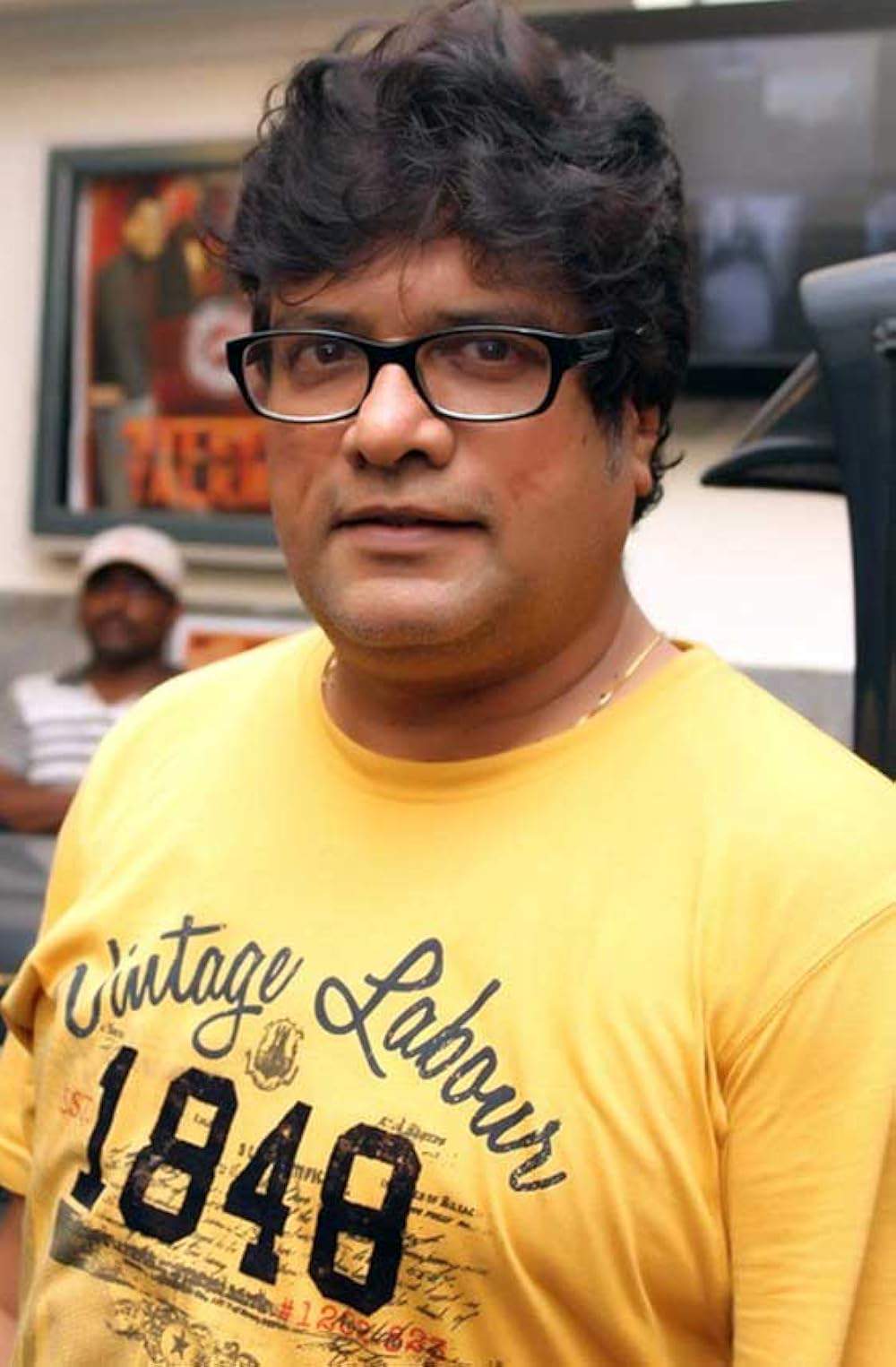
Rajesh Sharma
Amit Kr. Srivastav
Goutam Ghose
Nibaron Chakraborty
Raima Sen
Amrita Mukherji
Biswajit Chakraborty
Public Prosecutor
Abir Chatterjee
Shurjo Sinha
Parambrata Chatterjee
Abhijit Pakrashi
Prosenjit Chatterjee
Probir Roy Chowdhury
Srijit Mukherji
(cameo)
Kausik Ghosh
Mainak
Sumit Samaddar
Swapan / Kanai
Anindya Banerjee
June Maliah
Probir's Wife
Reeta Basu
Amrita's Mother
External Links and Streaming Options
Discover where to watch Baishe Srabon online, including streaming platforms, rental options, and official sources. Compare reviews, ratings, and in-depth movie information across sites like IMDb, TMDb, Wikipedia or Rotten Tomatoes.





Take the Ultimate Baishe Srabon Movie Quiz
Challenge your knowledge of Baishe Srabon with this fun and interactive movie quiz. Test yourself on key plot points, iconic characters, hidden details, and memorable moments to see how well you really know the film.
Baishe Srabon Quiz: Test your knowledge of the 2011 Bengali thriller Baishe Srabon with a mix of easy, medium, and hard questions.
Who is the ACP primarily handling the serial killer investigation?
Full Plot Summary and Ending Explained for Baishe Srabon
Read the complete plot summary of Baishe Srabon, including all major events, twists, and the full ending explained in detail. Explore key characters, themes, hidden meanings, and everything you need to understand the story from beginning to end.
In the shadowy nights of Kolkata, a string of murders unfolds with a chilling pattern: the killer writes a verse from Bengali poetry beside each victim, turning poetry into a deadly clue. The city’s police are left baffled as the trail grows colder, and ACP Abhijit Pakrashi [Parambrata Chatterjee] battles to connect the seemingly disparate deaths. His personal life strains under the weight of the case, especially with Amrita Mukherji [Raima Sen], a sharp TV journalist who covers the murders and becomes his confidant as the pressure tightens around him. The case takes an unexpected turn when Commissioner Amit Kumar Srivastav [Rajesh Sharma] insists on bringing back ex-DCP Probir Roy Chowdhury [Prosenjit Chatterjee], a volatile and notoriously blunt investigator who has a history of controversial methods. The reunion of these forces sets the stage for a battle of wits, temperament, and buried grievances as the clock ticks toward the next poetic anniversary.
As Abhijit and Probir team up, Amrita teams with Surjo Sinha [Abir Chatterjee], a fellow investigator and writer who helps peel back the public-facing facade of the killer’s motive. Together they craft a lens for their TV-series-inspired inquiry, while Amrita and Surjo navigate the emotional undercurrents of the investigation, including moments of jealousy and vulnerability that briefly threaten to derail their professional focus. The duo’s discussions about poets and poetry lead them to a crucial insight: the killer seems to strike on the death anniversaries of renowned Bengali poets, a pattern that could unlock the case’s final, devastating sequence. When they identify 29 June as the next target—the death anniversary of Michael Madhusudan Dutt—their suspicion pivots toward the elusive figure of Nibaron Chakraborty [Goutam Ghose], an eccentric poet who roams the city with a belief in the Hungry Generation movement.
Amrita’s prison visit to learn more about Rafique Ahmed and his confidant during his long imprisonment—Nibaron—plants the seed of doubt about Nibaron’s innocence. Nibaron’s insistence on meeting “Rabindranath” during their interview—and his surreal, almost haunted demeanor—pushes the investigators toward a deeper psychological reading of the killer’s mindset. A tense sequence at a cemetery escalates emotions: Abhijit, still processing personal pain, and Probir share fragments of their own losses, and Probir’s blunt wisdom about endurance and strength fuels their perseverance. Yet the duo’s breakthrough comes not from a single revelation but from a disciplined synthesis of their alternating viewpoints, recognizing that the death-date pattern aligns with a broader, orchestrated scheme rather than random violence.
The investigation intensifies as Probir and Abhijit narrow their focus to Nibaron’s nocturnal routines, suspecting a link to the murders. They visit Nibaron’s home under the guise of journalism, probing his stance on the Hungry Generation. The evidence appears to point toward Nibaron, but a shocking twist soon dispels the illusion: Swapan, Nibaron’s supposed servant, emerges as a pivotal figure in the killer’s network. Swapan [Sumit Samaddar] (also known as Kanai) reveals a dark truth that turns the case on its head: Nibaron’s inner circle has been complicit in the killings, and the real mastermind is closer to home than anyone suspected. As the pieces fall into place, the investigation exposes a calculated manipulation of Nibaron’s past—centering on a book fair arson and a carefully crafted lie that framed the poet and forced his suicide. The discovery of a final couplet beside Nibaron’s body confirms this grim manipulation and seals the first major arc of the case.
The truth, however, is only fully revealed after a cataclysmic twist: Rabindranath Tagore’s death anniversary is approaching, and Probir engineers a chilling public confrontation with a figure he calls Rabindranath Mitra, a publisher. Abhijit is stunned to learn that Swapan—whom he trusted as a loyal ally—turns out to be Probir’s own servant, Kanai, and that the mastermind behind the murders was none other than Probir Roy Chowdhury himself. Kanai’s role as the executor of the killings is laid bare, and Probir’s motive is revealed: a violent vendetta against the police for his suspension, built on deceit, framing, and a grotesque sense of revenge. With the pieces in place, Probir confronts Abhijit and makes clear that his hatred of murder has driven him to commit murder himself, even as he contends with the moral paradox of his own actions.
The culmination is devastating. After reciting what he believes to be the final couplet, Probir takes his own life, fading from the scene in a blaze of moral ambiguity that leaves Abhijit reeling and the city stunned. The case, at last, closes with Probir’s confession and suicide setting a somber tone for the truth that has emerged: a man, embittered by professional failure and personal loss, weaponized poetry and trust to enact vengeance. Abhijit, left to confront the cost of the revelations, must reckon with the fact that the line between heroism and complicity can blur in the darkest moments of a case that began with a killer’s verses and ended with a man’s lone, fatal decision.
The narrative unfolds with a steady, relentless pace, blending police procedure with intimate character drama. It explores not only the mechanics of a high-stakes investigation but also the toll it takes on relationships—between lovers, colleagues, and a city haunted by poems that become sequels to tragedy. The film uses its Kolkata backdrop to heighten tension, placing a stylish but somber lens on the pursuit of truth across a landscape where art and violence collide. In the end, the truth is as elegiac as the poems that begin and end the killer’s deadly cycle, leaving a heavy, lingering impression of how far a person will go to avenge a perceived slight and how the line between justice and vengeance can become dangerously thin.
Keywords: Kolkata, poetry, serial murders, investigation, pattern, Hungry Generation, personal sacrifice, deception, mastermind, confession, suicide.

Coming soon on iOS and Android
The Plot Explained Mobile App
From blockbusters to hidden gems — dive into movie stories anytime, anywhere. Save your favorites, discover plots faster, and never miss a twist again.
Sign up to be the first to know when we launch. Your email stays private — always.
Explore the mobile appWatch Trailers, Clips & Behind-the-Scenes for Baishe Srabon
Watch official trailers, exclusive clips, cast interviews, and behind-the-scenes footage from Baishe Srabon. Dive deeper into the making of the film, its standout moments, and key production insights.
Baishe Srabon Other Names and Titles
Explore the various alternative titles, translations, and other names used for Baishe Srabon across different regions and languages. Understand how the film is marketed and recognized worldwide.
Quick Links: Summary, Cast, Ratings, More

What's After the Movie?
Not sure whether to stay after the credits? Find out!
Check out our other apps:

SAT Sphere
Build confidence for the Digital SAT.

Mori Atlas
Discover wild places worth protecting.

Luntero
Search smarter for a home in Amsterdam.

Plot Explained
Unravel movie endings and hidden clues.

Pokechamp
Dive into Pokémon data and battle logic.

Driving Theory
Get ready for your European theory test.

Movie Dust
Plan your next cinema trip with ease.

Musemap
Find art and culture as you travel.

Selkobase
Compare credentials before committing.

Local Manual
Turn an unfamiliar country into practical next steps.

Lernavi
Compare school systems before your next move.

GymRoam
Find a workout stop wherever your plans take you.
Explore Our Movie Platform
New Movie Releases (2026)
Famous Movie Actors
Top Film Production Studios
Movie Plot Summaries & Endings
Major Movie Awards & Winners
Best Concert Films & Music Documentaries
Movie Collections and Curated Lists
© 2026 What's After the Movie. All rights reserved.
Privacy Policy