Resistance 2019



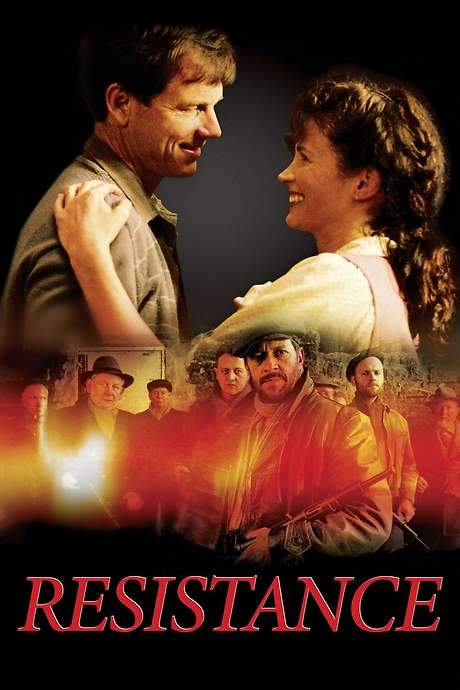
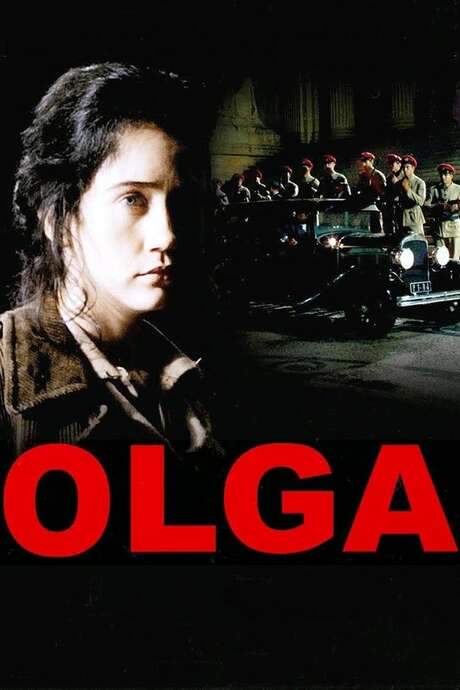
Brazil, 1961. Governor Leonel Brizola, holed up in an underground bunker within the Piratini Palace, anticipates an attack by the Brazilian military. The nation teeters on the brink of civil war after President Jânio Quadros's sudden resignation and efforts to prevent Vice-President João Goulart from assuming office. Using a radio transmitter, Brizola initiates the Legality movement to defend Goulart’s right to the presidency. Two brothers, entangled in a love triangle, find themselves drawn into the conflict and fight alongside him.

Does Resistance have end credit scenes?
No!
Resistance does not have end credit scenes. You can leave when the credits roll.
Where to Watch Resistance
See current US streaming, rental, and purchase options for Resistance (2019) via JustWatch.

AMC+ Amazon Channel
HD
AMC+ Roku Premium Channel
HD
Philo
HD
Sundance Now
HD
Kanopy
HD
Apple TV Store
4K
Fandango At Home
HD
Amazon Video
HD
Google Play Movies
SD
YouTube
SD Streaming availability powered by 
Meet the Full Cast and Actors of Resistance
Explore the complete cast of Resistance, including both lead and supporting actors. Learn who plays each character, discover their past roles and achievements, and find out what makes this ensemble cast stand out in the world of film and television.

Cleo
Cecília
Eduardo Mendonça
Chico
Fernando Alves Pinto
Luis Carlos
Paulo César Peréio
Radialista
Marcos Contreras
Pereio
Luis Franke
Major Neme
Áurea Baptista
Rosa Garramón
Evandro Soldatelli
Coronel Campos
Leonardo Machado
Leonel Brizola
Letícia Sabatella
Blanca
Carla Cassapo
Dóris
Roberto Oliveira
Coronel Machado Lopes
Renato Teixeira
Capitão
José Henrique Ligabue
Tonho
Zeca Brito
João França
Passageiro do Trem
Juliana Wolkmer
Neusa Brizola
Luiza Ollé
Lara
Sapiran Brito
Brizola em 2004
Fábio Rangel
Jango
Adriano Basegio
Hamilton Chaves
Alexandre Accorsi
Péricles
Erik Mathew
Robert
Ignacio León
Che Guevara
Jairo Klein
Jânio Quadros
Néstor Monasterio
Presidente do Uruguai
External Links and Streaming Options
Discover where to watch Resistance online, including streaming platforms, rental options, and official sources. Compare reviews, ratings, and in-depth movie information across sites like IMDb, TMDb, Wikipedia or Rotten Tomatoes.






Ratings and Reviews for Resistance
See how Resistance is rated across major platforms like IMDb, Metacritic, and TMDb. Compare audience scores and critic reviews to understand where Resistance stands among top-rated movies in its genre.

The Movie Echo Score
Resistance offers a commendable visual presentation and strong lead performance, yet its narrative structure feels uneven and occasionally contrived. Critics note the film’s keen cinematography and authentic period details, while also highlighting pacing irregularities and a lack of cohesive storytelling. Audience reactions echo this split, with praise for Eisenberg’s portrayal and the effective score, but criticism of predictability and historical inconsistencies. Overall, the film succeeds in moments of craft and emotion but falls short of a consistently compelling experience.
The Movie Echo Score Breakdown for Resistance

Art & Craft
In terms of direction and cinematography, the film is recognized for its keen visual composition and period authenticity. Critics applaud the evocative shooting style, and one user describes the visuals as strong, while others point to an uneven execution that undermines the overall polish. The mixed comments on editing and production design suggest occasional lapses. Consequently, the artistic craft is solid but not uniformly refined, yielding a respectable yet imperfect score.

Character & Emotion
When evaluating acting and character depth, Eisenberg’s performance receives consistent commendation for nuance and emotional weight. Critics and several users describe his portrayal as solid, expressive, and among his finest work. Some dissenting voices note a lack of conviction, but these are outweighed by the positive assessments. Supporting cast comments are limited, yet the overall impression is that character work drives the film’s emotional resonance, justifying a high rating.

Story & Flow
The film’s narrative coherence and pacing draw the most criticism, with reviewers noting a fragmented focus and predictable arc. Both critics and users highlight issues such as uneven pacing, lack of a singular narrative thrust, and historical inaccuracies that disrupt immersion. While the underlying true story is deemed important, the execution is seen as uneven, resulting in a middling score that reflects mixed sentiment toward the plot’s delivery.

Sensory Experience
Sensory elements, including the soundtrack and visual style, are generally praised for enhancing the film’s atmosphere. Critics mention effective use of music, though some find certain sound choices manipulative. Users commend the effective score and describe the visual presentation as strong, balancing the occasional criticism of tonal excess. The overall sensory experience contributes positively to the film’s impact, meriting a above‑average rating.

Rewatch Factor
Rewatch value appears moderate, with some reviewers finding the film engaging enough to sustain interest through a full viewing, while others perceive limited incentive for repeat viewings due to narrative shortcomings. Positive remarks about emotional resonance and historical significance suggest occasional appeal, yet the uneven story and pacing diminish lasting allure. The mixed feedback translates into a balanced score that captures the film’s conditional replay potential.
Full Plot Summary and Ending Explained for Resistance
Read the complete plot summary of Resistance, including all major events, twists, and the full ending explained in detail. Explore key characters, themes, hidden meanings, and everything you need to understand the story from beginning to end.
The film opens in 1938 Berlin, where the rise of the Nazi regime shatters a young Jewish girl’s world when Brown Shirts burst into her home and kill her parents. This brutal prelude sets the stage for a deeply human story about art, memory, and resistance under the shadow of oppression.
In Strasbourg, 1939, a young Marcel Marceau dreams of a life beyond his father’s butcher shop. Surrounded by growing threats from a powerful regime, he works to carve out a path in the arts—mime and painting become his sanctuary even as danger lurks outside. He performs playful impressions at a local cabaret, hinting at his later gift for transforming pain into performance. While he struggles with his father’s disapproval, he is drawn to a local girl named Emma, whose quiet strength and warmth spark a shy but growing affection between them. The atmosphere is tense, yet the bond between the two deepens as the world around them teeters on the brink of catastrophe.
Georges, Marcel’s cousin, and Emma become guardians to a Scout troop of 123 Jewish orphans, who take shelter in a castle in Strasbourg. The children arrive frightened and withdrawn, but the young mime’s talent for connection—his comedy, his timing, and his ability to see beyond fear—helps them begin to trust again. Emma becomes an indispensable partner in their care, and a tender romance blossoms between her and Marcel as they work to provide a sense of normalcy amid the perils of the occupation. The story follows their quiet, steadfast efforts to shield the vulnerable youths while keeping hope alive in a world that seems to be losing its way.
As the war spreads after Germany invades Poland in 1939, France reels under the threat of invasion and occupation. The French government relocates populations from border regions, and Marcel and Emma’s circle grows more entwined with the resistance. The children are redistributed to churches and Jewish families to minimize their visibility, yet Marcel and Emma remain deeply involved in their welfare. Their connection with the young Elsbeth persists, threading a through line of personal stakes through the larger conflict. The mood shifts from buoyant camaraderie to urgent danger as the stakes rise and the Nazis tighten their grip on occupied territory.
The narrative intensifies with the arrival of Klaus Barbie in Lyon in 1942, a ruthless enforcer whose brutal methods incarnate the cruelty of the occupation. Barbie’s campaign to crush the Resistance is marked by bribe-driven betrayals and executions carried out in a stark, empty pool at Gestapo Headquarters. The tension escalates as Marcel and Emma relocate to Lyon to continue their work with the Resistance, joined by Marcel’s brother Alain and Emma’s sister Mila. A narrow escape at the train station sees Alain slipping away from Nazi sweep; Marcel’s desperate act—burning a German soldier to aid his brother—demonstrates the immediacy and danger of their struggle. Mila and Emma, however, are not as fortunate. Mila is tortured to death in a brutal interrogation, while Emma survives only through a grim collaboration with her captors, a choice that drives her to despair and a subsequent suicide attempt. Marcel intervenes to rescue Emma, and the couple resolves to help more Jewish children find safety away from the reach of Barbie and the Gestapo.
With courage and ingenuity, Marcel and Emma orchestrate a dangerous, hopeful plan. They masquerade as a Scout troop on a hiking excursion and escort a dozen children, including Elsbeth, toward Switzerland by train through the French Alps. As the group passes their last station before the Franco-Swiss border, Barbie and his SS troops close in, forcing Emma to hide and putting Marcel under ruthless cross-examination. Barbie, convinced by his own machinations that Emma is a collaborator, narrows his search but fails to uncover the true mission: a clandestine crossing to freedom. The group presses on toward safety, their footsteps light with fear and heavy with resolve.
The pursuit intensifies as Barbie dispatches SS forces into the icy forests along the border. A gunshot shatters the moment of relief when Emma is mortally wounded during Barbie’s pursuit, and Marcel is left devastated by her death. Yet their escape endures; the children, led by Marcel, reach Switzerland, and the group’s endurance becomes a testament to resilience in the face of overwhelming danger.
The film returns to a starkly different afterword in 1945, when Marceau serves as a Liaison Officer with the United States Army in postwar Germany. The narrative closes in Nuremberg, where Marceau is introduced to troops by General George S. Patton and is celebrated for having traversed the Alps countless times to rescue hundreds of children, many of them orphans, saving thousands more through his quiet, tireless acts of courage. The final image lingers on a mime—Marceau’s signature performance—carved in white face against a simple, hopeful backdrop, a poignant reminder of art’s power to endure amid horror.

Coming soon on iOS and Android
The Plot Explained Mobile App
From blockbusters to hidden gems — dive into movie stories anytime, anywhere. Save your favorites, discover plots faster, and never miss a twist again.
Sign up to be the first to know when we launch. Your email stays private — always.
Explore the mobile appDiscover Film Music Concerts Near You – Live Orchestras Performing Iconic Movie Soundtracks
Immerse yourself in the magic of cinema with live orchestral performances of your favorite film scores. From sweeping Hollywood blockbusters and animated classics to epic fantasy soundtracks, our curated listings connect you to upcoming film music events worldwide.
Explore concert film screenings paired with full orchestra concerts, read detailed event information, and secure your tickets for unforgettable evenings celebrating legendary composers like John Williams, Hans Zimmer, and more.


Resistance Themes and Keywords
Discover the central themes, ideas, and keywords that define the movie’s story, tone, and message. Analyze the film’s deeper meanings, genre influences, and recurring concepts.

Unlock the World of Movies with Our Comprehensive Wiki
Dive into our Movie Wiki for in-depth film encyclopedia entries, including cast biographies, production trivia, plot synopses, behind-the-scenes facts, and thematic analyses. Whether you’re researching iconic directors, exploring genre histories, or discovering hidden easter eggs, our expertly curated movie database has everything you need to fuel your cinematic passion.
Similar Movies To Resistance You Should Know About
Browse a curated list of movies similar in genre, tone, characters, or story structure. Discover new titles like the one you're watching, perfect for fans of related plots, vibes, or cinematic styles.





Quick Links: Summary, Cast, Ratings, More

What's After the Movie?
Not sure whether to stay after the credits? Find out!
Check out our other apps:

SAT Sphere
Build confidence for the Digital SAT.

Mori Atlas
Discover wild places worth protecting.

Luntero
Search smarter for a home in Amsterdam.

Plot Explained
Unravel movie endings and hidden clues.

Pokechamp
Dive into Pokémon data and battle logic.

Driving Theory
Get ready for your European theory test.

Movie Dust
Plan your next cinema trip with ease.

Musemap
Find art and culture as you travel.

Selkobase
Compare credentials before committing.

Local Manual
Turn an unfamiliar country into practical next steps.

Lernavi
Compare school systems before your next move.

GymRoam
Find a workout stop wherever your plans take you.
Explore Our Movie Platform
New Movie Releases (2026)
Famous Movie Actors
Top Film Production Studios
Movie Plot Summaries & Endings
Major Movie Awards & Winners
Best Concert Films & Music Documentaries
Movie Collections and Curated Lists
© 2026 What's After the Movie. All rights reserved.
Privacy Policy