What's After the Blog?
news • feature • industry
Night of the Zoopocalypse: Clive Barker's Animated Horror Origin
Night of the Zoopocalypse is a 2025 animated horror film based on an unpublished short story by Hellraiser creator Clive Barker. The movie, distributed by Viva Pictures, transforms Barker's original "ZOOmbies" concept into a visually distinct kid-friendly zombie adventure featuring talking animals and gelatinous monsters.
April 5, 2026
Night of the Zoopocalypse: Clive Barker’s Animated Horror Origin
In 2014, horror icon Clive Barker conceived a story about a boy trapped in a zoo during a zombie apocalypse. Eleven years later, that germ of an idea evolved into Night of the Zoopocalypse, a 2025 animated feature directed by Rodrigo Perez-Castro and Ricardo Curtis that trades human protagonists for talking animals and conventional Disney aesthetics for a hallucinogenic visual palette. Released by indie distributor Viva Pictures, the film represents one of the year’s most unusual family-horror hybrids, blending genuine scares with bubble-eyed character design in a way that has largely escaped mainstream attention despite its bold creative vision.
From “ZOOmbies” to Zoopocalypse: The 11-Year Development Journey
Clive Barker first revealed the concept behind what would become Night of the Zoopocalypse in a 2014 interview published on his official website. At that time, the Hellraiser creator described an unpublished short story titled “ZOOmbies,” centering on a young boy stranded in a zoo during a zombie apocalypse. Rather than letting the concept remain dormant, Barker collaborated with author Ben Meares to adapt the premise into a comic book format. As Barker explained in the interview, this adaptation served as a proof of concept to explore whether the unusual premise could sustain a larger narrative.
The comic iteration caught the attention of potential buyers, leading to a sale that transferred the film rights to an unnamed production entity. According to Barker’s own recollection, neither he nor Meares maintained significant creative involvement following the transaction, suggesting the final cinematic product underwent substantial transformation by subsequent creative teams. By the time the film reached audiences in 2025, the central premise had shifted dramatically. The human protagonist from Barker’s original conception disappeared entirely, replaced by an ensemble cast of anthropomorphic animals residing within the zoo itself. This structural pivot fundamentally altered the narrative perspective while retaining the core concept of a zoological setting under siege by undead forces.
A Visual Departure from Mainstream Animation
Perhaps the most immediately striking aspect of Night of the Zoopocalypse is its radical aesthetic approach, which deliberately rejects the polished, market-tested norms of major studio animation. Where Disney and DreamWorks productions typically favor meticulously designed, ultra-friendly features reminiscent of Barbie doll proportions, this film embraces an eccentric visual language characterized by oversized, ping-pong-ball eyes that recall Aardman Animation’s tactile sensibilities without fully imitating them.
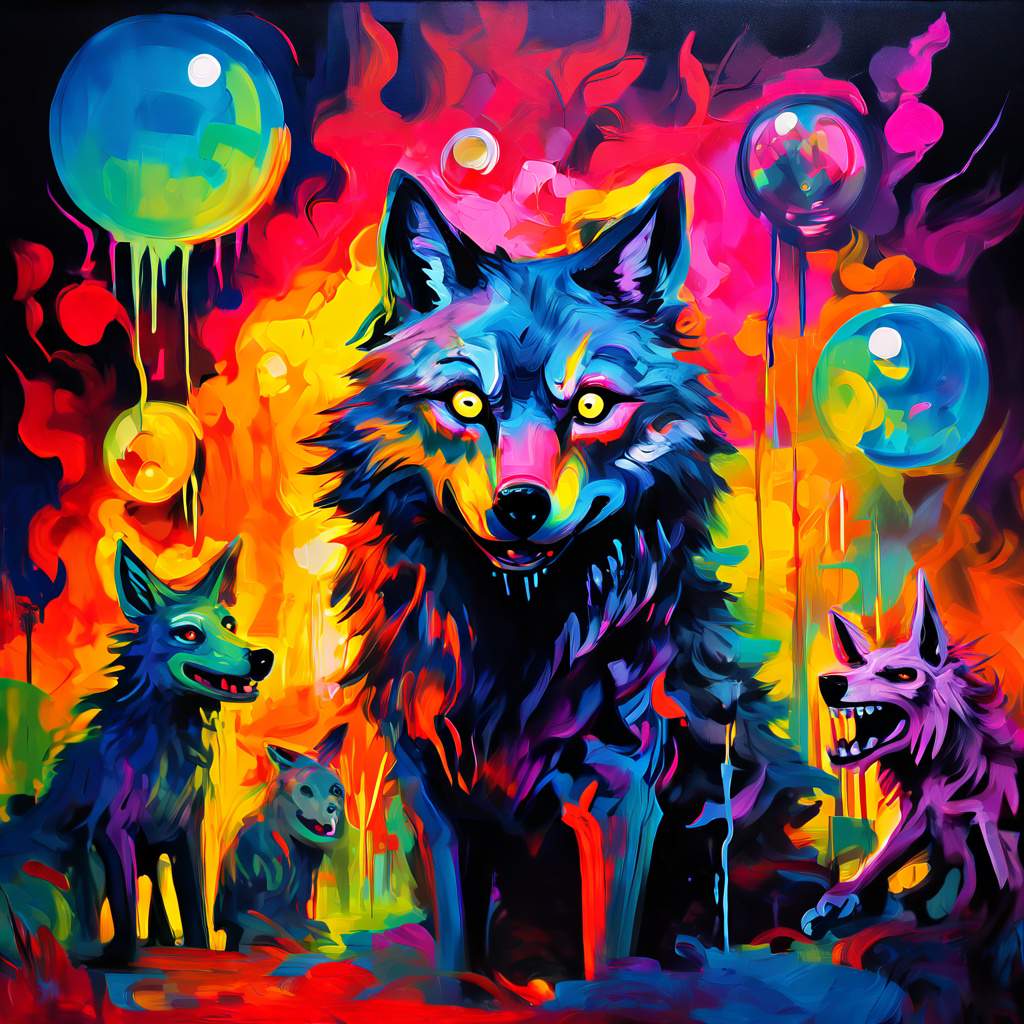
The character design exhibits a deliberate distortion of natural anatomy. Animals display fur that bubbles upward in irregular, rounded lumps rather than flowing naturally. Limb proportions vary wildly between characters: some creatures possess willow-thin extremities while others feature tree-trunk thick legs that create jarring, top-heavy silhouettes. The color palette draws inspiration from black-light posters, bathing sequences in neon hues that feel more at home in psychedelic rock venues than traditional family entertainment.
This visual risk-taking extends to the film’s horror elements. The production team committed to treating the zombie transformations with legitimate genre respect rather than sanitizing the threat for younger viewers. When a meteor crashes into the zoo’s rabbit enclosure, the initial infection sequence pays homage to creature features like Gremlins. An adorable bunny consumes a fragment of the space rock, then encases itself in a gooey cocoon before emerging as a translucent, gelatinous predator with glowing eyes—a transformation sequence that balances grotesque body horror with the film’s overall cartoon sensibilities.
The Threat: Gelatinous Monsters and Hybrid Beasts
The zombies of Night of the Zoopocalypse diverge significantly from the lumbering undead of traditional horror or the comical versions found in gaming franchises. These infected animals undergo physical metamorphosis into neon-colored, semi-transparent blob creatures that retain recognizable animal features while gaining monstrous new capabilities. Their gelatinous composition allows for creative visual gags and genuine threats alike, as the creatures can squeeze through spaces solid animals could not.
The infection mechanics drive the plot through familiar zombie-movie beats while maintaining the zoo setting’s unique constraints. Protagonists gradually realize the severity of the outbreak, fleeing to progressively smaller shelters as the infected horde grows. The narrative incorporates classic survival-horror dynamics regarding trust and leadership.
The climax introduces a particularly inventive twist on zombie lore: the discovery that these gel-animals can fuse together when mashed, creating massive hybrid creatures that combine physical traits from multiple species. The film’s final “boss monster” represents a grotesque amalgamation of giraffe, elephant, hippo, lion, and other zoo inhabitants into a single towering slime-beast, providing a visual payoff that justifies the film’s weirder aesthetic choices.
Voice Cast and Character Dynamics
The ensemble voice cast brings distinct personalities to the trapped menagerie:
- Gabbi Kosmidis as Gracie: A lanky timberwolf who serves as the group’s reluctant leader and primary protagonist
- David Harbour as Dan: A mountain lion distinguished by his notably thick, tree-trunk legs and physical presence
- Scott Thompson as Ash: An ostrich representing the fearful, anxious member of the survival group (known for Kids in the Hall)
- Christina Nova as Poot: A pygmy hippo child requiring protection, embodying the innocent-victim trope common to survival horror
- Paul Sun-Hyung Lee as Felix: A proboscis monkey positioned as the untrustworthy wildcard of the ensemble
This character roster reflects the film’s structural shift from Barker’s original boy-versus-zombies concept to a multi-perspective animal ensemble. The dynamics follow established survival-horror templates: debates over leadership authority, questions regarding which creatures can be trusted, and the ever-present tension between individual survival and group protection.
Distribution and Market Position: Viva Pictures’ Niche Strategy
Viva Pictures, the studio responsible for releasing Night of the Zoopocalypse, operates firmly outside the competitive sphere occupied by Disney, DreamWorks, and Netflix. The distributor has carved out a specific niche handling adaptations of idiosyncratic source material and works by offbeat creators. Their recent slate includes The Amazing Maurice, based on Terry Pratchett’s work, and Hitpig!, adapted from Berkeley Breathed’s (Bloom County) book—the latter unfortunately earning distinction as one of the worst theatrical openings on record.
Beyond literary adaptations, Viva has demonstrated consistent interest in monster-themed content, releasing under-the-radar titles such as Scary Girl and 200% Wolf. This programming strategy positions the distributor as a haven for unusual animated projects that major studios might deem too risky or commercially limited.
Despite its creative ambition and Barker’s pedigree, Night of the Zoopocalypse arrived with minimal fanfare in 2025, escaping the attention of mainstream audiences. This obscurity proves unfortunate given the film’s distinctive visual achievements and its successful navigation of the difficult balance between genuine horror and child-appropriate storytelling. The movie specifically targets what might be described as the “future goth” demographic—children approximately ten years old who appreciate darker aesthetics and unconventional narratives. While the persistent cuteness inherent to the animal cast may frustrate older horror enthusiasts seeking pure genre thrills, the production delivers exactly the kind of slick, unique, and legitimately scary experience that adventurous young viewers often struggle to find in an overcommercialized marketplace.
Discover More with What’s After the Movie
If Night of the Zoopocalypse sounds like your kind of cinematic discovery, you’ll find plenty more hidden gems and industry insights at What’s After the Movie. Our platform covers everything from obscure animated horror to major box office hits, offering comprehensive movie information, spoiler-free summaries, ending explanations, and the latest entertainment news. Explore our complete database of films at https://www.whatsafterthemovie.com/movies or dive deeper into industry analysis and feature articles at https://www.whatsafterthemovie.com/blog.
Continue reading


What's After the Movie?
Not sure whether to stay after the credits? Find out!
Check out our other apps:

SAT Sphere
Build confidence for the Digital SAT.

Mori Atlas
Discover wild places worth protecting.

Luntero
Search smarter for a home in Amsterdam.

Plot Explained
Unravel movie endings and hidden clues.

Pokechamp
Dive into Pokémon data and battle logic.

Driving Theory
Get ready for your European theory test.

Movie Dust
Plan your next cinema trip with ease.

Musemap
Find art and culture as you travel.

Selkobase
Compare credentials before committing.

Local Manual
Turn an unfamiliar country into practical next steps.

Lernavi
Compare school systems before your next move.

GymRoam
Find a workout stop wherever your plans take you.
Explore Our Movie Platform
New Movie Releases (2026)
Famous Movie Actors
Top Film Production Studios
Movie Plot Summaries & Endings
Major Movie Awards & Winners
Best Concert Films & Music Documentaries
Movie Collections and Curated Lists
© 2026 What's After the Movie. All rights reserved.
Privacy Policy