What's After the Blog?
Reviews
JUJUTSU KAISEN: Hidden Inventory / Premature Death (2025) Review – Gojo, Geto and the Birth of a Tragedy
A deep‑dive review of the Jujutsu Kaisen compilation film that re‑cuts the Hidden Inventory and Premature Death arcs. Discover how MAPPA’s new edits, a remixed soundtrack, and theatrical‑grade sound design amplify Gojo and Geto’s heartbreaking origin story.
July 25, 2025

Movies mentioned in this article
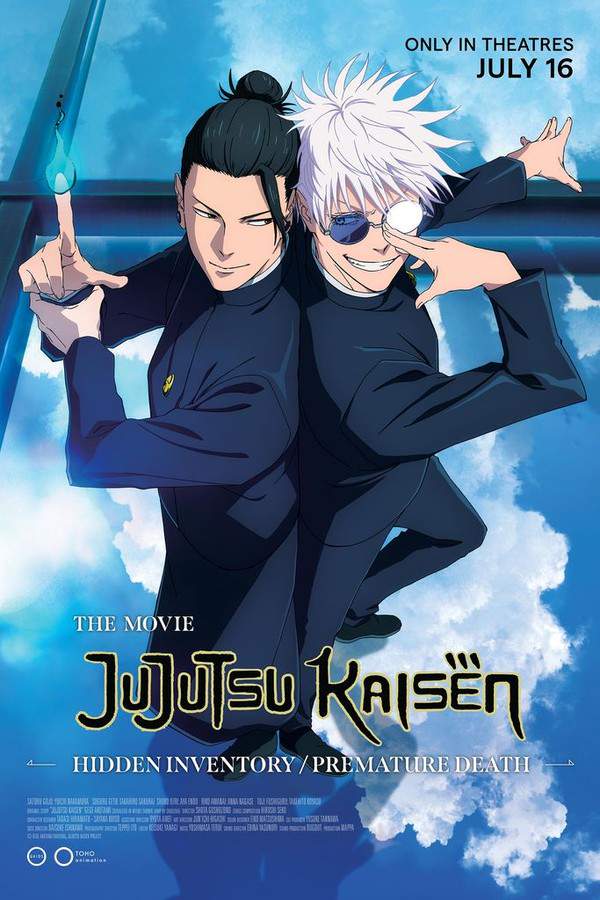
JUJUTSU KAISEN: Hidden Inventory / Premature Death (2025) Review – Gojo, Geto and the Birth of a Tragedy
This review dives into major plot developments, including character fates. If you haven’t experienced the story, know that spoilers lie ahead.
When I settled into a packed late‑night screening of “Jujutsu Kaisen: Hidden Inventory / Premature Death – The Movie,” I expected a polished recap of the season‑two opener. What I got felt closer to a requiem. MAPPA’s theatrical cut telescopes five episodes into 110 minutes, yet nothing about it feels compressed. On the contrary, the film’s slower, more deliberate rhythm left me absorbing the tragedy between each beat of silence. That sense of spaciousness becomes possible partly because the compilation lands in theaters with newly re‑timed edits and a pristine 4K finish. The result is not merely a “best‑of” reel but a cohesive, singular tragedy that stands on its own.
Release Context and the Joy of the Big Screen
North American fans only had two days—July 16 and 17—to catch the film in cinemas, courtesy of distributor GKIDS. I never tire of seeing anime get this kind of red‑carpet treatment; hearing the hush fall over the crowd the moment Gojo activates Infinity reminded me why theatrical sound matters. Even the softest whispers—Suguru Geto asking “Is this the only way?”—hovered in the air like a haunting after‑image. My seat literally rumbled when Gojo unleashes Hollow Purple, helped by a Dolby Atmos mix that turned each cursed technique into a sub‑bass thud you feel in your sternum.
Visual Storytelling: Elegance in Violence
Watching on a forty‑foot screen, I could pick up color‑grade tweaks that weren’t obvious on my living‑room monitor. Blues in Gojo’s domain shimmer with an almost holographic intensity, while flashbacks bathe the characters in somber earth tones that telegraph an irreversible fall from grace. MAPPA replaces several TV fade‑outs with fluid match‑cuts—Riko Amanai’s hopeful grin bleeding straight into Toji’s gunsight—that slammed me back into my seat. The gore remains artful rather than gratuitous; even when blood splashes across the lens, the composition keeps your gaze fixed on the emotion behind the violence.
Performances That Humanize Power
Yuichi Nakamura infuses Gojo with boyish arrogance that crosses the line into apathy once he recognizes his own godhood. In the cavernous acoustics of the theater, his laughter sounded unhinged, the echo bouncing back like a taunt. Meanwhile Takahiro Sakurai layers Geto’s warmth with a low, almost prayer‑like despair; his final monologue felt less like villainy and more like a man begging the universe for an answer. Hearing both Japanese and English dubs back‑to‑back on opening night confirmed how well the voice direction preserves that tragic symmetry.
Themes: Strength, Isolation, and the Cost of a Miracle
Condensed into feature length, the moral knot at the arc’s center tightens. The screenplay makes it impossible to ignore the causality: Gojo’s evolution into “the strongest” directly seeds Geto’s disillusionment. The cinematic pacing allowed me to sit with that irony rather than speed through it. One line repeated in my head long after the credits: “The world is unfair to sorcerers and humans alike.” On television the idea carried punch; on the silver screen it felt like a verdict passed on anyone who dares to hope for a miracle.
Box‑Office Buzz and Community Reception
For a two‑night engagement, the film’s commercial spell is potent. Box Office Mojo logs a $2.55 million domestic haul, bolstered by eager fans who treated the event like opening weekend for a AAA blockbuster. Stepping out into the lobby, I overheard viewers debating whether this cut surpasses the series’ Jujutsu Kaisen 0 prequel—an argument that continued on Letterboxd within hours. Personally, the emotional stakes here feel sharper, precisely because we know the friendship at its core is doomed.
Where to Go After the Curtains Close
If your city skipped the screening, digital availability is already being tracked by JustWatch, and you can pore over credits or trivia on TMDB and IMDb. Aggregator scores are building on Rotten Tomatoes and Metacritic, but my advice is simple: experience the film before letting the numbers color your take.
Final Thoughts
Watching “Hidden Inventory / Premature Death – The Movie” felt like staring directly into the furnace that forged two of shōnen anime’s most compelling rivals. The cinematic polish amplifies every heartbeat, every hesitation, and—most painfully—every betrayal. By the time the acoustic version of Tatsuya Kitani’s “Where Our Blue Is” plays over a lingering epilogue, the question haunting both heroes becomes ours as well: If limitless power can’t save one life, what is it really worth?
For those craving more context, What’s After the Movie hosts an extensive dedicated page complete with a full plot summary, interactive quizzes, links to other movie sites, and much more. And of course, you can explore additional reflections right here on our blog. I’ve already booked a second viewing—because some tragedies deserve to be witnessed twice.
Continue reading




What's After the Movie?
Not sure whether to stay after the credits? Find out!
Check out our other apps:

SAT Sphere
Build confidence for the Digital SAT.

Mori Atlas
Discover wild places worth protecting.

Luntero
Search smarter for a home in Amsterdam.

Plot Explained
Unravel movie endings and hidden clues.

Pokechamp
Dive into Pokémon data and battle logic.

Driving Theory
Get ready for your European theory test.

Movie Dust
Plan your next cinema trip with ease.

Musemap
Find art and culture as you travel.

Selkobase
Compare credentials before committing.

Local Manual
Turn an unfamiliar country into practical next steps.

Lernavi
Compare school systems before your next move.

GymRoam
Find a workout stop wherever your plans take you.
Explore Our Movie Platform
New Movie Releases (2026)
Famous Movie Actors
Top Film Production Studios
Movie Plot Summaries & Endings
Major Movie Awards & Winners
Best Concert Films & Music Documentaries
Movie Collections and Curated Lists
© 2026 What's After the Movie. All rights reserved.
Privacy Policy