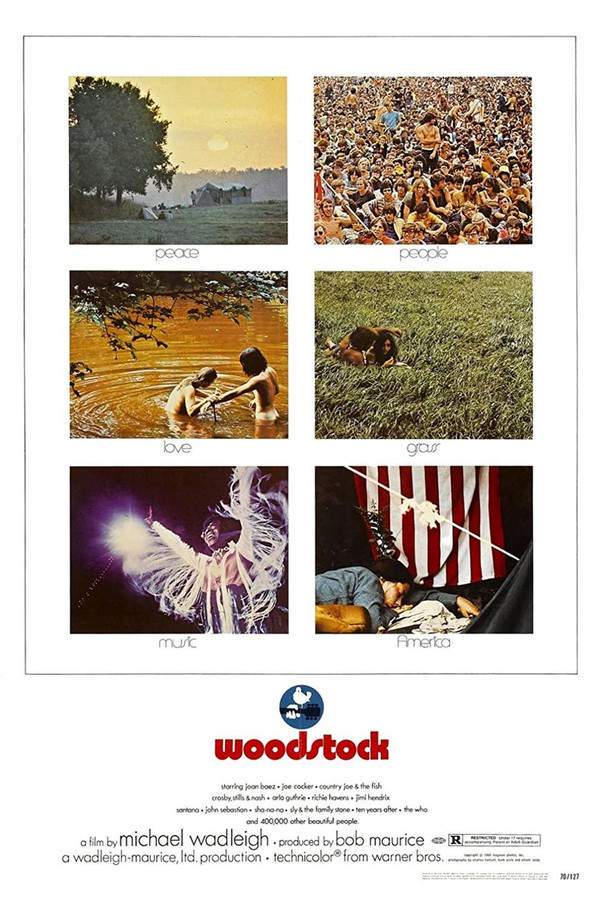
Woodstock 1970

Directed by

Michael Wadleigh
Made by

Warner Bros.
Where to Watch Woodstock
See current US streaming, rental, and purchase options for Woodstock (1970) via JustWatch.

Amazon Video
HD
Apple TV Store
HD
Google Play Movies
SD
YouTube
SD Streaming availability powered by 
Woodstock Plot Summary
Read the complete plot summary and ending explained for Woodstock (1970). From turning points to emotional moments, uncover what really happened and why it matters.
The film captures the vibrant and transformative moments of the Woodstock Music and Art Fair, a monumental event that took place over three unforgettable days in August 1969 near Bethel, New York. It provides a unique perspective on the performers and the diverse reactions of the 400,000 attendees alongside the local community. Opening with the captivating melody of “Long Time Gone” and “Wooden Ships” performed by Crosby, Stills & Nash, we witness the bustling activity as stagehands meticulously set up the platform for the musicians. The arrival of excited fans is depicted, their numbers swelling by the thousands.
Throughout the documentary, we hear insights from festival promoter Michael Lang, alongside rock promoter Bill Graham, who shares his expertise on managing the crowd’s energy. The lineup of legendary performers includes the likes of Richie Havens, Canned Heat, Joan Baez, The Who, Sha-Na-Na, Joe Cocker, Country Joe and the Fish, Arlo Guthrie, Crosby, Stills & Nash, Ten Years After, Jefferson Airplane, John Sebastian, Santana, Sly and the Family Stone, Janis Joplin, and Jimi Hendrix.
The film intersperses interviews with members of the counterculture, alongside local farmers, merchants, and law enforcement, many of whom express their discontent regarding neighbor Max Yasgur’s decision to host the concert on his farm. The chaos of nature is felt as a storm rolls in, soaking the audience and transforming the field into a muddy spectacle. Audiences can be seen enjoying mud-sliding contests amidst the downpour, while the counterculture’s spirit radiates through the smoking of marijuana and stronger substances, including poignant anti-Vietnam War sentiments.
Notable moments capture quick glimpses of the iconic Janis Joplin and Jerry Garcia, alongside scenes depicting medical assistance and nourishment provided by the Army, illustrating the communal effort of support and survival. The film draws to a close with a breathtaking aerial view of the colossal crowd, unified in their elation and fervor, as they cheer, encapsulating the essence of an era defined by peace, love, and music.
Woodstock Timeline
Follow the complete movie timeline of Woodstock (1970) with every major event in chronological order. Great for understanding complex plots and story progression.
Setting the Stage
The film opens with the captivating melodies of 'Long Time Gone' and 'Wooden Ships' performed by Crosby, Stills & Nash. Stagehands are seen meticulously preparing the platform for the remarkable lineup of musicians that will perform shortly.
Arrival of Fans
As the preparations continue, thousands of excited fans begin to arrive, swelling the numbers to an astonishing 400,000 attendees. The atmosphere is filled with anticipation as people from all walks of life converge to partake in this historic event.
Insights from Promoters
Festival promoter Michael Lang and rock promoter Bill Graham provide their insights throughout the film. They discuss the challenges of managing such a massive gathering and the energy of the crowd, showcasing their dedication to creating an unforgettable experience.
Performers Take the Stage
Legendary performers including Richie Havens, Joan Baez, and Jimi Hendrix grace the stage throughout the festival. Their performances create an electrifying atmosphere, and each act adds to the rich tapestry of music and emotion that defines the event.
Local Discontent
Interviews with local farmers, merchants, and law enforcement reveal their discontent with Max Yasgur's decision to host the concert. Their concerns about the potential chaos and disruption in their community illustrate the tension between local residents and the influx of festival-goers.
Nature's Chaos
As the festival progresses, a storm rolls in, soaking the crowd and transforming the beautiful festival grounds into a muddy spectacle. Attendees embrace the chaos, participating in impromptu mud-sliding contests, showcasing the spirit of enjoyment despite the weather.
Counterculture Spirit
The festival encapsulates the essence of the counterculture movement, with fans openly smoking marijuana and expressing their anti-Vietnam War sentiments. This rebellion against societal norms is a defining characteristic of the Woodstock experience.
Medical Assistance
Throughout the event, medical assistance is provided by volunteers and the Army, demonstrating the communal effort that emerges in times of need. Scenes of nourishment and care highlight the support and survival mentality that prevails amid the chaos.
Notable Appearances
The film features iconic moments with Janis Joplin and Jerry Garcia, capturing their influence and artistry during the festival. These glimpses into their performances provide insights into the larger cultural impact of the event.
Culmination of Joy
As the festival approaches its close, an aerial view showcases the vast, unified crowd. The sea of people, cheering in unison, embodies the era's spirit of peace, love, and music, leaving an indelible mark on history.
Woodstock Characters
Explore all characters from Woodstock (1970). Get detailed profiles with their roles, arcs, and key relationships explained.
Crosby, Stills & Nash
Crosby, Stills & Nash were a dynamic folk rock trio who opened the festival with their captivating melodies. Their harmonious voices added depth to the event's emotional tapestry, representing the peace and love ethos of the 1960s. Their presence set the tone for what would become an iconic musical gathering.
Richie Havens
Richie Havens was a renowned singer-songwriter and the first performer at Woodstock, whose soulful energy ignited the festival. His improvisational style and heartfelt lyrics resonated deeply with the audience, symbolizing the yearning for social change and connection. Havens became an emblematic figure of the peace movement.
Joan Baez
Joan Baez is a legendary folk singer known for her powerful voice and commitment to social justice. Her performance at Woodstock highlighted the intersection of music and activism, as she brought attention to causes such as civil rights and anti-war sentiments. Her presence embodied the spirit of the era.
Joe Cocker
Joe Cocker was celebrated for his soulful and gritty vocal style, which captured the emotional essence of the Woodstock audience. His vibrant performance left a lasting impact, symbolizing the raw energy of the festival. Cocker's music often conveyed themes of love and social reflection.
Max Yasgur
Max Yasgur was the local farmer who made the bold decision to host the Woodstock festival on his land, facing both support and opposition from the community. His willingness to embrace this transformative event marked him as a key figure in its history, representing openness and hospitality.
Woodstock Settings
Learn where and when Woodstock (1970) takes place. Explore the film’s settings, era, and how they shape the narrative.
Time period
August 1969
August 1969 was a significant month in American history, marked by the Woodstock Music and Art Fair, which symbolized the counterculture movement. It was a time characterized by anti-war sentiments, social upheaval, and a quest for peace and love. The festival became an iconic moment reflecting the hopes and challenges of a generation.
Location
Bethel, New York
Bethel, New York, is known for hosting the historic Woodstock Music and Art Fair in August 1969. The area transformed into a vibrant temporary community for over 400,000 attendees, highlighting the cultural shift of the time. The lush landscape became a backdrop for peace, love, and the exhilarating spirit of music.
Woodstock Themes
Discover the main themes in Woodstock (1970). Analyze the deeper meanings, emotional layers, and social commentary behind the film.
✌️
Peace & Love
The theme of peace and love resonates throughout the Woodstock festival, as it brought together diverse individuals seeking solace in music and community. The event became a symbol of the counterculture movement, highlighting the desires for harmony amid societal turbulence. It captured the spirit of unity and collective joy amidst chaos.
🎤
Music
Music serves as the heartbeat of the Woodstock festival, showcasing legendary performances from iconic artists of the time. The festival illustrated how music could foster connection and provide a voice for social change. The diverse lineup encouraged collaboration and celebrated the transformative power of live performances.
🌧️
Nature's Chaos
The unpredictable weather during the festival influenced the experience for both attendees and performers. The rain transformed the festival ground into a muddy haven, shifting the atmosphere yet enriching the communal spirit. Surprising moments of joy, like mud-sliding contests, depicted resilience amidst nature's chaos.

Coming soon on iOS and Android
The Plot Explained Mobile App
From blockbusters to hidden gems — dive into movie stories anytime, anywhere. Save your favorites, discover plots faster, and never miss a twist again.
Sign up to be the first to know when we launch. Your email stays private — always.
Explore the mobile appWoodstock Spoiler-Free Summary
Discover the spoiler-free summary of Woodstock (1970). Get a concise overview without any spoilers.
In the summer of 1969 a sprawling farm in upstate New York became the unexpected stage for a cultural moment that would echo through generations. Hundreds of thousands of young people converged on the open fields, drawn by the promise of music, freedom, and a shared yearning for something larger than everyday life. The setting—vast, grassy, and edged by the quiet of rural life—contrasts sharply with the swirling tide of a generation eager to rewrite the rules of love, art, and community, creating a world that feels both intimate and monumental.
At the heart of this gathering stand the visionaries who dared to make it happen. Michael Lang, the idealistic architect of the event, balances boundless optimism with the practicalities of coaxing a rural community into hosting an unprecedented crowd. Beside him, Bill Graham brings the hard‑won experience of a seasoned promoter, offering a steady hand as the logistical maze unfolds. Their partnership intersects with the reluctant generosity of Max Yasgur, the farmer whose land becomes a temporary utopia, and with the raw, heartfelt performance of Richie Havens, whose opening notes set the emotional tone for the days to come. These figures, along with a chorus of artists and everyday attendees, form a tapestry of personalities united by a common quest for expression.
Captured through the lenses of a devoted camera crew, the film immerses the viewer in a vivid, sensory mosaic of music, crowds, and the subtle tensions that ripple beneath the exuberance. The tone is warm and reverent, tinged with the unpredictability of weather, logistics, and the sheer scale of human gathering. Through candid interviews and sweeping shots, the documentary hints at the transformative power of collective experience while leaving the deeper stories of how that moment unfolds to the audience’s imagination, inviting us to feel the pulse of an era that still reverberates today.
Featured on this page

What's After the Movie?
Not sure whether to stay after the credits? Find out!
Check out our other apps:

SAT Sphere
Build confidence for the Digital SAT.

Mori Atlas
Discover wild places worth protecting.

Luntero
Search smarter for a home in Amsterdam.

Plot Explained
Unravel movie endings and hidden clues.

Pokechamp
Dive into Pokémon data and battle logic.

Driving Theory
Get ready for your European theory test.

Movie Dust
Plan your next cinema trip with ease.

Musemap
Find art and culture as you travel.

Selkobase
Compare credentials before committing.

Local Manual
Turn an unfamiliar country into practical next steps.

Lernavi
Compare school systems before your next move.

GymRoam
Find a workout stop wherever your plans take you.
Explore Our Movie Platform
New Movie Releases (2026)
Famous Movie Actors
Top Film Production Studios
Movie Plot Summaries & Endings
Major Movie Awards & Winners
Best Concert Films & Music Documentaries
Movie Collections and Curated Lists
© 2026 What's After the Movie. All rights reserved.
Privacy Policy