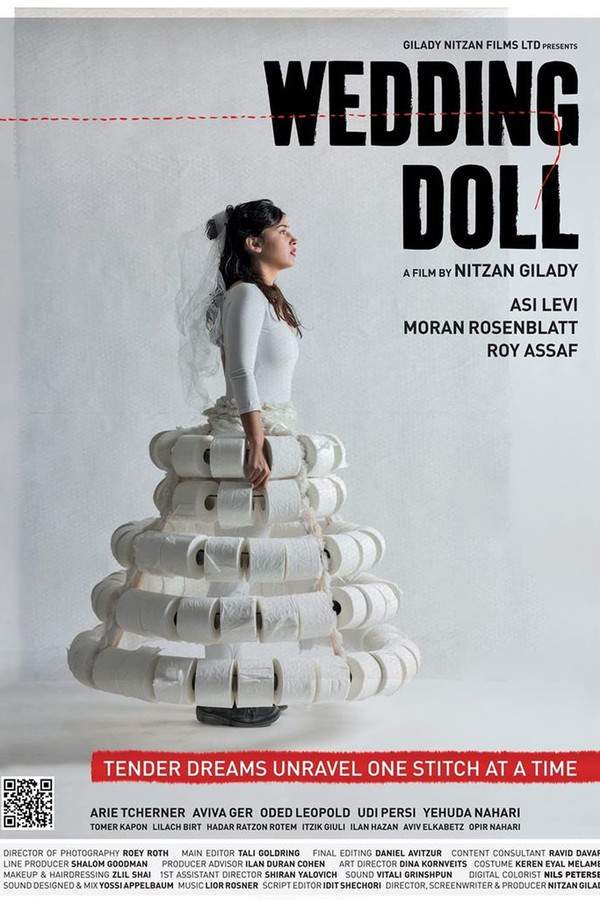
Wedding Doll 2016


Directed by

Nitzan Giladi
Made by

Strand Releasing
Where to Watch Wedding Doll
See current US streaming, rental, and purchase options for Wedding Doll (2016) via JustWatch.

Amazon Prime Video
HD
Amazon Prime Video with Ads
HD
Chai Flicks
HD
Strand Releasing Amazon Channel
HD
Fawesome
HD
Hoopla
SD
Amazon Prime Video Free with Ads
HD
Tubi TV
SD
Amazon Video
SD
Apple TV Store
HD
Fandango At Home
SD
Google Play Movies
SD
YouTube
SD Streaming availability powered by 
Wedding Doll Plot Summary
Read the complete plot summary and ending explained for Wedding Doll (2016). From turning points to emotional moments, uncover what really happened and why it matters.
Hagit, portrayed by Moran Rosenblatt, is a 24-year-old woman residing with her mother, Sarah, in the scenic town of Mitzpe Ramon. Living with a mild intellectual disability, which manifests in her slow speech and a somewhat stunted intellectual maturity, Hagit is constantly striving for independence. Employed at a modest toilet paper factory run by Arie (Arieh Tchernar) and his wife Pnina (Aviva Ger), she shares the workspace with Omri, the couple’s son, brought to life by Roy Assaf.
Sarah, a single mom grappling with the challenges of raising Hagit, works tirelessly as a hotel housekeeper. Her concern for Hagit’s well-being leads her to become overly protective, often frustrating her daughter who yearns to assert her independence in life. Despite Sarah’s attempts to pair her with someone of similar capabilities, like Elad (Aviv Elkabetz), Hagit’s heart is set on Omri, the object of her affection who shows her genuine kindness.
Adding complexity to their dynamic is Chen (Tomer Kapon), Hagit’s married brother, who remains distant. He believes it would be in Hagit’s best interest to transition to a group home, a sentiment echoed by Moshe, Sarah’s ex-husband.
Hagit’s burgeoning love for Omri, though tinged with the awareness of his pity, fuels her dreams of a future together. They often find solace sitting on cliffs overlooking the stunning Ramon Crater, sharing deep conversations and tender moments, such as light kisses. Hagit’s creative side shines through at the factory as she fashions a paper bride doll, while Omri crafts a groom from the same material—a beautiful representation of their growing bond.
From another angle, Sarah’s endeavors for her own romantic life are hindered by Hagit’s dependence on her. Her struggles to cultivate a relationship with Chaim (Oded Leopold) are intensified by her reluctance to leave Hagit alone for any length of time.
However, the factory’s financial woes weigh heavily on everyone involved, particularly with Arie contemplating a shutdown despite Omri’s passionate objections. In a bid to turn things around, Omri contemplates acquiring new equipment and borrows money from his friends, Eli (Yehuda Nahari Halevi) and Simon (Oudi Peri). However, Arie, upon witnessing a kiss between Hagit and Omri, insists that his son pursue studies in Canada, casting a shadow over their budding relationship.
As Omri prepares to leave, his friends organize a farewell gathering at the factory, which Hagit innocently misinterprets as a wedding celebration. Arriving in a wedding dress crafted from toilet paper rolls, she is met with mockery from Eli and Simon, while Omri, in his discomfort, fails to defend her, leading to a heart-wrenching climax where Hagit flees into the night, utterly broken.
Following a frantic search, Sarah finds Hagit on the roadside, and the two return home. In a poignant twist, Sarah resolves to place Hagit in a group home for her own safety. As they drive towards this new chapter, Hagit mournfully extends her paper bride doll out the window, watching as it drifts away—a powerful symbol of her relinquished dreams and unfulfilled yearnings for a life of love and partnership.
Wedding Doll Timeline
Follow the complete movie timeline of Wedding Doll (2016) with every major event in chronological order. Great for understanding complex plots and story progression.
Hagit and Sarah's Life
Hagit lives with her mother, Sarah, in the small town of Mitzpe Ramon. Sarah, a divorced single mother, works hard as a hotel housekeeper while being overly protective of Hagit due to her mild intellectual disability.
Hagit at the Factory
Hagit works at a small toilet paper factory owned by Arie and Pnina. The factory also employs Omri, their son, who is kind to Hagit, although his kindness is partly rooted in pity.
Hagit's Frustration
While Sarah tries to introduce Hagit to Elad, who has similar intellectual abilities, Hagit feels frustrated with her mother’s efforts. She desires independence and is determined to follow her own feelings, particularly her affection for Omri.
Brother's Indifference
Hagit's brother, Chen, who is married and has a child, shows little interest in helping care for Hagit. He believes that Hagit would be better off in a group home, a sentiment echoed by their father, Moshe.
Hagit and Omri's Bonding
Hagit develops a fantasy of marrying Omri, leading them to bond at the factory. They share moments of creativity, making a paper bride and groom, and often sit together on a cliff sharing intimate conversations and light kisses.
Sarah's Struggles
While dealing with her own challenges, Sarah attempts to build a romantic relationship with Chaim. Unfortunately, she finds it difficult to pursue her own happiness because of her obligations to care for Hagit.
Financial Woes at the Factory
The toilet paper factory encounters severe financial difficulties, prompting Arie to consider closing it. Despite Omri's protests and desire to save the factory, Arie insists on strict measures.
Hagit's Job Search
Desperate to find employment, Hagit applies for a job at a bridal salon in Be'ersheba, hoping to step into her dreams. Unfortunately, the owner rejects her, striking a blow to Hagit’s self-esteem.
Omri's Farewell Party
As tension builds, Omri announces his decision to leave for Canada, leading his friends to throw a farewell party at the factory. Hagit misinterprets the event as a wedding celebration and prepares accordingly.
Hagit's Heartbreak
At the farewell party, Hagit creates a wedding dress from toilet paper rolls, only to endure mockery from Omri’s friends. Heartbroken by Omri's failure to defend her, she flees into the night, feeling utterly desolate.
Sarah's Search
After Hagit runs away in heartbreak, Sarah rushes to find her daughter. The search is filled with tension as Sarah desperately hopes to bring Hagit back home safely.
Decision for a Group Home
In a moment of painful acceptance, Sarah decides that Hagit should be placed in a group home. Although Hagit does not resist, the decision signifies a heartbreaking shift in their relationship.
The Symbol of Letting Go
As they drive to the group home, Hagit holds her beloved paper bride doll out the window. In a symbolic act of letting go, she releases the doll, which represents her shattered dreams of marrying Omri.
Wedding Doll Characters
Explore all characters from Wedding Doll (2016). Get detailed profiles with their roles, arcs, and key relationships explained.
Hagit (Moran Rosenblatt)
Hagit is a determined 24-year-old woman with a mild intellectual disability who desires independence and love. Her naive yet hopeful nature drives her to pursue a relationship with Omri, which symbolizes her personal dreams. Despite her limitations, she shows a profound ability to love and yearn for connection.
Sarah (Assi Levy)
Sarah is Hagit's protective mother, navigating the challenges of single motherhood while caring for a daughter with a disability. Her overprotection stems from love but often hinders Hagit's growth. The conflict between her responsibilities and personal desires adds emotional depth to her character.
Omri (Roy Assaf)
Omri is a kind-hearted young man who works at the factory and becomes Hagit's romantic interest. His compassion towards Hagit is genuine, though tinged with pity, highlighting his internal conflict between societal expectations and his feelings for her. His character embodies the complexity of love in nuanced situations.
Wedding Doll Settings
Learn where and when Wedding Doll (2016) takes place. Explore the film’s settings, era, and how they shape the narrative.
Time period
The movie is set in contemporary times, reflecting present-day challenges faced by individuals with intellectual disabilities. It showcases modern social issues, including familial responsibilities, workplace dynamics, and personal dreams in a rapidly changing world.
Location
Mitzpe Ramon, Ramon Crater, Be'ersheba
Mitzpe Ramon is a small town in Southern Israel, nestled next to the breathtaking Ramon Crater, a geological wonder. The town is known for its tranquil atmosphere and desert landscapes, often attracting tourists and artists. The local toilet paper factory serves as the main workplace for the characters, highlighting the tight-knit community.
Wedding Doll Themes
Discover the main themes in Wedding Doll (2016). Analyze the deeper meanings, emotional layers, and social commentary behind the film.
💔
Love & Heartbreak
The theme of love and heartbreak is central to the story, as Hagit dreams of marrying Omri, who represents her hopes and aspirations. However, their relationship is complicated by societal perceptions and personal limitations. The emotional journey reflects the struggle between dreams and reality, leading to bittersweet moments.
🏠
Family Dynamics
The interplay of family dynamics is significant in 'Wedding Doll,' particularly the protective nature of Sarah towards Hagit. The tension between familial duties and personal desires creates a poignant backdrop, highlighting how family shapes individual choices and outcomes.
📭
Dreams & Aspirations
Hagit's dream of marriage and independence symbolizes the universal quest for self-actualization. Her journey illustrates the challenges faced by those with disabilities in pursuing their aspirations while contending with societal limitations and personal circumstances.

Coming soon on iOS and Android
The Plot Explained Mobile App
From blockbusters to hidden gems — dive into movie stories anytime, anywhere. Save your favorites, discover plots faster, and never miss a twist again.
Sign up to be the first to know when we launch. Your email stays private — always.
Explore the mobile appWedding Doll Spoiler-Free Summary
Discover the spoiler-free summary of Wedding Doll (2016). Get a concise overview without any spoilers.
In the starkly beautiful landscape of Mitzpe Ramon, a modest town clinging to the rhythm of a single toilet‑paper factory, everyday life hums with quiet determination. The community is tightly knit, its conversations often drifting between the desert’s sweeping horizons and the hum of machinery that keeps the local economy afloat. Amidst this backdrop, a gentle longing for something more stirs beneath the surface, giving the town an undercurrent of hopeful tension.
Hagit, a spirited 24‑year‑old with a mild intellectual disability, lives with her mother in a modest home perched on the edge of the crater. Her speech may be measured, but her desire for independence is unmistakable, and she yearns to step beyond the caretaking that has defined much of her existence. Working on the factory floor, she finds solace in small acts of creativity, shaping moments of beauty from the very material that sustains the town.
Sarah, Hagit’s single mother, balances the demands of a demanding house‑keeping job with an ever‑present worry for her daughter’s future. Protective yet yearning for her own companionship, she navigates the delicate dance between nurturing Hagit’s fledgling autonomy and grappling with her own solitary heart. Their relationship is a tender, sometimes fraught, tableau of love, responsibility, and unspoken hopes.
The factory, overseen by Arie and his wife Pnina, is more than just employment; it is the community’s lifeline. Within its walls, Omri, the owners’ son, shares the same work‑bench as Hagit, offering quiet kindness that blossoms into a secret, tender affection. As whispers of financial strain begin to echo through the corridors, both families feel the subtle pressure of uncertain horizons. The film captures this intimate blend of personal aspiration and communal fragility, painting a portrait of love and ambition that glimmers against the desert’s endless night.
Featured on this page

What's After the Movie?
Not sure whether to stay after the credits? Find out!
Check out our other apps:

SAT Sphere
Build confidence for the Digital SAT.

Mori Atlas
Discover wild places worth protecting.

Luntero
Search smarter for a home in Amsterdam.

Plot Explained
Unravel movie endings and hidden clues.

Pokechamp
Dive into Pokémon data and battle logic.

Driving Theory
Get ready for your European theory test.

Movie Dust
Plan your next cinema trip with ease.

Musemap
Find art and culture as you travel.

Selkobase
Compare credentials before committing.

Local Manual
Turn an unfamiliar country into practical next steps.

Lernavi
Compare school systems before your next move.

GymRoam
Find a workout stop wherever your plans take you.
Explore Our Movie Platform
New Movie Releases (2026)
Famous Movie Actors
Top Film Production Studios
Movie Plot Summaries & Endings
Major Movie Awards & Winners
Best Concert Films & Music Documentaries
Movie Collections and Curated Lists
© 2026 What's After the Movie. All rights reserved.
Privacy Policy