
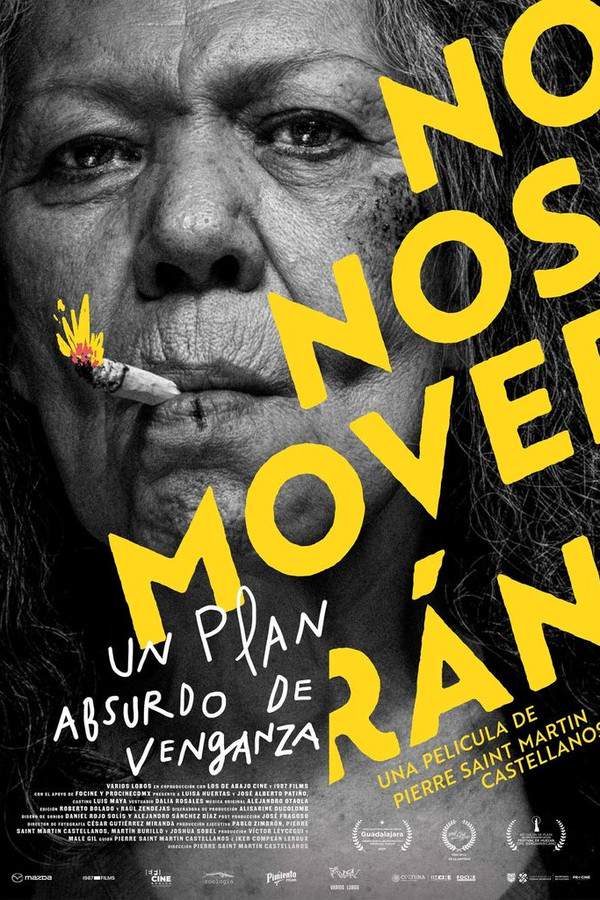
What Is We Shall Not Be Moved About?
The premise of We Shall Not Be Moved in 312 words, with nothing given away. The full story follows below.
The film opens in the shadow of Mexico City’s bitter recent memory, where grainy archival footage of the 1968 student protests flickers against the present‑day skyline of Tlatelolco. The streets hum with the sighs of a generation that never fully recovered, and the lingering echo of chants becomes a constant, uneasy undertone. Within this landscape, the story breathes through the quiet corridors of an aging apartment building, a place that has become both sanctuary and reminder of a trauma that refuses to fade.
Socorro, a septuagenarian lawyer, has turned her professional rigor into a personal crusade, haunted by the unsolved murder of her brother during the infamous massacre. She lives in a modest flat with her sister Esperanza, whose relationship with her is marked by worn‑out affection and unspoken resentment. Their son Jorge bears the weight of his mother’s obsession, his own stability eroding under the constant pressure of an inherited grief. A softer, more hopeful thread runs through his marriage to Lucía, whose pregnancy and yearning for a future beyond the shadow of the past hint at the possibility of renewal. The household, though bound by blood, vibrates with tension, each member navigating a delicate balance between loyalty and self‑preservation.
When a cryptic clue finally surfaces, the quiet determination that has defined Socorro’s life ignites into a relentless pursuit. The promise of uncovering the identity of the former soldier who took her brother’s life becomes a catalyst that threatens to upend the fragile equilibrium of her family and her own frail health. The tone is solemn yet charged, a study in how grief can sharpen resolve while simultaneously eroding the ties that sustain us. As the narrative unfurls, the fading strains of “No nos moverán” linger in the background, a mournful hymn that underscores the film’s meditation on memory, justice, and the stubborn persistence of those who refuse to be moved.
What Happens in We Shall Not Be Moved?
The complete story of We Shall Not Be Moved, from the first scene to the last, in 506 words (about 2 minutes). Spoilers throughout. Names in the text link to 3 cast member pages.
Spoilers ahead
Opening with archival footage from the documentary El Grito, the film situates the 1968 Mexican student movement within the broader history of state repression that culminated in the Tlatelolco massacre, setting a weighty historical backdrop for a personal quest for justice.
Socorro, Luisa Huertas in her sixties, is a seasoned lawyer who has spent decades trying to identify the soldier responsible for her brother Coque’s murder on October 2, 1968. Living in a quiet, tightly knit apartment in Tlatelolco with her sister Esperanza, she navigates strained ties with Esperanza and with her son Jorge, who carries the burden of her long-ignored trauma. There is a softer grove of warmth between Socorro and Jorge’s wife, Lucía, Agustina Quinci, a quiet beacon amid the storm of memories. On what would have been Coque’s seventy-fifth birthday, a long-lost package arrives and reveals the name of the soldier who appears in the final photograph of her brother before his death: Juan Agúndez.
Driven by a consuming sense of reckoning, Socorro tracks Agúndez with the help of the building’s porter, José Alberto Patiño who plays Siddartha. To push the plan forward, she coerces a former superior—now a magistrate in Mexico City—into providing contact information for a hitman. As her health betrays her—partial deafness and recurrent fainting spells—the burden of the plan grows heavier: she mortgages her apartment and arranges Agúndez’s kidnapping. Meanwhile, Lucía, who is pregnant and uncertain about her future due to Jorge’s instability, makes a painful choice to leave him and return to Argentina without disclosing the pregnancy.
When the accomplices falter, Socorro confronts the kidnapped man herself but collapses during the encounter. She wakes up in a hospital and soon learns that he is the one who brought her there. The two share a taxi, and he lays out his version of events. He denies being the soldier in the photograph, yet admits to having participated in the massacre under orders from a superior officer, even offering her a gun to kill him. Socorro refuses, insisting that true justice would have meant bringing him to prison.
Back at home, Socorro begins to mend the frayed threads of family life as she reconciles with Esperanza. The memory of Coque and the events of 1968 loom large as they reflect on the toll of a violence that fractured multiple generations. In a final act that blends memory and defiance, Socorro burns the photograph of her brother while singing No nos moverán, a gesture of resilience that closes the film with a quiet, stubborn hope.
The narrative weaves together personal grief and national history, showing how one woman’s pursuit of justice intersects with the destinies of those around her. The film remains intimate in its focus on legacy, guilt, and the possibility—and limits—of reparation within a society still haunted by the echoes of the 1968 movement. Through Socorro’s determined arc, viewers are invited to consider what justice means when legal avenues feel blocked, and to witness a restrained but powerful assertion of autonomy in the face of systemic memory and trauma.
We Shall Not Be Moved Timeline: Every Key Event in Order
13 key events in the order they happen, from “Opening archival footage setting the historical context” to “Conclusion: burning the photograph and singing No nos moverán”. 13 events name a place, across 10 locations.
- 1
Opening archival footage setting the historical context
The film opens with archival footage from El Grito, signaling the 1968 Mexican student movement. It introduces the repression that culminated in the Tlatelolco massacre, establishing the trauma that frames the story. The historical context foreshadows Socorro's lifelong quest for accountability.
When:1968 Where:Tlatelolco, Mexico City
- 2
Socorro's decades-long quest begins in isolation
Socorro, a lawyer in her sixties, has spent decades trying to identify the soldier who murdered her brother Coque on October 2, 1968. She lives in isolation in an apartment in Tlatelolco, sustaining strained relations with her sister Esperanza and her son Jorge. The weight of unresolved trauma shapes every interaction and decision.
When:present (after 1968) Where:Tlatelolco, Mexico City
- 3
Package reveals the name of the soldier: Juan Agúndez
On Coque's seventy-fifth birthday, a long-lost package arrives and reveals the name of the soldier who appears in Coque's final photograph: Juan Agúndez. This discovery becomes the catalyst for Socorro's plan to seek vengeance. The revelation shifts the narrative from memory to active pursuit.
When:Coque's 75th birthday (present timeline) Where:Socorro's apartment, Tlatelolco
- 4
Socorro enlists Siddartha to locate Agúndez
To advance her plan, Socorro tracks down Agúndez with the help of Siddartha, the building's porter. The search takes them through the corridors of the building and into the surrounding city. The alliance marks the move from obsession to a concrete course of action.
When:shortly after birthday Where:Tlatelolco, Mexico City
- 5
A magistrate is coerced to share a hitman contact
Socorro blackmails a former superior who has become a magistrate in Mexico City to obtain the contact information for a hitman. The tactic demonstrates the lengths she will go to secure justice outside the official system. Her willingness to bend the law foreshadows the escalating danger.
When:around the same period Where:Mexico City
- 6
The plan expands: kidnapping the suspect
With funds secured by mortgaging her apartment, Socorro arranges the kidnapping of Agúndez. The operation pulls in additional accomplices and tightens the net around the target. The act intensifies the moral stakes as she pursues a personal form of justice.
When:shortly after Where:Socorro's apartment area; kidnapping site
- 7
Lucía leaves Jorge; pregnancy disclosed to the future
Lucía, pregnant and uncertain about the future with Jorge, leaves him and returns to Argentina without telling him about the pregnancy. Her departure compounds the family tensions and leaves Jorge to confront his own instability. The personal upheaval mirrors the larger political trauma weighing on the characters.
When:concurrent with the kidnapping plot Where:Mexico City / Argentina
- 8
The accomplices falter; Socorro confronts the kidnapped man
As the plan unravels, the accomplices falter, and Socorro confronts the kidnapped man herself. She collapses during the confrontation, overwhelmed by the strain and danger. The moment marks a turning point from calculated vengeance to vulnerable mortality.
When:midway through the events Where:Mexico City; near the kidnapping site
- 9
Socorro wakes in hospital and learns the truth
She wakes up in a hospital and learns that the kidnapper was the one who brought her there, complicating the moral calculus. The hospital scene reframes her quest from certainty to uncertainty about who deserves justice. The revelation drives the next phase of her confrontation with the man.
When:immediately after awakening Where:Hospital
- 10
The taxi conversation: the accused reveals his version
The two share a taxi where the man explains his version of events. He admits to participating in the massacre under orders from a superior officer and denies being the soldier in the photograph. He even offers Socorro a gun to kill him, testing her resolve.
When:after hospital Where:Taxi, Mexico City
Show the other 3 events of We Shall Not Be Moved Hide the last 3 events
- 11
Socorro refuses revenge; justice means prison
Socorro rejects the offer of killing him, arguing that true justice would have placed him in prison. The refusal reframes vengeance as a pursuit of accountability within the law rather than personal retribution. Her stance preserves her humanity even as the wound remains.
When:after taxi conversation Where:Taxi (en route)
- 12
Return home and reconciliation with Esperanza
Socorro returns home and slowly reconciles with Esperanza. The sisters reflect on Coque's death and the broader events of 1968, indicating a fragile healing of the family rift. The home becomes a space where memory and memory-making shift toward resolution.
When:after taxi conversation Where:Socorro's apartment, Tlatelolco
- 13
Conclusion: burning the photograph and singing No nos moverán
In the final moment, Socorro burns the photograph of Coque as a act of release and makes peace with the past. She and Esperanza sing No nos moverán, signaling resilience and solidarity in the face of oppression. The film closes with a note of quiet defiance that links personal memory to collective history.
When:end of film Where:Socorro's apartment
Who Are the Main Characters in We Shall Not Be Moved?
6 characters, among them Socorro, Lucía and Jorge: who each one is and the part they play in the story. 5 of them link to the actor’s page.
- S
Socorro
Played by Luisa Huertas
A lawyer in her sixties who has spent decades seeking the soldier responsible for her brother Coque's murder on October 2, 1968. She lives in isolation in a Tlatelolco apartment with her sister Esperanza, and her unresolved trauma strains her relationships with Esperanza and her son Jorge. Despite partial deafness and fainting spells, she remains fiercely determined to uncover the truth and confront those connected to the massacre.
- 🧠 Trauma
- ⚖️ Justice seeker
- 👵 Elderly
- L
Lucía
Played by Agustina Quinci
Lucía is Jorge's wife and is pregnant; she is uncertain about her future due to Jorge's instability and leaves him, returning to Argentina without revealing her pregnancy. Her personal decisions underscore the human costs of political violence and the collateral damage on families.
- 🤰 Pregnant
- 🧭 Uncertain future
- ✈️ Cross-border life
- J
Jorge
Played by Pedro Hernández
Socorro's son, who grew up under the weight of his mother's unresolved trauma. His instability and volatile behavior strain family ties and complicate the maternal pursuit of justice surrounding the past.
- ⚠️ Instability
- 👨👩👦 Family conflict
- 🗺️ Uncertainty
- S
Sidartha
Played by José Alberto Patiño
The building's porter who assists Socorro in tracking down Agúndez; a pragmatic ally who provides a grounded, street-level perspective to the pursuit of justice.
- 🤝 Helpful
- 🗝️ Ally
- 🏢 Urban life
- DC
Dr. Candiani
Played by Juan Carlos Colombo
A former superior, now a magistrate in Mexico City, whom Socorro coerces to obtain contact information for a hitman. He represents the entanglement of power, law, and moral ambiguity within the justice system.
- 🏛️ Magistrate
- 💼 Power
- 🤔 Moral ambiguity
- C
Coque
Socorro's brother, murdered during the 1968 events; his death is the catalyst for Socorro's decades-long pursuit of truth and accountability.
- 🎗️ Loss
- 🕯️ Memory
- 🗓️ 1968
Where and When Is We Shall Not Be Moved Set?
We Shall Not Be Moved is set in Tlatelolco, Mexico City and Argentina (1960s and present day). Here is why the time and place matter to the story.
When
1960s and present day
The 1960s era anchors the core events, notably the October 2, 1968 massacre that shapes Socorro's lifelong quest. In the present day, Socorro’s aging health and her ongoing pursuit of truth drive the emotional arc. The juxtaposition of past and present emphasizes how history reverberates through personal lives.
Where
Tlatelolco, Mexico City, Argentina
Primarily set in a cramped apartment in the Tlatololco (Tlatelolco) district of Mexico City, the film centers on memory and the pursuit of justice. The opening archival footage ties the characters’ lives to the 1968 student movement and the Tlatelolco massacre. The story also follows Lucía’s journey to Argentina, showing how private lives cross borders in the wake of political violence.
- 🏙️ Urban
- 🗺️ Historical
- 🕯️ Personal
What Are the Themes of We Shall Not Be Moved?
3 ideas the story keeps returning to, among them Truth & Memory, Justice vs Revenge and Reconciliation.
-
01
Truth & Memory
The film centers on uncovering the identity of a soldier from the 1968 massacre and the decades-long effort to bear witness. Archival footage and the final photograph act as catalysts for memory and accountability. Through Socorro's investigation, the movie explores how memory shapes identity and justice in a society scarred by political violence.
-
02
Justice vs Revenge
Socorro's plan to abduct and punish a suspect tests the line between vengeance and justice. She ultimately refuses to kill, insisting that true justice belongs in prison and within the bounds of law. The film presents a moral dilemma about how a society should respond to state violence.
-
03
Reconciliation
The narrative ends with Socorro reconciling with Esperanza and burning the photograph of her brother, signaling healing through shared memory. The act of singing 'No nos moverán' underscores resilience and the communal memory that sustains advocacy for justice. The theme emphasizes restorative bonds over cycles of retribution.
What Kind of Film Is We Shall Not Be Moved?
Dark in tone, with steady pacing and a moderate story, going by the plot summary.
- Tone
- Dark
- Pacing
- Steady
- Story
- Moderate
- Intensity
- High
- Ending
- Bittersweet
A heavy, melancholic drama about one woman's obsessive quest for revenge that reveals how unresolved trauma can fracture families across generations.
- obsessive
- melancholic
- tense
- somber
- resigned
- traumatic
- revenge quest
- historical trauma
- family fracture
- unresolved grief
Content notes: historical massacre, kidnapping, revenge plot, traumatic loss.
Quiz
How well do you remember We Shall Not Be Moved? Test yourself on the story.
