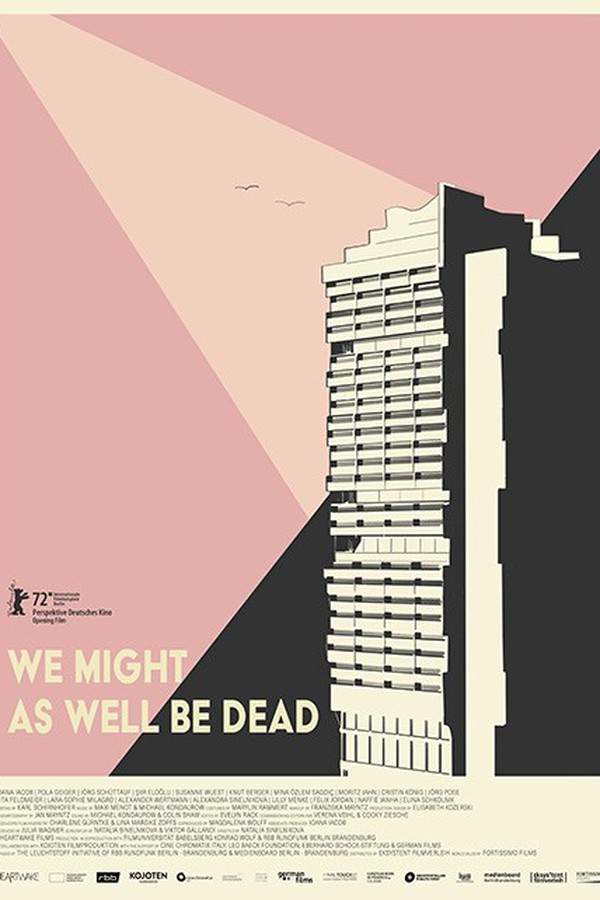
We Might As Well Be Dead 2023

Directed by

Natalia Sinelnikova
Made by

Aspect Ratio Film
Where to Watch We Might As Well Be Dead
See current US streaming, rental, and purchase options for We Might As Well Be Dead (2023) via JustWatch.



Streaming availability powered by 
We Might As Well Be Dead Plot Summary
Read the complete plot summary and ending explained for We Might As Well Be Dead (2023). From turning points to emotional moments, uncover what really happened and why it matters.
In a tranquil sanctuary surrounded by a lush, fenced forest, the inhabitants of a high-rise residential building enjoy a harmonious existence, filled with joyful communal celebrations and shared experiences. Among them is Anna Wilczyńska, a Polish woman who acts as the community’s gatekeeper, broadcasting important announcements and weather updates through the public address system.
However, the peace of this idyllic setting shatters when Gerti’s cherished dog goes mysteriously missing. The disappearance sets off a chain reaction of events that threatens to unravel their utopia. Anna’s teenage daughter, Iris Anna Wilczyńska, begins to believe that her ill fortune has summoned a malevolent presence, attributing the missing dog to the cursed Evil Eye. In her desperation, Iris locks herself in the bathroom, convinced that her seclusion will protect others from any misfortune that might befall them. This self-imposed isolation only deepens her fears, as she is plagued by night terrors and further withdraws from the world around her.
Amidst Anna’s efforts to calm her daughter and monitor a suspicious couple, she inadvertently becomes the target of paranoia, misidentified as a burglar and voyeur, thereby igniting fear throughout the complex. Meanwhile, despite Gerti’s claims of discovering another dead animal that he insists is his missing dog, anxiety permeates the community, replacing their usual tranquility with suspicion and distrust.
As tensions rise, some residents start doubting Anna’s ability to maintain their safety, spurred by Gerti’s incessant rumors that the true culprit may be lurking among them. This culminates in the establishment of a neighborhood watch, which prescribes a new vetting process for all residents, a development that fills Anna with trepidation.
In a frantic attempt to regain control, Anna devises a plan to frame Wolfram Mantel, an aspiring poet who peddles his work in the elevator during the day. When this deceit is uncovered, he becomes the scapegoat, ultimately forced out of the building by the vigilant residents. However, Anna’s fleeting sense of safety is again compromised, as the scrutiny of all residents continues.
The climax arrives when a fierce argument between Anna and Iris escalates into a loud altercation, resulting in their eviction from the complex. As they exit, they meet the Richards family, a familiar presence from earlier in their lives, once denied entry into the sanctuary, setting the scene for unforeseen developments in their intertwined fates.
We Might As Well Be Dead Timeline
Follow the complete movie timeline of We Might As Well Be Dead (2023) with every major event in chronological order. Great for understanding complex plots and story progression.
Introduction to the Sanctuary
The story begins in a tranquil sanctuary, where residents of a high-rise building coexist in a harmonious and joyful environment. This idyllic setting is characterized by communal celebrations and shared experiences among its inhabitants.
Anna's Role as Gatekeeper
Anna Wilczyńska, a Polish woman and the community gatekeeper, plays a pivotal role in maintaining order. She broadcasts important announcements and weather updates, ensuring that the residents are informed and connected.
The Mysterious Disappearance
Tragedy strikes when Gerti's beloved dog goes missing, a development that shatters the peace of the sanctuary. This event is the catalyst for a series of upheavals that unravel the community's previously idyllic existence.
Iris's Belief in the Evil Eye
Iris Anna Wilczyńska, Anna's teenage daughter, becomes increasingly convinced that her bad luck has summoned a malevolent force responsible for the dog's disappearance. Her fears lead her to lock herself in the bathroom, believing isolation will protect others from misfortune.
Iris's Night Terrors
As Iris keeps herself isolated, her fears manifest into night terrors, further deepening her disconnect from reality and the community around her. This mental turmoil affects both her and her mother, adding strain to their relationship.
Anna's Growing Paranoia
While trying to manage the chaos and calm her daughter, Anna inadvertently attracts the attention of suspicious residents. Misidentified as a burglar and voyeur, she becomes a target of paranoia, which stokes fear among the inhabitants.
Gerti's Rumors and Community Anxiety
Gerti claims to have found another dead animal, insisting it is his missing dog, and spreads rumors that the real culprit is hiding among them. This leads to an atmosphere of anxiety that disrupts the previously harmonious community.
Establishment of the Neighborhood Watch
In response to the rising tension and distrust, the residents decide to form a neighborhood watch. The new vetting process for all residents raises alarm in Anna, who fears it may further erode the trust and security within the community.
Anna's Deceptive Plan
Desperate to regain control, Anna devises a plan to frame Wolfram Mantel, an aspiring poet. This attempt at manipulation backfires spectacularly when her deceit is unraveled, leading to severe consequences for Wolfram.
Scapegoating Wolfram
After uncovering Anna's plot, the vigilant residents turn on Wolfram, forcing him out of the building as a scapegoat. Anna finds brief relief, but the ongoing scrutiny of all residents leaves her feeling vulnerable.
The Climactic Argument
Tensions reach a peak when Anna and Iris engage in a heated argument, which escalates into a loud altercation. This conflict ultimately results in their eviction from the sanctuary they once called home.
Encounter with the Richards Family
As Anna and Iris leave the building, they come across the Richards family, who were denied entry into the sanctuary earlier in their lives. This encounter hints at the intertwining of their fates and potential future developments.
We Might As Well Be Dead Characters
Explore all characters from We Might As Well Be Dead (2023). Get detailed profiles with their roles, arcs, and key relationships explained.
Anna Wilczynska
Anna serves as the community's gatekeeper, overseeing the residents' interactions and broadcasting vital information. Her deep care for her daughter and the community fuels her efforts to restore peace amid rising paranoia. Despite her good intentions, Anna grapples with the growing mistrust of those around her.
Iris Anna Wilczynska
Iris is Anna's teenage daughter, whose belief in a malevolent curse jeopardizes her mental well-being and strains her relationship with her mother. As she succumbs to isolation and fear, her character arc highlights the impact of external chaos on youth and family dynamics.
Wolfram Mantel
Wolfram is an aspiring poet caught in the community's web of paranoia. His character symbolizes the vulnerability of individuals in a collective space as he becomes a scapegoat for the residents' fears. His artistic aspirations clash with the harsh reality of being mistrusted and ultimately ostracized.
Gerti Posner
Gerti is a resident whose attachment to his lost dog ignites initial conflicts within the community. His fervent claims and panic about the mysterious disappearance amplify the anxiety among residents, illustrating how personal loss can trigger widespread fear.
We Might As Well Be Dead Settings
Learn where and when We Might As Well Be Dead (2023) takes place. Explore the film’s settings, era, and how they shape the narrative.
Time period
The film's events appear to unfold in contemporary times, reflecting modern societal issues concerning community trust, paranoia, and the effects of isolation. The characters' interactions and circumstances resonate with familiar current-day themes, though no specific timeframe is detailed.
Location
high-rise residential building, fenced forest
The story unfolds in a high-rise residential building nestled within a serene, fenced forest, providing a peaceful retreat for its inhabitants. Known for its harmonious atmosphere, this community values joyful celebrations and a collective living experience. However, the tranquil setting quickly becomes a backdrop for anxiety and paranoia as events take a dark turn.
We Might As Well Be Dead Themes
Discover the main themes in We Might As Well Be Dead (2023). Analyze the deeper meanings, emotional layers, and social commentary behind the film.
🕵️♂️
Suspicion
The theme of suspicion permeates the narrative as fear and uncertainty take hold of the community. Incidents like the missing dog lead to paranoia, causing residents to question each other's motives. This atmosphere undermines their once harmonious existence, illustrating how quickly trust can erode in a tightly-knit environment.
👩👧
Family Strain
Anna's relationship with her daughter Iris showcases the theme of family strain exacerbated by external pressures. As Iris's fear of the supposed curse grows, Anna struggles to maintain both her authority and her daughter's trust. Their conflict symbolizes the challenges families face amid societal tensions.
👥
Community Dynamics
The film explores the dynamics of community living, highlighting the balance between safety and suspicion. Initial communal joy deteriorates into fear and isolation as residents band together in misguided attempts to protect themselves. The shift from unity to division reflects the fragile nature of human relationships in close quarters.

Coming soon on iOS and Android
The Plot Explained Mobile App
From blockbusters to hidden gems — dive into movie stories anytime, anywhere. Save your favorites, discover plots faster, and never miss a twist again.
Sign up to be the first to know when we launch. Your email stays private — always.
Explore the mobile appWe Might As Well Be Dead Spoiler-Free Summary
Discover the spoiler-free summary of We Might As Well Be Dead (2023). Get a concise overview without any spoilers.
In a secluded forest clearing, a sleek high‑rise rises like a glass‑crowned sanctuary, its residents living behind a rhythm of shared celebrations and the gentle hum of communal life. The building’s design promises safety and harmony, its polished corridors and sunlit terraces framing a world that feels almost curated for peace. Yet beneath the polished surface, the very act of living so closely together keeps an undercurrent of quiet observation, a reminder that perfection can be as fragile as the glass that reflects it.
Anna serves as the building’s gatekeeper, a calm voice that drifts through the public‑address system with weather updates, notices, and the occasional reassurance. Her role blends the responsibilities of a security officer with the intimacy of a neighbor, making her both a guardian and a familiar presence in the lives of those she watches over. At home, she navigates the delicate balance of motherhood with her teenage daughter, Iris, whose restless curiosity often clashes with the orderly world her mother helps maintain.
When a beloved dog vanishes from the tranquil community, the incident ripples through the high‑rise like a sudden chill. What began as an everyday loss quickly morphs into an unsettling question that pries open the residents’ latent anxieties. Whispers travel the elevators, and the previously unshakable sense of safety begins to feel porous, hinting at the hidden tensions that have long lingered beneath the calm façade.
Against this backdrop, Anna finds herself striving to keep order as fear silently spreads, forcing her to confront the invisible cracks in the utopia she has helped to uphold. The situation tests her resolve, exposing how quickly a tightly knit enclave can turn inward, questioning the very foundations of trust, security, and the quiet certainties that once defined life within the glass walls.
Featured on this page

What's After the Movie?
Not sure whether to stay after the credits? Find out!
Check out our other apps:

SAT Sphere
Build confidence for the Digital SAT.

Mori Atlas
Discover wild places worth protecting.

Luntero
Search smarter for a home in Amsterdam.

Plot Explained
Unravel movie endings and hidden clues.

Pokechamp
Dive into Pokémon data and battle logic.

Driving Theory
Get ready for your European theory test.

Movie Dust
Plan your next cinema trip with ease.

Musemap
Find art and culture as you travel.

Selkobase
Compare credentials before committing.

Local Manual
Turn an unfamiliar country into practical next steps.

Lernavi
Compare school systems before your next move.

GymRoam
Find a workout stop wherever your plans take you.
Explore Our Movie Platform
New Movie Releases (2026)
Famous Movie Actors
Top Film Production Studios
Movie Plot Summaries & Endings
Major Movie Awards & Winners
Best Concert Films & Music Documentaries
Movie Collections and Curated Lists
© 2026 What's After the Movie. All rights reserved.
Privacy Policy