
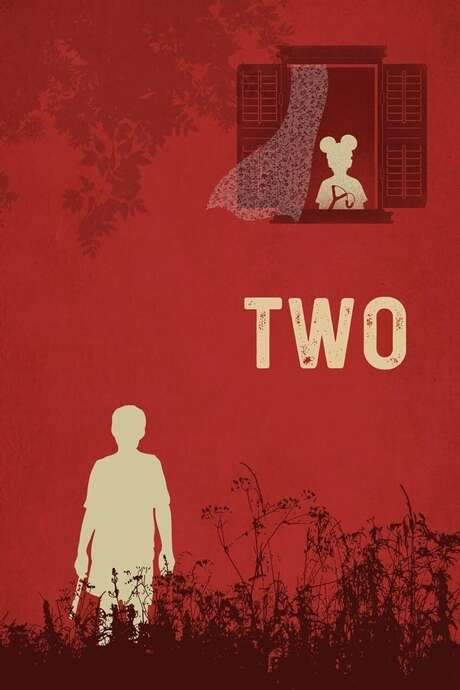
What Is Two About?
The premise of Two in 324 words, with nothing given away. The full story follows below.
In a quiet, wordless fable, the screen opens on a cramped shantytown and a polished, sun‑splashed interior, each framed through a single window that separates two worlds. The film lets objects speak: rows of glossy toys, a sparkling bottle, and a simple handmade flute become the language of privilege and perseverance. The atmosphere is deliberately still, inviting the viewer to linger on the stark visual contrast between excess and modesty, while a faint hum of distant life underscores the tension that builds without a single line of dialogue.
Ravi Kiran appears on the wealthy side, a child surrounded by an impressive array of toys that seem to vibrate with the confidence of a first‑world existence. Across the pane, the street child watches from his modest dwelling, his only instrument a humble flute that carries a quiet, persistent melody. Their silent gazes meet, setting the stage for an unspoken competition that unfolds through a series of playful challenges. The tone remains playful yet edged with a subtle undercurrent of rivalry, as each child attempts to assert his own reality through the games they choose.
The film’s visual storytelling turns the ordinary—stacked toys, makeshift masks, a slingshot—into symbols of larger social forces, hinting at the clash between abundance and scarcity without ever naming it. A kite drifts overhead, a kite string glints in the wind, and the children’s attempts to claim it become a metaphor for reach and control. The contrast between the noisy, mechanical cacophony of indoor playthings and the lone, resonant notes of a flute emphasizes how different worlds can coexist, each louder in its own sphere.
Through its minimalist style and careful composition, the short film invites viewers to contemplate the nature of power, the weight of privilege, and the quiet persistence of those who are often unheard. The rivalry remains poised, leaving the audience to wonder which voice will ultimately carry farther across the thin glass that both separates and connects them.
What Happens in Two?
The complete story of Two, from the first scene to the last, in 382 words (about 2 minutes). Spoilers throughout. Names in the text link to 1 cast member page.
Spoilers ahead
From the opening frames, a rich kid Ravi Kiran is shown surrounded by toys and a bottled drink, a visual cue for a privileged, imperialist First World. As he toys, a sound pulls him to the window where a slum kid plays a flute, a quiet reminder of the exploited Third World. To display his power, the rich kid blasts a loud note from a toy trumpet, drowning out the flute’s melody. The street kid then retreats to his hut and returns with a handmade mask and a bow and arrow, and the rich kid responds by revealing his battery-powered monkey drummer toy. The street kid comes back out, and the rich kid escalates the display by wearing various masks — including a demon, a Native American, and a Cowboy — while brandishing toy swords, spears, and guns. Disappointed, the street kid withdraws again to his hut as the rich kid resumes his noisy parade, a self-satisfied gleam lingering in his eyes.
During play, the rich kid notices a kite fluttering in the sky and rushes to the window to catch sight of the flyer, the street kid holding the kite string, Manja. Enraged by the other boy’s happiness, he pulls out a slingshot in a crude attempt to strike the kite. When the aim misses, he switches to a toy air-rifle and finally brings the kite down, taunting the poor street kid with cruel satisfaction. The street kid returns to his hut with tears in his eyes and the torn kite in hand, giving up on any hope of friendship.
Back inside, the rich kid’s toys contribute a chaotic orchestra of sounds, each one making its own distinctive noise. The film ends on a note of quiet persistence as the distant sound of a flute lingers despite the clamor, inviting a reflection on whose world is louder and who is heard. Set against the backdrop of the Vietnam War era, the film invites a stark reading: the rich kid and the street kid can be seen as personifications of the United States and Vietnam, two forces bound by history, power, and a fragile humanity.
The final frames leave a lasting impression of power, privilege, and the perils of escalating conflict, all conveyed through a child’s play that never quite grows up.
Two Timeline: Every Key Event in Order
12 key events in the order they happen, from “Two worlds collide at the window” to “Closing note and reflection”. 12 events name a place, across 10 locations.
- 1
Two worlds collide at the window
A rich kid sits among his toys with a bottled drink, representing a privileged world. He overhears a sound and looks toward the window to see a slum kid playing a flute, signaling the encounter between privileged and exploited worlds. This moment foreshadows the power struggle that will follow.
Where:Rich kid's room/window
- 2
Toy show of power
The rich kid lifts his toy arsenal to dominate the room with noise and spectacle. The street kid returns from his hut with a homemade mask and a bow and arrow, while the rich kid introduces a battery-powered monkey drummer to outmatch him. The display reveals how each boy tries to control the other's attention.
Where:Window and adjacent room/outside area
- 3
Masks and intimidation
The two children escalate by using masks, the street kid revealing a homemade mask and the rich kid wearing several masks including a demon, Native American, and Cowboy while brandishing toy weapons. Their performance turns into a show of intimidation and dominance rather than friendship. The dynamic underscores the growing rift between them.
Where:Outside huts/window
- 4
Disappointment and retreat
Feeling mocked, the street kid returns to his hut with tears in his eyes. The rich kid resumes playing with his toys, savoring the sadistic sense of control he has over the moment. The exchange ends with both retreating to their respective spaces, leaving the window as a dividing line.
Where:Outside huts/window
- 5
Kite sighting and challenge
The rich kid spots a kite flying in the sky and rushes to the window to identify the flyer. He sees the slum kid holding the kite string, a sign of pride and freedom. The moment sparks a desire to strip away that freedom through a show of power.
Where:Window overlooking the kite in the sky
- 6
Destruction attempt begins
He takes aim with a slingshot and tries to shoot the kite from above. When the aim fails, he switches to a toy air rifle in a bid to bring the kite down. The action is a cruel assertion of dominance over the other child.
Where:Outside window/sky area
- 7
Kite falls and taunt
After a successful shot, the kite is downed and the rich kid taunts the street kid with the fallen symbol of his hope. The street kid returns to his hut with tears, the torn kite clutched in his hand. The moment crystallizes the brutal power imbalance between them.
Where:Sky above/slum area
- 8
Return to noise
Back inside, the rich kid returns to his endless toy play, the sounds of each device filling the space. He seems to find solace in the cacophony, as if noise proves control. The street kid remains outside, dealing with loss and the memory of the kite.
Where:Rich kid's room
- 9
Persistent flute and memory
Even amid the noise, the flute from the street kid quietly echoes through the window. The rich kid cannot shake the reminder of what has happened and what he has done. The memory and music haunt him as the toys keep clattering.
Where:Room/window
- 10
Toy tower crash
A toy robot in the room collides with a tower of other toys, causing the tower to fall to the ground. The collision serves as a symbolic collapse of the rich kid's constructed order. He watches the mayhem and begins to confront the consequences of his actions.
Where:Toy room
- 11
War era frame
The film positions the two children as personifications of larger forces, with the rich kid embodying the United States and the street kid Vietnam. The late 1960s Vietnam War context deepens the critique of imperialist power and exploitation. The framing invites the audience to question the cycle of domination.
Where:Narrative framing; window/areas
- 12
Closing note and reflection
The story ends with the rich kid still hearing the flute as the loud toys fade in memory. He ponders his deeds and the cost of his actions as the scene closes on the crumbling toy tower. The ending reinforces the moral tension between wealth, power, and the price of domination.
Where:Rich kid's room/window
Who Are the Main Characters in Two?
2 characters, among them Rich Boy (Ravi Kiran) and Street Kid: who each one is and the part they play in the story. 1 of them link to the actor’s page.
- RB
Rich Boy (Ravi Kiran)
Played by Ravi Kiran
A privileged child whose world is saturated with toy sounds and showy power. He derives a cruel satisfaction from asserting dominance over the street kid, using masks and weapons as toys of control. His actions reveal a capacity for manipulation and a disconnect from empathy.
- 💰 Wealth
- 😈 Cruelty
- 🧸 Toy-obsession
- SK
Street Kid
A slum-dwelling child who finds joy in simple music and kite-flying, yet bears the weight of poverty and exploitation. He experiences cruelty at the hands of the rich kid but maintains a sense of innocence and resilience, glimpsing friendship that is never fully realized.
- 🎶 Music
- 😢 Innocence
- 💧 Vulnerability
Where and When Is Two Set?
Two is set in Mansion and Slums (1960s Vietnam War era). Here is why the time and place matter to the story.
When
1960s Vietnam War era
The events unfold against the backdrop of the Vietnam War era, an age of global conflict and imperial power struggles. The rich kid's toys and the street kid's struggles symbolize the broader power imbalance of the time.
Where
Mansion, Slums
The film juxtaposes a wealthy kid's immaculate home filled with toys and a neighboring slum where a street kid lives. The two worlds collide through a window and a kite, highlighting stark class contrasts. The locations range from a toy-filled interior to a humble hut in the slums, reflecting global tensions of wealth and exploitation.
- 🏙️ Socioeconomic divide
What Are the Themes of Two?
3 ideas the story keeps returning to, among them Class Divide, Imperialism and Innocence vs Cruelty.
-
01
Class Divide
A persistent gap between wealth and poverty is dramatized by the rich kid's abundance of toys and the street kid's scarcity. The rich kid's attempts to dominate through noise mirror a colonizer mindset, while the street kid's vulnerability exposes the costs of inequality. The film uses these visual contrasts to critique how privilege distorts perception and habit.
-
02
Imperialism
The narrative frames the rich kid as a stand-in for imperial powers and the street kid as a symbol of exploited nations. The kite, mask play, and weaponized imagery emphasize domination and commodification of others. The film uses satire to critique how wealth and power shape the world.
-
03
Innocence vs Cruelty
The street kid's innocent attempts to connect contrast with the rich kid's sadistic pleasure in wielding power. The symbolic acts—tears, torn kite, and the cacophony of toys—reveal how innocence can be crushed by wealth-driven cruelty. The contrast highlights the fragile nature of hope in an unequal world.
What Kind of Film Is Two?
Melancholic in tone, with slow pacing and a straightforward story, going by the plot summary.
- Tone
- Melancholic
- Pacing
- Slow
- Story
- Straightforward
- Intensity
- Medium
- Ending
- Bittersweet
A quiet and melancholic short film that uses the symbolic play of two boys to create a reflective and subtly oppressive atmosphere, highlighting the uneasy tension between privilege and poverty without a single spoken word.
- reflective
- symbolic
- uneasy
- quiet
- oppressive
- melancholic
- class conflict
- childhood innocence
- power dynamics
- symbolic narrative
Content notes: psychological manipulation, child conflict, class exploitation.
Quiz
How well do you remember Two? Test yourself on the story.
