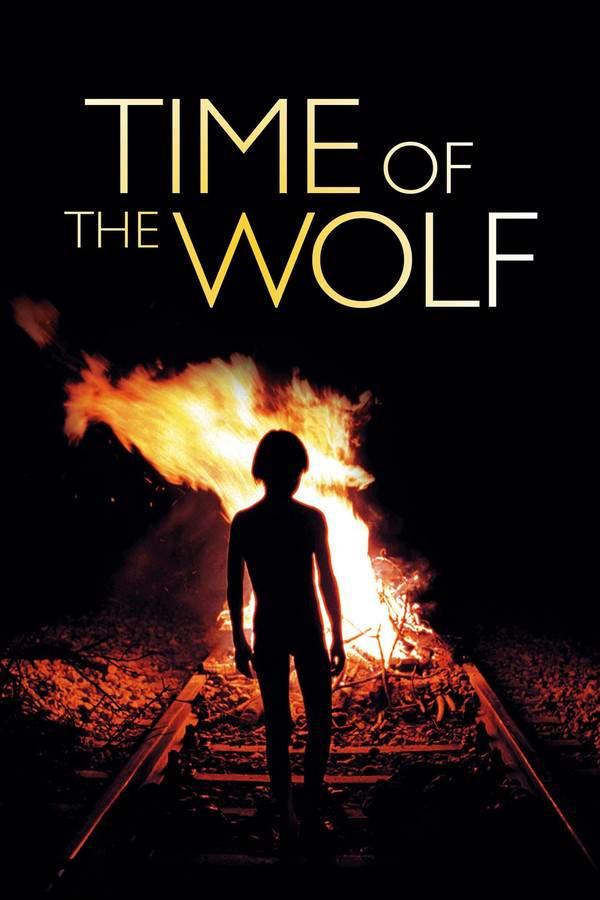
Time of the Wolf 2004

Made by

Palm Pictures
Where to Watch Time of the Wolf
See current US streaming, rental, and purchase options for Time of the Wolf (2004) via JustWatch.

Strand Releasing Amazon Channel
HD
Kanopy
HD
Tubi TV
SD
Amazon Video
SD
Apple TV Store
HD
Fandango At Home
SD
Google Play Movies
SD
YouTube
SD Streaming availability powered by 
Time of the Wolf Plot Summary
Read the complete plot summary and ending explained for Time of the Wolf (2004). From turning points to emotional moments, uncover what really happened and why it matters.
Following an unspecified apocalyptic event that has severely disrupted society and altered the world as we know it, a middle-class French family—comprising Anne, her husband Georges, and their children Eva and Ben—set out on a journey to their rural vacation home in hopes of finding safety and refuge. When they arrive at the house, they are met with a heartbreaking surprise: it is already occupied by an armed man and his family, who have taken over the property amidst the chaos. Georges attempts to negotiate and calmly de-escalate the tense situation, but tragically, he is shot and killed instantly, leaving Anne and her children to deal with the shock and grief.
In the aftermath of this loss, the surviving family members are forced to leave the house with only what little they could salvage, and they cautiously begin their trek through a landscape that has been ravaged by societal collapse. The once-familiar countryside now bears the scars of devastation—villages lay abandoned, some are hostile and unwelcoming, homes are burned to ash, and livestock is reduced to smoldering carcasses piled in pyres. Throughout their journey, they encounter evidence of widespread destruction and despair, as well as other survivors who are often unresponsive or hostile, highlighting the grim reality of their world.
Their escape leads them to meet a feral, emotionally detached teenage boy who has survived alone in the wild, living on the fringes of society. Anne attempts to care for him, sensing the loneliness and vulnerability beneath his rough exterior, but the boy remains wary and distant, reluctant to trust anyone again. The group’s journey eventually brings them to a railway station, a desperate gathering place for other refugees who cling to hope that a train will come and carry them away from the chaos. The station is a melting pot of diverse individuals, with different backgrounds and social classes, all united by their shared hopes and fears.
Within this temporary refuge, tensions quickly rise over scarce resources, which must be earned through bartering possessions, services, or sometimes, morally questionable acts—such as sexual favors from women—mirror the desperation and moral ambiguity that now define their lives. Koslowski, a self-appointed leader, attempts to maintain order amidst the chaos, but conflicts are inevitable, and suspicion flickers in everyone’s eyes.
During this tumultuous time, Anne encounters Béa, a woman from the city who whispers ominous thoughts to her about “the Just,” a small group of 36 righteous individuals believed to be roaming the earth, whose existence is thought to be the reason why the world continues to escape total destruction. This strange idea adds a layer of religious or philosophical intrigue amidst the bleak circumstances, prompting reflections on morality and divine will.
As the story progresses, Eva develops a close bond with the feral teenage boy, but tensions escalate when he eventually abandons the community, stealing one of the goats—a act Eva perceives as a betrayal and an immoral act. The situation turns darker when she witnesses a rape occurring while the group is asleep, an event that leaves her emotionally scarred. In an act of self-preservation and moral outrage, Eva throws herself over her sleeping brother Ben to shield him from harm, displaying her innocence and resilience amidst chaos.
Adding to the mounting horror, the group is shaken when they discover that Georges’s killer, along with his wife and child, have now joined their camp. Anne desperately urges the others to expel them, but the others refuse, citing lack of concrete evidence. Similar accusations ripple through the camp, with accusations flying against a Pole in Koslowski’s group, accused of murdering a local farmer—highlighting the paranoia and breakdown of social order.
Amidst these crises, entertainment comes from an old man who, in a tragic and macabre display, swallows razor blades and shares stories about people who throw themselves into fire, illustrating the extreme despair that has become commonplace. Ben’s health continues to decline, suffering from unexplained chronic nosebleeds and a growing sense of withdrawal, signaling his deteriorating physical and mental state.
In a poignant, heartbreaking moment, Ben, in a state of despair, leaves the camp one night and strips down before a blazing fire on the tracks—an apparent act of sacrifice intended to stop a passing train from taking him away. Luckily, a camp member finds him just in time, pulling him away from a potential tragedy, and reassures him that his willingness to die has been seen and understood. The man tells Ben that his life still holds value and that his strength will be remembered, giving the boy a renewed sense of hope and a reason to continue fighting for survival.
The film concludes with a silent, haunting shot captured from a moving train, gliding through a peaceful countryside. There are no passengers, no voices, and no signs of the refugees—only the tranquil landscape passing by, leaving viewers with a sense of quiet ambiguity about the future of these survivors and the world they inhabit. This ending amplifies the themes of loss, resilience, and the uncertain hope that persists in the face of unimaginable devastation.
Time of the Wolf Timeline
Follow the complete movie timeline of Time of the Wolf (2004) with every major event in chronological order. Great for understanding complex plots and story progression.
Family arrives at rural vacation home
Following an unspecified apocalyptic event, Anne, Georges, Eva, and Ben travel to their countryside house, hoping to find safety from societal collapse. Upon arrival, they discover the house is already occupied by an armed family, indicating total societal breakdown. Georges attempts to de-escalate the tense situation but is suddenly shot and killed by the intruders.
Forced withdrawal and wandering
After Georges' death, Anne and her children are allowed to leave with minimal belongings. They are forced to wander the devastated countryside, facing a landscape ravaged by collapse and violence. Their journey is marked by encounters with hostile villages, abandoned scenes, and the struggle for survival.
Encounter with the feral teenage boy
While traversing the landscape, the family meets a feral teenage boy who has survived alone in the wild. He exhibits emotional detachment and wariness towards outsiders, but Anne tries to show him compassion and care, recognizing his vulnerability amidst chaos.
Arrival at the railway station
After days of hardship, the group reaches a refugee gathering point at a railway station. The station is crowded with diverse survivors, and a self-appointed leader named Koslowski begins overseeing resource distribution and interactions among different groups. Tensions arise over access to resources and services offered by the community.
Bartering and exploitation at the station
Refugees barter whatever possessions they have or offer services—sometimes including sexual favors—to secure resources. The atmosphere is tense and desperate, highlighting the societal breakdown and the breakdown of moral boundaries in the fight for survival.
Meeting Béa and the concept of 'the Just'
Anne encounters Béa, a city woman who whispers about 'the Just', a group of 36 righteous people believed to be responsible for the world's salvation. Béa suggests that their hardships may be a divine trial linked to these mysterious figures, adding a spiritual dimension to their suffering.
Eva bonds and witnesses a betrayal
Eva grows close with the feral teenage boy, who eventually abandons the group to steal a goat, seen as a betrayal by Eva. She also witnesses the group being victimized when she observes a rape while others sleep, and instinctively throws herself over her brother to shield him, exposing her innocence amidst chaos.
Arrival of Georges’s killers and accusations
The group discovers that Georges’s murderer, along with his wife and child, has joined their shelter. Anne demands their removal, but the group refuses without concrete proof. Tensions escalate as accusations are made against other members, highlighting distrust and moral ambiguity among survivors.
Entertainment and tales of sacrifice
An old man provides brief entertainment by swallowing razor blades and telling stories of people sacrificing themselves by fire or other means. These stories reflect themes of suffering, salvation, and the search for meaning amidst chaos, resonating with the group’s grim reality.
Ben’s mysterious illness and act of sacrifice
Ben, suffering from chronic nosebleeds and an unexplained illness, leaves the camp and strips down by a fire on the tracks, seemingly attempting to sacrifice himself to stop a passing train. A man pulls him away, telling him that their willingness to die is noticed and that his life still has value, giving him a reason to live.
Silent closing scene from a train window
The film ends with a silent, panoramic shot from a passing train, moving through peaceful countryside. There are no signs of refugees or chaos, suggesting a return to normalcy or the continued uncertainty, highlighting themes of transition and unresolved tension.
Time of the Wolf Characters
Explore all characters from Time of the Wolf (2004). Get detailed profiles with their roles, arcs, and key relationships explained.
Anne, played by Isabelle Huppert
A protective mother striving to keep her children safe in a brutal world. Anne demonstrates resilience, compassion, and moral strength as she navigates threats and moral dilemmas. Her leadership and emotional depth highlight her journey from fear to resolve.
Eva, child's daughter
A sensitive and observant girl who forms a close bond with the feral teenage boy. Eva’s innocence is tested by the violence around her, but her courageous act to shield her brother underscores her moral strength and growing awareness of the world’s brutality.
Ben, child's son
A withdrawn boy suffering from unexplained illness and exhibiting acts of sacrifice, such as attempting to stop a passing train. Ben symbolizes vulnerability and hope, as his willingness to die reveals a deep desire to impact the chaos positively.
Koslowski, the group leader
The self-appointed leader of the refugee group at the railway station. Koslowski attempts to impose order in chaos, hosting moral debates and managing resource conflicts, embodying the struggle to maintain social structure amid collapse.
Béa, played by Béatrice Dalle
A city woman who offers cryptic insights about 'the Just.' Béa's presence introduces themes of moral judgment and the possibility of divine retribution, adding a philosophical layer to the story's exploration of morality in chaos.
The feral teenage boy
A survivor who has adapted to the wilderness, embodying raw survival instincts. His wary attitude and eventual betrayal highlight themes of trust and the brutality of social breakdown in apocalyptic settings.
Time of the Wolf Settings
Learn where and when Time of the Wolf (2004) takes place. Explore the film’s settings, era, and how they shape the narrative.
Time period
post-apocalyptic future
The story is set after an unspecified global catastrophe that has dismantled society. The timeline is marked by a collapse of social order, resource scarcity, and violent clashes among survivors. The timeframe reflects a bleak, lawless era where hope is driven by human resilience amid chaos.
Location
rural France, railway station, countryside
The movie takes place primarily in a rural French landscape ravaged by an unspecified apocalyptic event. Key locations include a remote vacation home, a derelict railway station, and the surrounding countryside, which serve as the backdrop for survival and societal collapse. These settings highlight themes of isolation, desolation, and the struggle to find safety in a fractured world.
Time of the Wolf Themes
Discover the main themes in Time of the Wolf (2004). Analyze the deeper meanings, emotional layers, and social commentary behind the film.
🔥
Survival
The central theme revolves around human survival in a hostile, lawless environment. Characters must navigate threats from other survivors, scarcity of resources, and internal conflicts. The movie explores what it means to stay alive physically and morally when society's norms no longer apply.
🕊️
Hope
Despite the pervasive despair, moments of hope emerge, especially through acts of sacrifice and human connection. The characters’ struggles to cling to hope serve as a contrast to the brutal realities they face, emphasizing resilience and the longing for redemption.
👪
Family & Humanity
The film examines the bonds of family and human kindness amidst chaos. The characters’ efforts to protect loved ones and the moral dilemmas they face reflect the enduring importance of compassion and social bonds, even in the darkest circumstances.

Coming soon on iOS and Android
The Plot Explained Mobile App
From blockbusters to hidden gems — dive into movie stories anytime, anywhere. Save your favorites, discover plots faster, and never miss a twist again.
Sign up to be the first to know when we launch. Your email stays private — always.
Explore the mobile appTime of the Wolf Spoiler-Free Summary
Discover the spoiler-free summary of Time of the Wolf (2004). Get a concise overview without any spoilers.
In a Europe teetering on the edge of collapse, resources have become as scarce as certainty. The film opens with a middle‑class French couple and their two children deciding to seek refuge in a remote country house they own, hoping the isolation will shield them from the surrounding desperation. The landscape they travel through is stark and empty, a silent testament to a world that has retreated from the comforts of modern life, where every rusted fence and smoking ruin whispers of an uncertain future.
Upon arrival, they find the home already inhabited by another family, an unexpected presence that turns a hopeful retreat into a tense, unsettling standoff. This fragile encounter sets the tone for a story that lives in the gray areas between trust and suspicion, compassion and self‑preservation. The atmosphere is heavy with whispered anxieties, and the cinematography captures the cold, wind‑scarred fields and dim interiors that mirror the internal struggle of the characters as they grapple with the reality that safety is no longer guaranteed.
At the heart of the narrative are Anne, a mother determined to protect her family, Georges, her pragmatic partner, and their children Eva and Ben, each responding to the crisis in their own way. Their bond is tested not only by the harsh external world but also by the delicate dynamics that emerge when strangers must coexist. The film’s mood is austere yet oddly intimate, drawing the audience into a contemplative space where hope flickers like a distant lantern, and the true cost of survival is measured not in grand gestures but in the quiet moments of shared humanity amidst a landscape where kindness has become a rare commodity.
Featured on this page

What's After the Movie?
Not sure whether to stay after the credits? Find out!
Check out our other apps:

SAT Sphere
Build confidence for the Digital SAT.

Mori Atlas
Discover wild places worth protecting.

Luntero
Search smarter for a home in Amsterdam.

Plot Explained
Unravel movie endings and hidden clues.

Pokechamp
Dive into Pokémon data and battle logic.

Driving Theory
Get ready for your European theory test.

Movie Dust
Plan your next cinema trip with ease.

Musemap
Find art and culture as you travel.

Selkobase
Compare credentials before committing.

Local Manual
Turn an unfamiliar country into practical next steps.

Lernavi
Compare school systems before your next move.

GymRoam
Find a workout stop wherever your plans take you.
Explore Our Movie Platform
New Movie Releases (2026)
Famous Movie Actors
Top Film Production Studios
Movie Plot Summaries & Endings
Major Movie Awards & Winners
Best Concert Films & Music Documentaries
Movie Collections and Curated Lists
© 2026 What's After the Movie. All rights reserved.
Privacy Policy