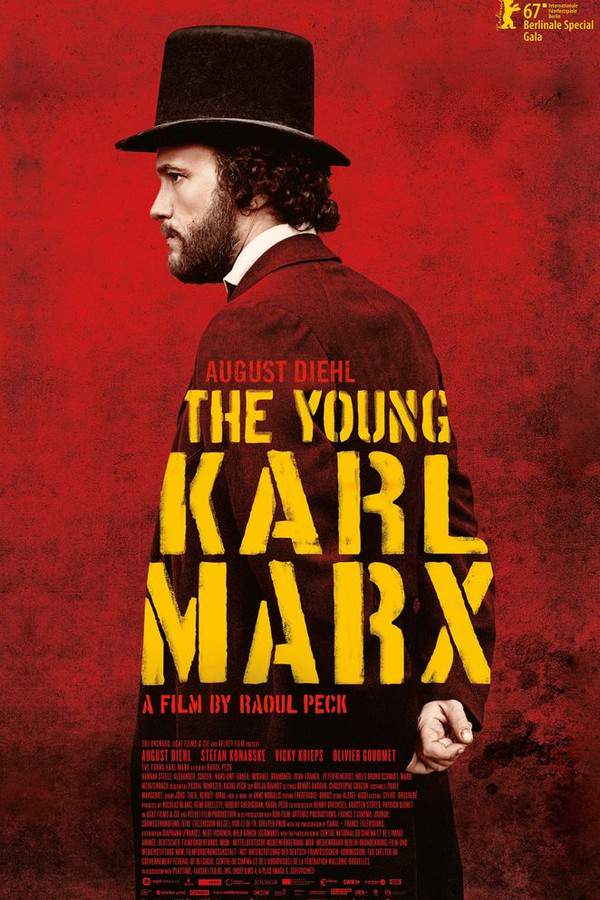
The Young Karl Marx 2018


Directed by
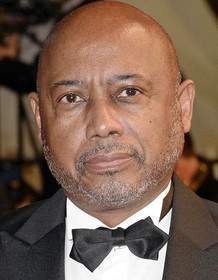
Raoul Peck
Made by

Agora Films
Where to Watch The Young Karl Marx
See current US streaming, rental, and purchase options for The Young Karl Marx (2018) via JustWatch.

Amazon Prime Video
HD
Amazon Prime Video with Ads
HD
fuboTV
HD
Fandango at Home Free
HD
Amazon Video
SD
Apple TV Store
HD Fandango At Home
SD
Google Play Movies
SD
YouTube
SD Streaming availability powered by 
The Young Karl Marx Plot Summary
Read the complete plot summary and ending explained for The Young Karl Marx (2018). From turning points to emotional moments, uncover what really happened and why it matters.
While in his twenties, Karl Marx (August Diehl) grapples with the challenge of making a name for himself as an influential writer in the realms of politics and sociology. The narrative unfolds with a striking scene depicting impoverished individuals foraging for dead wood in a forest—a practice they have engaged in for generations. However, as the winds of regulation shift, the government declares this wood collecting illegal, asserting it now belongs to the landlords as private property. This brutal transition leads to the persecution and extrajudicial killings of the destitute by government officials. Throughout these tumultuous events, Marx becomes increasingly aware of how the bourgeoisie has effectively seized control of the state apparatus itself.
In his journey, Marx encounters Friedrich Engels (Stefan Konarske), a young man hailing from a wealthy background whose father owns factories. Witnessing firsthand the abysmal conditions and exploitation faced by workers—including children—Engels’ convictions deepen. Together, Marx and Engels join forces to develop a powerful political movement aimed at reforming the plight of the impoverished workforce.
Their collaboration culminates in a daring coup at a League of the Just meeting, leading to the establishment of the Communist League. The film reaches its climax with the publication of their seminal work, The Communist Manifesto, where Marx and Engels distill complex theories into accessible language for the masses, coinciding with the fervor of the 1848 revolutions. This powerful statement not only captures the spirit of the age but also sows the seeds for future movements seeking justice and equity for the working class.
The Young Karl Marx Timeline
Follow the complete movie timeline of The Young Karl Marx (2018) with every major event in chronological order. Great for understanding complex plots and story progression.
Introduction to Karl Marx
In his twenties, Karl Marx struggles to establish himself as a significant writer in politics and sociology. He is driven by the desire to make a mark on the intellectual landscape of his time.
Impoverished Individuals foraging
The film opens with a harrowing scene showing impoverished people foraging for dead wood in a forest. This act of survival reflects a long-standing practice that is now threatened by changing regulations.
Government Regulation Changes
The government intervenes by declaring wood collection illegal, stating that it belongs to landlords as private property. This shift creates immediate hardship for the poor, who relied on this resource for survival.
Persecution of the Poor
Following the new regulations, government officials begin persecuting the impoverished community. Extrajudicial killings become commonplace as authorities violently enforce the new laws.
Marx's Awakening
Amidst the chaos, Karl Marx becomes increasingly aware of the power dynamics at play. He realizes that the bourgeoisie have seized control of the state machinery to maintain their dominance over the working class.
Meeting Friedrich Engels
Marx meets Friedrich Engels, a young man from a wealthy family with a factory-owning father. Engels has witnessed the harsh realities of the working class, fueling his desire for reform and social justice.
Engels' Transformation
As Engels becomes more aware of the exploitation faced by workers, including children, his convictions strengthen. He recognizes the gross injustices perpetuated by the capitalist system that he once benefited from.
Formation of a Political Movement
Marx and Engels decide to forge a powerful political movement aimed at addressing the injustices faced by the impoverished workforce. They begin to attract like-minded individuals eager for change.
Coup at the League of the Just
The duo leads a bold coup at a League of the Just meeting, seizing the opportunity to redefine the group's direction. This pivotal moment lays the groundwork for the establishment of the Communist League.
Publication of The Communist Manifesto
In a climactic moment, Marx and Engels publish *The Communist Manifesto.* This revolutionary text articulates their political theories in a digestible format, resonating with the working class.
Impact on the Revolutions of 1848
The publication coincides with the fervor of the 1848 revolutions across Europe. The manifesto serves not only as a call to action but also ignites a passion for justice and equity in labor rights.
Legacy of Their Work
The ideas presented in *The Communist Manifesto* lay the foundation for future movements advocating for the rights of the working class. Marx and Engels' work endures as a cornerstone of socialist thought.
Fostering Solidarity
Marx and Engels' collaboration fosters a sense of solidarity among workers across social classes. Their emphasis on collective action becomes essential in the struggle for justice and reform.
Ending the Era of Silence
The film concludes as Marx and Engels’ ideas begin to spread widely, breaking down barriers of silence surrounding workers' rights. Their legacy inspires generations to continue the fight for equality and systemic change.
A New Chapter in History
As their revolutionary ideas take root, a new chapter in history begins, forever changing the landscape of political thought and action. This pivotal moment sets the stage for the global conversations surrounding socialism and workers’ rights.
The Young Karl Marx Characters
Explore all characters from The Young Karl Marx (2018). Get detailed profiles with their roles, arcs, and key relationships explained.
Karl Marx
Karl Marx, portrayed by August Diehl, is a passionate and driven individual marked by his quest to understand and remedy the socio-political disparities of his time. As he grapples with his ideals, he evolves from an aspiring writer to a pivotal figure advocating for revolutionary change. His deepening awareness of injustice propels him to collaborate with Engels in founding the Communist League.
Friedrich Engels
Friedrich Engels, played by Stefan Konarske, comes from a privileged background but is profoundly affected by the working conditions he witnesses. His evolution from a factory owner's son to a dedicated reformist highlights his commitment to the labor movement. Engels complements Marx's ideologies, and together they seek to empower the oppressed.
The Young Karl Marx Settings
Learn where and when The Young Karl Marx (2018) takes place. Explore the film’s settings, era, and how they shape the narrative.
Time period
1840s
The 1840s were marked by significant social upheaval across Europe, with widespread discontent fueling revolutionary sentiments. This decade saw the rise of the working-class movement as individuals began to organize against oppressive labor conditions and advocate for workers' rights. The publication of *The Communist Manifesto* became a pivotal moment in political history, articulating the struggles of the proletariat.
Location
Europe
The movie is primarily set in Europe during the 1840s, showcasing both urban centers and rural landscapes. The depiction of impoverished individuals foraging for wood highlights the stark contrasts between the wealthy bourgeoisie and the working class. This period is characterized by social unrest and a growing awareness of the inequalities present in society.
The Young Karl Marx Themes
Discover the main themes in The Young Karl Marx (2018). Analyze the deeper meanings, emotional layers, and social commentary behind the film.
⚖️
Social Justice
Central to the film is the theme of social justice, exploring the plight of the working class under the oppressive bourgeois system. Marx and Engels’ efforts to highlight the exploitation faced by workers resonate throughout the narrative, advocating for a more equitable society. Their passionate calls for reform and change ignite a movement that challenges the status quo.
🛠️
Labor Struggles
The film delves into the struggles of labor, underscoring the harsh realities faced by workers in factories and rural settings. It emphasizes the impact of industrialization on the workforce, particularly the exploitation of women and children. This theme highlights the necessity of solidarity among workers to confront and transform their dismal conditions.

Coming soon on iOS and Android
The Plot Explained Mobile App
From blockbusters to hidden gems — dive into movie stories anytime, anywhere. Save your favorites, discover plots faster, and never miss a twist again.
Sign up to be the first to know when we launch. Your email stays private — always.
Explore the mobile appThe Young Karl Marx Spoiler-Free Summary
Discover the spoiler-free summary of The Young Karl Marx (2018). Get a concise overview without any spoilers.
In the restless streets of 1844 Paris, a city awash with revolutionary fervor and suffocating censorship, the air hums with whispered debates and the clatter of a society on the brink of transformation. Smoke curls from cramped cafés where intellectuals gather, while the shadows of poverty linger just beyond the polished façades of grand boulevards. The film captures this volatile tableau with a palette of muted grays and sudden bursts of color, echoing the tension between oppression and the yearning for change.
At the heart of this maelstrom walks Karl Marx, a fiercely inquisitive twenty‑six‑year‑old whose mind races to synthesize philosophy, economics, and the lived struggles of the disenfranchised. Accompanied by his devoted wife Jenny, whose quiet resolve steadies him, Marx grapples with the daunting task of giving voice to a world that seeks to silence dissent. Their flight through the city’s winding alleys is as much an external escape as an internal quest for purpose, setting the stage for a partnership that promises to reshape ideas.
Their journey intersects with Friedrich Engels, a young man from a privileged industrial lineage who has witnessed the stark realities of factory labor firsthand. Engels’ observations sharpen his own convictions, and when he meets Marx, a tentative alliance forms—rooted in shared outrage and a mutual belief that theory must meet the lived experience of the working class. The chemistry between the two thinkers is palpable, a blend of intellectual rigor and restless idealism that hints at a collaboration destined to echo far beyond the cramped salons and cobblestones.
The film’s tone balances gritty realism with an undercurrent of hopeful urgency, inviting viewers to feel the pulse of a society teetering between repression and rebirth. Through atmospheric cinematography and a soundtrack that murmurs like distant protests, the story immerses us in a world where ideas are weapons, friendships are forged in fire, and the promise of a new future lingers just beyond the horizon.
Movies with Similar Twists and Themes
Uncover films that echo the narrative beats, emotional arcs, or dramatic twists of the one you're exploring. These recommendations are handpicked based on story depth, thematic resonance, and spoiler-worthy moments — perfect for fans who crave more of the same intrigue.

Featured on this page

What's After the Movie?
Not sure whether to stay after the credits? Find out!
Check out our other apps:

SAT Sphere
Build confidence for the Digital SAT.

Mori Atlas
Discover wild places worth protecting.

Luntero
Search smarter for a home in Amsterdam.

Plot Explained
Unravel movie endings and hidden clues.

Pokechamp
Dive into Pokémon data and battle logic.

Driving Theory
Get ready for your European theory test.

Movie Dust
Plan your next cinema trip with ease.

Musemap
Find art and culture as you travel.

Selkobase
Compare credentials before committing.

Local Manual
Turn an unfamiliar country into practical next steps.

Lernavi
Compare school systems before your next move.

GymRoam
Find a workout stop wherever your plans take you.
Explore Our Movie Platform
New Movie Releases (2026)
Famous Movie Actors
Top Film Production Studios
Movie Plot Summaries & Endings
Major Movie Awards & Winners
Best Concert Films & Music Documentaries
Movie Collections and Curated Lists
© 2026 What's After the Movie. All rights reserved.
Privacy Policy