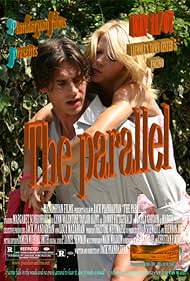
The Parallel 2007

Directed by

Jack Piandaryan
Made by

Piandaryan Films
Where to Watch The Parallel
See current US streaming, rental, and purchase options for The Parallel (2007) via JustWatch.



Streaming availability powered by 
The Parallel Plot Summary
Read the complete plot summary and ending explained for The Parallel (2007). From turning points to emotional moments, uncover what really happened and why it matters.
In orbit around Earth, an astronaut named Major Robert Gaines rides the quiet of his space capsule as he completes a mission, when a sudden failure in his communications leaves him adrift and unconscious. He wakes up back on Earth with no memory of how he returned, appearing none the worse for wear, and is released into the custody of his family.
From the very first moments, something inside the ordinary has shifted. A white picket fence surrounds the house—something Gaines does not recognize—and his wife, Helen, insists it has always been there since they moved in. The confusion deepens when a clear mismatch appears on his collar: a photograph shows him as a Colonel, even though he believes himself to be a Major, and Helen mutters that he has been a Colonel for months. The reunion is tender—she plants a kiss on him to reassure him—but the kiss seems to reveal more than warmth; it signals that something essential has changed. Helen’s attempts to help reveal further fissures: she reaches to call a friend, a fellow officer, but Gaines cuts her off, insisting she was only inviting him and his wife to dinner. The domestic scene hums with normalcy on the surface, yet the undercurrents of doubt begin to pull Gaines away from certainty.
As the day unfolds, a series of small, unsettling details mounts. When Maggie brings coffee, Gaines stops her from adding sugar, and her remark that he’s different—“something is wrong”—lands with him as a corroboration he cannot ignore. When Helen candidly admits she cannot explain what is happening to him, he grows more insistent that he must face a formal examination. A chilling assertion follows: he believes the President of the United States is John F. Kennedy, a name no one else recognizes, and this conviction drives him toward a singular conclusion—he has slipped into a parallel universe.
The plot thickens as a mechanic notes a critical discrepancy: the space capsule Gaines was launched in is not an exact match to the one he has returned in. The discrepancy becomes the hinge on which Gaines’ hypothesis turns—could reality itself have changed? He is summoned to inspect the capsule, and as he approaches it, he feels himself being drawn back to the moment he departed his own universe. The moment of truth arrives with a careful landing and a report to his superiors. They are prepared to chalk his experience up to a nightmare, a psychosomatic fracture of perception, rather than a real phenomenon.
Yet the anomaly refuses to fade. Controllers on the ground intercept another transmission—this time from Colonel Robert Gaines himself. The broadcasting fear and uncertainty are palpable as the signal cuts out mere seconds later, and the Colonel vanishes from radar. The tension intensifies, and Gaines returns home with a cautious hope that he is simply facing a bizarre episode in need of explanation. The final turn of the story brings a stark, emotional reveal: his daughter recognizes him again, and the white picket fence is suddenly absent, as if the changes driving his world are not just inside his head but have altered the very fabric of his home life.
What emerges is a quiet meditation on memory, identity, and the fragility of the line between reality and perception. Gaines’ experiences force him, and the audience, to confront the possibility that the universe can shift in subtle, almost unnoticeable ways, altering people’s memories, statuses, and the physical surroundings they inhabit. The narrative unfolds with a restrained, clinical tone that never overclaims, instead letting the contradictions and discoveries accumulate until they form a coherent, if unsettling, picture of a man who returns not to the same world he left, but to one that has quietly rewritten his place within it. The story invites reflection on how we define who we are when the foundations of our daily lives—our home, our family, even the roles we hold in society—have suddenly altered without our consent. It remains a careful balance of science-fiction intrigue and intimate human drama, presenting a luminous puzzle rooted in the tension between memory and reality.
The Parallel Timeline
Follow the complete movie timeline of The Parallel (2007) with every major event in chronological order. Great for understanding complex plots and story progression.
Blackout during space mission
Gaines' space capsule loses communications, and he blacks out. He wakes up on Earth with no memory of the return flight or what happened in orbit.
Discrepancy at home: the white picket fence
Back home, Gaines notices a white picket fence he does not recall. Helen insists it was always there since they bought the house. The mismatch signals a fracture in his perceived reality.
Rank photo contradicts his memory
In a family photo, his insignia has changed from Major to Colonel. Helen says he has been a Colonel for months. This conflicting memory sharpens his sense that something is deeply off.
Kiss reveals something is wrong
Helen kisses him to reassure him, but the gesture feels unsettling. She immediately senses something is different about him. She tries to call his fellow officer friend for help, but Gaines interrupts, claiming she was merely inviting him to dinner.
Seeking official examination
Gaines insists on turning himself in for examination to determine what happened. He seeks objective validation rather than relying on his altered memories. The move marks his push for formal inquiry.
Kennedy claim reinforces doubt
He asserts that John F. Kennedy is the President, a claim that others cannot corroborate. This fuels his conclusion that he has slipped into a parallel universe. The others dismiss it as a delusion, but the doubt lingers.
Capsule discrepancy spotted
A mechanic reports the capsule Gaines returned in is not identical to the one he was sent out in. The physical difference provides tangible support for his alternate-reality theory. Gaines uses this clue to bolster his case with authorities.
Approaching the capsule triggers a shift
Gaines is summoned to inspect the capsule. As he approaches, he begins to slip back toward his original universe. The shift is gradual and tied to the capsule's condition.
Landing and reporting the experience
He lands the craft safely and reports what happened to his superiors. They are inclined to treat it as a nightmare rather than a tangible phenomenon. The officials begin to question the limits of their own assumptions.
Another transmission from Colonel Gaines
Ground controllers receive a transmission from Colonel Gaines. The message cuts out seconds later, and the Colonel disappears from radar. The mystery deepens as the timeline becomes unstable.
Domestic reunion and restored reality
The Major returns home and is joyfully greeted by his daughter, who recognizes him. The white picket fence is absent, suggesting he has returned to his original reality. The scene closes on a quiet, relieved family reunion.
The Parallel Characters
Explore all characters from The Parallel (2007). Get detailed profiles with their roles, arcs, and key relationships explained.
Major Robert Gaines
An astronaut who returns from space with altered memories and a growing conviction that he has slipped into a parallel universe. He remains determined to uncover the truth, even as his sense of self and loyalties are challenged by conflicting signals from family and colleagues.
Helen Gaines
Gaines's wife, perceptive and protective, who senses something is off about her husband. She becomes the emotional anchor for the family, trying to ground him in reality while facing the possibility of another version of him.
Maggie
A domestic helper who notices Gaines' unusual behavior and serves as a perceptive observer of the changes in his routine. Her small, clinical observations become clues to the larger mystery unfolding.
John F. Kennedy
The President Gaines insists exists in the parallel universe, illustrating the era and heightening the stakes of crossing realities.
The Parallel Settings
Learn where and when The Parallel (2007) takes place. Explore the film’s settings, era, and how they shape the narrative.
Time period
1960s
Set against the backdrop of the 1960s space race and Cold War era, the story uses era-specific details like John F. Kennedy to anchor the premise. The plot hinges on a leap across parallel timelines, framed by the period's scientific optimism and geopolitical tension. The timeline stretch emphasizes how memory can be unreliable when worlds collide.
Location
Space capsule, Gaines' family home, Outer space
The narrative shifts between Gaines' Earthly home and the space capsule, with a detour into a parallel Earth where familiar landmarks vanish or shift. The changing scenery—like the mysterious white picket fence—highlights the tension between memory and reality. Investigations compare the capsule to an identical craft, underscoring the crossing of worlds.
The Parallel Themes
Discover the main themes in The Parallel (2007). Analyze the deeper meanings, emotional layers, and social commentary behind the film.
🧭
Identity
The protagonist grapples with a fractured sense of self as memories and ranks blur across universes. He must decide which version of his life is real while loved ones notice the discrepancies. The film probes how personal continuity is maintained when reality itself is unstable.
🌀
Reality
Reality becomes malleable as timelines diverge, with details like the fence and presidency shifting between worlds. The narrative explores how perception can redefine truth when multiple realities interact, challenging characters to discern what is authentic.
🏠
Home
Home and memory anchor the drama, only to be tested as the house changes and a familiar father figure becomes unfamiliar. The evolving sense of home mirrors the protagonist's struggle to hold on to his identity and relationships across dimensions.

Coming soon on iOS and Android
The Plot Explained Mobile App
From blockbusters to hidden gems — dive into movie stories anytime, anywhere. Save your favorites, discover plots faster, and never miss a twist again.
Sign up to be the first to know when we launch. Your email stays private — always.
Explore the mobile appThe Parallel Spoiler-Free Summary
Discover the spoiler-free summary of The Parallel (2007). Get a concise overview without any spoilers.
In the quiet suburbs of an unnamed America, a former athlete awakens to find his world subtly out of sync. One moment he is a celebrated figure on the field, the next he is a middle‑aged man navigating a life that feels both familiar and foreign. The film opens with this disorienting shift, setting a tone that hovers between introspective drama and quiet science‑fiction speculation. Light filters through ordinary neighborhoods, yet every ordinary detail carries an undercurrent of unease, inviting the audience to question what is real and what is imagined.
At the heart of the story is Robert Gaines, a man whose athletic past seems to have been erased, leaving behind a marriage that has grown stagnant and a routine that feels more like a façade than a foundation. His partner, Helen, offers both comfort and mystery, embodying the tension between shared history and the gaps that have suddenly appeared. The couple’s home, their conversations, and the small comforts of daily life become a maze of familiar landmarks that no longer align with his internal map, and the dissonance is felt not only by Gaines but by everyone around him.
The film’s tone is deliberately measured, allowing the audience to linger in the spaces between what is known and what is hinted at. The cinematography leans into muted palettes, echoing the protagonist’s foggy recollection, while the score weaves a subtle, almost tactile sense of curiosity. As Gaines confronts the contradictions in his surroundings—photos that don’t match, names that feel misplaced—he is propelled into a quiet but relentless quest to piece together his identity.
Through understated performances and a world that feels both ordinary and uncanny, the story invites viewers to share in the protagonist’s search for answers. The central mystery remains poised at the edge of perception, promising a journey that explores memory, self‑discovery, and the fragile boundaries between one’s past and an alternate present.
Featured on this page

What's After the Movie?
Not sure whether to stay after the credits? Find out!
Check out our other apps:

SAT Sphere
Build confidence for the Digital SAT.

Mori Atlas
Discover wild places worth protecting.

Luntero
Search smarter for a home in Amsterdam.

Plot Explained
Unravel movie endings and hidden clues.

Pokechamp
Dive into Pokémon data and battle logic.

Driving Theory
Get ready for your European theory test.

Movie Dust
Plan your next cinema trip with ease.

Musemap
Find art and culture as you travel.

Selkobase
Compare credentials before committing.

Local Manual
Turn an unfamiliar country into practical next steps.

Lernavi
Compare school systems before your next move.

GymRoam
Find a workout stop wherever your plans take you.
Explore Our Movie Platform
New Movie Releases (2026)
Famous Movie Actors
Top Film Production Studios
Movie Plot Summaries & Endings
Major Movie Awards & Winners
Best Concert Films & Music Documentaries
Movie Collections and Curated Lists
© 2026 What's After the Movie. All rights reserved.
Privacy Policy