The Parallel 2007

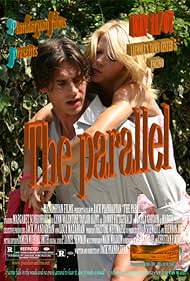
A former athlete finds himself unexpectedly transported to an alternate reality. He's now a middle-aged man facing a stagnant marriage and a past he doesn't recall. Struggling to understand his new life, he confronts a confusing mix of familiar and foreign experiences as the boundaries of his memories become increasingly unclear. He must unravel the mystery of his identity and how he arrived in this strange world.


Does The Parallel have end credit scenes?
No!
The Parallel does not have end credit scenes. You can leave when the credits roll.
Where to Watch The Parallel
See current US streaming, rental, and purchase options for The Parallel (2007) via JustWatch.



Streaming availability powered by 
Meet the Full Cast and Actors of The Parallel
Explore the complete cast of The Parallel, including both lead and supporting actors. Learn who plays each character, discover their past roles and achievements, and find out what makes this ensemble cast stand out in the world of film and television.
No actors found
External Links and Streaming Options
Discover where to watch The Parallel online, including streaming platforms, rental options, and official sources. Compare reviews, ratings, and in-depth movie information across sites like IMDb, TMDb, Rotten Tomatoes or Metacritic.







Take the Ultimate The Parallel Movie Quiz
Challenge your knowledge of The Parallel with this fun and interactive movie quiz. Test yourself on key plot points, iconic characters, hidden details, and memorable moments to see how well you really know the film.
The Parallel (2007) Quiz: Test your knowledge of the film The Parallel (2007) with these ten questions ranging from easy to challenging.
What is the military rank of Robert Gaines at the beginning of the story?
Full Plot Summary and Ending Explained for The Parallel
Read the complete plot summary of The Parallel, including all major events, twists, and the full ending explained in detail. Explore key characters, themes, hidden meanings, and everything you need to understand the story from beginning to end.
In orbit around Earth, an astronaut named Major Robert Gaines rides the quiet of his space capsule as he completes a mission, when a sudden failure in his communications leaves him adrift and unconscious. He wakes up back on Earth with no memory of how he returned, appearing none the worse for wear, and is released into the custody of his family.
From the very first moments, something inside the ordinary has shifted. A white picket fence surrounds the house—something Gaines does not recognize—and his wife, Helen, insists it has always been there since they moved in. The confusion deepens when a clear mismatch appears on his collar: a photograph shows him as a Colonel, even though he believes himself to be a Major, and Helen mutters that he has been a Colonel for months. The reunion is tender—she plants a kiss on him to reassure him—but the kiss seems to reveal more than warmth; it signals that something essential has changed. Helen’s attempts to help reveal further fissures: she reaches to call a friend, a fellow officer, but Gaines cuts her off, insisting she was only inviting him and his wife to dinner. The domestic scene hums with normalcy on the surface, yet the undercurrents of doubt begin to pull Gaines away from certainty.
As the day unfolds, a series of small, unsettling details mounts. When Maggie brings coffee, Gaines stops her from adding sugar, and her remark that he’s different—“something is wrong”—lands with him as a corroboration he cannot ignore. When Helen candidly admits she cannot explain what is happening to him, he grows more insistent that he must face a formal examination. A chilling assertion follows: he believes the President of the United States is John F. Kennedy, a name no one else recognizes, and this conviction drives him toward a singular conclusion—he has slipped into a parallel universe.
The plot thickens as a mechanic notes a critical discrepancy: the space capsule Gaines was launched in is not an exact match to the one he has returned in. The discrepancy becomes the hinge on which Gaines’ hypothesis turns—could reality itself have changed? He is summoned to inspect the capsule, and as he approaches it, he feels himself being drawn back to the moment he departed his own universe. The moment of truth arrives with a careful landing and a report to his superiors. They are prepared to chalk his experience up to a nightmare, a psychosomatic fracture of perception, rather than a real phenomenon.
Yet the anomaly refuses to fade. Controllers on the ground intercept another transmission—this time from Colonel Robert Gaines himself. The broadcasting fear and uncertainty are palpable as the signal cuts out mere seconds later, and the Colonel vanishes from radar. The tension intensifies, and Gaines returns home with a cautious hope that he is simply facing a bizarre episode in need of explanation. The final turn of the story brings a stark, emotional reveal: his daughter recognizes him again, and the white picket fence is suddenly absent, as if the changes driving his world are not just inside his head but have altered the very fabric of his home life.
What emerges is a quiet meditation on memory, identity, and the fragility of the line between reality and perception. Gaines’ experiences force him, and the audience, to confront the possibility that the universe can shift in subtle, almost unnoticeable ways, altering people’s memories, statuses, and the physical surroundings they inhabit. The narrative unfolds with a restrained, clinical tone that never overclaims, instead letting the contradictions and discoveries accumulate until they form a coherent, if unsettling, picture of a man who returns not to the same world he left, but to one that has quietly rewritten his place within it. The story invites reflection on how we define who we are when the foundations of our daily lives—our home, our family, even the roles we hold in society—have suddenly altered without our consent. It remains a careful balance of science-fiction intrigue and intimate human drama, presenting a luminous puzzle rooted in the tension between memory and reality.

Coming soon on iOS and Android
The Plot Explained Mobile App
From blockbusters to hidden gems — dive into movie stories anytime, anywhere. Save your favorites, discover plots faster, and never miss a twist again.
Sign up to be the first to know when we launch. Your email stays private — always.
Explore the mobile appDiscover Film Music Concerts Near You – Live Orchestras Performing Iconic Movie Soundtracks
Immerse yourself in the magic of cinema with live orchestral performances of your favorite film scores. From sweeping Hollywood blockbusters and animated classics to epic fantasy soundtracks, our curated listings connect you to upcoming film music events worldwide.
Explore concert film screenings paired with full orchestra concerts, read detailed event information, and secure your tickets for unforgettable evenings celebrating legendary composers like John Williams, Hans Zimmer, and more.


Unlock the World of Movies with Our Comprehensive Wiki
Dive into our Movie Wiki for in-depth film encyclopedia entries, including cast biographies, production trivia, plot synopses, behind-the-scenes facts, and thematic analyses. Whether you’re researching iconic directors, exploring genre histories, or discovering hidden easter eggs, our expertly curated movie database has everything you need to fuel your cinematic passion.
Quick Links: Summary, Cast, Ratings, More

What's After the Movie?
Not sure whether to stay after the credits? Find out!
Check out our other apps:

SAT Sphere
Build confidence for the Digital SAT.

Mori Atlas
Discover wild places worth protecting.

Luntero
Search smarter for a home in Amsterdam.

Plot Explained
Unravel movie endings and hidden clues.

Pokechamp
Dive into Pokémon data and battle logic.

Driving Theory
Get ready for your European theory test.

Movie Dust
Plan your next cinema trip with ease.

Musemap
Find art and culture as you travel.

Selkobase
Compare credentials before committing.

Local Manual
Turn an unfamiliar country into practical next steps.

Lernavi
Compare school systems before your next move.

GymRoam
Find a workout stop wherever your plans take you.
Explore Our Movie Platform
New Movie Releases (2026)
Famous Movie Actors
Top Film Production Studios
Movie Plot Summaries & Endings
Major Movie Awards & Winners
Best Concert Films & Music Documentaries
Movie Collections and Curated Lists
© 2026 What's After the Movie. All rights reserved.
Privacy Policy