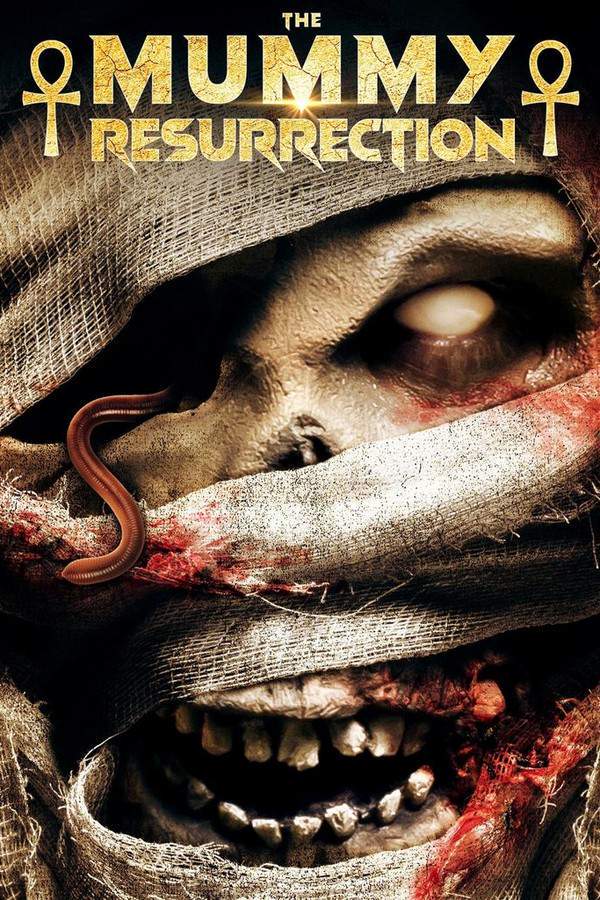
The Mummy 1959

Directed by

Terence Fisher
Made by
Rank Film Distributors
Where to Watch The Mummy
See current US streaming, rental, and purchase options for The Mummy (1959) via JustWatch.






The Mummy Plot Summary
Read the complete plot summary and ending explained for The Mummy (1959). From turning points to emotional moments, uncover what really happened and why it matters.
In Egypt, 1895, a trio of archaeologists—John Banning, his father Stephen Banning and his uncle Joseph Whemple—search for the tomb of Princess Ananka, the powerful high priestess of Karnak. The expedition is marked by a warning from an Egyptian guide, Mehemet Bey: stay away, or face a deadly curse. Undeterred, the team penetrates the tomb and unseals the sarcophagus of Ananka. When Joseph leaves to bring John the news, Stephen discovers the ancient Scroll of Life and reads from it. Outside, the rest of the team hears his anguished screams as Stephen is left in a catatonic stupor, a portent of a far darker fate to come.
Three years pass, and in a quiet English town, Stephen Banning emerges from his strange trance at the Engerfield Nursing Home for the Mentally Disordered. He insists that by reading from the Scroll of Life he unintentionally resurrected a mummified guardian named Kharis, the devoted servant of Karnak who had been entombed to protect the tomb’s sanctity. Stephen’s revelation sets off a chilling prophecy: Kharis will hunt down and kill anyone who desecrated Ananka’s resting place. Into this maelstrom steps Mehemet Bey again, now living under the alias Mehemet Atkil, driven by a fierce devotion to Karnak and a desire for vengeance. He arranges for the resurrection to be carried out using the Scroll, and enlists a pair of drunken carters, Pat and Mike (with a third minor helper played by Harold Goodwin) to haul a crate containing Kharis to his rented refuge. A reckless accident—drunken driving—causes the crate to plunge into a bog, seemingly ending the danger. Yet the Scroll’s power is not so easily buried: Bey commands Kharis to rise again, and the mummy stirs from the bog to begin its deadly mission.
When Kharis moves, the first victim is Stephen’s nephew, Joseph Whemple, who is murdered as John watches in horror. Peter Cushing—as John Banning—returns home to confront a threat that seems fantastical to the skeptical world. John’s attempt to stop the killer with a close-range pistol shot proves futile; the ancient guardian is impervious to conventional weapons, and the mystery deepens as the local police, notably Inspector Mulrooney, wrestle with the unreality of a living mummy. The inspector, a man of “cold, hard facts,” doubts the tale until more witnesses circle the strange events, and a striking clue emerges: Isobel, John’s wife, bears an uncanny resemblance to Princess Ananka herself.
As Mulrooney’s investigation advances, the city’s fear grows, and Bey accelerates his plans. He sends Kharis back toward the Bannings’ home with orders to complete the task Bey believes will secure Karnak’s will. When Kharis confronts Isobel, John’s pleas are heard, and his wife, using a desperate act to disrupt the spell, loosens her hair and breaks the mummy’s apparent control—causing Kharis to release John from his deadly grip. Bey, terrified of losing control of the creature, orders Kharis to kill Isobel, but the undead guardian refuses to carry out the command and turns on Bey instead, striking him down in a violent, desperate struggle.
The pursuit ends in a swamp, where Kharis — still clutching the unconscious Isobel — is pursued by John, Mulrooney and the encircling police. Isobel awakens and calmly requests that Kharis set her down, a small mercy amid a nightmarish chase. The mob fires, and the monster sinks into the quagmire, the Scroll of Life clutched in its grasp as the weapon of both doom and deliverance. The forces of superstition and modern skepticism collide, and with Kharis’s burial beneath the murky water and mud, the immediate threat at last comes to a close, though the scars of belief and fear linger in the English countryside.
The film blends classical horror with a tense, procedural investigation as John grapples with a terror that defies empirical explanation. The characters—brought to life by a distinguished cast—navigate a pendulum of credulity and dread: from the ancient rites of Karnak to a contemporary English town haunted by the shadows of a resurrected curse. The narrative unfolds with a careful balance of mood, menace, and revelation, ever keeping the central mystery in focus: whether science and faith can coexist in confronting a force as old as tombs and as relentless as the undead guardian Kharis.
Peter Cushing embodies John Banning’s determined courage and rational resistance in the face of a fearsome undead threat, while Yvonne Furneaux anchors the human cost of the mummy’s reign through Isobel Banning’s peril and resilience. The malevolent resurrection is rendered with a measured theatricality by Christopher Lee as Kharis, whose presence dominates each frame with silent, inexorable menace. The malignant mastermind, George Pastell, coordinates the supernatural scheme that sets the horror in motion, and the film’s quieter complexity is sustained by Felix Aylmer and Raymond Huntley as the elder scholars whose discoveries trigger a chain of deadly consequences. The supporting ensemble—Eddie Byrne as Inspector Mulrooney, Michael Ripper as one of the carters, George Woodbridge as the other carter, and Harold Goodwin in a minor role—helps to ground the supernatural threat in a tangible, lived world.
The Mummy Timeline
Follow the complete movie timeline of The Mummy (1959) with every major event in chronological order. Great for understanding complex plots and story progression.
Discovery of Princess Ananka's tomb
In 1895, archaeologists John Banning, his father Stephen, and his uncle Joseph Whemple uncover the tomb of Princess Ananka in Egypt. They pry open the sarcophagus and awaken the legend of Ananka's desecration curse. Mehemet Bey warns them that the tomb should not be disturbed, but their curiosity overrules caution.
Scroll of Life awakens Kharis
Stephen reads from the Scroll of Life and is seized by a scream that leaves him in a catatonic state. The ancient mummified high priest Kharis is awakened, bound to guard Ananka's tomb. The others realize a real, deadly force has been unleashed.
Three years later: Stephen's revelation
Three years pass and Stephen emerges from his catatonia in Engerfield, England, and informs John that Kharis has been resurrected by the Scroll. He warns that the mummy will hunt down anyone who desecrated the tomb. John struggles to accept the supernatural explanation but is shaken by his father's story.
Mehemet Bey arrives in England
Mehemet Bey travels to Engerfield under the alias Mehemet Atkil to avenge Karnak. He hires a pair of drunken carters, Pat and Mike, to haul the recovered mummy in a crate toward England. A mishap when the carters drive carelessly sends the crate into a bog, seemingly ending the plan.
Kharis resurrected and sent toward the Bannings
Using the Scroll of Life, Mehemet Bey awakens Kharis and orders him to slay the Bannings' family, beginning with Stephen Banning. The zombie-like figure begins its approach from the bog toward the English countryside, leaving terror in its wake.
Joseph Whemple is killed
Kharis advances to the Whemple residence and kills Joseph Whemple, a crime witnessed by John. The murder confirms the mummy's literal rather than symbolic danger and escalates the investigation.
Mulrooney's skeptical investigation
Inspector Mulrooney is assigned to the case but remains skeptical, insisting on cold, hard facts. He interviews townsfolk and begins to entertain the possibility that a real mummy might be responsible for the murders.
Isobel's resemblance to Ananka emerges
John notices that his wife Isobel bears an uncanny resemblance to Princess Ananka, deepening the mystery. Mulrooney's inquiries grow more complicated as paranormal clues challenge his belief in rational explanations.
Final plan: target the Bannings
Mehemet Bey sends Kharis toward the Bannings' home to claim the final victim. The tension builds as the mummy closes in on John and Isobel, and the family realizes the danger is personal and near.
Hair loosening frees John
During the confrontation, John tells Isobel to loosen her hair, breaking Kharis's hold on him long enough to slip free. The mummy hesitates to kill Isobel, indicating a possible residual humanity bound to Princess Ananka's memory.
Mehemet Bey's demise at Kharis's claws
Mehemet Bey orders Kharis to kill Isobel, then attempts to murder her himself. In a grim reversal, Kharis kills Mehemet Bey instead, demonstrating the mummy's loyalty to its curse rather than its master.
Final pursuit and the mummy sinks
Kharis carries the unconscious Isobel into a swamp, pursued by John, Mulrooney, and other officers. Isobel regains consciousness and begs him to set her down, but the police open fire as Kharis sinks into the quagmire with the Scroll of Life.
The Mummy Characters
Explore all characters from The Mummy (1959). Get detailed profiles with their roles, arcs, and key relationships explained.
John Banning (Peter Cushing)
A brave and resourceful archaeologist’s son who relentlessly pursues the truth after witnessing the murder of his father and the terrifying return of the mummy. He confronts both superstition and bureaucratic skepticism, taking decisive action to protect his wife and expose the threat. His wit and determination keep him at the center of the unraveling mystery.
Kharis
The mummified high priest awakened from the tomb, driven by a perverse sense of duty to guard Princess Ananka’s burial site. He is relentless, nearly unstoppable, and capable of murderous precision. His presence embodies the terror of the past coming to life in the present.
Mehemet Bey
A devoted worshiper of Karnak who orchestrates the mummy’s return to England to exact revenge on the Bannings. He is cunning, fanatical, and willing to manipulate ancient powers for vengeance. His actions set off the chain of killings and the mummy’s rampage.
Joseph Whemple
An archaeologist who, along with his colleagues, discovers the Scroll of Life and faces the consequences of awakening a dormant power. His death becomes a turning point that drives the investigation and escalates the fear surrounding the mummy.
Isobel Banning
John Banning’s wife, whose courage and presence anchor the human side of the conflict. She endures danger, aids her husband, and ultimately confronts the mummy in a climactic showdown. Her resilience underscores the theme of human connection amidst terror.
Inspector Mulrooney
The skeptical police inspector assigned to the case who gradually becomes convinced that there is more to the murders than cold, hard evidence. His shift from doubt to belief adds tension and a procedural perspective to the unfolding horror.
The Mummy Settings
Learn where and when The Mummy (1959) takes place. Explore the film’s settings, era, and how they shape the narrative.
Time period
1895–1898
The opening takes place in 1895, amid the era of European expeditions to the Nile and the fascination with ancient Egypt. Three years later, the action moves to late 1890s England, where the consequences of awakening Kharis escalate. The period frames a clash between imperial curiosity and superstition, setting up a collision between science and myth.
Location
Egypt, Engerfield
Most of the action unfolds at the tombs near Karnak in Egypt, where the Scroll of Life is read and a curse is unleashed. The story then shifts to Engerfield, England, at the Bannings' home and the nursing home where Stephen recovers from catatonia. The Egyptian setting highlights tombs as sacred places and the dangers of awakening ancient powers.
The Mummy Themes
Discover the main themes in The Mummy (1959). Analyze the deeper meanings, emotional layers, and social commentary behind the film.
⚰️
Curse Legacy
The Scroll of Life awakens Kharis, turning tomb desecration into a deadly reckoning. The mummy’s pursuit embodies the inescapable consequences of meddling with the dead. The film poses whether ancient power remains a force that the modern world can control. It suggests reverence for sacred sites and the limits of human hubris.
🧭
Rationalism
Inspector Mulrooney’s skepticism frames a clash between empirical investigation and the supernatural. John Banning’s account challenges the boundaries of reason. The tension builds suspense as belief and evidence pull in opposite directions. Ultimately, the narrative tests what can be known rather than what is believed.
❤️
Love
Isobel Banning’s courage anchors the human stakes amid danger. Her relationship with John reveals loyalty and resilience under threat. Love acts as a counterbalance to the impersonal horror of the mummy, guiding the protagonists toward action and solidarity. In the end, human bonds help navigate a world haunted by ancient powers.

Coming soon on iOS and Android
The Plot Explained Mobile App
From blockbusters to hidden gems — dive into movie stories anytime, anywhere. Save your favorites, discover plots faster, and never miss a twist again.
Sign up to be the first to know when we launch. Your email stays private — always.
Explore the mobile appThe Mummy Spoiler-Free Summary
Discover the spoiler-free summary of The Mummy (1959). Get a concise overview without any spoilers.
In the twilight of the 19th century, a trio of scholars push deeper into Egypt’s forbidden sands, drawn by the promise of a sealed tomb belonging to Princess Ananka, a legendary high priestess of Karnak. The desert’s oppressive heat and the murmurs of ancient curses set a tone of uneasy reverence, where the line between scholarly curiosity and sacrilege feels razor‑thin. Beyond the dunes, the story shifts to a quiet English town, where the soot‑gray streets and fog‑shrouded hedgerows provide a stark contrast, yet the same ancient menace seems poised to cross continents, embedding itself in the modern world’s rational veneer.
John Banning returns home after the expedition, a man whose scientific mind battles the unsettling whispers of what was unearthed. His wife, Isobel, carries an uncanny likeness to the lost princess, a detail that subtly weaves personal intrigue with the larger myth. The rediscovery awakens Kharis, a millennia‑old priest whose very existence blurs the boundaries between legend and flesh. The film’s atmosphere hovers between gothic dread and a procedural mystery, as the characters grapple with an invisible threat that refuses to be catalogued by the era’s burgeoning scientific tools.
Against this backdrop, the local constabulary, led by a hard‑nosed inspector, represents the skeptical modern order, while an enigmatic Egyptian guide, Mehemet, embodies an unyielding devotion to the ancient rites. The tension between belief and empiricism fuels a palpable sense of foreboding, as the protagonists must reconcile their rational worldviews with forces that defy explanation. The tone remains steeped in shadowed corridors, mournful music, and the relentless tick of unseen danger, inviting the audience to linger in a space where history’s ghosts may yet claim a foothold in the present.
Featured on this page

What's After the Movie?
Not sure whether to stay after the credits? Find out!
Check out our other apps:

SAT Sphere
Build confidence for the Digital SAT.

Mori Atlas
Discover wild places worth protecting.

Luntero
Search smarter for a home in Amsterdam.

Plot Explained
Unravel movie endings and hidden clues.

Pokechamp
Dive into Pokémon data and battle logic.

Driving Theory
Get ready for your European theory test.

Movie Dust
Plan your next cinema trip with ease.

Musemap
Find art and culture as you travel.

Selkobase
Compare credentials before committing.

Local Manual
Turn an unfamiliar country into practical next steps.

Lernavi
Compare school systems before your next move.

GymRoam
Find a workout stop wherever your plans take you.
Explore Our Movie Platform
New Movie Releases (2026)
Famous Movie Actors
Top Film Production Studios
Movie Plot Summaries & Endings
Major Movie Awards & Winners
Best Concert Films & Music Documentaries
Movie Collections and Curated Lists
© 2026 What's After the Movie. All rights reserved.
Privacy Policy