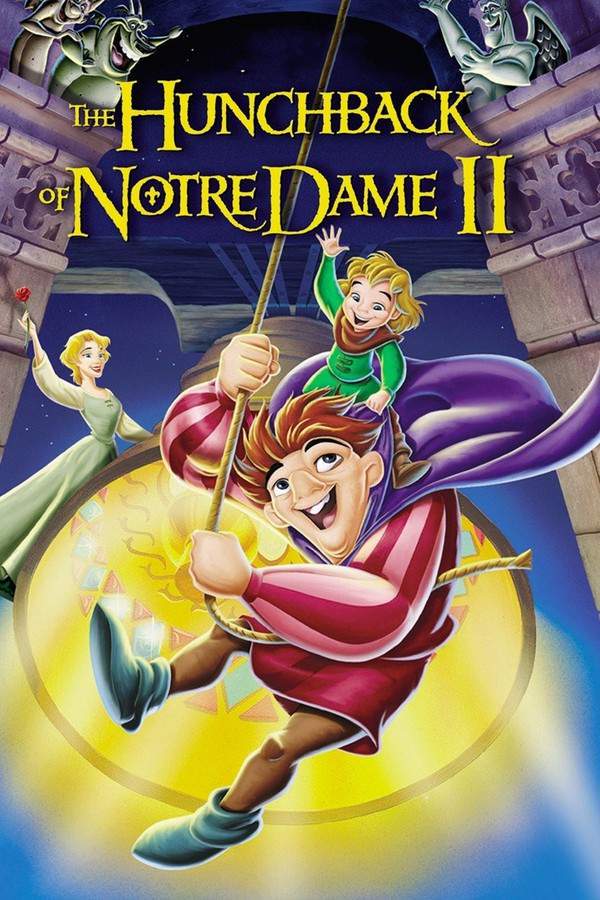
The Hunchback of Notre Dame 1996


Directed by

Gary Trousdale
Made by

Buena Vista Pictures
Where to Watch The Hunchback of Notre Dame
See current US streaming, rental, and purchase options for The Hunchback of Notre Dame (1996) via JustWatch.







The Hunchback of Notre Dame Plot Summary
Read the complete plot summary and ending explained for The Hunchback of Notre Dame (1996). From turning points to emotional moments, uncover what really happened and why it matters.
In the year 1482, in the heart of Paris during the reign of Louis XI, the tale unfolds brimming with love, obsession, and tragic fate. Esmeralda, a sixteen-year-old Roma dancer, captures the hearts of several men, including the noble Captain Phoebus and the tragic bell ringer, Quasimodo. The Archdeacon, Claude Frollo, is consumed by his twisted desire for Esmeralda, leading him to order Quasimodo to abduct her. However, in a turn of events, Quasimodo is thwarted by Phoebus and his guards, freeing Esmeralda, who soon finds herself infatuated with Phoebus.
The plot thickens when Gringoire, a poet who tries to save Esmeralda but ends up knocked out by Quasimodo, stumbles into the dangerous “Court of Miracles,” inhabited by the Roma and the marginalized. To save his life, Esmeralda agrees to marry Gringoire, though she denies him any physical intimacy, creating tension in their unconventional union.
The following day, Quasimodo faces punishment as he is sentenced to public humiliation. When Esmeralda offers him water, their bond deepens, capturing his heart and setting off a force of emotions.
As tensions escalate, Frollo becomes obsessed with Esmeralda, especially after learning she has taught her pet goat, Djali, to spell “PHOEBUS.” This knowledge ignites Frollo’s jealousy, leading him to spy on Phoebus. After discovering Phoebus’s intentions with Esmeralda, Frollo’s jealousy culminates in violence as he stabs Phoebus during their clandestine meeting. Esmeralda, finding herself in a precarious position, suffers the consequences as she is accused of witchcraft and murder while awaiting her execution.
“If I can’t have her, no one can.”
Frollo’s madness deepens, attempting to force his affections upon Esmeralda. In a desperate act, Quasimodo rescues her, drawing the law’s ire but granting temporary sanctuary in the cathedral.
As news spreads and attempts to rescue Esmeralda rise, Gringoire learns of the plan to strip her of her sanctuary. Clopin Trouillefou, the fearless leader of the Roma, galvanizes the “Court of Miracles” to storm Notre-Dame in a bid for their beloved dancer’s freedom. Misunderstanding the intentions, Quasimodo emerges to defend the cathedral, resulting in chaos that reaches even the king’s ear. Misinterpreting the rallying efforts of the Roma as a riot demanding Esmeralda’s death, the king orders immediate execution.
In a heartbreaking twist, Frollo’s attempts to ensnare Esmeralda lead him to confront Sister Gudule, revealing a shocking connection—she is Esmeralda’s birth mother, long separated from her daughter. Their reunion is tragically cut short when Esmeralda is dragged away to meet her fate on the gallows.
From atop Notre-Dame, both Frollo and Quasimodo witness the execution. Unable to bear the loss, Quasimodo exacts his revenge by casting Frollo to his death. Left with nothing to live for, Quasimodo disappears from the world, forever haunted by his love for Esmeralda.
In a somber conclusion, years later, the skeletons of Quasimodo and Esmeralda are discovered intertwined, suggesting that he sought her even in death, tragically uniting them in a final embrace amongst the forgotten.
The Hunchback of Notre Dame Timeline
Follow the complete movie timeline of The Hunchback of Notre Dame (1996) with every major event in chronological order. Great for understanding complex plots and story progression.
Esmeralda Captures Hearts
In the heart of Paris in 1482, the beautiful Roma dancer Esmeralda captures the attention of various men, including Captain Phoebus and the disfigured bell ringer, Quasimodo. Her allure becomes the source of both passion and obsession, setting the stage for the ensuing tragedy.
Frollo's Dark Desire
The Archdeacon Claude Frollo, consumed by his twisted desire for Esmeralda, plots to have her abducted. He commands Quasimodo to carry out this plan, revealing the depth of Frollo's obsession and his willingness to exploit Quasimodo's loyalty.
The Rescue by Phoebus
As Quasimodo attempts to carry out Frollo's orders, Captain Phoebus intervenes, leading a rescue that liberates Esmeralda. This event not only strengthens the bond between Esmeralda and Phoebus but also deepens Quasimodo's feelings for her.
Gringoire's Agreement
Gringoire, a poet who tries to save Esmeralda, finds himself outmatched and is knocked unconscious by Quasimodo. In a desperate bid to save her life, Esmeralda agrees to marry Gringoire, though she denies him any physical intimacy, complicating their relationship.
Quasimodo's Punishment
Quasimodo faces punishment for his actions by being publicly humiliated. Despite the shame, when Esmeralda shows him compassion by offering water, a profound bond forms between them, revealing the depths of Quasimodo's emotions.
Frollo's Jealousy Ignites
Frollo's obsession escalates upon discovering that Esmeralda has taught her pet goat, Djali, to spell Phoebus's name. This knowledge drives Frollo to spy on Phoebus, leading to an explosive confrontation party where jealousy manifests violently.
The Stabbing
During a secret meeting, Frollo's jealousy culminates in tragedy as he stabs Phoebus, believing he is protecting his claim on Esmeralda. This heinous act sets off a series of events that will leave Esmeralda facing severe consequences.
Accusation and Imprisonment
Following Phoebus's injury, Esmeralda is wrongly accused of witchcraft and murder. As she awaits execution, her fate grows increasingly precarious, caught in the web of Frollo's obsession and societal prejudices against her.
Frollo's Madness Deepens
Frollo's madness intensifies as he attempts to force his affections on Esmeralda, further distorting the line between desire and control. Quasimodo, witnessing her suffering, resolves to take action and rescue her from this nightmare.
Quasimodo's Rescue
In a desperate act of love, Quasimodo rescues Esmeralda from her captors, offering her temporary refuge in the cathedral. This act of defiance draws the attention of the law, placing both him and Esmeralda in greater danger.
Rallying the Roma
As news of Esmeralda's impending execution spreads, Clopin, the leader of the Roma, rallies his people to storm Notre-Dame to demand her freedom. This act of solidarity highlights the deep bond within the Roma community, as they fight against injustice.
Chaos at Notre-Dame
Misunderstanding the Roma's intentions as a riot, Quasimodo emerges to protect the cathedral, leading to chaos and confusion. This unexpected turn of events reaches the king, prompting him to issue a harsh order for Esmeralda's execution.
Sister Gudule's Revelation
In a heartbreaking moment, Sister Gudule reveals to Frollo that she is Esmeralda's long-lost mother. Their brief reunion is tragically interrupted as Esmeralda is captured and taken away to face her execution.
A Tragic Execution
From the heights of Notre-Dame, both Frollo and Quasimodo witness Esmeralda's execution. Overwhelmed by grief and rage, Quasimodo seeks vengeance against Frollo for orchestrating Esmeralda's demise.
Quasimodo's Final Act
In a tragic conclusion, Quasimodo casts Frollo to his death, consumed by despair after losing Esmeralda. Years later, their intertwined skeletons are discovered, symbolizing their tragic love that transcended even death.
The Hunchback of Notre Dame Characters
Explore all characters from The Hunchback of Notre Dame (1996). Get detailed profiles with their roles, arcs, and key relationships explained.
Quasimodo
Quasimodo, the tragic bell ringer of Notre-Dame, is a figure of resilience and devotion. Despite his disfigurement, he possesses a gentle heart, shaped by longing and loneliness. His character embodies the complexities of love, showcasing both strength and vulnerability as he grapples with his feelings for Esmeralda.
Esmeralda
Esmeralda is a free-spirited Roma dancer whose beauty and strength captivate those around her. She symbolizes the fight against oppression and injustice, showing remarkable courage in the face of adversity. Her relationships with Quasimodo and Phoebus reveal her complexity and the societal expectations placed upon women.
Claude Frollo
Claude Frollo, the Archdeacon, is a character consumed by obsession and desire, which ultimately leads to his downfall. His internal conflict between duty and desire drives the narrative toward tragedy, reflecting the destructive nature of unchecked passions. Frollo serves as a cautionary figure, illustrating the dangers of obsession.
Captain Phoebus
Captain Phoebus is characterized by his charm and nobility, initially drawn to Esmeralda's beauty. His moral conflict between duty and love adds tension to the story as he navigates his feelings amidst the chaos surrounding them. Phoebus represents the struggle to balance personal desires with societal expectations.
Gringoire
Gringoire is a poet and dreamer, whose naivety often lands him in trouble. He offers a unique perspective on love and loyalty, particularly through his unconventional marriage to Esmeralda. His character highlights the theme of artistic ambition set against the harsh realities of life.
The Hunchback of Notre Dame Settings
Learn where and when The Hunchback of Notre Dame (1996) takes place. Explore the film’s settings, era, and how they shape the narrative.
Time period
1482
The year 1482 reflects a period in France characterized by significant political and social turbulence. This was a time when the monarchy sought to consolidate power, and the societal divide between the nobility and the marginalized was deeply pronounced. Furthermore, it was an era of burgeoning cultural expression and tensions that would shape the future of France.
Location
Paris
Paris, known as the City of Light, is rich in history, art, and culture. During the late 15th century, it was a center of political power under the reign of Louis XI, hosting grand structures such as the Notre-Dame Cathedral, where much of the story unfolds. The city's complex social fabric at that time included the marginalized Roma community, represented in this tale.
The Hunchback of Notre Dame Themes
Discover the main themes in The Hunchback of Notre Dame (1996). Analyze the deeper meanings, emotional layers, and social commentary behind the film.
💔
Unrequited Love
Unrequited love permeates the narrative, particularly through Quasimodo's longing for Esmeralda. His affection is a profound reflection of beauty and tragedy intertwined, as he represents the struggles of loving someone who is unattainable. This theme resonates deeply with the concept of selfless love faced with societal rejection.
⚖️
Justice and Injustice
The story highlights the dichotomy of justice and injustice in society. Esmeralda's wrongful accusation and the harsh consequences she faces illustrate the failures of a system that perpetuates inequality. The quest for justice ultimately becomes a driving force, leading to rebellion against oppressive societal norms.
😔
Isolation
Isolation is poignantly depicted through Quasimodo's character, whose physical appearance leads to societal rejection. His emotional detachment signifies a deeper commentary on the human condition, exploring how external perceptions can lead to profound inner loneliness despite the desire for connection.

Coming soon on iOS and Android
The Plot Explained Mobile App
From blockbusters to hidden gems — dive into movie stories anytime, anywhere. Save your favorites, discover plots faster, and never miss a twist again.
Sign up to be the first to know when we launch. Your email stays private — always.
Explore the mobile appThe Hunchback of Notre Dame Spoiler-Free Summary
Discover the spoiler-free summary of The Hunchback of Notre Dame (1996). Get a concise overview without any spoilers.
In the bustling streets of 15th‑century Paris, the stone arches of Notre‑Dame loom like a cathedral‑city within a city, its bells echoing across rooftops and market squares. The film paints the capital with a rich, gothic palette—cobblestones glisten after rain, lanterns flicker in narrow alleys, and the distant hum of courtly intrigue drifts through the air. This world feels both timeless and intimate, inviting viewers to wander through its shadowed cloisters and vibrant squares while sensing an undercurrent of yearning.
Quasimodo is introduced as the bell‑ringer whose very shape sets him apart from the bustling crowds below. Confined to the lofty towers of the cathedral, he has grown accustomed to the reverberations of his own solitude, yet a quiet longing for belonging pulses beneath his stone‑cold exterior. His daily rituals—pulling ropes, sounding the hour—become a meditation on identity, and his solitary existence is tinged with the hope that somewhere beyond the stained‑glass walls, someone might see past his appearance.
When a lively Roma dancer arrives, the city’s rhythm shifts. Esmeralda moves through the streets with effortless grace, her smile sparking curiosity in even the most jaded onlookers. Her presence brings color to the gray stone, and her free‑spirited nature hints at a world where acceptance might be possible for those who dare to look beyond the surface. The chemistry between the bell‑ringer and the dancer is subtle yet magnetic, promising a bond forged in compassion and shared dreams.
Amid the swirling intrigue, a charismatic officer of the guard, Captain Phoebus, patrols the avenues with a confident stride. His reputation for bravado and a taste for the finer things in life adds a layer of tension, as his interactions with both the cathedral’s outcast and the city’s free‑spirited performer suggest competing desires and unspoken alliances. Together, these figures navigate a Paris steeped in beauty, superstition, and the quiet hope that love and acceptance might transcend even the deepest divides.
Featured on this page

What's After the Movie?
Not sure whether to stay after the credits? Find out!
Check out our other apps:

SAT Sphere
Build confidence for the Digital SAT.

Mori Atlas
Discover wild places worth protecting.

Luntero
Search smarter for a home in Amsterdam.

Plot Explained
Unravel movie endings and hidden clues.

Pokechamp
Dive into Pokémon data and battle logic.

Driving Theory
Get ready for your European theory test.

Movie Dust
Plan your next cinema trip with ease.

Musemap
Find art and culture as you travel.

Selkobase
Compare credentials before committing.

Local Manual
Turn an unfamiliar country into practical next steps.

Lernavi
Compare school systems before your next move.

GymRoam
Find a workout stop wherever your plans take you.
Explore Our Movie Platform
New Movie Releases (2026)
Famous Movie Actors
Top Film Production Studios
Movie Plot Summaries & Endings
Major Movie Awards & Winners
Best Concert Films & Music Documentaries
Movie Collections and Curated Lists
© 2026 What's After the Movie. All rights reserved.
Privacy Policy