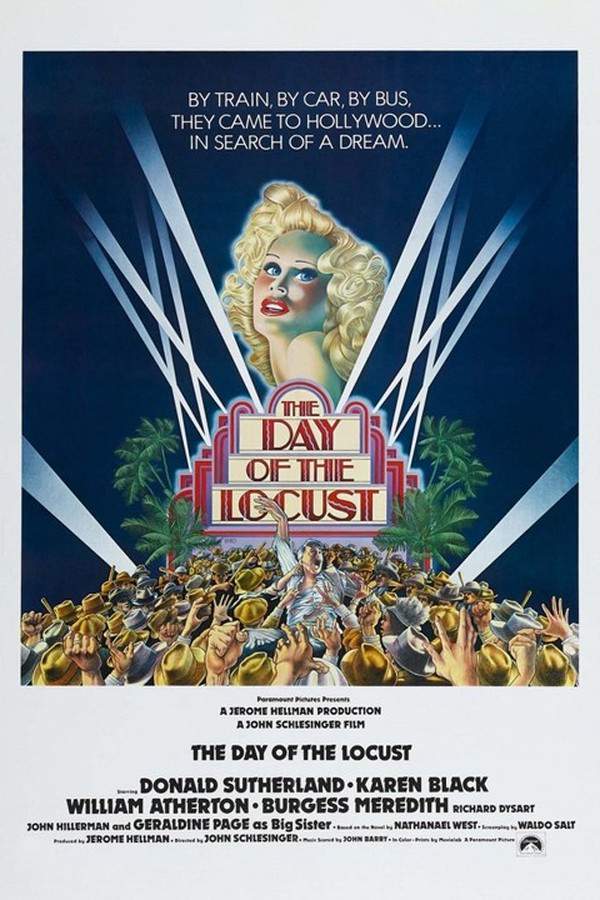
The Day of the Locust 1975

Directed by
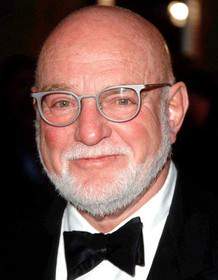
John Schlesinger
Made by

Paramount Pictures
Where to Watch The Day of the Locust
See current US streaming, rental, and purchase options for The Day of the Locust (1975) via JustWatch.







The Day of the Locust Plot Summary
Read the complete plot summary and ending explained for The Day of the Locust (1975). From turning points to emotional moments, uncover what really happened and why it matters.
Aspiring artist Tod Hackett, a recent Yale graduate, ventures into 1930s Hollywood with dreams of making it big. He secures a position as an art department production illustrator at a prominent film studio and moves into the San Bernardino Arms, a dilapidated bungalow court filled with colorful characters who are all on the fringes of the film industry. Among the eclectic residents is Faye Greener, a struggling actress with grand ambitions, her father Harry, an ex-vaudevillian, and Abe Kusich, a dwarf embroiled in a tumultuous romance with his girlfriend, Mary. Adore Loomis, a young boy whose mother hopes to turn him into a star, resides nearby, and Homer Simpson, a repressed accountant, secretly harbors feelings for Faye.
Tod notices a crack in the wall caused by an earthquake and whimsically places a bright red flower inside it. His friendship with Faye blossoms as he accompanies her to a screening where she has a minor role, only for her to be disheartened when her appearance is drastically reduced on screen. When Tod tries to express his feelings for her, Faye gracefully deflects, stating she would only consider marriage to a wealthy man.
At a lavish party in the Hollywood Hills, the eclectic guests indulge in stag films. Although hesitant, Faye finds herself drawn to Tod, leading to an intimate campfire outing with cowboy Earle Shoop and his friend, Miguel. An inebriated Tod’s jealousy surfaces when Faye dances with Miguel, resulting in a disturbing confrontation. Later, tragedy strikes when Faye and Homer take Harry to a church service, where a healer known as Big Sister attempts a cure for his heart condition—unfortunately, he dies soon after. Struggling for funeral costs, Faye resort to prostitution to make ends meet.
The shy, obsessive Homer’s affection for Faye deepens as he provides support after her father’s passing. They eventually move in together while Faye continues her weary pursuit of acting opportunities. During the filming of a Waterloo-themed period drama, Faye narrowly escapes a set collapse, and Tod, who witnesses the chaos, reconnects with her afterward. The trio shares a meal where Faye confesses her relationship with Homer lacks passion, though it provides her with a sense of security.
As the trio attend a party hosted by Faye and Homer, the atmosphere thickens with tension as Faye seeks validation from the other men, including Claude Estee, a successful art director. A confrontation unfolds when Homer catches Faye in a compromising position with Miguel, leading to drama as Tod remains a passive observer.
The situation escalates during the premiere of The Buccaneer at Grauman’s Chinese Theatre. Homer, feeling lost, ignites chaos after a confrontation with young Adore, resulting in a brutal act that leaves Adore dead. The scene spirals into violence as the crowd reacts, leading to an all-out riot. Faye becomes a victim in the ensuing melee, while Tod suffers severe injuries. Amid this chaos, Tod’s artistic visions manifest as Goyaesque figures descend upon the turmoil.
Days later, Faye finds herself alone in Tod’s abandoned apartment, tears welling as she gazes at the solitary flower left behind, a poignant reminder of what once was.
The Day of the Locust Timeline
Follow the complete movie timeline of The Day of the Locust (1975) with every major event in chronological order. Great for understanding complex plots and story progression.
Tod's Arrival in Hollywood
Aspiring artist Tod Hackett arrives in 1930s Hollywood after graduating from Yale, filled with dreams of achieving fame and success in the film industry. He secures a position as an art department production illustrator at a prominent film studio, signaling the start of his journey in this glamourous yet challenging world.
Moving to San Bernardino Arms
Tod moves into the San Bernardino Arms, a bungalow court that is home to a mix of colorful characters, all of whom are struggling to make their mark in the film industry. Here, he meets Faye Greener, a hopeful actress, and various eccentric residents, including her ex-vaudevillian father Harry and dwarf Abe Kusich.
The Red Flower
Noticing a crack in the wall caused by an earthquake, Tod whimsically places a bright red flower inside it. This small act symbolizes his artistic perspective and offers a glimpse into his character, even amid the grim realities of Hollywood.
Faye's Disappointment
Tod's friendship with Faye grows when he accompanies her to a screening where she has a minor role. However, Faye is disheartened when her appearance on screen is significantly reduced, highlighting the harsh realities faced by aspiring actors.
The Hollywood Party
At a lavish party in the Hollywood Hills, guests indulge in stag films and revelry. Faye is drawn to Tod during the event, leading to a more intimate outing, but jealousy brews within Tod when Faye dances with cowboy Miguel, culminating in a disturbing confrontation.
Harry's Death
Tragedy strikes when Faye and Homer take her father Harry to a church service where a healer known as 'Big Sister' attempts to cure his heart condition. Despite their hopes, Harry dies shortly after, leaving Faye devastated and struggling for financial support.
Faye's Desperation
In the aftermath of her father's death, Faye resorts to prostitution to make ends meet, a stark indicator of her desperation and the lengths to which she must go in the cutthroat environment of Hollywood. Her struggles emphasize the harsh realities for women in the industry.
Homer's Support
Homer Simpson, the repressed accountant with unrequited feelings for Faye, deepens his affection for her by supporting her after Harry's death. They eventually move in together, although Faye's pursuit of acting continues to weigh heavily on her.
Set Collapse Incident
While filming a Waterloo-themed period drama, Faye narrowly escapes a catastrophic set collapse. Tod witnesses the chaos and reunites with her afterward, reigniting their friendship amid the rollercoaster of their lives in Hollywood.
Confession of Security and Passion
During a shared meal between Tod, Faye, and Homer, Faye confesses her relationship with Homer lacks passion, despite providing her a sense of security. This revelation showcases her disillusionment with her current circumstances and yearning for something more.
Party Tensions Rise
At a party hosted by Faye and Homer, tension fills the air as Faye seeks validation from other men, particularly Claude Estee. When Homer discovers Faye in a compromising position with Miguel, it leads to a dramatic confrontation that severely tests their relationships.
Chaos at the Premiere
During the premiere of *The Buccaneer* at Grauman’s Chinese Theatre, Homer's feelings of disorientation culminate in a violent outburst after confronting young Adore. This act ignites chaos, resulting in Adore's death and a riot that sends the audience into a frenzy.
Faye's Victimhood
In the ensuing melee of the riot, Faye becomes one of the casualties, illustrating the chaos that Hollywood has wrought on her life. This moment serves as a tragic climax, encapsulating the destructive nature of the environment she yearned to succeed in.
Tod's Artistic Vision
As chaos reigns during the riot, Tod's artistic visions manifest in the form of Goyaesque figures that descend upon the turmoil, blurring the lines between reality and art. This moment reflects Tod’s internal struggle and his perception of the chaotic world around him.
Faye's Mourning
Days later, Faye is found alone in Tod's abandoned apartment, reflecting on her tumultuous journey. Tears well up in her eyes as she gazes at the solitary flower left behind, symbolizing a poignant reminder of lost opportunities and the remnants of her past.
The Day of the Locust Characters
Explore all characters from The Day of the Locust (1975). Get detailed profiles with their roles, arcs, and key relationships explained.
Tod Hackett
Tod Hackett is a recent Yale graduate and aspiring artist who moves to Hollywood eager to break into the film industry. His character embodies naivety and hope, yet he becomes entwined in a tumultuous world filled with ambition, heartbreak, and violence. As he struggles with his feelings for Faye, he navigates the complexities of love and the harsh realities of Hollywood.
Faye Greener
Faye Greener is a captivating yet struggling actress, desperately seeking fame and validation. She navigates her relationships with a blend of charm and manipulation, often leaving a wake of heartbreak in her pursuit of success. Her character represents the allure of Hollywood and the personal sacrifices made in its pursuit.
Homer Simpson
Homer Simpson is a repressed accountant whose love for Faye leads him down a path of jealousy and desperation. His character is marked by internal conflict, as he seeks to support Faye while grappling with feelings of inadequacy. The tragic end of his story underlines the theme of unreciprocated love.
Harry Greener
Harry Greener is Faye's father, an ex-vaudevillian whose presence adds to the burdens Faye faces. His struggles symbolize the generational dreams of fame that often remain unfulfilled, reflecting the tragic pursuits within the entertainment industry.
Earle Shoop
Earle Shoop is a cowboy who briefly captivates Faye's interest, embodying the carefree allure of Hollywood. His character serves as a contrast to the more obsessive relationships in the story, highlighting the variety of experiences in the quest for fame.
The Day of the Locust Settings
Learn where and when The Day of the Locust (1975) takes place. Explore the film’s settings, era, and how they shape the narrative.
Time period
1930s
The 1930s were marked by the Great Depression in America, a time when many struggled to make a living and chase dreams amid economic hardship. This period influenced the arts significantly, as people turned to films for escapism. Hollywood became a playground of ambition and desperation, imbuing the story with a rich backdrop of societal challenges.
Location
Hollywood, San Bernardino Arms, Hollywood Hills, Grauman’s Chinese Theatre
The movie takes place primarily in 1930s Hollywood, a bustling hub of the film industry known for its glamour yet steeped in the struggles of aspiring artists. The San Bernardino Arms is a dilapidated bungalow court that serves as the home for colorful characters on the fringes of Hollywood. Grauman's Chinese Theatre, a notable venue for film premieres, becomes the scene for the film's climactic riot.
The Day of the Locust Themes
Discover the main themes in The Day of the Locust (1975). Analyze the deeper meanings, emotional layers, and social commentary behind the film.
🎭
Ambition
The theme of ambition permeates the film as characters strive for success in the film industry. Tod Hackett's hopes of becoming an esteemed artist are contrasted with Faye Greener's relentless pursuit of fame, even at a personal cost. The narrative explores the lengths individuals will go to in order to achieve their dreams, highlighting both the allure and the dark side of ambition.
💔
Desperation
Desperation is a potent theme illustrated through the characters' struggles. Faye resorts to prostitution after her father's death, reflecting the lengths to which she must go to survive in a competitive environment. This sense of urgency and loss echoes throughout the film, exposing the grim realities behind the glitz of Hollywood.
🔥
Violence
The theme of violence culminates in a chaotic riot during a film premiere, showcasing the volatile nature of human emotions and societal tension. The tragic events highlight the fragility of dreams in the face of overwhelming circumstances, as characters grapple with jealousy, betrayal, and the desperate need for validation.

Coming soon on iOS and Android
The Plot Explained Mobile App
From blockbusters to hidden gems — dive into movie stories anytime, anywhere. Save your favorites, discover plots faster, and never miss a twist again.
Sign up to be the first to know when we launch. Your email stays private — always.
Explore the mobile appThe Day of the Locust Spoiler-Free Summary
Discover the spoiler-free summary of The Day of the Locust (1975). Get a concise overview without any spoilers.
In the midst of 1930s Los Angeles, the glitter of the silver screen masks a city teetering on the edge of decay. The streets pulse with a restless energy, where hopeful migrants converge on cramped bungalow courts that cling to the promises of Hollywood while the walls around them crumble. The air is heavy with the scent of ambition, cheap perfume, and the distant echo of a society whose values are being reshaped by fame and fortune, casting long shadows over the sun‑lit boulevards.
Tod Hackett, a freshly graduated artist from Yale, arrives with sketchbook in hand, dreaming that his talent will find a place in the bustling studios. He secures work as a production illustrator, trading the quiet of academia for the frantic pace of set design. Amid the flickering lights of the studio lot, he discovers a world where imagination collides with commerce, and every line he draws feels both a personal triumph and a bargaining chip in a larger, unforgiving machine.
Faye Greener inhabits the same cracked façade, a young actress whose aspirations are as bright as the red flower she once slipped into a cracked wall. Her determination to break through the unforgiving casting rooms is matched only by her father’s lingering vaudeville past and the precarious balance she maintains between performance and survival. Across the hallway, Homer Simpson watches the spectacle with quiet intensity; a repressed accountant whose orderly life is unsettled by an unspoken yearning for the glamour he can only observe from the margins. Their intertwined lives form a fragile network of longing, envy, and fleeting connection.
Together, these three characters navigate a realm where the promise of stardom is tempered by desperation, and where the relentless pursuit of success can both illuminate and corrupt. The mood is one of haunting beauty—a tapestry of faded dreams and stark reality—inviting the viewer to wonder how far each will go before the glitter of Hollywood finally casts its shadow over their fragile hopes.
Movies with Similar Twists and Themes
Uncover films that echo the narrative beats, emotional arcs, or dramatic twists of the one you're exploring. These recommendations are handpicked based on story depth, thematic resonance, and spoiler-worthy moments — perfect for fans who crave more of the same intrigue.



Featured on this page

What's After the Movie?
Not sure whether to stay after the credits? Find out!
Check out our other apps:

SAT Sphere
Build confidence for the Digital SAT.

Mori Atlas
Discover wild places worth protecting.

Luntero
Search smarter for a home in Amsterdam.

Plot Explained
Unravel movie endings and hidden clues.

Pokechamp
Dive into Pokémon data and battle logic.

Driving Theory
Get ready for your European theory test.

Movie Dust
Plan your next cinema trip with ease.

Musemap
Find art and culture as you travel.

Selkobase
Compare credentials before committing.

Local Manual
Turn an unfamiliar country into practical next steps.

Lernavi
Compare school systems before your next move.

GymRoam
Find a workout stop wherever your plans take you.
Explore Our Movie Platform
New Movie Releases (2026)
Famous Movie Actors
Top Film Production Studios
Movie Plot Summaries & Endings
Major Movie Awards & Winners
Best Concert Films & Music Documentaries
Movie Collections and Curated Lists
© 2026 What's After the Movie. All rights reserved.
Privacy Policy