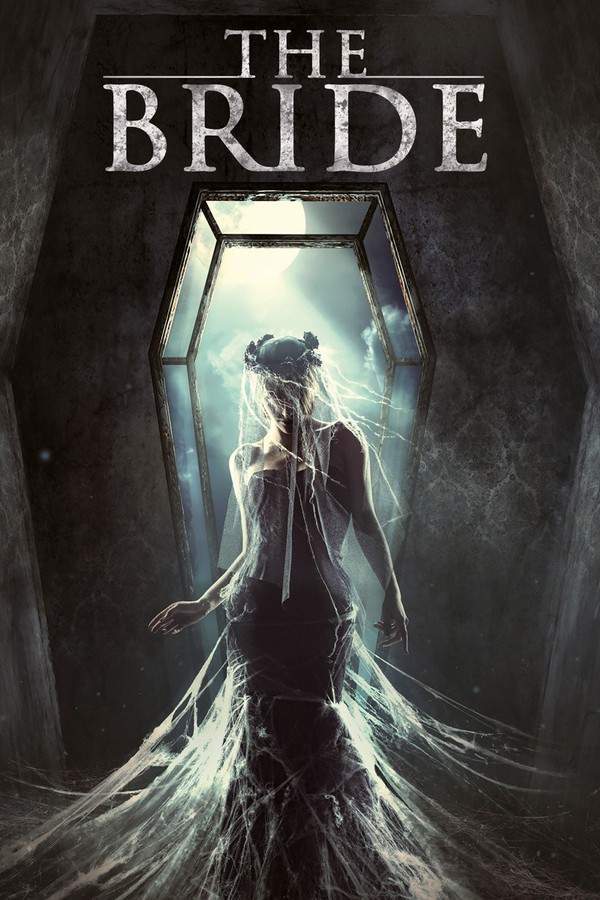
The Bride (La Novia) 2016


Directed by
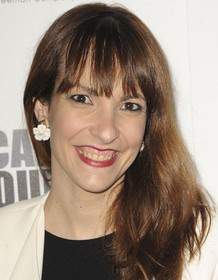
Paula Ortiz
Made by
Strand Releasing
Where to Watch The Bride (La Novia)
See current US streaming, rental, and purchase options for The Bride (La Novia) (2016) via JustWatch.

Amazon Prime Video
HD
Amazon Prime Video with Ads
HD
Strand Releasing Amazon Channel
HD
Fawesome
HD
Hoopla
SD
Kanopy
HD
Filmzie
HD
Pluto TV
SD
The Roku Channel
HD
Tubi TV
SD
Xumo Play
HD
Amazon Video
HD
Apple TV Store
HD
Fandango At Home
SD
Google Play Movies
SD
YouTube
SD Streaming availability powered by 
The Bride (La Novia) Plot Summary
Read the complete plot summary and ending explained for The Bride (La Novia) (2016). From turning points to emotional moments, uncover what really happened and why it matters.
Mary Shelley returns from the afterlife to tell a story she never finished, and she does so by possessing a woman named Ida in 1936 Chicago. Through Ida’s traces of memory and voice, the tale unfolds with a somber, almost mythic cadence: Shelley speaks of the criminal world around crime boss Lupino, whose henchmen, Clyde and James, quietly whisk Ida aside as the author’s tirades spill out, causing her to stumble to her death on a staircase. In this same city, a different drama takes shape around the revived dead and the endless ache of loneliness.
In another corner of Chicago, the Frankenstein creature—often called Frank—arrives at the doorstep of scientist Dr. Cornelia Euphronius. Frank, having learned from the old legends of reanimation, asks Euphronius to create a companion for him after more than a century of solitude. Together they select Ida’s corpse and succeed in reviving her, though the process steals Ida’s memory in the process. Frank seizes on this amnesia, presenting her as his bride and insisting that her lost memories are the accident that fractured her past.
Ida’s revived life begins with a shared night out: they attend a screening featuring Frank’s favorite actor, Ronnie Reed, and later dance in a club. A brutal turn comes when two men try to assault Ida; Frank kills them and, despite her pleas to be left behind, she chooses to flee with him. The couple slips away on a train bound for New York City, during which they murder a security officer who confronts them following Shelley’s destabilizing outburst. On the other side of the country, Detective Jake Wiles and his assistant Myrna Malloy start to connect a string of murders and disappearances to the lovers’ trail.
The fugitives land in New York, where, in a new identity, Frank tells Ida her name is Penelope Rogers. The alias is not enough to quiet the escalating chaos: at a screening of Revolt of the Zombies and later at a high-society party, Penelope disrupts the crowd with a fierce energy that crosses into mayhem. Frank participates in the revelry, even dancing as Reed does in his films, while partygoers fall under a strange, Shelley-possessed influence. When the police arrive, Penelope resists and holds Reed at gunpoint, condemning the men in attendance for abusing women. Detective Wiles recognizes her true identity as Ida, and the couple’s escape becomes a headline-grabbing spree that ends with a stolen car carrying them out of the city.
As Lupino notices the sensational crimes in the press, he orders harsher measures, executing James for failing to quiet Penelope and sending Clyde to finish the job. Malloy’s investigation—connecting sightings of the couple to films set in Ronnie Reed’s worlds—drives them toward Niagara Falls, where Wiles confronts Penelope and informs her of her true past. A tense moment leaves Wiles injured when Penelope shoots his foot, forcing the couple to flee again. They take shelter at a drive-in where Frank hints at the truth of their origins, prompting a moral reckoning in their fragile bond.
Wiles’s confession to Malloy—that he and Ida had once planned to take down Lupino but failed—introduces guilt into the pursuit. Malloy rises to replace the retiring Wiles, and the couple’s path converges with the law again at the drive-in. Frank seeks Penelope’s forgiveness, reaffirming his love for her, and she reclaims the identity of the Bride as they prepare for one final turn of events. In a brutal twist, Clyde shoots Frank, and the Bride escapes with his lifeless body back toward Euphronius’s laboratory, pursued by Malloy.
Euphronius herself refuses to reanimate the dead again after a traumatic attempt to save her husband, a decision that blocks the pair’s earlier fate. Clyde presses into the laboratory and fatally shoots the Bride, leaving Euphronius alone with the Bride’s and Frank’s corpses. Malloy arrives and orders the search for Clyde as the police take control of the scene; a glimmering sense of possibility returns as Malloy and the revived influence of Mary Shelley—who guides Euphronius—encourage a new experiment. Euphronius, moved by their voices, decides to attempt one final revival of the couple.
Clyde is soon captured by police, and the lab fills with the sign of something extraordinary: bright lights spill from the laboratory as the revived bodies of Penelope and Frank hold hands once more. In the ending credits, Lupino is finally apprehended by Wiles, while female rioters inspired by the Bride fill the streets, closing the tale on a note of renewed energy and eerie triumph.
- This retelling preserves the film’s core arc: a supernatural intercession by Mary Shelley, the revival and trauma of Ida, the creation of Penelope, a relentless crime spree, uneasy confrontations with law enforcement, and a final, ominous revival that hints at a cycle renewed. The story stays faithful to its themes of memory, identity, power, and the perilous lure of reanimation, while delivering a richly detailed journey through love, murder, law, and the uncanny certainty that some corpses never stay buried.
The Bride (La Novia) Timeline
Follow the complete movie timeline of The Bride (La Novia) (2016) with every major event in chronological order. Great for understanding complex plots and story progression.
Mary Shelley possesses Ida to tell her story
In 1936 Chicago, the spirit of Mary Shelley possesses Ida and begins recounting Lupino's crimes. Shelley's presence drives Ida into a trance as she riffs on the living dead's history. The moment crescendos when Lupino's henchmen cause Ida to fall down a flight of stairs and die.
Ida revived by Euphronius; memory loss
Dr. Euphronius revives Ida's corpse, bringing Frank's reanimation project to life. Ida wakes with memory loss and no recollection of her past. Frank claims her as his bride, refusing to let her remember a life apart from him.
Frank reveals Penelope Rogers as Ida's true identity
Within their fragile bond, Frank tells Penelope that her true name is Penelope Rogers. The memory loss keeps her from recognizing her former life, while Frank's possessive affection deepens. They decide to proceed with their dangerous plans together.
First violent escape: cinema, club, and murder
Frank and Penelope attend a film featuring Ronnie Reed and later go dancing at a club. When a would-be attacker targets Penelope, Frank eliminates the threat by killing the two men. Despite the danger, Penelope chooses to stay with Frank.
Flight to New York: train escape and officer death
The lovers stow away on a train bound for New York, killing a security officer who discovers them. Mary Shelley’s influence sparks a public outburst that complicates their escape. The pursuit by police and detectives begins in earnest.
Detectives Wiles and Malloy start chasing the couple
Detective Jake Wiles and Myrna Malloy begin tying the murders to the reanimation and the Bride's identity. They follow the couple across state lines to New York, assembling clues from city to city. The investigation widens into a major manhunt.
Penelope's identity clarified in NYC
While in hiding, Frank formally identifies the Bride as Penelope Rogers, reinforcing Ida's metamorphosis into Penelope. The old life remains inaccessible, as memory loss clouds any prior identity. The revelation marks a turning point in their relationship and in the chase.
Revolt of the Zombies screening chaos and high-class party refuge
Penelope disrupts a screening of Revolt of the Zombies, creating a public spectacle. They seek sanctuary at a luxurious party where Mary Shelley-possessed party-goers mingle with the elite. The glamour and danger of the duel between life and death intensify the pursuit.
Ronnie Reed moment; Wiles recognizes Penelope; police officer killed; getaway
At the party, Frank's adoration for Ronnie Reed becomes entangled with the Bride's presence; possessed guests join the chaos. Detective Wiles recognizes Penelope's true identity, and in a frenzy she shoots a police officer before fleeing in a stolen car. The Bride's notoriety grows as the escape continues.
Lupino deploys killers after the Bride
Lupino hones in on the Bride through newspaper reports, deciding to silence her for good. He executes James for failing to stop her and dispatches Clyde to kill Penelope again. The criminal underworld piles pressure on the couple as their spree continues.
Malloy and Wiles reach Niagara Falls
Malloy and Wiles trace the killings to film-set locations and travel to Niagara Falls to confront the couple. They edge closer to catching them as the trail narrows around Ronnie Reed's films' settings. The chase shifts toward the falls as crucial evidence materializes.
Niagara Falls confrontation; drive to the drive-in; origins revealed
At Niagara Falls, Wiles confronts them and reveals Ida's true past before Penelope shoots him in the foot. The couple flees to a drive-in, where Frank recounts the origins of their strange bond. The drive-in becomes a turning point in their story.
Frank is killed; Bride escapes with his body to Euphronius' lab
Clyde arrives at the drive-in and fatally shoots Frank; Penelope escapes with his body toward Euphronius' laboratory. The lovers' romance ends in tragedy as the forces against them tighten. The Bride's hope for revival is put on hold for a moment.
Euphronius contemplates revival; Clyde is stopped; Bride resurrected
Clyde breaks into Euphronius' lab and fatally shoots the Bride before the police arrive. Malloy urges a citywide search for Clyde, heightening the tension. Encouraged by Malloy and Mary from the afterlife, Euphronius contemplates reviving the couple despite the danger.
Revival and hopeful ending
Euphronius revives the Bride and Frank, and the two hold hands in a silent, eerie promise. The ending hints at Lupino's arrest by Wiles and rioters inspired by the Bride, suggesting a glimmer of justice for the living. The afterlife's influence lingers as life and death blur together.
The Bride (La Novia) Characters
Explore all characters from The Bride (La Novia) (2016). Get detailed profiles with their roles, arcs, and key relationships explained.
Ida (Penelope Rogers)
Revived from Ida's corpse by Euphronius and Frank, Ida awakens with memory loss and a chance for a new life. Taking on the names Penelope Rogers and, later, the Bride, she embodies shifting identities as she moves from victim to aggressor. She partners with Frank to commit crimes and assert a new agency in a world that no longer recognizes her. Her arc ends with a fatal shot, followed by revival, highlighting the fragility and resilience of identity.
Frank (Frankenstein's Monster)
Frankenstein's monster arrives seeking companionship after a century of loneliness. He persuades Euphronius to animate Ida as his bride, effectively turning love into possession. He participates in their crime spree, occasionally showing tenderness but often responding with violence to threat or betrayal. His final fate is entangled in a cycle of death and revival with Ida.
Dr. Cornelia Euphronius
A brilliant scientist who brings Frank and Ida back to life through risky reanimation experiments. Her work blurs ethical boundaries and personal loyalties, especially as she confronts the consequences of reviving beings with fragile memories. She initially refuses to reanimate Frank at one point, then agrees to revive the couple after external persuasion, underscoring the moral gray areas of science. Her lab becomes the stage for questions about life, death, and responsibility.
Lupino
Crime boss Lupino commands a ruthless empire and pursues the Bride across cities after learning of Ida's death and Penelope's rampage. He orders James's execution for failure and dispatches Clyde to finish the job, making him a calculating, merciless antagonist. His influence reaches into the police and press, driving the tension between law and crime. His end remains connected to the Bride's fate and Euphronius' decision at the lab.
Clyde
Lupino's henchman who carries out brutal orders, including killing suspects and attempting to silence Penelope/Ida. He remains a shadowy, lethal presence whose actions escalate the chase. He ultimately shoots the Bride, setting off the final chain of events that leads to the lab's confrontation.
Detective Jake Wiles
Senior detective investigating the murders, following the couple through Chicago and New York. He and Malloy discover the connection to Ronnie Reed's films and the pattern across cities. He acknowledges guilt for not acting to prevent Ida's death and ultimately retires, passing the baton to Malloy.
Myrna Malloy
Detective Wiles's assistant who traces the pattern of murders tied to Ronnie Reed's film locations. She travels to Niagara Falls with Wiles and helps advance the pursuit. She ends up aiding Euphronius' decision to revive the couple.
Mary Shelley
The author and narrator from the afterlife who speaks through Ida to tell a story that extends Frankenstein's legacy. Her spectral presence frames the Bride's tale, adding a meta-layer to the narrative about storytelling and memory.
Ronnie Reed
The film's meta-star whose on-screen persona resonates with Frank's aspirations. The Bride encounters Reed at a party, an event that becomes a catalyst for Penelope's defiance and a mirror to cinema's own glamour and danger.
The Bride (La Novia) Settings
Learn where and when The Bride (La Novia) (2016) takes place. Explore the film’s settings, era, and how they shape the narrative.
Time period
1936
The action unfolds in 1936 Chicago during the Great Depression, a time of economic hardship and gangster activity. The period influences fashion, public venues, and the film’s atmosphere, mixing noir mood with early cinema aesthetics. The narrative travels through urban centers and cinema culture, underscoring a world where crime, science, and spectacle collide.
Location
Chicago, New York City, Niagara Falls, Euphronius' laboratory, drive-in, high-class party
Primarily set in Chicago during the 1930s, with sequences that move to New York City and Niagara Falls as the couple flees. The story also unfolds in a scientist's laboratory where reanimation takes place and at upscale social venues like a high-class party and a drive-in, reflecting a blend of crime, cinema, and science. The varied locales emphasize the era's street-level danger and glamorous nightlife that frame the monster and bride's saga.
The Bride (La Novia) Themes
Discover the main themes in The Bride (La Novia) (2016). Analyze the deeper meanings, emotional layers, and social commentary behind the film.
🪞
Identity
Ida awakens with memory loss after revival, while new identities emerge as Penelope Rogers and later the Bride. The story uses shifting names and roles to explore how memory and perception shape who we are. Identity is tested as the characters blur lines between victim, aggressor, and chosen self. The arc highlights how external narratives can redefine a person.
💞
Obsession
Frank's longing for companionship becomes an all-consuming fixation that treats Penelope as more than a partner—she becomes an object of possession and power. Their bond escalates into a volatile blend of romance and violence, revealing how desire can drive criminal acts. The film uses their toxic relationship to critique the glamorization of monstrous appetites. Love without consent mutates into control and danger.
⚰️
Life, Death & Rebirth
Reanimation sits at the story's core, bringing Ida and Frank back to life at Euphronius' lab. The process erases memory and reshapes loyalties, complicating who they were and who they become. The Bride and Frank's revival at the end reasserts that life and love can be renewed, even after murder. The ending hints at cyclical resurrection rather than final closure.
🕵️
Power & Justice
Lupino's crime empire clashes with law enforcement as Wiles and Malloy chase the couple across cities and reputations. Guilt over inaction and a sense of accountability drive the investigators' arc, challenging vigilante justice. The narrative critiques the price of silence and the cost of allowing crime to dominate public life. The finale ties personal vendetta to a broader sense of justice, ending with renewed resolve to pursue truth.

Coming soon on iOS and Android
The Plot Explained Mobile App
From blockbusters to hidden gems — dive into movie stories anytime, anywhere. Save your favorites, discover plots faster, and never miss a twist again.
Sign up to be the first to know when we launch. Your email stays private — always.
Explore the mobile appThe Bride (La Novia) Spoiler-Free Summary
Discover the spoiler-free summary of The Bride (La Novia) (2016). Get a concise overview without any spoilers.
markdown In the shadowed streets of 1936 Chicago, Frank — a creature born from tragedy and science — searches for the one thing denied to him across a century of existence: companionship. His journey leads him to the laboratory of Dr. Cornelia Euphronius, a scientist whose controversial work with reanimation offers a flicker of hope. What begins as a desperate request soon transforms into an unlikely collaboration, as Frank asks her to create what he has never had — a bride to share his lonely, immortal life.
Dr. Euphronius approaches the task with both scientific precision and the haunted wisdom of past failures. When the reanimation succeeds, the woman who awakens possesses no memory of who she once was. In this blankness, Frank sees an opportunity — and perhaps a deception — naming her Penelope and crafting a tender fiction about their shared past. For a brief, fragile moment, the possibility of love and belonging seems tangible, even as it rests on uncertain foundations.
But the world beyond the laboratory walls holds little mercy for those who defy natural law. As the pair venture into a city humming with danger — from its criminal underbelly to determined investigators closing in — they must navigate a landscape where every step risks exposure. Their journey becomes a dance between intimacy and survival, raising questions about identity, authenticity, and whether a connection built on hidden truths can ever truly endure. As past and present collide, both Frank and his creation must confront what it means to be alive — and whether love, however it begins, is worth the cost of revealing it.
Featured on this page

What's After the Movie?
Not sure whether to stay after the credits? Find out!
Check out our other apps:

SAT Sphere
Build confidence for the Digital SAT.

Mori Atlas
Discover wild places worth protecting.

Luntero
Search smarter for a home in Amsterdam.

Plot Explained
Unravel movie endings and hidden clues.

Pokechamp
Dive into Pokémon data and battle logic.

Driving Theory
Get ready for your European theory test.

Movie Dust
Plan your next cinema trip with ease.

Musemap
Find art and culture as you travel.

Selkobase
Compare credentials before committing.

Local Manual
Turn an unfamiliar country into practical next steps.

Lernavi
Compare school systems before your next move.

GymRoam
Find a workout stop wherever your plans take you.
Explore Our Movie Platform
New Movie Releases (2026)
Famous Movie Actors
Top Film Production Studios
Movie Plot Summaries & Endings
Major Movie Awards & Winners
Best Concert Films & Music Documentaries
Movie Collections and Curated Lists
© 2026 What's After the Movie. All rights reserved.
Privacy Policy