
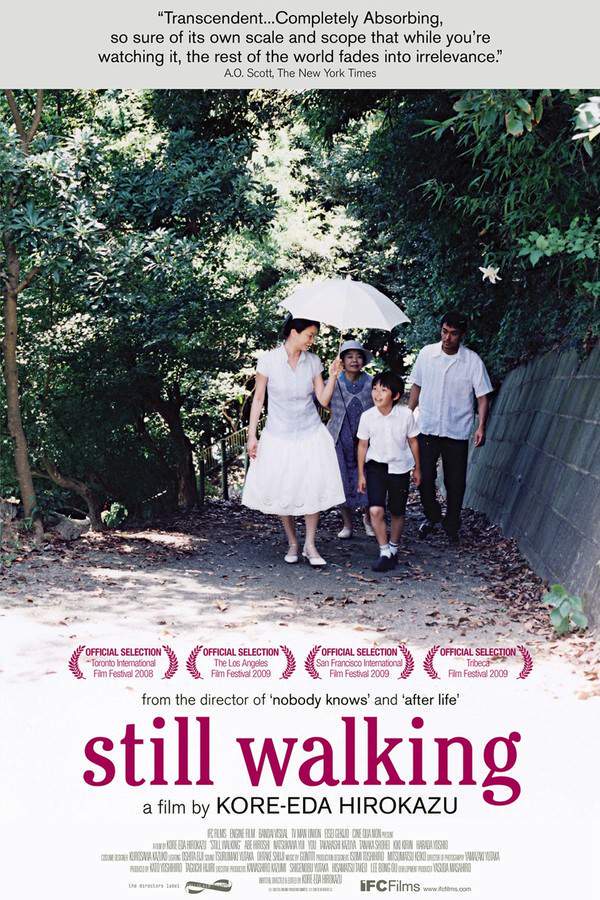
What Is Still Walking About?
The premise of Still Walking in 282 words, with nothing given away. The full story follows below.
In a quiet suburb of Japan, the Yokoyama family gathers each year to mark the anniversary of a tragedy that still shapes their lives. The ritual, centered around a shared meal and gentle conversation, offers a lyrical portrait of ordinary people holding onto memory while the seasons turn. The film’s tone is tender and observant, letting the everyday textures of home—soft lighting, the clatter of dishes, the hush of a garden—speak to the weight of unspoken loss.
Kyohei, the retired doctor who once guided his children’s futures, carries the quiet ache of a parent who lost his firstborn. Toshiko, his wife, balances devotion to the past with the need to keep the family moving forward. Their surviving son, Ryota, now an art restorer, returns with his new spouse, Yukari, a compassionate widow, and her shy young son, Atsushi. The presence of Chinami, Ryota’s sister, and her own family adds another layer of generational perspective. Each character arrives with their own quiet hopes and hidden insecurities, and the camera lingers on these subtle interactions—glances, half‑smiles, the way a hand rests on a photograph—that hint at deeper currents beneath the surface.
The day unfolds like a tapestry of small moments: stories whispered over tea, quiet jokes that soften the edges of grief, and the inevitable pauses where each member confronts what the anniversary has always meant. The film’s style is restrained yet emotionally resonant, allowing the audience to feel the pull of tradition and the gentle strain of unresolved feelings. Through careful framing and a soft, naturalistic soundscape, the story invites viewers to contemplate how families negotiate the past, cherish the present, and quietly hope for a future that honors both loss and love.
What Happens in Still Walking?
The complete story of Still Walking, from the first scene to the last, in 560 words (about 2 minutes). Spoilers throughout.
Spoilers ahead
The Yokoyama family reunites annually to honor the memory of their eldest son, Junpei, who tragically drowned 12 years ago while rescuing another boy. This poignant gathering includes Kyohei, Junpei’s retired doctor father, and his mother, Toshiko, along with their surviving son Ryota, who has recently married a widow named Yukari and has taken on the role of a stepfather to her young son, Atsushi. They are also accompanied by their daughter Chinami, her spouse, and their children. Ryota grapples with feelings of resentment stemming from the lingering shadow of his brother, who was clearly their parents’ favorite. Junpei’s belongings remain untouched, a constant reminder of his parents’ affection for him, particularly affecting Kyohei, who is still consumed by grief. Disappointed that Ryota chose a path in art restoration instead of embracing the family tradition of medicine, Kyohei’s bitterness adds to the family tension.
As the family gathers, Kyohei and Toshiko are initially frosty towards Yukari, harboring superstitions associated with Ryota marrying a widow. However, they gradually begin to appreciate her kindness and make efforts to connect with the shy Atsushi. Throughout the day, the family reminisces, sharing stories about their lives and careers. Yet, underneath the surface, Ryota privately struggles to reveal his difficulties finding stable work in his chosen field. When Ryota finds out Kyohei is advising Atsushi to pursue medicine, he attempts to confront his father, but Kyohei dismisses his concerns.
An unexpected visitor, Yoshio, the boy whom Junpei saved, arrives later that evening. The family’s reaction is mixed — many feel resentment towards Yoshio, who has grown into a rather aimless adult, believing he should have paid the ultimate price for his actions, while Ryota empathizes, feeling a familiar sting of inferiority. He pleads with Toshiko to cease inviting Yoshio over, arguing that her insistence on blaming him for Junpei’s death only perpetuates their shared sorrow. Toshiko, however, insists that holding on to someone to blame helps her cope with her son’s loss.
As Chinami and her family depart, the remaining members gather for dinner. Yukari’s inquiries into Toshiko and Kyohei’s marriage surface long-buried resentments and disappointments, yet their bond has endured through the years. A poignant moment arises when Toshiko shares their romantic song, Blue Light Yokohama by Ayumi Ishida, revealing that she was once haunted by jealousy when she heard Kyohei singing it with another woman. This flash of vulnerability illustrates the depth of their relationship struggles.
That night, a butterfly mysteriously enters the home and lands on Junpei’s photograph, prompting Toshiko to believe it symbolizes her lost son. Although Ryota approaches this notion with skepticism, he captures the butterfly and releases it outside as a tribute. Toshiko urges Ryota to start a family with Yukari soon, advising that a child could fortify their union against potential divorce.
The next morning, Ryota, Yukari, and Atsushi bid farewell. While Kyohei and Toshiko express eagerness to see them again for the New Year, Ryota and Yukari privately resolve to forgo the visit. As they drive away, Ryota reflects in voiceover that Kyohei passed away a few years later, followed by Toshiko. Their family dynamics shift without Chinami moving in or Ryota fulfilling the promises made during the reunion. The film concludes with Ryota’s family, now including a young daughter, paying respects at the Yokoyama family graves, embodying the rituals and traditions he learned from his mother.
Still Walking Timeline: Every Key Event in Order
15 key events in the order they happen, from “Annual Family Reunion” to “Paying Respects”.
- 1
Annual Family Reunion
The Yokoyama family gathers annually to honor Junpei, their eldest son who tragically drowned while saving another boy twelve years ago. This poignant event serves as a bittersweet reminder of their loss and the enduring bonds of family.
- 2
Kyohei and Toshiko's Struggles
Kyohei, Junpei's father and a retired doctor, remains deeply affected by his son's death. His ongoing grief is compounded by resentment towards Ryota, who chose a career in art restoration rather than following in his father's medical footsteps.
- 3
Ryota's New Family Dynamics
As Ryota marries Yukari, a widow, he takes on the role of stepfather to her son Atsushi. This new family dynamic adds another layer of complexity to the already strained relationships among the family members during the reunion.
- 4
Tensions with Yukari
Kyohei and Toshiko initially harbor resentment towards Yukari due to superstitions surrounding their son's marriage to a widow. Over time, however, they begin to recognize her kindness and make efforts to bond with Atsushi.
- 5
Family Reminiscing
Throughout the reunion, the family shares stories about their lives and careers, engaging in both laughter and sorrow. Ryota struggles internally, feeling the weight of expectations and inadequacies in his chosen career path.
- 6
Confronting Kyohei
Tension escalates when Ryota discovers that Kyohei is encouraging Atsushi to pursue a career in medicine. Feeling frustrated and dismissed, Ryota attempts to confront his father about the pressure that comes from his expectations.
- 7
Visit from Yoshio
An unexpected guest arrives: Yoshio, the boy who Junpei saved. The family's reaction is mixed, with many harboring resentment towards him as they grapple with their unresolved feelings about Junpei's death.
- 8
Toshiko’s Need for Blame
Toshiko insists on keeping Yoshio in their lives, believing that blaming him helps her cope with Junpei's loss. Ryota, however, pleads with her to stop this cycle of blame, realizing it only exacerbates the family's sorrow.
- 9
Dinner and Resentment
As Chinami and her family depart, remaining members gather for dinner. During this meal, Yukari's inquiries into Kyohei and Toshiko's marriage reveal long-buried resentments, highlighting the tensions in their relationships.
- 10
Sharing a Romantic Song
In a tender moment, Toshiko shares their romantic song, *Blue Light Yokohama*, which stirs memories of jealousy and vulnerability. This revelation illustrates the depth of their relationship struggles over the years.
Show the other 5 events of Still Walking Hide the last 5 events
- 11
Symbolic Butterfly
That night, a butterfly enters the home and lands on Junpei’s photograph, prompting Toshiko to view it as a symbol of her lost son. Skeptical, Ryota captures and releases the butterfly as a tribute, symbolizing hope and remembrance.
- 12
Advice on Starting a Family
Toshiko encourages Ryota to start a family with Yukari, believing that a child could strengthen their bond and provide solace against possible future divorce. This advice emanates from her desire to see her family thrive despite past tragedies.
- 13
Farewell and Reflection
As Ryota, Yukari, and Atsushi bid farewell the next morning, Kyohei and Toshiko express eagerness to see them again. However, privately, Ryota and Yukari resolve to skip the New Year visit, leaving an air of unresolved tension.
- 14
Life After the Reunion
In a voiceover, Ryota reflects on the loss of Kyohei and Toshiko in the years following the reunion. Their family dynamics shift dramatically without them, as Ryota struggles with the unfulfilled promises he made during this poignant gathering.
- 15
Paying Respects
The film concludes with Ryota's family, now including a young daughter, visiting the Yokoyama family graves. This moment embodies the rituals and traditions he learned from his mother, symbolizing the enduring legacy of their family bonds and memories.
Who Are the Main Characters in Still Walking?
7 characters, among them Kyohei, Toshiko and Ryota: who each one is and the part they play in the story.
- K
Kyohei
Kyohei is the retired doctor and father figure, depicted as deeply entrenched in his grief over the loss of his eldest son. His bitterness towards Ryota's career choice and constant comparison with Junpei reveal his struggles with acceptance. Though stern and seemingly distant, Kyohei's emotions reflect the complexity of love and loss within familial relationships.
- 👨⚕️ Doctor
- 😞 Grief
- T
Toshiko
Toshiko, the mother, embodies a nurturing yet tormented spirit, trying to keep the memory of her son alive. Her attachment to Junpei's belongings illustrates her difficulty moving on. Throughout the film, her relationship with Kyohei also reveals vulnerabilities and the heartache that accompanies enduring love amid tragedy.
- 👩👧 Mother
- 💔 Heartache
- R
Ryota
Ryota, the surviving son, grapples with his identity as he compares himself to his deceased brother. His struggle for validation and acceptance from his father underscores familial expectations and the weight of legacy. As he navigates his role as a husband and stepfather, Ryota's character captures the nuances of familial love and societal pressure.
- 👨🎨 Artist
- 🤔 Reflection
- Y
Yukari
Yukari, Ryota's wife, represents a bridge between past sorrows and future hopes. Initially met with skepticism by Kyohei and Toshiko, her kindness gradually earns their acceptance, reflecting the complexities of blending families. Through her interactions, Yukari cultivates warmth and understanding within the family unit.
- 👩❤️👨 Wife
- 🌼 Acceptance
- A
Atsushi
Atsushi, Yukari's young son, navigates his new family dynamics with shyness and innocence. His presence serves as a reminder of the potential for new beginnings and the importance of nurturing relationships. As the family contemplates the future, Atsushi symbolizes hope amid lingering grief.
- 👦 Child
- 🌱 Hope
- C
Chinami
Chinami, Ryota's sister, provides a lighter touch to family gatherings, serving as a grounding presence amid the heaviness of past memories. Her family responsibilities showcase the importance of interdependence and support while underscoring the shared history that binds them all together.
- 👩 Sister
- 💪 Support
- Y
Yoshio
Yoshio, the boy saved by Junpei, introduces a complicated layer of conflicting emotions to the family dynamics. As a reminder of their son's sacrifice, he creates tension and evokes both resentment and empathy within the Yokoyama family. His aimlessness reflects struggles faced by those grappling with past traumas.
- 👨🦱 Visitor
- 🌧️ Conflict
Where and When Is Still Walking Set?
Still Walking is set in Yokohama. Here is why the place matters to the story.
When
The movie unfolds during contemporary times, focusing on the family's present-day interactions while peppered with memories of the past. This juxtaposition of history and the present allows for exploration of grief, remembrance, and the evolving relationships within the family.
Where
Yokohama
Yokohama is a vibrant port city in Japan known for its historical significance and cultural diversity. It is a place where the modern skyline meets the rich heritage of early foreign trade. The setting provides a backdrop for family reunions and deep emotional connections, representing both nostalgia and the complexities of familial ties.
- 🏙️ City
- 🏡 Home
What Are the Themes of Still Walking?
3 ideas the story keeps returning to, among them Grief, Family Dynamics and Tradition.
-
01
Grief
Grief is a central theme, deeply affecting each family member in their unique ways. The annual reunion is shrouded in sorrow, as they come together to honor the memory of Junpei, whose loss continues to shape their lives. The movie poignantly explores how grief transforms relationships, revealing underlying tensions and unresolved issues.
-
02
Family Dynamics
The film delves into complex family dynamics, highlighting generational differences, expectations, and the burdens of legacy. Each character navigates their roles within the family, revealing resentment and love intertwined. The reunion serves as a catalyst for confronting these issues, illuminating the struggles of acceptance and understanding.
-
03
Tradition
Tradition plays a vital role in the narrative, illustrating how family rituals can foster connections or exacerbate tensions. The annual gathering not only honors the past but also emphasizes the importance of continuity and the transmission of values across generations. This theme weaves through the characters' interactions, shaping their identities and aspirations.
What Kind of Film Is Still Walking?
Melancholic in tone, with slow pacing and a straightforward story, going by the plot summary.
- Tone
- Melancholic
- Pacing
- Slow
- Story
- Straightforward
- Intensity
- Medium
- Ending
- Bittersweet
A slow, contemplative family drama that immerses the viewer in the quiet, lingering grief of a reunion, marked by subtle tensions and moments of fragile connection.
- melancholic
- quiet
- reflective
- introspective
- somber
- tender
- family reunion
- grief and loss
- family dynamics
- unresolved trauma
Content notes: child death (recounted), prolonged grief.
Quiz
How well do you remember Still Walking? Test yourself on the story.
