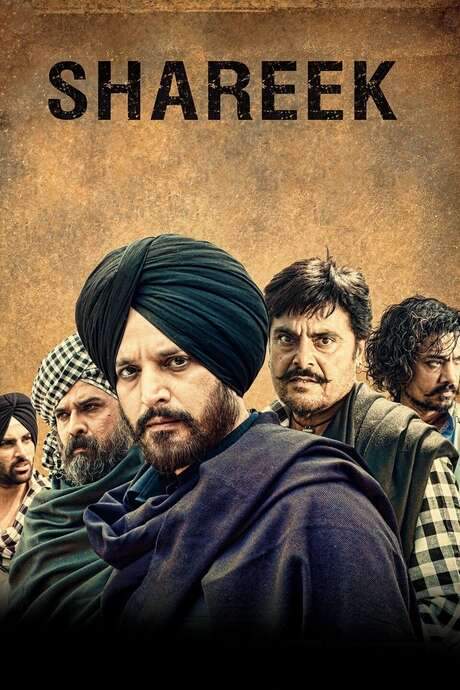
Shareek 2015
Directed by

Navaniat Singh
Made by

Where to Watch Shareek
See current US streaming, rental, and purchase options for Shareek (2015) via JustWatch.





Shareek Plot Summary
Read the complete plot summary and ending explained for Shareek (2015). From turning points to emotional moments, uncover what really happened and why it matters.
Shareek Timeline
Follow the complete movie timeline of Shareek (2015) with every major event in chronological order. Great for understanding complex plots and story progression.
Initial land dispute between families
Two families contest ownership of land handed down by their father and grandfather. Jassa and Surjit tend to the land, while their cousins watch with envy. The dispute over control sets the stage for future conflicts.
Pavitar is murdered by Pali and Dara
Pali and Dara murder Pavitar, the father of Jassa and Surjit, during a period of tension over the land. The act triggers a spiral of vengeance and retaliation. The community reels from the brutal attack.
Jassa takes revenge on Pali
Jassa kills Pali in retaliation for Pavitar’s murder. The act intensifies the feud and pushes the families toward larger consequences. The violence marks a turning point for the brothers.
Jassa is forced to leave India
After the killing, Pali’s brother presses Jassa to flee the country. He is compelled to abandon his homeland and loved ones. The departure fragments the family ties further.
Ten-year leap
The story jumps forward by ten years, skipping over the intervening years. New relationships and arrangements have formed during Jassa’s absence. The community thinks about how the land continues to shape lives.
Agam marries Roohi
Agam enters into marriage with Roohi, establishing new family ties amid the ongoing land dispute. The alliance changes the balance of power among those who claim ownership. The marriage signals shifts in loyalties.
Court case over the land
The land once belonging to Jassa’s father is taken to court. After a lengthy legal battle, the court declares Agam the rightful owner. The verdict redraws who controls the ancestral property.
Dara orchestrates an attack, killing Agam
Dara, driven by envy, hires a vehicle to ram into Agam, killing him. The assassination escalates the feud and leaves Roohi and her family reeling. The tragedy rekindles Jassa’s return to the conflict.
Jassa returns to India after hearing about a family death
Jassa comes back to India upon learning that a close relative has died. He confronts the consequences of years of separation and the renewed conflict over the land. The return reshapes the power dynamics in the family.
Roohi inherits the land
Roohi is recognized as the owner of the land, consolidating her position in the ongoing dispute. The decision redirects control away from Jassa’s lineage. This shift affects alliances and future marriages within the families.
Dara plans Roohi's marriage to his brother
Dara schemes to unite Roohi with his brother through marriage, attempting to secure the land through family ties. Roohi’s father agrees to the arrangement, opening a path to a new consolidation of power. The plan deepens the family intrigue around the property.
Ekam returns and is asked to marry Roohi
Ekam returns and learns that his own brother has died. The family then asks him to marry Roohi, aligning him with the land-claim lineage. He accepts the proposal, linking his fate to Roohi and the property.
Jassa kills Dara and goes to prison
Jassa kills Dara in retaliation for the plots and violence surrounding Roohi and the land. He is subsequently imprisoned for the act. The feud appears to be reaching a breaking point.
Jassa’s death at Zorawar’s hands
After being released in 2015, Jassa is killed by his son, Zorawar, who shoots him in the head. The act closes the long-running family saga with tragedy. Zorawar’s murder marks a grim turn in the family legacy.
Shareek Characters
Explore all characters from Shareek (2015). Get detailed profiles with their roles, arcs, and key relationships explained.
Jassa (Jimmy Shergill)
A strong-willed patriarch who guards the family land and drives the initial feud. His quest for honor and retribution sets off a chain of killings, exiles, and returns that shape the family’s fate. He embodies a mix of duty, pride, and ruthless resolve, which sustains the cycle of violence. His later actions and their consequences define the arc of the generations that follow.
Surjeet (Guggu Gill)
A senior family member who helps guard the land alongside Jassa. He represents the traditional guardianship of ancestral property and the weight of familial responsibility. His presence anchors the feud within the kin and underscores the tension between old loyalties and new ambitions. He remains a stabilizing yet conflicted figure amid the upheaval.
Pavitar Singh Brar (Pavitar) (Gurucharan Channi)
The original landowner whose murder launches the war between the families. His death becomes the catalyst for vengeance and legal battles that redefine who holds claim to the land. He embodies the legacy and sacrifice tied to the property, whose memory fuels ongoing conflict. His absence destabilizes the family’s future.
Pali (Kuljinder Singh Sidhu)
A cousin whose envy and ambition fuel the initial crime against Pavitar. He embodies treachery within the kin and sparks the escalation of violence. His actions set off a domino effect that forces exile and retaliation across the generations. A schemer whose choices have long-lasting repercussions.
Dara (Mukul Dev)
A principal antagonist who orchestrates the murder of Pavitar and later schemes to kill Agam. His manipulations extend to marriages and power plays aimed at controlling the land. His brutality culminates in a direct confrontation with Jassa, sealing his role as the archetypal villain. His actions propel the cycle of violence toward the next generation.
Ekam (Simar Gill)
A younger family member who navigates the evolving dynamics after the leap. He returns to India, engages in the land struggle, and marries Roohi, aligning himself with the next generation’s stake in the property. His decisions reflect a blend of tradition and pragmatic choices in a shifting landscape. He embodies renewal amid ongoing conflict.
Roohi (Oshin Sai)
The daughter of Bakhsheesh Sandhu who inherits the land and becomes a focal point of marriage alliances. Her union with Ekam ties her to the future of the land and its governance. Roohi’s position as landowner amplifies the stakes of familial honor and legitimacy within the feud. She represents the new generation carving a path through the inherited turmoil.
Agam (Simar Gill)
A key member of the younger generation who marries Roohi and becomes a target in the feud. His death in a Dara-planned incident marks a turning point that intensifies the struggle for ownership. He embodies the vulnerabilities of trust within a family torn by rivalry. His absence reshapes the power balance and future claims to the land.
Jassi (Mahie Gill)
Jassa’s love and partner who experiences separation as the feud unfolds. Her relationship with Jassa underscores the personal cost of the land dispute. She remains a symbol of loyalty and sacrifice within the family drama. Her role highlights how romance and duty collide in a world ruled by property and revenge.
Zorawar (Meherbaan Singh)
The son of Jassa and Jassi who, after a long absence, returns to confront his past. His actions culminate in the killing of Jassa, marking a brutal chapter in the saga. He embodies a turbulent new generation shaped by the cycles of violence and retaliation. His decision to end his grandfather’s life closes one violent arc and seeds another.
Bakhsheesh Sandhu (Sukhwinder Chahal)
Roohi’s father who initially agrees to arrange marriages to stabilize land ownership. His choices reflect traditional oversight of family assets and alliances. He represents the parental authority that negotiates between love, law, and land. His stance helps steer the family through the turmoil toward a future claim.
Bittu (Harneel Degra)
Dara’s brother who participates in the family’s schemes and adds to the network of kin involved in the land feud. He embodies the collective pressure within the clan to protect or seize control of property. His presence deepens the web of loyalties and betrayals surrounding the land dispute.
Thanedaar (Sanju Solanki)
The police figure who becomes involved as the feud spills into legal consequences. His role reflects the state’s attempt to regulate violence and adjudicate the rights to land. He represents authority in a story driven by revenge, inheritance, and justice.
Shareek Settings
Learn where and when Shareek (2015) takes place. Explore the film’s settings, era, and how they shape the narrative.
Time period
1990s to 2015
The narrative spans several decades, beginning with the murder that triggers the feud and progressing through a ten-year leap to the next generation. Marriages and legal battles over land mark the shifting fortunes of the families. The timeline culminates with events in 2015, tying revenge to inheritance and justice in a long-running saga.
Location
India
The story unfolds across locations in India where land is the central asset for two families. It depicts rural, agrarian life and the social fabric built around ownership, honor, and succession. The setting emphasizes how property and lineage shape alliances, betrayals, and revenge.
Shareek Themes
Discover the main themes in Shareek (2015). Analyze the deeper meanings, emotional layers, and social commentary behind the film.
⚔️
Family Feud
Two families are locked in a long-running war over land inherited from their fathers. The feud compels members to take drastic action, fueling cycles of revenge that ripple through generations. Personal loyalties are tested as envy and pride drive decisions with violent consequences. The conflict reveals how property and honor can dominate human relationships.
⚖️
Justice & Inheritance
Legal battles over rightful ownership of land are central to the plot, highlighting the tension between law and vengeance. The court's verdicts intermittently shift power, yet violence often disrupts formal outcomes. The narrative questions whether justice can quell a family feud that feels like a birthright. Ultimately, inheritance becomes a catalyst for both protection and destruction.
🌾
Land & Legacy
Land is not just property but a symbol of family legacy and identity. The struggle to control it tests loyalties, alliances, and promises across generations. The land's fate influences marriages, migrations, and the social standing of each clan. The saga shows how a single parcel can define a family’s future.

Coming soon on iOS and Android
The Plot Explained Mobile App
From blockbusters to hidden gems — dive into movie stories anytime, anywhere. Save your favorites, discover plots faster, and never miss a twist again.
Sign up to be the first to know when we launch. Your email stays private — always.
Explore the mobile appShareek Spoiler-Free Summary
Discover the spoiler-free summary of Shareek (2015). Get a concise overview without any spoilers.
In the rolling fields of rural Punjab, land is more than soil—it is the pulse of honor, history, and identity. Generations have toiled under the weight of family legacies, and the very earth they tend becomes a silent witness to the expectations and rivalries that shape their lives. Against this backdrop, a seemingly simple question of ownership unfurls into a simmering feud that threatens to bind the region’s future to its past.
…Jassa is the eldest son entrusted with the stewardship of the ancestral parcel that his forebears once held dear. Steeped in a strong sense of duty, he works the land alongside his brother Surjit, both embodying the values of perseverance and pride that have defined their lineage. Their cousins, driven by envy and ambition, view the same fields as a prize worth contesting, setting the stage for a deep‑rooted rivalry that transcends mere property.
The families, once intertwined by kinship, now stand on opposite sides of an ever‑tightening divide. As the dispute sharpens, the surrounding community feels the ripple of tension—festivals lose their sparkle, conversations linger on unspoken grudges, and the promise of shared prosperity seems to drift farther away. New alliances begin to form, and younger members such as Ekam find themselves caught between the weight of expectations and the desire for a different path, while Roohi navigates the delicate balance of love and loyalty amid the growing discord.
The film’s tone blends the stark beauty of Punjab’s landscapes with an undercurrent of brooding intensity, inviting viewers to contemplate how a single piece of land can ignite a chain of events that echo through generations. It invites curiosity about how duty, pride, and familial bonds will shape the characters’ choices, leaving the audience poised on the edge of a story where heritage is both a blessing and a curse.
Movies with Similar Twists and Themes
Uncover films that echo the narrative beats, emotional arcs, or dramatic twists of the one you're exploring. These recommendations are handpicked based on story depth, thematic resonance, and spoiler-worthy moments — perfect for fans who crave more of the same intrigue.


Featured on this page

What's After the Movie?
Not sure whether to stay after the credits? Find out!
Check out our other apps:

SAT Sphere
Build confidence for the Digital SAT.

Mori Atlas
Discover wild places worth protecting.

Luntero
Search smarter for a home in Amsterdam.

Plot Explained
Unravel movie endings and hidden clues.

Pokechamp
Dive into Pokémon data and battle logic.

Driving Theory
Get ready for your European theory test.

Movie Dust
Plan your next cinema trip with ease.

Musemap
Find art and culture as you travel.

Selkobase
Compare credentials before committing.

Local Manual
Turn an unfamiliar country into practical next steps.

Lernavi
Compare school systems before your next move.

GymRoam
Find a workout stop wherever your plans take you.
Explore Our Movie Platform
New Movie Releases (2026)
Famous Movie Actors
Top Film Production Studios
Movie Plot Summaries & Endings
Major Movie Awards & Winners
Best Concert Films & Music Documentaries
Movie Collections and Curated Lists
© 2026 What's After the Movie. All rights reserved.
Privacy Policy