
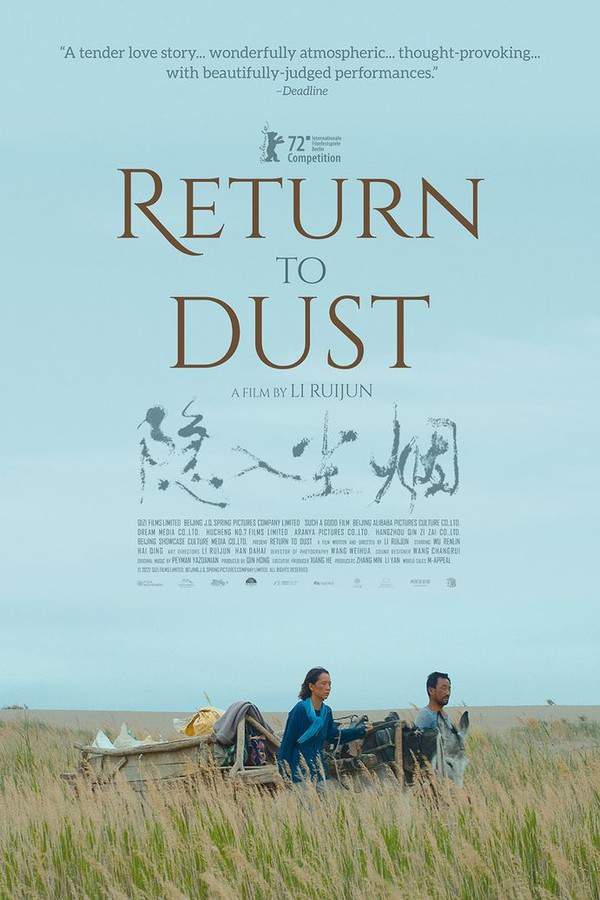
What Is Return to Dust About?
The premise of Return to Dust in 335 words, with nothing given away. The full story follows below.
Return to Dust unfolds in the windswept, sun-bleached landscape of rural Gaotai county, where life is measured by the rhythms of the soil rather than the ticking of clocks. Into this austere world steps Ma Youtie, a weathered middle-aged farmer accustomed to solitude and the quiet dignity of labor, alongside Cao Guiying, a woman whose circumstances have marked her as overlooked by a society that prizes youth and vitality above all else. Brought together by a hastily arranged union orchestrated by their families, the two begin their shared life as strangers — two mismatched souls bound by little more than circumstance and the hope of something better.
With calloused hands and stubborn determination, they set about carving out a home from the harsh, unyielding land. Their early days are marked by struggle and scarcity, but as they tend the soil together, something unexpected takes root — not just in the fields, but between them. The barren earth slowly yields to their care, and alongside it, a gentle, unspoken affection begins to grow. Seasons pass with quiet grace, painting their humble existence in shifting light: long summer days of shared labor, crisp autumn harvests, and the hushed intimacy of winter evenings by lamplight. Their bond deepens into something tender and resilient, a partnership forged through patience, mutual respect, and the simple act of surviving side by side.
Yet the world beyond their small refuge is changing faster than they can keep pace. The encroaching march of modernization lingers at the edges of their peaceful life, as does the quiet pressure of a society that views their union with a mixture of pity and pragmatism. Villages empty as people chase opportunities elsewhere, and the land itself seems poised on the threshold of transformation. Return to Dust is a meditative, visually arresting portrait of love found in the unlikeliest of places — a story that breathes with the dust of the earth, speaking to the fragile beauty of human connection against the vast indifference of time and progress.
What Happens in Return to Dust?
The complete story of Return to Dust, from the first scene to the last, in 795 words (about 3 minutes). Spoilers throughout. Names in the text link to 3 cast member pages.
Spoilers ahead
Set against the rustic and harsh landscape of rural Gansu during the year 2011, the story unfolds as a poignant exploration of love and hardship. It centers on the lives of Ma Youtie, played by Renlin Wu, a humble and impoverished farmer who lives a life of extreme simplicity, and Cao Guiying, portrayed by Hai-Qing. Guiying is a middle-aged woman who has faced a lifetime of adversity; she is disabled, incontinent, and infertile. Because of these challenges, she has suffered systemic mistreatment from her own family and has surpassed the traditional age for marriage in rural Chinese society.
Despite their societal standing, their families arrange a marriage between the two. What begins as a marriage of convenience gradually evolves into a deep emotional bond, characterized by genuine closeness and a rare tenderness that provides both of them with a sense of belonging. Together, they navigate their daily existence, farming the land with the help of their loyal donkey. Initially, the couple finds shelter in one of the many abandoned properties within their village. However, their stability is short-lived. The original owner of the house, who had long since migrated to Shenzhen for work, returns unexpectedly. His return is motivated by greed, as he discovers a government incentive offering substantial cash payments to homeowners whose poorly constructed, unoccupied houses are demolished.
Forced to move once again, Youtie and Guiying relocate to another vacant property before deciding to take their destiny into their own hands by building their own homestead. With a spirit of resilience, they construct a home using mud bricks they manufacture themselves and old wooden posts salvaged from the ruins of other demolished buildings.
Parallel to their domestic struggles, Youtie becomes entangled with a powerful local businessman who requires frequent blood transfusions. Because Renlin Wu’s character shares a rare blood type with the businessman, he is repeatedly called upon to donate blood to save the wealthy man’s life. In exchange for these life-saving donations, the businessman’s family provides Youtie with cheap gifts. Demonstrating his integrity and lack of materialism, Youtie refuses to treat these as gifts, accepting them only as borrowed items. During this time, his brother, Zhanhong Ma, suggests that he and Guiying move into a modern high-rise public housing apartment. However, the couple finds this option completely impractical, as the apartment cannot accommodate the farm animals essential to their survival.
Tragedy strikes when Guiying falls ill. In an act of care, Youtie insists that she rest while he goes out to work. While out, he encounters a group of locals lounging unconcernedly by an irrigation canal. They casually inform him that Guiying had been searching for him to deliver some food, but that she felt dizzy and accidentally fell into the water, where she drowned. Devastated by the loss of his companion, Youtie desperately jumps into the canal to retrieve her lifeless body.
In the wake of this tragedy, Youtie moves through his days in a state of quiet grief. He finishes his harvest, frees his faithful donkey, and sells all his worldly possessions to clear his remaining debts. He departs from his usual habit of saving seeds for the next planting season, signaling a loss of hope for the future. Even in his final act of commerce, he is exploited; the buyer cheats him by rounding down the price, claiming it is simply “to make the bookkeeping easier.”
As he prepares Guiying’s body for burial, Youtie performs a heartbreaking gesture, pressing grains of corn into her hand to leave a mark. He had previously explained that through this specific mark, he would always feel a connection to her. In a final, somber scene, Youtie lies down next to some smoldering charcoal, his body shaking uncontrollably, strongly implying that he has committed suicide.
The aftermath is cold and clinical. His few remaining belongings are hauled away in a handcart, and a government official pays Zhanhong Ma for the permission to demolish the small house that Youtie and Guiying had built with their own hands—the only place where they experienced true happiness. The loyal donkey is seen returning to the ruins of the house on its own, ignored and unwanted by everyone.
Due to strict censorship in China, the ending of the film was modified. In the revised version, the explicit act of taking poison is removed, though a bottle remains on the altar dedicated to Guiying. Furthermore, a confusing plot point was added where a character claims Youtie is moving to a city apartment, despite the implication of his death. A final line of text was eventually added to the credits to satisfy authorities, stating:
“Ma Youtie moved to his new home in the winter of 2011 and started his new life with the help of the government and the warm-hearted villagers.”
Return to Dust Timeline: Every Key Event in Order
15 key events in the order they happen, from “An Arranged Match in Rural Gansu” to “The Demolition and the Donkey”. 11 events name a place, across 10 locations.
- 1
An Arranged Match in Rural Gansu
In the harsh rural landscape of Gansu in 2011, the families of Ma Youtie and Cao Guiying arrange a marriage between them. Youtie is a humble, impoverished farmer living a life of extreme simplicity, while Guiying is a disabled, incontinent, and infertile middle-aged woman who has suffered lifelong mistreatment from her own family. Both have been cast aside by society, having surpassed the traditional age for marriage in rural China.
When:2011 Where:Rural Gansu, China
- 2
A Marriage of Convenience Begins
The newlyweds settle into one of the many abandoned properties in their village, beginning their life together. At first, the marriage is purely one of convenience, born of necessity rather than affection. Having lived lives defined by hardship and rejection, neither expects much warmth from the union.
Where:An abandoned house in the village
- 3
Tenderness Takes Root
Over time, the marriage of convenience gradually evolves into a deep emotional bond marked by genuine closeness and rare tenderness. Farming the land together with the help of their loyal donkey, the couple finds a sense of belonging neither has ever known. Their daily existence, though harsh, becomes filled with quiet companionship.
Where:The village farmland
- 4
Evicted From Their First Home
The couple's fragile stability is shattered when the original owner of their house, who had long since migrated to Shenzhen for work, returns unexpectedly. Motivated by greed, he has discovered a government incentive offering substantial cash payments to owners of poorly constructed, unoccupied houses that are demolished. Youtie and Guiying are left with no choice but to leave.
Where:Their home in the village
- 5
Moving Once Again
Forced out of their first shelter, the couple relocates to another vacant property in the village. The constant displacement weighs on them, but they endure it together as they have endured everything else. Rather than continue depending on abandoned houses, they resolve to take their destiny into their own hands.
Where:Another vacant property in the village
- 6
Building Their Own Homestead
With remarkable resilience, Youtie and Guiying set out to build a home of their very own. They manufacture mud bricks themselves and salvage old wooden posts from the ruins of other demolished buildings. The homestead becomes a tangible symbol of their shared hope and self-reliance.
Where:The village
- 7
Life-Saving Blood Donations
A powerful local businessman who requires frequent blood transfusions shares Youtie's rare blood type, and Youtie is repeatedly called upon to donate blood to save the wealthy man's life. In exchange for these life-saving donations, the businessman's family offers him only cheap gifts. Demonstrating his integrity and lack of materialism, Youtie refuses to treat them as gifts, accepting them strictly as borrowed items.
- 8
Rejecting the High-Rise Apartment
Youtie's brother Zhanhong Ma suggests that he and Guiying move into a modern high-rise public housing apartment. The couple finds the option completely impractical, as the apartment cannot accommodate the farm animals essential to their survival. They choose to remain on the land they know, despite all of its hardships.
- 9
Guiying Falls Ill
Tragedy looms when Guiying falls ill, adding to the burdens of her already fragile health. In an act of devoted care, Youtie insists that she rest at home while he goes out to work in the fields. It is a small, loving decision that will prove devastating in hindsight.
- 10
Drowning at the Irrigation Canal
While Youtie is out working, a group of locals lounging by an irrigation canal casually inform him that Guiying had been searching for him to deliver some food. Feeling dizzy, she accidentally fell into the water and drowned. Devastated by the loss of his companion, Youtie desperately jumps into the canal to retrieve her lifeless body.
Where:The irrigation canal
Show the other 5 events of Return to Dust Hide the last 5 events
- 11
Quiet Grief and Settling Debts
In the wake of Guiying's death, Youtie moves through his days in a state of quiet grief. He finishes the harvest, frees his faithful donkey, and sells all his worldly possessions to clear his remaining debts. Tellingly, he departs from his usual habit of saving seeds for the next planting season, signaling that he has lost all hope for the future.
Where:The homestead and farmland
- 12
One Final Exploitation
Even in his final act of commerce, Youtie cannot escape being taken advantage of. The buyer cheats him by rounding down the agreed price, dismissively claiming it is simply to make the bookkeeping easier. The moment underscores how routine his exploitation has been throughout his entire life.
- 13
A Final Farewell to Guiying
As Youtie prepares Guiying's body for burial, he performs one heartbreaking final gesture. He presses grains of corn into her hand to leave a mark, recalling how he had once explained that through this specific mark he would always feel a connection to her. It is his last, tender promise to the woman he loved.
Where:Their home
- 14
Youtie's Final Act
In a somber closing scene, Youtie lies down next to some smoldering charcoal, his body shaking uncontrollably. The film strongly implies that he has committed suicide, unable to carry on without Guiying. The only place where the couple experienced true happiness is about to be erased as well.
Where:Their home
- 15
The Demolition and the Donkey
In the cold and clinical aftermath, Youtie's few remaining belongings are hauled away in a handcart, and a government official pays his brother Zhanhong Ma for permission to demolish the small house the couple built with their own hands. The loyal donkey, ignored and unwanted by everyone, is seen returning on its own to the ruins of the home. Due to strict censorship, the ending was later modified, with a credits line added claiming Youtie moved to a new home and started a new life in the winter of 2011.
Where:The ruins of their homestead
Who Are the Main Characters in Return to Dust?
2 characters, among them Ma Youtie and Cao Guiying: who each one is and the part they play in the story. Every profile links to the actor’s page.
- MY
Ma Youtie
Played by Renlin Wu
Ma Youtie is a humble and impoverished farmer characterized by his integrity and simplicity. He faces immense hardship in both his daily life and emotional journey, revealing a deep resilience as he navigates love and loss. His commitment to his values is tested, reflecting the struggles of rural existence.
- 👨🌾 Farmer
- 💔 Grief
- 🌱 Resilience
- CG
Cao Guiying
Played by Hai-Qing
Cao Guiying is a middle-aged woman who has endured a life of adversity, facing systemic mistreatment due to her disabilities. Despite her challenges, she shows strength and depth, forming a poignant bond with Youtie that transcends societal expectations. Her journey reflects the quest for love and acceptance against overwhelming odds.
- 👩🦽 Disability
- 💖 Hope
- 💔 Love
Where and When Is Return to Dust Set?
Return to Dust is set in rural Gansu (2011). Here is why the time and place matter to the story.
When
2011
The year 2011 in China was marked by social and economic changes, alongside traditional customs still deeply embedded in rural communities. This time period highlighted the contrast between modern development and the challenges faced by the elderly and disabled in society. It was an era where many rural inhabitants struggled with poverty while navigating the complexities of evolving societal expectations.
Where
rural Gansu
Rural Gansu is known for its rustic and harsh landscape, characterized by vast fields and a challenging climate. The region embodies the simplicity of rural life, where farming is the primary occupation. It serves as a backdrop for stories of hardship and resilience, reflecting the struggles of its inhabitants.
- 🏞️ Landscape
- 🌾 Agriculture
What Are the Themes of Return to Dust?
3 ideas the story keeps returning to, among them Love & Loss, Home & Belonging and Societal Pressure.
-
01
Love & Loss
The film explores the profound theme of love that blossoms in unlikely circumstances, highlighting the emotional bond formed between two marginalized individuals. Their relationship illustrates how connections can offer solace amidst hardship. However, the theme of loss is equally poignant, as tragedy strikes, revealing the fragility of their happiness and the deep grief that follows.
-
02
Home & Belonging
The struggle to create a home represents the duo's quest for belonging in a harsh world. Their efforts to build a homestead from mud bricks and salvaged wood symbolize resilience and determination. Unfortunately, their physical and emotional home becomes a source of conflict, ultimately leading to the poignant reminder of what it means to truly belong.
-
03
Societal Pressure
The film delves into the societal pressures faced by individuals, particularly the marginalized in rural China. The characters navigate expectations around marriage, family roles, and economic survival, often leading to difficult choices. These pressures exacerbate their struggles, highlighting the unseen battles that many endure in pursuit of a life defined by dignity and respect.
What Kind of Film Is Return to Dust?
Bleak in tone, with slow pacing and a straightforward story, going by the plot summary.
- Tone
- Bleak
- Pacing
- Slow
- Story
- Straightforward
- Intensity
- High
- Ending
- Bleak
A devastating rural drama that slowly unfolds a tender yet tragic love story, watching two outcasts build a fragile life together before cruel fate and indifferent progress tear it all away.
- somber
- melancholic
- devastating
- tender
- bleak
- quiet
- arranged marriage
- rural poverty
- grief and loss
- displacement
Content notes: suicide, drowning, grief and bereavement, exploitation, ableism, economic hardship.
Quiz
How well do you remember Return to Dust? Test yourself on the story.
