
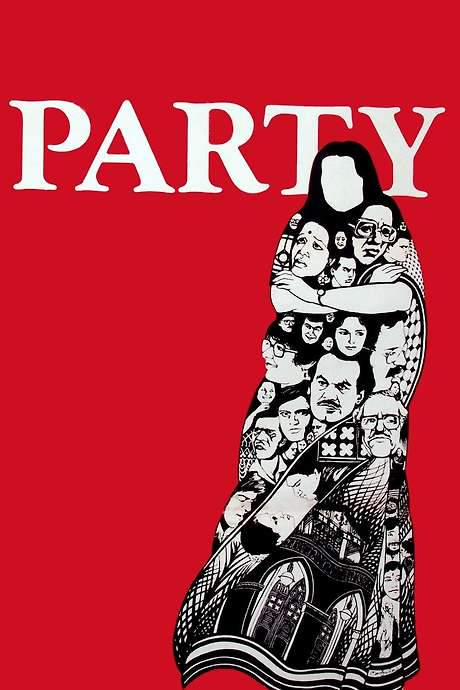
What Is Party About?
The premise of Party in 284 words, with nothing given away. The full story follows below.
In the glittering heart of Bombay, an extravagant evening gathers the city’s most celebrated artists, patrons, and public figures beneath a canopy of chandeliers and whispered applause. The night is orchestrated by the indomitable Damyanti Rane, a wealthy widow whose reputation as a patron of the arts has made her home a revered sanctuary for cultural dialogue. She has invited friends and admirers to honor the recent triumph of playwright Diwakar Barve, whose National Literary Award has sparked both admiration and speculation among the assembled elite.
As crystal glasses clink and the orchestra swells, the conversations drift from lighthearted reminiscences to sharper, more pointed observations. The guests’ temperaments—catty, outraged, resigned, cynical—create a tapestry of tension that subtly reframes the celebratory veneer. Beneath the polite chatter, rumors about the award’s politics and the influence of power begin to surface, hinting at the fragile balance between artistic prestige and institutional ambition that defines the gathering.
Though absent from the room, the presence of poet‑writer Amrit hangs over the soirée like an echo. Once a revered voice among the literary circles, he now lives among a tribal community, his work and ideals resurfacing repeatedly through the guests’ recollections. His philosophy acts as a moral compass for the dialogue, challenging the attendees to confront the dissonance between their lofty aspirations and the realities of a society riddled with inequity.
The film’s tone is simultaneously opulent and unsettling, bathing the viewer in the warm glow of high society while exposing the undercurrents of doubt and unrest that ripple through the crowd. The party becomes a reflective microcosm of a larger nation, inviting curiosity about how art, power, and conscience intersect when the lights dim and the conversations turn inward.
What Happens in Party?
The complete story of Party, from the first scene to the last, in 459 words (about 2 minutes). Spoilers throughout. Names in the text link to 2 cast member pages.
Spoilers ahead
The entire action is confined to an evening party hosted by Damyanti Rane, Vijaya Mehta, a wealthy middle‑age widow and renowned patron of the arts in the city. The gathering gathers the city’s cultural elite and patrons to celebrate the achievement of Diwakar Barve, a celebrated playwright who has just been awarded the National Literary Award. As the drinks flow and conversations drift from light banter to sharper observations, the mood shifts with the guests’ varied temperaments—catty, outraged, resigned, and cynical—each remark nudging the night toward unspoken truths.
Gradually, the conversations hint at motives behind the award and the people who might have pulled strings. Accusations fly about Damyanti’s political clout, about serving the establishment, or perhaps being a mere toady to power. Yet beneath these surface clashes, the real prize—or perhaps the real winner—emerges in the form of Amrit, Naseeruddin Shah, an immensely talented writer-poet who withdrew from the party circuit and urban literary societies to live and work among a tribal community. Though Amrit is not present in person, his influence saturates the discourse, resurfacing again and again in the attendees’ memories and judgments.
What follows is a reckoning with art and responsibility. Amrit’s voice—though heard only through others’ recollections and insinuations—reasserts itself as a moral touchstone, upbraiding the room for its banality, deceit, and utter callousness toward the inequities that: lie at the heart of society. The party becomes a mirror, reflecting not just the ambitions of its guests but the deeper ethical questions about what art is for and whom it serves. In this way, the gathering serves as a microcosm of a larger city and country, pressing its participants to confront the gap between aesthetic prestige and human dignity.
The film intensifies toward a harrowing finale that shifts from the glittering interiors of the party to the rural, heartland stretches of the nation. In a shocking turn, Amrit is shown to have been murdered by the police, branded a “left-wing terrorist” in the tense atmosphere surrounding the festivities. This act of state violence cuts through the film with brutal clarity, underscoring the precariousness of dissent and the way political power can silence visionary voices. The murder occurs roughly at the same moment the party unfolds, collapsing the evening’s pretenses and forcing every attendee to face a stark, unsettling truth about the cost of opposing forces that seek to define what art or life should be.
In the end, the narrative leaves viewers with a stark meditation on the purpose of art and the possibility—or impossibility—of ennobling humanity when power, class, and ideology violently converge. The party, meant to honor artistic achievement, becomes the stage where truth battles illusion, and where the life of a single poet becomes a lens on an entire society’s conscience.
Party Timeline: Every Key Event in Order
12 key events in the order they happen, from “Damayanti Rane hosts an exclusive evening” to “Art's true aim affirmed by tragedy”. 11 events name a place, across 9 locations.
- 1
Damayanti Rane hosts an exclusive evening
A rich widow hosts the gathering for urban patrons, filling the halls with art, privilege, and gossip. The air is thick with expectations as attendees size up each other and the night's implied bargains. The stage is set for a night where appearances will clash with unspoken truths.
When:Evening Where:Damayanti Rane's residence
- 2
Diwakar Barve receives the National Literary Award
The room erupts in a toast as Barve is celebrated for his achievement, a moment that feels earned yet strategic. Behind the accolades, conversations buzz about how the award may reflect Damayanti's influence and the establishment's approval. The atmosphere is a mix of pride and suspicion.
When:Early evening Where:Main hall
- 3
Whispers about Barve's links to power
A thread of rumors threads through the room, suggesting Damayanti's political clout helped Barve secure the prize or kept him within the establishment's good graces. Some patrons smile with satisfaction, others with wary skepticism. The discussion marks the first crack in the party's polished surface.
When:Early evening Where:Near the library alcove
- 4
Arts versus politics: cynicism of the elite
Conversations turn sharply on whether art should resist or embrace power, and whether the party's glamour masks inequality. Attendees trade catty remarks and resigned sighs about a system that rewards status over substance. The sense of unease deepens as the night continues.
When:Mid-evening Where:Reception hall
- 5
Amrit emerges as the real winner in absentia
Gradually the talk centers on Amrit, the talented writer-poet who left party life to work with tribal communities. Though not present, he is hailed as the true victor for embodying the ideals the gathering claims to admire. The conversation reframes the night around his principled choice and the distance between ideal and reality.
When:Mid-evening Where:Throughout the party
- 6
Amrit's absence becomes a moral presence
The missing figure repeatedly returns in conversations as a moral touchstone, reminding guests of banality, deceit, and neglect of societal inequities. Attendees argue and rationalize, yet his absence haunts the room. The dialogue reveals how art is often used to comfort privilege while ignoring real injustice.
When:Mid to late evening Where:Various rooms
- 7
Artists' noble aim vs party’s petty calculations
Discourses shift to the core aim of art: ennobling humanity, a standard many claim to uphold but rarely practice. In tone and memory, Amrit is invoked as the standard against which others measure their own vanity. The gulf between rhetoric and action becomes painfully obvious.
When:Late evening Where:Main hall
- 8
Tensions erupt as the night wears on
The party devolves into cliques and competitive maneuvering, and the promise of meaningful art dissolves into social bargaining. Some guests pretend to champion Amrit's cause while others seize the opportunity to advance personal agendas. The atmosphere grows tense, with undercurrents of fear and anger.
When:Late evening Where:Various rooms
- 9
The harrowing moment: Amrit's murder by police
As the party unfolds, the country’s heartlands become the stage for a brutal police killing described as the left-wing terrorist act against Amrit. The revelation shocks the attendees and reframes every prior conversation under the shadow of state violence. The moment feels like a rupture that exposes the society's true violence.
When:Late evening Where:Heartland of the country
- 10
Parallel events collide with the celebration
News of Amrit's death travels through the party as the action continues, creating a gulf between words and reality. Attendees struggle to reconcile their previous judgments with the brutal truth of the murder. The party's celebratory mood collapses into uneasy silence.
When:Late evening Where:Party venue
- 11
Aftershocks and reflection
The conversations falter as the murder sinks in, forcing the attendees to confront their complicity and the inequities they ignored. Some pledge reforms, others retreat into cynicism, and the space becomes haunted by what art should resist but failed to do. The narrative emphasizes that the powerful can shield privilege at the cost of human life.
When:Very late evening Where:Reception area
- 12
Art's true aim affirmed by tragedy
The tale closes with a meditation that the ennobling of humanity remains art's highest aim, even when lived tragedy contradicts it. Amrit's memory serves as a moral compass for what the gathering should strive toward, and the film leaves the question bittersweet: will the world change or merely talk about it? The ending underscores the gap between ideals and reality.
When:End of party
Who Are the Main Characters in Party?
5 characters, among them Amrit (Naseeruddin Shah), Damyanti Rane (Vijaya Mehta) and Divakar Barve: who each one is and the part they play in the story. Every profile links to the actor’s page.
-
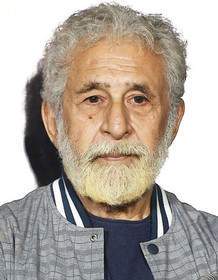
Amrit (Naseeruddin Shah)
Played by Naseeruddin Shah
A renowned writer-poet who withdrew from urban literary circles to live among a tribal community; his memory and ideals haunt the party’s conversations. Though not present, his influence acts as a moral touchstone challenging the room’s banality and deceit.
- 🧠 Intellectual
- 🎭 Visionary
- 💬 Contemplative
- DR
Damyanti Rane (Vijaya Mehta)
Played by Vijaya Mehta
A wealthy, middle‑aged widow and renowned patron of the arts who hosts the gathering. Her political clout and status position her at the center of the room’s power dynamics, inviting scrutiny of who really benefits from cultural prestige.
- 👑 Social power
- 🎭 Patronage
- 🗝️ Influence
- DB
Divakar Barve
Played by Manohar Singh
A celebrated playwright who has just been awarded the National Literary Award; his achievement acts as the evening’s central catalyst. His presence triggers conversations about art, recognition, and the cost of artistic integrity.
- 🎨 Artist
- 🏆 Acclaimed
- 🗣️ Catalyst
- R"
Ravindra "Ravi" (Shafi Inamdar)
Played by Shafi Inamdar
An attendee whose remarks reflect the room’s sharp, sometimes caustic observations. He embodies the social atmosphere where remarks reek of ambition and insecurity, contributing to the party’s tense undercurrents.
- 💬 Attendee
- 🗨️ Cynical
- 🧭 Observer
- SR
Sona Rane (Deepa Sahi)
Played by Deepa Sahi
A guest whose presence highlights the party’s social reach beyond the core cultural elite. Her demeanor and interactions contribute to the salon’s dynamics and the shifting tensions as the night unfolds.
- 🌐 Social circle
- 🫖 Insider
- 🧩 Connector
Where and When Is Party Set?
Party is set in Metropolitan city and Rural heartland (Evening). Here is why the time and place matter to the story.
When
Evening
The events take place over a single party-filled evening, moving from casual conversations to a brutal reckoning. The pacing relies on social dynamics and shifting loyalties rather than a fixed historical moment. The film contrasts glamorous urban life with looming consequences that spill into the country’s rural spaces.
Where
Metropolitan city, Rural heartland
The action unfolds at an opulent evening party in a metropolitan city, a hub of cultural prestige and social power. The venue is filled with art patrons, politicians, and journalists who shape taste and influence. As the night progresses, the narrative shifts from glamorous interiors to the stark rural heartland, highlighting the distance between urban privilege and the rest of the country.
- 🏙️ Urban setting
- 🌾 Rural landscape
What Are the Themes of Party?
4 ideas the story keeps returning to, among them Power & Corruption, Art & Responsibility and Truth & Hypocrisy.
-
01
Power & Corruption
The party exposes how political clout and cultural capital steer judgments and the distribution of prestige. Accusations about Damyanti’s influence reveal how art and awards can be entangled with power. The setting shows a world where success is negotiated through networks as much as merit, blurring lines between artistry and politics.
-
02
Art & Responsibility
Amrit’s legacy acts as a moral touchstone despite his absence, prompting attendees to argue about what art owes society. The conversations insinuate responsibility beyond aesthetic prestige, questioning who benefits from literature. The murder underscores the peril artists face when dissent collides with authority.
-
03
Truth & Hypocrisy
The party serves as a mirror for urban elites, exposing pretenses, banality, and competing loyalties. In the glare of polished illusions, people’s true motives emerge through sharp remarks and insinuations. The gathering forces a confrontation with the gap between stated values and real actions.
-
04
State Violence
The revelation that Amrit has been murdered by the police signals how state power can silence dissent. The branding of Amrit as a 'left-wing terrorist' shows the use of ideology to justify brutal tactics. This moment reframes the party as a stage where political violence intrudes on culture and art.
What Kind of Film Is Party?
Tense in tone, with steady pacing and a moderate story, going by the plot summary.
- Tone
- Tense
- Pacing
- Steady
- Story
- Moderate
- Intensity
- High
- Ending
- Bleak
A tense and claustrophobic drama that uses a single party setting to expose deep-seated social hypocrisy and political corruption, culminating in a devastating revelation that shatters the characters' superficial world.
- tense
- cynical
- claustrophobic
- unsettling
- satirical
- melancholic
- political corruption
- social hypocrisy
- artistic integrity
- class disparity
Content notes: police brutality, murder, political violence.
Quiz
How well do you remember Party? Test yourself on the story.
