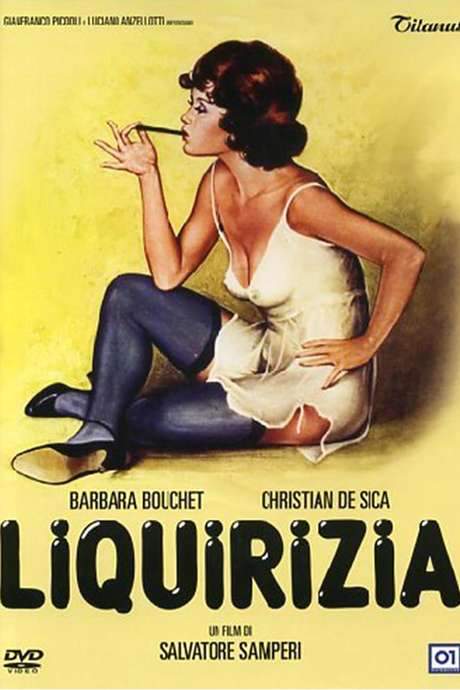
Liquirizia 1979

Directed by

Salvatore Samperi
Made by

Hera Cinematografica
Liquirizia Plot Summary
Read the complete plot summary and ending explained for Liquirizia (1979). From turning points to emotional moments, uncover what really happened and why it matters.
In 1959, Padua buzzes with the energy of two friends on the cusp of adulthood. Fulvio [Massimo Anzellotti] and Carletto [Stefano Ruzzante] are in their final year of school, each pulled by different worlds. Fulvio comes from a working‑class background and attends an accounting institute, chasing the hot new trends—sports, cars, rock music, and women. Carletto, by contrast, hails from a wealthy bourgeois family and studies at a classical high school, dreaming of relocating to Rome to become a theatrical director. Their paths cross as they hatch a plan to stage a grand end‑of‑year celebration that would unite their peers from both schools, raise some money, and give everyone a chance to have fun one last time before summer.
The plan is ambitious: Carletto will shape the show, while Fulvio pushes to bring in a marquee performer from Milan. Fulvio travels to meet a famous singer, aiming to secure participation from Adriano Celentano, but fate trips him up when he encounters a boastful rock singer named Flyn. The latter, portrayed by the lively and confident Teo Teocoli, agrees to perform, adding a spark of rock charisma to the lineup. The mix of acts promises variety, with each group preparing something different to captivate the audience.
A crucial ally arrives in bartered strength and goodwill: Mrs. Raffaella, played by Barbara Bouchet, is the mother of a younger student who lends them a family-owned theater free of charge. The theater is cared for by a Neapolitan custodian—an affable, affectionate watchman who worships Eduardo De Filippo and keeps a watchful eye on every rehearsal. This makes the venue feel both intimate and charged with possibility, the kind of place where a school show could become something bigger than anyone expected.
The cast within the theater reflects the tension and promise of youth. On the high school side, Gian Galeazzo Lo Cascio—a naïve, affluent heir—is engaged to Marina, a romance that threads through the back-and-forth of preparations. Giulia has a soft spot for Carletto, adding a hint of teenage longing to the backstage conversations. There’s also the playful energy of Baffi, and Bartolozzi, the redheaded daughter of a wealthy shoemaker, who is utterly infatuated with Fulvio. The high school performances range from ballet and opera to Shakespeare, a testament to the kids’ eagerness to shine in every possible guise.
The accounting students bring their own bold personalities to the mix. Two of them, Maiale and Coen, clash with the others, injecting a punch of rivalry and humor into the behind‑the‑scenes dynamics. The diverse lineup is meant to blend culture and rebellion, to show that students from different walks of life can come together around shared ambition and camaraderie.
As the big night arrives, the mood shifts from hopeful to chaotic. The audience boos several acts, the rock‑oriented performance by Flyn falls flat, and a group of former students storms the stage led by the infamous Tonazzi, known as “Be‑Bop‑A‑Lula,” turning the event into a riot. The celebration collapses into a violent brawl, underscoring the vulnerabilities and pressures the young organizers face when expectations collide with reality. Carletto sees the collapse as a personal failure and, in a poignant moment, asks Raffaella to accompany him to Rome—only to be gently declined, a reminder of the choices and limits that come with growing up.
In the aftermath of summer, a quiet scene settles the story. Carletto visits Fulvio at Bartolozzi’s shop, where Fulvio has found work, and hints that he has given in to the advances of the girl he’s been interested in. The moment is both practical and bittersweet: the elder Bartolozzi, portrayed with a knowing smile and a licorice stick, watches the exchange with a mix of humor and resigned wisdom. The film closes on a note that blends that sense of missed romance with the promise of new starts, reminding viewers that life moves on even after dreams collide with reality.
Throughout, the film paints a vivid tableau of youth and ambition in a provincial setting, balancing humor with sentiment, and showing how the impulse to create something together can illuminate both the strengths and the tensions of a community on the brink of adult life. The ensemble cast—featuring [Barbara Bouchet], [Massimo Anzellotti], [Stefano Ruzzante], [Jenny Tamburi], [Christian De Sica], [Simona Mariani], [Gigi Ballista], [Benedetta Fazzini], [Teo Teocoli], and [Ricky Gianco]—brings warmth, color, and a touch of chaos to this coming‑of‑age comedy that remains firmly anchored in its time and setting.
Liquirizia Timeline
Follow the complete movie timeline of Liquirizia (1979) with every major event in chronological order. Great for understanding complex plots and story progression.
1959, Padua: two friends in their final year
In Padua, 1959, Fulvio and Carletto are in their final year of school. Fulvio comes from a working-class family and pursues the latest trends—sports, cars, rock music, and women—while Carletto, from a wealthy bourgeois background, dreams of moving to Rome to become a theatrical director.
Fulvio’s world vs. family expectations
Fulvio's father tries to steer him toward socialism, but Fulvio resists, choosing his own interests instead. The two friends embody contrasting worlds, setting up the tension between duty and personal ambition that drives the story.
Carletto’s theater dream
Carletto is enrolled in a classical high school and harbors dreams of Rome as a theater director. His refined, bourgeois world stands in contrast to Fulvio's practical concerns, highlighting their diverging paths.
Planning the end-of-year celebration
They decide to organize an end-of-year celebration that brings together high school and accounting students to raise money and have fun. Carletto is tasked with directing the show, while Fulvio travels to Milan to persuade a singer to participate.
Fulvio meets Flynt in Milan
Fulvio travels to Milan to persuade singer Adriano Celentano to join the event. He fails to meet Celentano and instead encounters a boastful rock singer named Flynt, whom he invites to perform at the show.
The theater is secured
Carletto convinces Mrs. Raffaella, the mother of a younger student, to lend them a family-owned theater free of charge. The theater is run by a Neapolitan caretaker who idolizes Eduardo De Filippo and keeps a close eye on the students.
Cast preparations
The high schoolers rehearse diverse acts—ballet, opera, and Shakespeare—while the accounting students mount rock numbers and variety acts. Among the students are Gian Galeazzo Lo Cascio, a naïve wealthy heir engaged to Marina; Giulia, who fancies Carletto; Baffi, friendly and playful; and Bartolozzi, the redheaded daughter of a wealthy shoemaker who is infatuated with Fulvio.
Raffaella becomes a confidante
Raffaella develops feelings for Carletto and helps him believe in himself. She encourages him to stay focused and keep the show on track despite the mounting difficulties.
The disastrous show begins
On the day of the performance, the dance and acting acts are booed by the audience, undermining the show. Flynt's appearance proves a failure and he is kicked out, signaling the unraveling of the plan.
Be-Bop-A-Lula interrupts the stage
A group of former students led by Tonazzi, known as Be-Bop-A-Lula, storms onto the stage and takes control, turning the night into a chaotic brawl. The event devolves into violence as the planned celebration collapses.
Realization and a rejected escape plan
Carletto realizes he has failed and confronts the consequences of the aborted show. He asks Raffaella to go to Rome with him, but she politely declines.
Summer break and a quiet revelation
After the summer vacation, Carletto visits Fulvio at Bartolozzi's shop, where Fulvio now works. Carletto hints that he has given in to the girl's advances, while Bartolozzi smiles, chewing a licorice stick.
Liquirizia Characters
Explore all characters from Liquirizia (1979). Get detailed profiles with their roles, arcs, and key relationships explained.
Fulvio (Massimo Anzellotti)
A working-class high school student drawn to trends like sports, cars, and rock. He personally drives the plan to stage the year-end show, even traveling to Milan to recruit performers; his rebellion against his father’s socialist expectations fuels his appetite for modern pleasures.
Carletto (Stefano Ruzzante)
From a wealthy bourgeois background, Carletto dreams of becoming a theatrical director. He organizes the show and pushes the project forward, relying on the other students and staff, while wrestling with his own insecurity and romantic entanglements.
Raffaella (Barbara Bouchet)
Mother of a younger student who becomes involved with Carletto. She offers encouragement and practical help, and her growing affection for Carletto drives a pivotal emotional arc, even as she declines his Rome-bound invitation.
Gian Galeazzo Lo Cascio (Christian De Sica)
A naïve wealthy heir who is engaged to Marina. His presence represents the upper-class bubble and acts as a foil to the more grounded ambitions of Fulvio and Carletto.
Marina (Jenny Tamburi)
The young woman from a wealthy background who is Gian Galeazzo’s fiancée, adding a layer of romance and social contrast to the plot.
Tonazzi "Er Nano" (Ricky Gianco)
A boisterous former student turned rock singer who storms the stage with energy and disrupts the planned performances, symbolizing the unpredictable chaos of pop culture.
Flyn (Teo Teocoli)
A boastful rock singer Fulvio hopes to recruit; his presence highlights the era’s burgeoning pop culture and the gap between studio polish and live street swagger.
Bartolozzi (Gigi Ballista)
A wealthy shoemaker and father of a daughter involved in the social circle; he owns a shop and lends his community's support, observing the events with wry optimism.
Padre di Fulvio (Enzo Liberti)
Fulvio’s father, who attempts to push his son toward socialism, highlighting the generational clash and the pull between political ideals and personal freedom.
Fidanzata di Fulvio (Carmen Russo)
Fulvio’s girlfriend, who witnesses his desire for the latest trends and supports his ambitions, illustrating the social expectations placed on relationships.
Mimic (Giancarlo Magalli)
A performer in the theatre lineup who provides mimicry and comic acts, contributing to the show's varied programme and its chaotic energy.
Liceale (Sandro Ghiani)
One of the high school students in the show, representing the younger generation from the student body.
Liceale (Paolo Baroni)
Another high school student participant, contributing to the diverse acts that fill the theatre programme.
Liceale (Diego Cappuccio)
A third high school student in the production, part of the ensemble that attempts to salvage the show.
Liceale (Christiana Borghi)
Another young participant from the high school group, adding to the mix of talents on stage.
Liceale (Gianfranco Manfredi)
A further student actor in the show, illustrating the broad cast of youth involved in the endeavour.
Liceale (Pietro Zambiasi)
One of the young participants from the student group, contributing to the energetic acts.
Liquirizia Settings
Learn where and when Liquirizia (1979) takes place. Explore the film’s settings, era, and how they shape the narrative.
Time period
1959
Set in 1959, the film captures an Italy where postwar affluence meets a rising youth culture drawn to pop music and performance. Students from different social backgrounds converge to stage a school event that becomes a battleground of ambition and tradition. The plot mirrors the era's informal revolution, where theatre and rock influences begin to reshape everyday life.
Location
Padua
The story unfolds in Padua in 1959, focusing on a provincial city with a mix of university life and social clubs. A family-owned theatre serves as the main venue for the end-of-year show, overseen by a Neapolitan caretaker who idolizes Eduardo De Filippo. The setting highlights the clash between working-class Fulvio and bourgeois Carletto, against a backdrop of local theatres, schools, and ambitious dreams.
Liquirizia Themes
Discover the main themes in Liquirizia (1979). Analyze the deeper meanings, emotional layers, and social commentary behind the film.
🎶
Youth Culture
Two young students channel their restless energy into a big end-of-year show, illustrating how youth seeks self-definition through music and performance. The plan pits the thrill of rock and variety acts against parental and societal expectations. The result is a clash between novelty and tradition, with friendships and rivalries driving the plot.
🎭
Theatre and Ambition
The family-owned theatre becomes the crucible for dreams, funds, and ego. A caretaker who idolizes Eduardo De Filippo keeps a watchful eye on every act, reminding the students that live performances are unpredictable. The show’s chaos—bored audiences, failed acts, and a rogue rock singer—tests the characters’ resolve and planning.
💘
Romance Across Classes
Raffaella’s affection for Carletto cuts across social lines, adding pressure to an already fragile collaboration. Carletto’s bourgeois dreams and Fulvio’s working-class roots create a tension that romance both complicates and deepens. The romance subplot underscores how love can intersect with ambition, influence decisions, and complicate loyalties.

Coming soon on iOS and Android
The Plot Explained Mobile App
From blockbusters to hidden gems — dive into movie stories anytime, anywhere. Save your favorites, discover plots faster, and never miss a twist again.
Sign up to be the first to know when we launch. Your email stays private — always.
Explore the mobile appLiquirizia Spoiler-Free Summary
Discover the spoiler-free summary of Liquirizia (1979). Get a concise overview without any spoilers.
In the summer of 1959 Padua hums with the restless energy of youth on the brink of adulthood. The town’s narrow streets and modest theaters become a stage for two distinct student groups—a third‑class high‑school class and a cohort of mature accountants—who decide to create a single, unforgettable celebration for the last day of school. The film’s tone blends light‑hearted comedy with gentle nostalgia, painting a portrait of a community where aspirations collide with tradition and where every corner holds the promise of a song, a dance, or a daring idea.
At the heart of the plan are Fulvio and Carletto. Fulvio, a working‑class lad studying accounting, is drawn to the flash of new trends—sports cars, rock music, and the excitement of the city’s nightlife. Carletto, raised in a comfortable bourgeois family and enrolled in a classical high school, harbors a secret longing to escape to Rome and become a theatre director. Their partnership fuses Fulvio’s street‑wise ambition with Carletto’s artistic vision, setting the stage for a collaboration that feels both bold and precarious.
The project quickly gathers a colorful cast of allies. Mrs. Raffaella, a caring mother, lends the group a family‑owned theatre, while a warm‑hearted Neapolitan custodian watches over rehearsals with a reverence for Eduardo De Filippo. Among the students, Gian Galeazzo the naïve heir, his fiancée Marina, and the wistful Giulia who secretly admires Carletto add layers of teenage romance. Baffi and Bartolozzi, the red‑haired daughter of a shoemaker, bring their own quirks, while the accountant side features the brash duo Maiale and Coen, whose rivalry fuels both humor and tension. A charismatic rock singer named Flyn promises to inject a burst of contemporary flair into the lineup.
All these threads weave a vibrant tapestry of ambition, friendship, and the inevitable clash of worlds. The atmosphere crackles with anticipation as the young organizers rehearse, dream, and confront the subtle pressures of making their shared vision a reality. In a setting that feels both intimately provincial and unmistakably alive, “Liquirizia” captures the bittersweet pulse of a generation poised between carefree summer and the inevitable steps toward adult life.
Featured on this page

What's After the Movie?
Not sure whether to stay after the credits? Find out!
Check out our other apps:

SAT Sphere
Build confidence for the Digital SAT.

Mori Atlas
Discover wild places worth protecting.

Luntero
Search smarter for a home in Amsterdam.

Plot Explained
Unravel movie endings and hidden clues.

Pokechamp
Dive into Pokémon data and battle logic.

Driving Theory
Get ready for your European theory test.

Movie Dust
Plan your next cinema trip with ease.

Musemap
Find art and culture as you travel.

Selkobase
Compare credentials before committing.

Local Manual
Turn an unfamiliar country into practical next steps.

Lernavi
Compare school systems before your next move.

GymRoam
Find a workout stop wherever your plans take you.
Explore Our Movie Platform
New Movie Releases (2026)
Famous Movie Actors
Top Film Production Studios
Movie Plot Summaries & Endings
Major Movie Awards & Winners
Best Concert Films & Music Documentaries
Movie Collections and Curated Lists
© 2026 What's After the Movie. All rights reserved.
Privacy Policy