
What Is Lapachhapi About?
The premise of Lapachhapi in 256 words, with nothing given away. The full story follows below.
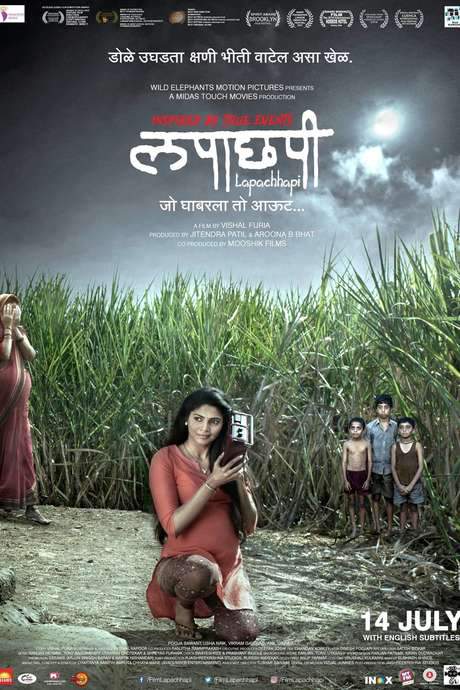
In a remote village surrounded by endless sugarcane fields, a young couple seeks refuge from the troubles of city life. Tushar and his pregnant wife Neha arrive at a ramshackle house owned by an elderly local couple, Bhaurao and Tulsabai, hoping the isolation will offer them peace and a fresh start. The setting seems idyllic at first—a quiet escape from those who pursue them back home—wrapped in the rustic charm of rural India and the gentle rustle of tall cane swaying in the wind.
Beneath the tranquil surface, the household harbors strained dynamics and whispered resentments. Tulsabai’s sharp tongue and cold treatment toward her daughter-in-law Lakshmi hint at deep-seated tensions within the family, casting a quiet shadow over the otherwise peaceful compound. Neha, in her vulnerable state of advanced pregnancy, begins to notice unsettling details that disrupt the calm—flickering visions, faint voices carried on the wind, and an oppressive sense that the old house holds secrets it refuses to release.
As days pass, the atmosphere grows heavier, and the boundary between the living world and something far more sinister begins to blur. The dense sugarcane fields, once a symbol of serene isolation, slowly transform into a maze of creeping dread, their towering stalks seeming to close in around the house. Neha’s intuition sharpens with every unexplained encounter, drawing her deeper into a mystery rooted in the village’s grim history. With evil spirits said to haunt the premises, the young couple must navigate an increasingly hostile environment where reality and the supernatural collide in deeply unsettling ways.
What Happens in Lapachhapi?
The complete story of Lapachhapi, from the first scene to the last, in 258 words (about 1 minute). Spoilers throughout. Names in the text link to 4 cast member pages.
Spoilers ahead
The story begins with a chilling sequence featuring a heavily pregnant woman fleeing from an invisible entity, which eventually forces her to commit suicide by stabbing herself.
Later, a young couple, Tushar and an eight-month-pregnant Neha, travel to a secluded village to hide from aggressive creditors. They find shelter in a dilapidated house surrounded by dense sugarcane fields, owned by an elderly couple, Bhaurao and Tulsabai. While the village seems peaceful at first, a dark atmosphere emerges as Tulsabai constantly torments her daughter-in-law, Lakshmi. During their stay, Neha is told the grim tale of Kaveri, a former daughter-in-law who allegedly murdered her husband and young nephews in cold blood.
As time passes, Neha experiences disturbing visions of three children and hears a woman’s voice emanating from an old tape recorder. These supernatural encounters reveal a hidden truth: Kaveri had actually killed her husband accidentally during a fight, after which Tulsabai incited the villagers to burn her alive. Now a malevolent spirit, Kaveri haunts the residence, driving pregnant women to madness and forcing them to end their own lives.
The horror deepens when it is revealed that Bhaurao and Tulsabai practice female infanticide, killing daughters-in-law who give birth to girls. Their son, Pratap Rao—who has been masquerading as Tushar—drowns the female infants as a human sacrifice to ensure a successful harvest. When Pratap Rao attempts to kill Neha, he is instead lynched by the corporeal spirits of the murdered children. Guided by these spirits through the maze of sugarcane fields, Neha finally escapes the village, leaving the nightmare behind.
Lapachhapi Timeline: Every Key Event in Order
15 key events in the order they happen, from “A Pregnant Woman's Death” to “Escape from the Sugarcane Maze”. 12 events name a place, across 5 locations.
- 1
A Pregnant Woman's Death
The film opens with a heavily pregnant woman running away in a desperate attempt to escape an unseen force that appears to be chasing her. Despite her efforts, the force catches up with her and compels her to stab herself, setting a sinister tone for the story.
- 2
A Couple on the Run
A young couple, Tushar and his eight-month-pregnant wife Neha, are introduced to the viewers. To escape their vengeful debtors, they undertake a trip to a remote village where they hope to hide away safely.
Where:Remote village
- 3
Settling in the Farmhouse
The couple accommodates themselves in a ramshackle house located in the midst of a thick sugarcane field. The house is owned by an aged couple, Bhaurao and Tulsabai, who let them stay. At first, all appears well in the tranquil village.
Where:Ramshackle house in the sugarcane field
- 4
Dark Secrets Begin to Surface
The peaceful atmosphere does not last long, as the dark secrets of the family inhabiting the house begin to surface. The tranquility of the village slowly gives way to something far more sinister, hinting at the horrors hidden within the household.
- 5
Lakshmi's Torment
Tulsabai constantly berates and torments her daughter-in-law Lakshmi, always casting disparaging remarks after her. Her cruel treatment exposes the family's deep-seated disdain for the women living under their roof.
Where:The farmhouse
- 6
The Tale of Kaveri
Tulsabai tells Neha the story of Kaveri, the wife of her younger brother-in-law. According to the tale, Kaveri murdered her own husband and her brothers-in-law, who were still children, in cold blood.
Where:The farmhouse
- 7
Haunting Visions Begin
Neha starts to see visions of the three children and hears the voice of a woman coming from a tape recorder the children play with. She suspects that the woman's voice belongs to the dead daughter-in-law, Kaveri. As time passes, the visions grow stronger and more vivid.
Where:The farmhouse
- 8
The Truth About Kaveri
The visions eventually reveal the truth to Neha: Kaveri had accidentally stabbed her husband during a scuffle. It was never the cold-blooded murder that Tulsabai's story had claimed it to be.
- 9
Kaveri Burned Alive
Tulsabai witnessed the accidental stabbing and chose to weaponize it against Kaveri. She instigated the other villagers to burn Kaveri alive, burying the truth and condemning an innocent woman to a horrific death.
Where:The village
- 10
A Malevolent Spirit's Curse
Following her death, Kaveri's malevolent spirit haunted the house. She drove the pregnant women who lived there mad and forced them to stab themselves, echoing the chilling death shown in the film's opening.
Where:The farmhouse
Show the other 5 events of Lapachhapi Hide the last 5 events
- 11
Female Infanticide Revealed
It is revealed that Bhaurao and Tulsabai regularly practice female infanticide. They kill the daughters-in-law who bear female children, keeping their gruesome crimes hidden within the walls of the house.
Where:The farmhouse
- 12
Pratap Rao's Human Sacrifice
The newborn female babies are drowned by the couple's son, Pratap Rao, who has been masquerading as Tushar. The killings are carried out in accordance with a misguided superstition that calls for human sacrifice to ensure a bountiful harvest.
Where:The farmhouse
- 13
The Children's Revenge
Pratap Rao attempts to kill Neha as his next victim. However, the spirits of the murdered children appear in corporeal form and lynch him, putting an end to his killings and saving Neha's life.
Where:The farmhouse
- 14
Neha Flees the House
Horrified by the atrocities she has uncovered, Neha leaves the home in disgust. As she departs, she sees a vision of the children, whose presence is no longer threatening to her.
Where:The farmhouse
- 15
Escape from the Sugarcane Maze
The spirits of the children guide Neha out of the maze-like sugarcane fields that surround the house. Freed from the nightmares of the village, Neha leaves it behind, never to return again.
Where:Sugarcane fields
Who Are the Main Characters in Lapachhapi?
4 characters, among them Neha (Pooja Sawant), Tushar (Vikram Gaikwad) and Tulsabai (Usha Naik): who each one is and the part they play in the story. Every profile links to the actor’s page.
- N(
Neha (Pooja Sawant)
Played by Pooja Sawant
Neha is an 8-month-pregnant woman who embodies vulnerability and strength as she navigates the horrors unleashed upon her. Torn between her instincts to protect her unborn child and the terrifying visions she encounters, she represents the struggle against past injustices. Her courage to face these chilling truths ultimately leads her to flee the oppressive environment.
- 👩👧👦 Pregnancy
- 🎭 Tragedy
- ⚔️ Survival
- T(
Tushar (Vikram Gaikwad)
Played by Vikram Gaikwad
Tushar is a man caught in a web of financial troubles who seeks refuge in the village with his wife, but is ultimately unaware of the sinister forces at play. He represents the conflict between seeking a peaceful life and the dark truths lurking beneath the surface. His role highlights the disconnection from the ominous history intertwined with their new home.
- 🏃♂️ Escape
- 💔 Struggle
- 🤔 Innocence
- T(
Tulsabai (Usha Naik)
Played by Usha Naik
Tulsabai is the matriarch characterized by her cruel disposition and manipulative nature. Her tormenting behavior towards her daughter-in-law and the readers' exposure to her involvement in malevolent acts mark her as a formidable antagonist. Her character symbolizes the ingrained traditions that perpetuate violence against women.
- 👵🏼 Authority
- 🔥 Malevolence
- 🔪 Tradition
- B(
Bhaurao (Anil Gawas)
Played by Anil Gawas
Bhaurao acts as a supportive partner to Tulsabai, embodying patriarchal authority. His participation in atrocious customs highlights the complicity of society in upholding brutal traditions. His character serves as a reminder of the systemic issues that perpetuate a cycle of violence and fear.
- 👴🏽 Tradition
- ⛓️ Complicity
- 🏚️ Gloom
Where and When Is Lapachhapi Set?
Lapachhapi is set in Remote Village and Sugarcane Fields. Here is why the place matters to the story.
When
The film's events unfold in a contemporary setting, as indicated by the relatable issues faced by the characters. Themes like debt and superstition reflect ongoing societal struggles. The supernatural elements intertwine with the current timeline, adding depth to the villagers' psychological torment.
Where
Remote Village, Sugarcane Fields
The movie is set in a remote village surrounded by lush, sprawling sugarcane fields. This tranquil locale serves as a deceptive backdrop, hiding dark secrets and a haunted history. The village's isolation becomes poignant as it amplifies the supernatural occurrences and the oppressive atmosphere affecting its inhabitants.
- 🌾 Agriculture
- 🏡 Rural
- 🏜️ Secluded
What Are the Themes of Lapachhapi?
2 ideas the story keeps returning to, among them Supernatural Horror and Infanticide.
-
01
Supernatural Horror
The film delves into the theme of supernatural horror, where the past horrors of the village manifest as vengeful spirits. Neha's experiences blur the line between reality and the supernatural, as she is haunted by visions of children and the tragic history of Kaveri. This theme explores how unresolved issues from the past can torment the present.
-
02
Infanticide
A dark theme of female infanticide is interwoven throughout the narrative, revealing societal issues regarding gender and superstition. The practice is upheld by the characters, showcasing the dire consequences of such beliefs. This theme highlights the moral decay and the extreme lengths taken by individuals to adhere to harmful traditions.
What Kind of Film Is Lapachhapi?
Dark in tone, with steady pacing and a moderate story, going by the plot summary.
- Tone
- Dark
- Pacing
- Steady
- Story
- Moderate
- Intensity
- High
- Ending
- Bittersweet
A haunting and oppressive rural horror that slowly reveals its darkest secrets through a pregnant woman's terror in a remote sugarcane farmhouse, blending supernatural dread with deeply disturbing real-world atrocities against women and children.
- oppressive
- haunting
- unsettling
- eerie
- foreboding
- grim
- female infanticide
- supernatural revenge
- domestic abuse
- gender violence
Content notes: female infanticide, infanticide, burning alive, self harm, domestic abuse, child murder.
Quiz
How well do you remember Lapachhapi? Test yourself on the story.
