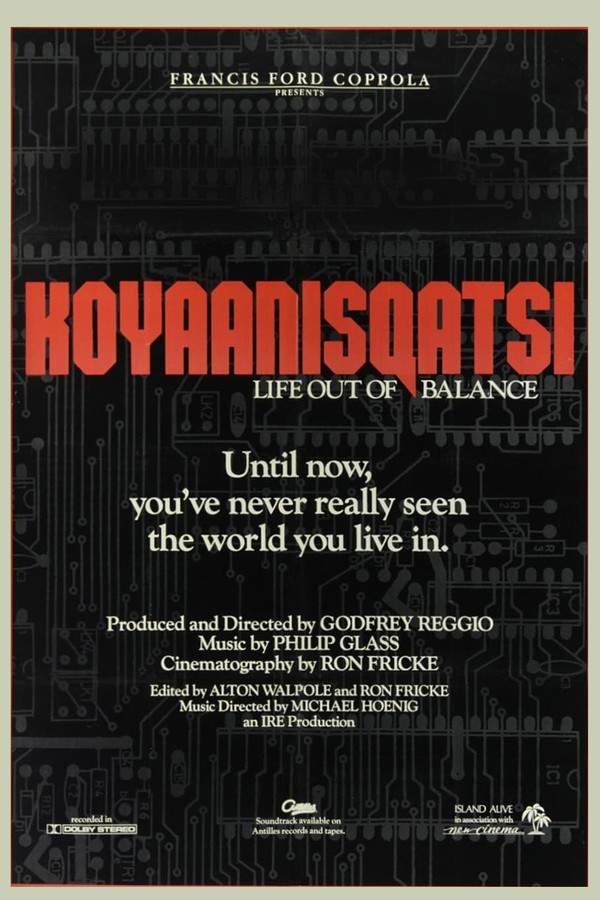
Koyaanisqatsi 1983

Directed by

Godfrey Reggio
Made by

Island Alive
Where to Watch Koyaanisqatsi
See current US streaming, rental, and purchase options for Koyaanisqatsi (1983) via JustWatch.










Koyaanisqatsi Plot Summary
Read the complete plot summary and ending explained for Koyaanisqatsi (1983). From turning points to emotional moments, uncover what really happened and why it matters.
Opening with a sense of solemnity, the screen is black, accompanied by minimal titles. The sound of priests chanting the word Koyaanisqatsi resonates over a rather melancholic organ melody. This introduction might evoke thoughts of a requiem as we contemplate ancient cave paintings from days gone by.
The scene shifts to bubbling fires at what seems to be an industrial site, where the music swells to incorporate a soprano line that weaves through the organ’s tones. A slow-motion spectacle unfolds as we witness the take-off of a rocket, illuminated by a fiery blaze. The perspective transitions to a majestic view of mountain ranges, captured possibly from an aircraft. Rich geological formations, reminiscent of the Grand Canyon, come into focus.
As we move into the second movement, an imploring sound akin to a siren fills the air, conveying a sense of distress. This gradually softens, allowing us to observe the contours and colors of the rocks—formations that stand in stark contrast to pebbles and hint at the desert landscape devoid of human presence. The music introduces a more hopeful note, encouraging us to see the stunning beauty of the plains and desert landscapes.
With each movement, we hear the music evolve, leading to steam rising from volcanoes or possibly geysers, the soundscape becoming richer with string instruments evoking an elegiac quality. Shadows shift across expansive hills and valleys, as we catch glimpses of bats flitting within a cave before fading to black.
In the third movement, a serious rasp underscores the appearance of dark clouds on the horizon, followed by torrents of water cascading down a waterfall, perhaps even Niagara Falls, glimpsed from above. The once stormy atmosphere yields to a bright trumpet solo, signaling a return to a more vibrant state, but the seriousness is never far behind as the waves crash back to the beginning.
As we enter the fourth change, exhilarating music accompanies us on a plane ride through turbulent valleys, while colorful farm fields rush by beneath. A wonderful blend of brass and instruments conveys affirmation, encapsulating the emotions of this vast journey. We now pass footage of a quarry being blasted—intense yet contained—as a character is introduced.
This figure arrives in a van that spews polluting black smoke, set against a backdrop of grand bridges and pipelines stretching toward infinity. The organ’s shrieks forewarn of the piercing visual of crisscrossing pylons and smoke from cooling towers of a power station. The frenzy intensifies with footage of an oil refinery, where explosions synchronize perfectly with the driven music.
In a moment of juxtaposition, sunbathers lounge close to the power station, oblivious to the choir of angels observing their actions. A whimsical sight of reflections from clouds on the facade of a towering office building accompanies our contemplation of an airplane, which momentarily resembles an angry human face.
As we navigate the sixth transition, repeated scales echo the bustling roads below, crafting a thrilling experience of driving amidst a concerned angelic choir your humanity’s plight. The close-ups of vehicles imbue them with a certain personality, transitioning to scenes of military might—aerial views of tanks juxtaposed with fighter planes that hint at impending conflict.
In New York City, shadows of clouds sweep overhead in utter silence while glimpses of the Hudson River evoke memories of journeys taken. The haunting sound of a cello perfectly aligns with the image of derelict buildings, where a broken fire hydrant tells tales of neglect and despair.
As we progress, trumpets sound an urgent call, flying over rows of identical blocks, and the detonation of buildings looms large. Explosions erupt rhythmically, conveying a destruction that leaves debris raining down. Our focus returns to an ominous sky, strings crescendoing to indicate divine displeasure as we survey the city, a throbbing epicenter of humanity on the brink. This visual and auditory tapestry concludes at minute 39, hinting at more to unravel.
Koyaanisqatsi Timeline
Follow the complete movie timeline of Koyaanisqatsi (1983) with every major event in chronological order. Great for understanding complex plots and story progression.
Opening Ceremony
The film begins with an atmosphere of solemnity as the screen remains black, accompanied by minimalistic titles. The chanting of priests resonating the word 'Koyaanisqatsi' complements a melancholic organ melody, setting the tone for a reflective journey through time.
Industrial Fires
The scene shifts to an industrial site, where bubbling fires signal energy and transformation. A powerful crescendo in the music enhances the slow-motion image of a rocket taking off, illuminating the skyline with its fiery blaze.
Geological Wonders
As the perspective expands, we catch a majestic view of an expansive mountain range, possibly from an airplane. The camera focuses on rich geological formations that draw parallels to the beauty of the Grand Canyon, evoking a sense of awe for nature's grandeur.
Desert Landscapes
With a shift to the second movement, an imploring sound akin to a siren fills the air, urging the audience to observe the rugged contours of the desert. The colors of the rocks stand in stark contrast to the barren landscape, emphasizing the beauty devoid of human presence.
Volcanoes and Geysers
As the music evolves, images of steam rising from volcanoes or geysers dominate the screen. The soundscape deepens, enriched by strings that create an elegiac quality, illustrating the raw forces of nature in motion across expansive hills and valleys.
Storms and Waterfalls
In the third movement, dark clouds gather ominously as torrents cascade from a waterfall, possibly Niagara Falls. This dramatic shift in ambiance is accompanied by a bright trumpet solo, reminding us of nature's cyclical beauty amidst turmoil.
Aerial Journeys
Exhilarating music guides us through a plane ride over turbulent valleys, where colorful farm fields rush beneath. This sweeping aerial footage mixes emotions of wonder and anticipation, encapsulating the vast journey of life and growth.
Introduction of Pollution
The film takes a darker turn as a character drives up in a van releasing polluting black smoke against a backdrop of bridges and pipelines. This image starkly contrasts humanity's progress with the environmental costs it incurs.
Industrial Chaos
Footage of intense operations at an oil refinery showcases explosions that synchronize perfectly with the music's rhythm. This portrayal of industrial activity serves as a commentary on human consumption and its destructive consequences.
Blissful Ignorance
A poignant observation occurs as sunbathers lounge near a power station, blissfully unaware of their surroundings. This whimsical sight underscores the disconnect between humanity's pleasures and the looming threats of environmental devastation.
Waking Conscience
The sixth transition reveals bustling roads below, conveying a thrilling experience of driving amidst an angelic choir. This transition subtly hints at the urgency of human existence and the various paths taken in contemporary society.
Military Might
Aerial views of military formations, including tanks and fighter planes, cut sharply into the peaceful landscapes prior. This juxtaposition of industry and conflict portrays the impending strife that often accompanies societal progress.
Urban Deterioration
In New York City, shadows of clouds sweep across deserted buildings while the Hudson River evokes nostalgia. The haunting cello sounds resonate with the imagery of urban neglect, lending an emotional depth to the deteriorating cityscape.
Destruction's Call
A dramatic reawakening occurs as trumpets soar over identical blocks, signaling the impending demolition of buildings. The rhythm of explosions conveys not just destruction, but a reflection on the consequences of unchecked urban expansion.
Conclusion of Tension
The visual narrative concludes with an ominous sky and a crescendo of strings that evoke divine displeasure. This moment serves as a haunting reminder of humanity's plight, perfectly encapsulated in the throbbing epicenter of life on the edge of catastrophe.
Koyaanisqatsi Characters
Explore all characters from Koyaanisqatsi (1983). Get detailed profiles with their roles, arcs, and key relationships explained.
Ted Koppel
Ted Koppel serves as a narrator figure whose presence evokes a sense of gravitas throughout the film. His character encapsulates the journey from solemnity to chaos, reflecting on humanity's endeavors and their repercussions.
Koyaanisqatsi Settings
Learn where and when Koyaanisqatsi (1983) takes place. Explore the film’s settings, era, and how they shape the narrative.
Location
New York City, Hudson River
New York City, an iconic urban landscape, is known for its towering skyscrapers and vibrant culture. The Hudson River, flowing along the city's edge, offers stunning views and memories of countless journeys, while juxtaposing the city’s grandeur with its underlying neglect.
Koyaanisqatsi Themes
Discover the main themes in Koyaanisqatsi (1983). Analyze the deeper meanings, emotional layers, and social commentary behind the film.
🌍
Environmental Concern
The film explores the relationship between humanity and nature, illustrating the beauty of the natural world contrasted against the destructive impact of industrialization. It portrays the urgent need for awareness of environmental issues as humanity continues to encroach on natural landscapes.
⚖️
Socio-Political Conflict
There are stark visuals of military power and urban decay that hint at underlying societal conflicts. The film evokes a sense of urgency about the consequences of conflict and the collapse of communities amidst the throes of modernization and warfare.
🕰️
Contrasts of Time
Through its movements, the film presents time as a crucial element that shifts from natural beauty to human innovation and destruction. This interplay creates a sense of reflection on the past, present, and future, urging viewers to contemplate their legacy.

Coming soon on iOS and Android
The Plot Explained Mobile App
From blockbusters to hidden gems — dive into movie stories anytime, anywhere. Save your favorites, discover plots faster, and never miss a twist again.
Sign up to be the first to know when we launch. Your email stays private — always.
Explore the mobile appKoyaanisqatsi Spoiler-Free Summary
Discover the spoiler-free summary of Koyaanisqatsi (1983). Get a concise overview without any spoilers.
In a world caught between timeless horizons and the relentless surge of modernity, Koyaanisqatsi opens as a visual meditation on the fragile balance of Earth’s ecosystems and the machines humanity has forged. Without a single spoken line, the film invites the audience to become the silent observer, witnessing pristine valleys, soaring mountains, and elemental forces that pulse with an ancient rhythm. These natural tableaux are juxtaposed against stark images of bustling cities, towering bridges, and ceaseless streams of traffic, each frame a deliberate contrast that asks what is lost when progress eclipses the wild.
The tone is simultaneously reverent and unsettling, carried on a soaring, minimalist score that swells like a breath of wind across a canyon before dissolving into the mechanical hum of factories and power plants. Time‑lapse photography stretches moments into eternity, turning sunrise into a luminous cascade and city lights into rivers of neon, emphasizing both the beauty and the alienation that accompany our accelerating pace. Through rhythmic editing, the film crafts a lyrical critique that feels less like a lecture and more like an invitation to feel the dissonance between humanity’s inventions and the planet’s enduring pulse.
At its core, the film does not focus on individual protagonists; instead, it positions humanity itself as the central figure—an anonymous collective whose deeds are reflected in the landscape it reshapes. This anonymous presence is felt through recurring motifs: smoke rising from industrial stacks, the relentless flow of traffic, and the quiet persistence of untouched wilderness. As the score rises and falls, the viewer is left to contemplate their own place within this grand tableau, sensing both awe at the world’s splendor and an unspoken urgency to reassess the path we travel.
Featured on this page

What's After the Movie?
Not sure whether to stay after the credits? Find out!
Check out our other apps:

SAT Sphere
Build confidence for the Digital SAT.

Mori Atlas
Discover wild places worth protecting.

Luntero
Search smarter for a home in Amsterdam.

Plot Explained
Unravel movie endings and hidden clues.

Pokechamp
Dive into Pokémon data and battle logic.

Driving Theory
Get ready for your European theory test.

Movie Dust
Plan your next cinema trip with ease.

Musemap
Find art and culture as you travel.

Selkobase
Compare credentials before committing.

Local Manual
Turn an unfamiliar country into practical next steps.

Lernavi
Compare school systems before your next move.

GymRoam
Find a workout stop wherever your plans take you.
Explore Our Movie Platform
New Movie Releases (2026)
Famous Movie Actors
Top Film Production Studios
Movie Plot Summaries & Endings
Major Movie Awards & Winners
Best Concert Films & Music Documentaries
Movie Collections and Curated Lists
© 2026 What's After the Movie. All rights reserved.
Privacy Policy