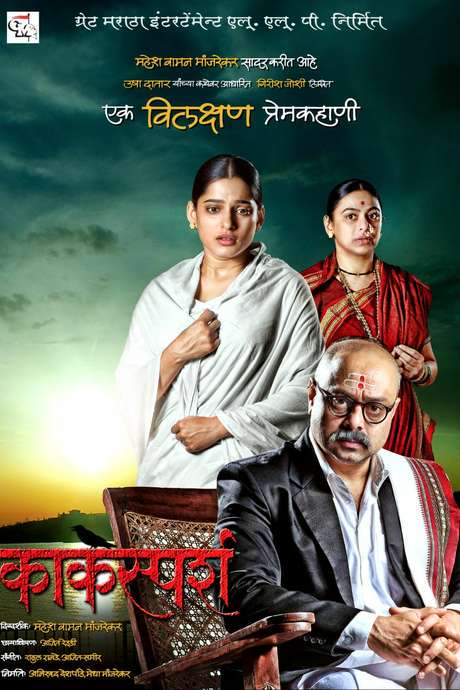


Kaksparsh Plot Summary
Read the complete plot summary and ending explained for Kaksparsh (2012). From turning points to emotional moments, uncover what really happened and why it matters.
Hari Hari Dada Damle, head of a traditional Chitpavan Brahmin family, rules over life in the Konkan village of Torgaon with his wife Tara, their three children, his younger brother Mahadev, and his widowed aunt Namu Aatya. He orchestrates a marriage between Mahadev and a pre-pubescent girl, Durga, who is renamed as Uma after the union. Mahadev dies before the marriage can be consummated, and Hari conducts the Śrāddha rites for his brother. For a long time the crows refuse to touch the offerings, until Hari mutters something over the meal and the crow finally touches the offerings, signaling a complex bond between duty, ritual, and the unseen.
From the start, the Brahmin community presses that Uma, now a widow, should have her head shaved as part of ritual purification. Hari resists, refusing to permit such rituals, and stands by Uma through every controversy and whisper of doubt from Tara and others. This steadfast protective stance cements Hari’s image as a guardian, yet it also stirs suspicion about his true motives within the household.
Years pass, and Tara is diagnosed with a terminal illness. The now grown-up Uma steps forward to take charge of the family’s day-to-day affairs, effectively becoming the pillar of the household. Before Tara dies, she recognizes her earlier misjudgments and pleads with Hari to marry Uma; he refuses, caught between old vows and a growing, undeniable tenderness.
Meanwhile, Hari arranges the marriage of his son Sankarshan and welcomes this new arrangement with a mix of pride and guarded emotion. The tension between Hari and Uma deepens when he catches her listening at the threshold of the newlyweds’ room, hearing their playful banter. Disgusted by what he perceives as inappropriate behavior, Hari withdraws from Uma, and she, puzzled and hurt, tries to reach out to Hari’s friend Balwant for explanation. Hari, unaware of the underlying reason, overhears the exchange and cuts ties with Balwant.
Uma, left bewildered by Hari’s withdrawal, grows more isolated as her health begins to deteriorate. Sankarshan pleads with Shanti to talk to her, but the weight of unanswered questions about her relationship with Hari remains heavy on her heart. In a moment of resolve, Uma begins a fast, signaling the depth of her longing for understanding and connection.
When Hari finally reveals the truth, the ground shifts. He confesses that during Mahadev’s death rites, the offerings were rejected by the crows for an extended period, and in that moment he vowed that no other man would touch Uma. This vow explains his resistance to shaving her head and to Tara’s proposal of their marriage. Yet when he learns from Tara that Uma has fallen in love with him, he chooses to break the vow and open himself to a possible union with her, despite the risks to the stability of his world.
Uma forgives him, and the two proceed toward reconciliation, with Hari preparing to take the Mangala sutra as a symbol of their bond. But tragedy strikes: Uma is dead. It becomes clear that Uma sacrificed her life to safeguard the integrity of Hari’s vow, choosing not to be the obstacle that would force him to break a vow that had defined and bound him for so long. Hari, left to face the awakening of a love he almost claimed and the loss of the woman who stood by him, comes to understand the profound cost of vows, duty, and the perils of clinging to tradition at the expense of human connection.
Kaksparsh Timeline
Follow the complete movie timeline of Kaksparsh (2012) with every major event in chronological order. Great for understanding complex plots and story progression.
Hari orchestrates Mahadev-Uma arranged marriage
Hari Damle, head of a traditional Chitpavan Brahmin family in Torgaon, arranges the marriage of his brother Mahadev to the girl Durga, who will be renamed Uma. The union binds the family to ritual duty from the start and marks Hari as a guardian of tradition. Mahadev dies before the marriage can be consummated, and Hari conducts the Śrāddha rites for his brother, setting the tone for the years ahead.
Crows reject offerings during the death rites
During Mahadev's death rites, the crows repeatedly refuse the offerings, testing the ritual. Hari mutters a vow under his breath, and finally the crow touches the meal, signaling a hidden bond between duty, ritual, and the unseen. The moment foreshadows the extraordinary restraint Hari will exercise to guard Uma.
Uma becomes a widow and faces ritual shaving pressure
Uma is now a widow and the Brahmin community presses for ritual purification through shaving her head. Hari resists, standing by Uma through whispers and doubt from Tara and others. His steadfast defense cements his image as a protective guardian, while sowing seeds of suspicion about his true motives.
Tara's illness elevates Uma to family pillar
Years pass and Tara is diagnosed with terminal illness, thrusting Uma into day-to-day leadership of the family. Uma becomes the steady pillar keeping the household intact, even as old expectations gnaw at the edges of tradition. Hari watches Uma rise with pride and unease in equal measure.
Tara pleads for Uma-Hari marriage; Hari refuses
Before Tara dies, she pleads with Hari to marry Uma, recognizing her growth and loyalty. Hari refuses, torn between timeless vows and a growing tenderness he cannot ignore. The tension between duty and desire tightens its grip on the household.
Hari arranges Sankarshan's marriage
Amid the household tensions, Hari arranges the marriage of his son Sankarshan, viewing it as a stabilizing move for the family. He welcomes this arrangement with a mix of pride and guarded emotion, mindful of Uma's presence and the vows that still bind him. The domestic order shifts as the next generation steps into their roles.
Hari discovers Uma at the threshold; rift grows
Hari catches Uma listening at the threshold of the newlyweds’ room, overhearing their playful banter. He feels disgust at what he misreads as improper behavior and withdraws from Uma. Uma seeks an explanation from Balwant, but Hari, unaware of the truth, cuts ties with Balwant, deepening their estrangement.
Uma isolates as Hari withdraws; health declines
Uma grows more isolated as Hari withdraws his attention, and her health begins to deteriorate under the weight of unanswered questions. Sankarshan pleads with Shanti to talk to her, but the emotional distance between Hari and Uma remains unresolved. The family watches a fragile bond fray further with each passing day.
Uma initiates a fast for understanding
In a moment of resolve, Uma begins a fast, signaling the depth of her longing to understand and connect with Hari. The act becomes a silent plea that highlights the distance that duty and miscommunication have created between them. The fast draws the household into a tense, hopeful stillness.
Hari reveals the vow that shaped him
Hari finally reveals the truth: during Mahadev's death rites, the offerings were rejected by the crows for an extended period, and in that moment he vowed that no other man would touch Uma. He explains this vow as a protective measure for Uma's purity and the family's honor. He also clarifies how it explains his resistance to shaving Uma's head and to Tara's proposal of marriage.
Tara reveals Uma's love for Hari
Tara reveals to Uma that Uma has fallen in love with Hari, a confession that shakes the already fragile balance of the household. This revelation compels Hari to confront the possibility of breaking the vow. He weighs the risk to the family against the pull of a future with Uma.
The vow is challenged; Mangala sutra looms
Uma forgives Hari, and the couple moves toward reconciliation as Hari contemplates taking the Mangala sutra to seal their bond. The potential union is framed as a daring rebuke to the old vows that once defined him. The family reads the tremors of change in the new, fragile equilibrium.
Uma dies sacrificing to protect the vow
Tragedy interrupts the fragile reconciliation: Uma dies, having sacrificed her life to safeguard Hari's vow and the family's stability. Hari is left to grapple with the realization that love came too late to save her. The death redefines his understanding of duty, love, and the cost of tradition.
Hari confronts the cost of vows and tradition
With Uma gone, Hari confronts the awakening of a love he almost claimed and the price of clinging to tradition. He processes the personal loss and the hollow echo of vows kept at the expense of human connection. The narrative closes on a stark meditation about duty versus desire.
Reflection on vows and the human cost
In the aftermath, Hari grapples with the profound costs of vows and tradition. The household remains altered by Uma's absence, and Hari understands that ritual duty without compassion can fracture families. The story ends as a sober meditation on cost, loyalty, and the fragility of human ties.
Kaksparsh Characters
Explore all characters from Kaksparsh (2012). Get detailed profiles with their roles, arcs, and key relationships explained.
Hari Dada Damle (Sachin Khedekar)
Head of a traditional Chitpavan Brahmin family in Torgaon, Hari is a guardian figure whose life is defined by duty. He resists social pressure—such as Uma’s head-shaving—and stands by his family through whispers of doubt. His long-standing vow to safeguard Uma frames the plot until love and tragedy force a reckoning with tradition.
Uma (Priya Bapat)
Uma grows from Mahadev’s wife-to-be into the central pillar of the household. She navigates suspicion, illness, and isolation with quiet resolve, and she loves Hari, leading to a defining choice between personal happiness and family duty. Her life culminates in a self-sacrificing act that tests the boundaries of vows.
Young Uma/Durga (Ketaki Mategaonkar)
Durga, a pre-pubescent girl who is renamed Uma after her union, enters the family through an arranged marriage. Her early life introduces the film’s conflict around ritual purity, duty, and the complexities of consent within tradition. Her later transformation mirrors the emotional stakes of the family’s vows.
Kaksparsh Settings
Learn where and when Kaksparsh (2012) takes place. Explore the film’s settings, era, and how they shape the narrative.
Location
Torgaon, Konkan
Kaksparsh is set in the Konkan village of Torgaon, where a traditional Chitpavan Brahmin family governs daily life. The setting emphasizes close-knit village customs, rituals, and social pressures that shape every decision. The coast and rural housebound living provide a backdrop for whispered judgments and rigid expectations that the family navigates.
Kaksparsh Themes
Discover the main themes in Kaksparsh (2012). Analyze the deeper meanings, emotional layers, and social commentary behind the film.
⚖️
Duty vs Love
The story centers on Hari Dada’s unwavering commitment to vows and family duty. His vow to keep Uma from any other man stems from ritual beliefs and the memory of Mahadev’s death rites. When feelings arise between Hari and Uma, the film probes whether tradition should supersede personal connection, and ultimately what it costs to uphold a vow.
🕉️
Ritual vs Individual
Rituals surrounding Uma’s status as a widow and the shaving of her head symbolize social purity and control. Hari challenges those expectations, standing by Uma against whispers and the community’s pressure. The tension reveals how ritual rules can overshadow individual happiness and wellbeing.
🛡️
Family Bonds
Hari’s protective stance positions him as the household’s stabilizing force, even as his decisions alienate Uma. The family dynamic—duties to elders, the needs of children, and the understanding of forgiveness—drives much of the film’s emotional arc. Uma’s devotion to the family deepens the sense of duty that binds them.
💔
Sacrifice and Tragedy
Uma’s love for Hari culminates in a tragic sacrifice: she dies to protect the integrity of his vow. The narrative frames her death as the ultimate cost of clinging to tradition at the expense of human connection. Hari is left to confront the price of vows and the limits of duty.

Coming soon on iOS and Android
The Plot Explained Mobile App
From blockbusters to hidden gems — dive into movie stories anytime, anywhere. Save your favorites, discover plots faster, and never miss a twist again.
Sign up to be the first to know when we launch. Your email stays private — always.
Explore the mobile appKaksparsh Spoiler-Free Summary
Discover the spoiler-free summary of Kaksparsh (2012). Get a concise overview without any spoilers.
In the quiet, wind‑kissed village of Torgaon on the Konkan coast, tradition hangs as heavy as the monsoon clouds. A close‑knit Chitpavan Brahmin household lives under the watchful gaze of age‑old customs, where every ritual and spoken vow carries the weight of generations. The rhythm of daily life is punctuated by the sounds of temple bells, the scent of fresh incense, and the unspoken expectations that bind each family member to their prescribed role.
The family is headed by the steadfast Hari Damle, whose steady presence steadies the household through both celebration and sorrow. Beside him stands his devoted wife Tara, their children, and the ever‑watchful elder aunt, Namu Aatya. When tragedy strikes and a young bride is left a widow, the community’s ancient prescriptions threaten to strip her of identity, demanding outward signs of loss that clash with the family’s emerging sense of compassion. The young widow, Uma, finds herself at the heart of this tension, caught between the rigid expectations of her caste and the quiet, unwavering support offered by those closest to her.
Mahadev, Hari’s younger brother, once shared a bond with Uma that hints at deeper affection, while Balwant, an old family friend, becomes an inadvertent confidant in the delicate dance of unspoken feelings. As Hari’s son Sankarshan steps into adulthood and his sister Shanti seeks to understand the undercurrents of the household, the community’s gaze shifts, and the atmosphere thickens with questions of duty, love, and honor. The film’s tone is a tender blend of melancholy and hope, portraying the quiet resilience of a woman navigating the narrow corridors of tradition while the world around her subtly reshapes.
Through measured pacing and a lyrical portrait of rural life, the story invites viewers to linger on the spaces between duty and desire, offering a glimpse of how an unassuming gesture of kindness can ripple through a tightly woven society, stirring both inner conflict and quiet reverence.
Featured on this page

What's After the Movie?
Not sure whether to stay after the credits? Find out!
Check out our other apps:

SAT Sphere
Build confidence for the Digital SAT.

Mori Atlas
Discover wild places worth protecting.

Luntero
Search smarter for a home in Amsterdam.

Plot Explained
Unravel movie endings and hidden clues.

Pokechamp
Dive into Pokémon data and battle logic.

Driving Theory
Get ready for your European theory test.

Movie Dust
Plan your next cinema trip with ease.

Musemap
Find art and culture as you travel.

Selkobase
Compare credentials before committing.

Local Manual
Turn an unfamiliar country into practical next steps.

Lernavi
Compare school systems before your next move.

GymRoam
Find a workout stop wherever your plans take you.
Explore Our Movie Platform
New Movie Releases (2026)
Famous Movie Actors
Top Film Production Studios
Movie Plot Summaries & Endings
Major Movie Awards & Winners
Best Concert Films & Music Documentaries
Movie Collections and Curated Lists
© 2026 What's After the Movie. All rights reserved.
Privacy Policy