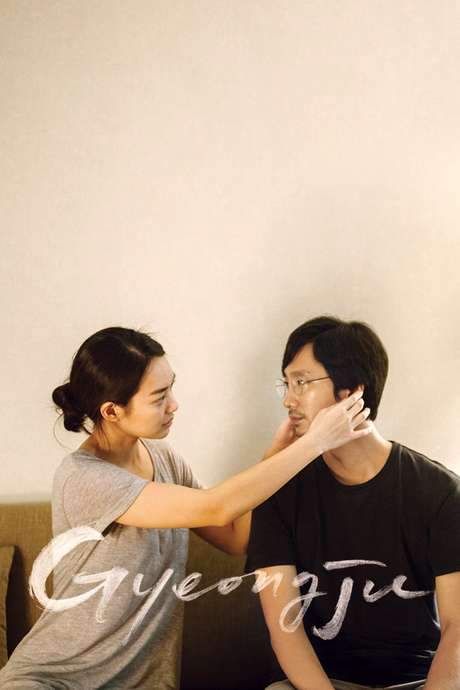
Gyeongju 2014

Directed by

Ryoo Seung-wan
Made by

Invent Stone
Where to Watch Gyeongju
See current US streaming, rental, and purchase options for Gyeongju (2014) via JustWatch.

Fawesome
HD
Hoopla
SD
Filmzie
HD
Mometu
HD
Plex
HD
Plex Channel
HD
Rakuten Viki
HD
Tubi TV
SD
Amazon Video
SD Streaming availability powered by 
Gyeongju Plot Summary
Read the complete plot summary and ending explained for Gyeongju (2014). From turning points to emotional moments, uncover what really happened and why it matters.
Choi Hyeon, Park Hae-il, returns to Korea to pay his respects to his recently deceased friend Kim Chang-hee Kim Hak-seon. A history professor who teaches in China, he is often seen as a bit of an oddball; when others try to engage him, he tends to snub them, even as he maintains a veneer of outward closeness. After the solemn visit, he wanders the ancient city of Gyeongju, famed for its tombs and tumuli, letting the quiet, age-old landscape echo his thoughts and questions about the past.
In the wandering, he reconnects with his circle of friends, including Kang, known as Teacher Kang Ryoo Seung-wan, and Lee Chun-won Kwak Ja-hyung. The trio once shared a bond over a teahouse that sits at the crossroads of memory and history, a place they last visited seven years earlier. As Hyeon continues to drift through the town, he becomes intrigued by an erotic piece of art that used to hang in that teahouse but has since vanished. His curiosity leads him to the teahouse’s current owner, Gong Yoon-hee Shin Min-a, a woman who seems to hold the key to the painting’s past and the teahouse’s evolving present. The day unfolds with an intimate pace as Gong Yoon-hee invites him closer, extending an offer to join her in bed, yet Hyeon remains preoccupied with his own thoughts and the fragment of art that lingers in his mind. As dawn arrives, he leaves the teahouse again, aware that a few people he encountered the previous day have died, a thread of mortality that threads through his reflections.
The following morning, Gong Yoon-hee shows a renewed curiosity about the erotic art she has wallpapered over, and a memory surfaces in a forthcoming flashback. In the recollection, Hyeon and his friends sit around the teahouse table, discussing the painting that bears the provocative line, “Lets have a drink and then each other.” > Lets have a drink and then each other
As the sequence of memory and present moment intertwines, it becomes clear that Kim Chang-hee’s widow has some claim to the teahouse’s past, signaling a deeper connection between the space and the friends who once inhabited it. Kim Chang-hee’s widow, Lee Na-ra, appears to have been the teahouse’s previous owner, adding another layer to the mystery and the way the past continues to surface in the present.
Gyeongju Timeline
Follow the complete movie timeline of Gyeongju (2014) with every major event in chronological order. Great for understanding complex plots and story progression.
Arrival in Korea to pay respects
Choi Hyeon travels to Korea to pay his respects to his recently deceased friend Kim Chang-hee. He meets their mutual friend Kang, setting the stage for the visit. The trip also introduces Hyeon's reputation as a China-based history professor who is frequently mistaken for odd by locals.
Reunion with Kang
Hyeon and Kang reconnect during the visit, exchanging memories and observations about their shared past. The interaction hints at a quiet, complex friendship rather than overt warmth. This meeting helps anchor Hyeon's emotional landscape as he moves through the city.
Hyeon as an outsider
In conversations with locals, Hyeon is often mistaken for a weirdo, a misreading that underscores his aloof, enigmatic presence. He politely avoids deeper connections when people try to reach out, yet maintains a carefully cultivated outward closeness. The dynamic emphasizes his role as observer rather than social participant.
Post-visit wandering in Gyeongju
After paying his respects, Hyeon wanders through Gyeongju, a city famed for its tombs and tumuli from the Silla Kingdom. The ancient landscape sparks reflections on memory and history as he moves along the streets. The mood blends reverie with a sense of being a stranger in a storied past.
Return to the teahouse from seven years past
Hyeon visits a teahouse that he, Kim, and Kang had frequented seven years earlier. The familiar space stirs memories and a sense of unfinished business from the past. He feels drawn to the place as if time loops back to previous conversations.
Curiosity about the vanished erotic art
Inside the teahouse, Hyeon becomes curious about an erotic artwork that had once been displayed there and has since vanished. The missing piece becomes a focal point for his introspection and for the mystery surrounding the teahouse. The artwork’s absence heightens the tension between memory and reality.
Interest in Gong Yun-hee
Hyeon notices the current teahouse owner, Gong Yun-hee, and his interest expands beyond the physical space. Their interaction hints at a potential connection, driven by shared curiosity about the art and its history. The day unfolds with a subtle, evolving attraction.
An invitation and an unsettled answer
Gong invites Hyeon to her bed, but he remains preoccupied with his thoughts and the missing artwork. He gives only a distracted response, prioritizing his internal preoccupations over immediate intimacy. The scene deepens his portrayal as a man haunted by memory.
Morning departure and ominous news
He leaves the teahouse in the morning, aware that some people he saw yesterday have died. The news unsettles him and reinforces the theme of mortality. His wandering continues as he pieces together what his visit means.
Continued wandering after dawn
Hyeon spends more time wandering, letting his thoughts guide him through the city’s quiet spaces. The day’s drift mirrors his inner detachment and curiosity about the living and the dead. The city’s history serves as a mirror for his own unsettled state.
The next morning’s wallpapered art curiosity
The next morning at the teahouse, Gong Yun-hee grows curious about the erotic art, which she has since covered with wallpaper. The concealment adds to the painting’s enigmatic aura and raises questions about ownership and memory. Hyeon’s earlier fascination lingers in the air.
Flashback to the teahouse table
A flashback unfolds showing Hyeon and his friends seated at the teahouse table and commenting on the erotic painting. The painting bears the provocative message, 'Lets have a drink and then each other,' connecting past conversations to present longing. The memory deepens the mystery surrounding the teahouse.
Kim Chang-hee’s widow as former owner
It is revealed that Kim Chang-hee’s widow appears to have been the teahouse’s previous owner. The revelation reframes the space as a site of personal histories and unresolved ties. The teahouse thus stands as a crossroads between friendship, love, and legacy.
Memory as a living presence
As events unfold, Hyeon contemplates that the teahouse is more than a setting; it seems to carry the memories of Kim Chang-hee and Kang. The place acts as a conduit for past relationships to intersect with present curiosity. This realization adds a melancholic layer to the narrative.
Legacy and unfinished business
With the widow’s appearance and the teahouse’s ownership history, the film hints at unresolved affairs threading through generations. Hyeon’s visit becomes less about the museum-like past of Gyeongju and more about what remains unspoken between friends. The ending leaves questions about memory, art, and mortality.
Gyeongju Characters
Explore all characters from Gyeongju (2014). Get detailed profiles with their roles, arcs, and key relationships explained.
Choi Hyeon (Park Hae-il)
A history professor based in China who returns to Korea to pay respects to his deceased friend Kim Chang-hee. He is introspective, quietly detached, and tends to snub casual interactions while remaining outwardly courteous. His fascination with the vanished erotic painting and the teahouse owner Gong Yoon-hee drives the day’s events, revealing a mind peeled by memory and obligation.
Gong Yoon-hee (Shin Min-a)
The current owner of the teahouse who catches Choi Hyeon’s interest. She is curious and alluring, inviting him into a personal exchange, yet her own motives and past remain partially concealed. Her presence sharpens the tension between longing and restraint, framing the encounter as both intimate and elusive.
Kim Chang-hee (Kim Hak-seon)
Hyeon’s friend whose memory lingers throughout the visit. The seven-year gap and Hyeon’s reflections on their past friendship drive a tone of nostalgia and introspection. His absence and the stories surrounding him anchor the narrative in shared history.
Grave Keeper (Lee Choon-yun)
An enigmatic figure encountered among the tombs, representing the film’s attention to death and the afterlife. The Grave Keeper contributes to the atmosphere of quiet, ritual space that frames the characters’ interactions. His presence underscores the theme of memory across realms of life and death.
Kim Chang-hee's Widow
The widow of Kim Chang-hee, implied to have previously owned the teahouse. She embodies lingering ties to the past and the ownership of space where memory and art intersect. Her presence hints at how property and legacy influence the present-day narrative.
Gyeongju Settings
Learn where and when Gyeongju (2014) takes place. Explore the film’s settings, era, and how they shape the narrative.
Location
Gyeongju, Gyeongju Teahouse
Gyeongju, the ancient capital of the Silla Kingdom, serves as the film’s setting. Known today for tombs and tumuli, the city offers a quiet, reflective backdrop for Hyeon’s journey. The teahouse in Gyeongju becomes a focal point where past and present mingle as he revisits memories with Gong Yoon-hee.
Gyeongju Themes
Discover the main themes in Gyeongju (2014). Analyze the deeper meanings, emotional layers, and social commentary behind the film.
🕰️
Memory
The film uses memory as a driving force, pulling Hyeon back to old spaces and old friends. The past intrudes on the present through the erased painting, triggering introspection and a sense of connection to what once was. The interactions in Gyeongju expose how memory can blur lines between reality and longing.
💔
Desire and Loss
Desire is entangled with grief as Gong Yoon-hee's invitation to intimacy collides with Hyeon's preoccupation with the painting. The erotic art becomes a mirror for unspoken yearnings and the fragility of life. The film threads romance with mortality, leaving desire shadowed by absence.
🪦
Death and Remembrance
The film juxtaposes living contact with the looming presence of death, especially through the deaths of those Hyeon encounters. The teahouse and its painting become catalysts for contemplating oblivion, memory, and the price of looking back. Death frames the story as something ever-present in quiet, everyday spaces.

Coming soon on iOS and Android
The Plot Explained Mobile App
From blockbusters to hidden gems — dive into movie stories anytime, anywhere. Save your favorites, discover plots faster, and never miss a twist again.
Sign up to be the first to know when we launch. Your email stays private — always.
Explore the mobile appGyeongju Spoiler-Free Summary
Discover the spoiler-free summary of Gyeongju (2014). Get a concise overview without any spoilers.
In the tranquil shadows of Gyeongju, a city whose ancient tombs whisper the legacy of the Silla Kingdom, a solitary figure returns from abroad. Choi Hyeon, a history professor who has spent years lecturing in Beijing, arrives to honor a departed friend. The journey is less a pilgrimage than a pause—a chance to step away from the academic rigor and the expectations that have long framed his life. The Korean capital, with its blend of stone graves, fragrant pines, and soft evening light, becomes a landscape for quiet contemplation, where every rustle seems to echo a memory he has tried to keep at arm’s length.
The heart of his wandering leads him to a modest teahouse that once hosted laughter and idle chatter among old companions. The shop, now under the care of a young woman named Gong Yun‑hee, retains an air of nostalgia, its walls steeped in tea-scented melancholy. As Hyeon watches her move through the space with practiced grace, a subtle tension forms—a mingling of curiosity, unspoken histories, and the gentle pull of something unfamiliar yet familiar. Their conversation drifts around the present while the past lingers like a faint perfume, inviting both to glimpse the other’s interior world without the need for grand declarations.
Amid the delicate clink of porcelain and the soft hum of distant traffic, an enigmatic piece of erotic artwork—once displayed on the teahouse’s wall—serves as a quiet focal point. Its absence, replaced now by plain wallpaper, hints at stories left untold and at the intimate layers that people choose to conceal. For Hyeon, the painting becomes a metaphor for the hidden desires and regrets that space out the moments of his own life, prompting a tentative exploration of what might be found when one allows vulnerability to surface.
The mood of the film steadies between wistful melancholy and a gentle, almost lyrical humor. It paints Gyeongju not merely as a backdrop but as a character itself—still, patient, and resonant. Through Hyeon’s quiet introspection and his tentative connection with Yun‑hee, the narrative opens a space where grief, memory, and the possibility of unexpected companionship coexist, inviting the audience to linger in the delicate space between past and present.
Featured on this page

What's After the Movie?
Not sure whether to stay after the credits? Find out!
Check out our other apps:

SAT Sphere
Build confidence for the Digital SAT.

Mori Atlas
Discover wild places worth protecting.

Luntero
Search smarter for a home in Amsterdam.

Plot Explained
Unravel movie endings and hidden clues.

Pokechamp
Dive into Pokémon data and battle logic.

Driving Theory
Get ready for your European theory test.

Movie Dust
Plan your next cinema trip with ease.

Musemap
Find art and culture as you travel.

Selkobase
Compare credentials before committing.

Local Manual
Turn an unfamiliar country into practical next steps.

Lernavi
Compare school systems before your next move.

GymRoam
Find a workout stop wherever your plans take you.
Explore Our Movie Platform
New Movie Releases (2026)
Famous Movie Actors
Top Film Production Studios
Movie Plot Summaries & Endings
Major Movie Awards & Winners
Best Concert Films & Music Documentaries
Movie Collections and Curated Lists
© 2026 What's After the Movie. All rights reserved.
Privacy Policy