What Happens in Encounters at the End of the World?
The complete story of Encounters at the End of the World, from the first scene to the last, in 361 words (about 2 minutes). Spoilers throughout.
Spoilers ahead
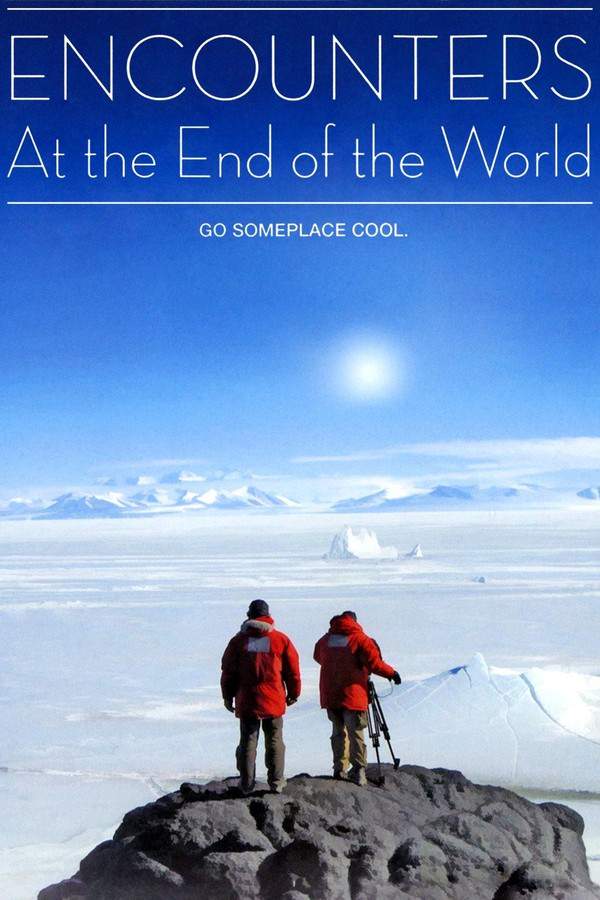
Filmmaker Werner Herzog and cinematographer Peter Zeitlinger travel to Antarctica to meet the people who live and work there and to capture footage of the continent’s unique locations. In his narration, Herzog explains that this film will not be a typical Antarctica film about “fluffy penguins” but will instead explore the dreams of the people and the landscape.
Arriving at McMurdo Station, the two-man crew interview some maintenance and support workers and iceberg geologist Douglas MacAyeal. They travel to a nearby seal camp supervised by zoologist Olav Oftedal, then join the film’s composer/producer, research diver Henry Kaiser, at a diving camp. The film then shows underwater footage shot by Kaiser. Cell biologist Samuel Bowser and zoologist Jan Pawlowski are interviewed, and after finishing their research, Kaiser and Bowser stage a rooftop guitar concert back at McMurdo.
Herzog and Zeitlinger visit Ernest Shackleton’s nearby cabin, which has been preserved, unchanged, for almost a century. After some footage filmed at the South Pole, Herzog interviews penguin scientist David Ainley. He asks Ainley about penguin sexuality and mental illness. At the end of the documentary, Herzog captures a lone penguin that stops following its colony. Instead of heading to the sea to feed or returning to its group, the penguin turns and begins waddling toward the vast, mountainous interior of the continent facing certain death.
The filmmakers visit the active volcano Mount Erebus and interview volcanologists. As Herzog speculates about alien scientists visiting a post-human Earth, there is a sequence shot in tunnels carved deep into the ice below South Pole station, where various trinkets and mementos, including a can of Russian caviar and a whole frozen sturgeon, have been placed in carved-out shelves in the walls and preserved by the extreme cold and dry air. On the slope of Erebus, Herzog and Zeitlinger explore ice caves formed by fumaroles.
Continuing the progression into the metaphysical, the filmmakers visit the launch of a giant helium balloon used in a neutrino detection project (ANITA) and interview physicist Peter Gorham. The final word is given to a philosopher/maintenance worker at McMurdo, and the film ends with more footage from the fumarole ice caves and Kaiser’s dives.