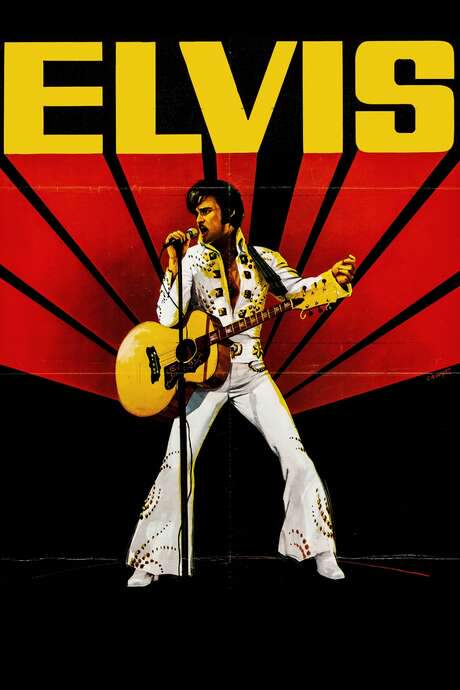
Elvis 1979

Directed by

John Carpenter
Made by

Dick Clark Productions
Elvis Plot Summary
Read the complete plot summary and ending explained for Elvis (1979). From turning points to emotional moments, uncover what really happened and why it matters.
Elvis Timeline
Follow the complete movie timeline of Elvis (1979) with every major event in chronological order. Great for understanding complex plots and story progression.
Childhood loss and early singing
In 1945 in Tupelo, Elvis visits the grave of his stillborn twin brother Jesse, feeling the ache of his family's loss. After being taunted by another kid for his emotions, he returns home and sings with his neighbors, which fuels his budding love of performing.
1953: High school struggles and breakthrough
Elvis endures harassment in the Memphis high school bathroom and is befriended by Red West. Encouraged by Bonnie, he performs in the school talent show, singing 'Old Shep' to a captivated audience. The win strengthens his resolve to pursue music, and he shares a kiss with Bonnie on a hill afterward.
Sun Records discovery and My Happiness
Bonnie tells Elvis about a local record company opportunity, and in Sun Records studio he sings 'My Happiness'. The assistant notes Elvis has a 'negro sound', which Sam Phillips believes could be hugely profitable. Impressed, Sam phones Elvis and offers a deal to make records.
That's All Right – recording and release
Elvis is paired with Scotty Moore and Bill Black at Sun Records and they record 'That's All Right'. Sam Phillips loves the track and pushes the new sound forward. In July 1954 the song is released, and Elvis nervously leaves home as the radio begins to play it repeatedly.
Opry audition and rising fame
Elvis continues to surge in popularity and secures bigger gigs. He auditions for the Grand Ole Opry, performing 'Blue Moon of Kentucky', but is told to reconsider truck driving; he storms off and smashes his guitar in frustration.
Colonel Parker takes the helm
In 1955 the mysterious old man with a cigar is revealed as Colonel Tom Parker, who begins managing Elvis. Parker secures bigger gigs and a higher pay, enabling Elvis to buy his family comforts like a pink Cadillac and diamonds. RCA later shows interest as Elvis’s momentum grows.
Heartbreak Hotel era and film beginnings
1956 sees Elvis record Heartbreak Hotel with a larger session band in a bigger studio, fueling national fame. The workload wears him down, causing fainting at a show. Hollywood opportunities begin to surface as Hal Wallis offers a film role after a televised performance, and he signs with Ed Sullivan Show, though his dance moves are censored.
Graceland and rising fame
In 1957 Elvis buys Graceland for his parents and himself, marking a new level of prominence. Heartbreak Hotel earns gold status as fan frenzy grows; paparazzi swarm his life, and a moment of mischief with a gumball machine reveals the stress his family endures with his fame.
Army draft and Germany years
Elvis is drafted in 1958, dyes his hair black to fit a movie-star image, and begins a draining two-year stint that interrupts his music and film work. In Germany he bonds with Priscilla Beaulieu as his mother Gladys battles illness, and he performs at a bar, singing 'Tutti Frutti' to a cheering crowd.
Return to America and family life
Elvis returns to the U.S. in 1960, still grieving Gladys and navigating fame's limits while at Graceland. He and Priscilla grow closer during Christmas visits, and he schedules his final concert in 1961 as he shifts focus toward film work.
1963-1967: JFK, Las Vegas wedding, and fame pressures
The 1963 airwaves carry news of John F. Kennedy's assassination, feeding Elvis's fear of being targeted. In 1967 he marries Priscilla in Las Vegas, and the couple's life is strained by constant scrutiny and his reluctance to abandon his art for a spotless image. He clashes with collaborators on film rehearsals but insists on keeping his playful side, worrying about losing Priscilla to isolation.
1968: Priscilla's pregnancy and domestic tensions
On February 1, 1968 Priscilla gives birth to a baby girl, Lisa Marie. Elvis wrestles with a sense of emptiness and asks Jesse for guidance on his purpose. A morning after a tense breakfast, Priscilla confronts him about outsiders and independence, signaling growing friction in their life at Graceland.
1969 comeback and Vegas show
In 1969 Elvis revives his career with a TV special and plans a comeback tour, recording 'Suspicious Minds' in California along the way. He promises Priscilla a Europe trip after the tour and reflects on his mortality as he seeks one more taste of stardom. He heads to Las Vegas, preparing to perform at the International Hotel with the crowd soon to roar for the King.
Elvis Characters
Explore all characters from Elvis (1979). Get detailed profiles with their roles, arcs, and key relationships explained.
Elvis Presley
A magnetic, restless performer whose talent drives a rapid rise from local venues to worldwide fame. He battles the pressures of fame, loyalty to his roots, and the evolving expectations of his image while maintaining a fierce drive to perform. His charisma on stage and his personal connections define the arc from early heartbreak to ultimate comeback.
Colonel Tom Parker
An enigmatic manager who reshapes Elvis's career, pushing for bigger gigs, film opportunities, and lucrative contracts. He serves as a controlling yet shrewd gatekeeper, accelerating Elvis's rise while provoking tension with his creators and collaborators. His influence marks the transformation of Elvis into a global phenomenon.
Gladys Presley
Elvis's devoted mother, protective and hopeful for her son's success while bearing the family burden. Her love provides emotional grounding but also intensifies the pressure Elvis feels to please his family. Her presence and loss deeply affect Elvis's emotional world.
Bonnie
Elvis's girlfriend whose relationship provides emotional counterpoint to his rising career. Her presence highlights the strain between distance, fame, and personal connection, including moments of loyalty and heartbreak as their romance evolves.
Scotty Moore
Lead guitarist and early bandmate who helps establish Elvis's signature sound. He represents the supportive circle surrounding Elvis during the Sun Records era and the first wave of his fame.
Bill Black
Bass player and early member of Elvis's band, contributing to the initial rockabilly sound that defined Elvis's early recordings. He embodies the tight-knit group behind Elvis as fame begins to surge.
Sam Phillips
Owner of Sun Records who discovers Elvis and pushes for a new, racially blurred sound. His belief in Elvis's potential catalyzes the switch toward a larger, more commercial audience.
Ed Sullivan
Television host who becomes a gatekeeper of Elvis's public image, governing what audiences can see and hear on national TV. His appearance decisions reflect the era's censorship and the tension between art and broadcast standards.
Priscilla Presley
Elvis's partner who becomes a central emotional counterpoint as fame isolates him. Her relationship with Elvis evolves through separation and connection, highlighting the strain fame places on personal life and intimacy.
Lisa Marie Presley
Elvis and Priscilla's daughter, introduced as a symbol of future hope and new life amid the turbulence of Elvis's career and fame. Her presence foreshadows Elvis's longing for family stability.
Jesse Garon Presley
Elvis's stillborn twin brother, whose absence casts a lingering emotional weight over Elvis's family history and personal motivation. The memory of Jesse anchors Elvis's sense of loss throughout his life.
Red West
Elvis's friend and associate who navigates the complexities of fame with him. Their relationship reflects the camaraderie and tension that accompany a rising star amid shifting social circles.
Vernon Presley
Elvis's father, a steady presence who shares in the family's joys and stresses as Elvis's career takes off. His support and concern ground Elvis amid the whirlwind of stardom.
Nick Adams
A fellow actor and friend who enters Elvis's Hollywood world, offering companionship and insight as Elvis navigates film careers and public attention.
Elvis Settings
Learn where and when Elvis (1979) takes place. Explore the film’s settings, era, and how they shape the narrative.
Time period
1945-1969
The story spans the mid-20th century, beginning with Elvis's childhood in 1945 and culminating in his 1969 Vegas comeback. It follows the transformation from a regional musician to a national icon, through the 1950s rise, the late-1950s military period, and the 1960s film career and stage revivals. The era is defined by rapid cultural shifts, television exposure, and the evolving music industry.
Location
Tupelo, Mississippi, Memphis, Tennessee, Las Vegas, Nevada, Germany
The narrative moves across key sites of Elvis's life: his boyhood in Tupelo, where music first calls to him and a stillborn brother casts a shadow over family life. It then shifts to Memphis as Elvis starts to break out, facing local harassment and rising fame. The Vegas strip becomes the showcase for his comeback, while his Army years relocate him to Germany, shaping his maturity and personal life.
Elvis Themes
Discover the main themes in Elvis (1979). Analyze the deeper meanings, emotional layers, and social commentary behind the film.
🎤
Fame and Identity
Elvis's rise to superstardom is driven by a desire to shape his own image while meeting external expectations. The narrative shows how managers, studios, and fans push him toward a marketable persona. His onstage energy clashes with personal doubts about authenticity, loyalty, and belonging, defining his public identity as the King of Rock and Roll.
💔
Family and Loss
Gladys's love anchors Elvis but also anchors him to family duty and sorrow. The stillbirth of Jesse Garon and Gladys's illness weigh heavily on his choices and priorities. These losses shape his relationships, including the strain and support dynamics with Bonnie and Priscilla.
🕺
Performance and Celebrity
Live performance is shown as both salvation and strain, with electrifying shows, censorship battles on television, and relentless media glare. Elvis's artistry collides with commercial demands and public scrutiny, highlighting the constant tension between artistic freedom and mass appeal.

Coming soon on iOS and Android
The Plot Explained Mobile App
From blockbusters to hidden gems — dive into movie stories anytime, anywhere. Save your favorites, discover plots faster, and never miss a twist again.
Sign up to be the first to know when we launch. Your email stays private — always.
Explore the mobile appMovies with Similar Twists and Themes
Uncover films that echo the narrative beats, emotional arcs, or dramatic twists of the one you're exploring. These recommendations are handpicked based on story depth, thematic resonance, and spoiler-worthy moments — perfect for fans who crave more of the same intrigue.

Featured on this page

What's After the Movie?
Not sure whether to stay after the credits? Find out!
Check out our other apps:

SAT Sphere
Build confidence for the Digital SAT.

Mori Atlas
Discover wild places worth protecting.

Luntero
Search smarter for a home in Amsterdam.

Plot Explained
Unravel movie endings and hidden clues.

Pokechamp
Dive into Pokémon data and battle logic.

Driving Theory
Get ready for your European theory test.

Movie Dust
Plan your next cinema trip with ease.

Musemap
Find art and culture as you travel.

Selkobase
Compare credentials before committing.

Local Manual
Turn an unfamiliar country into practical next steps.

Lernavi
Compare school systems before your next move.

GymRoam
Find a workout stop wherever your plans take you.
Explore Our Movie Platform
New Movie Releases (2026)
Famous Movie Actors
Top Film Production Studios
Movie Plot Summaries & Endings
Major Movie Awards & Winners
Best Concert Films & Music Documentaries
Movie Collections and Curated Lists
© 2026 What's After the Movie. All rights reserved.
Privacy Policy