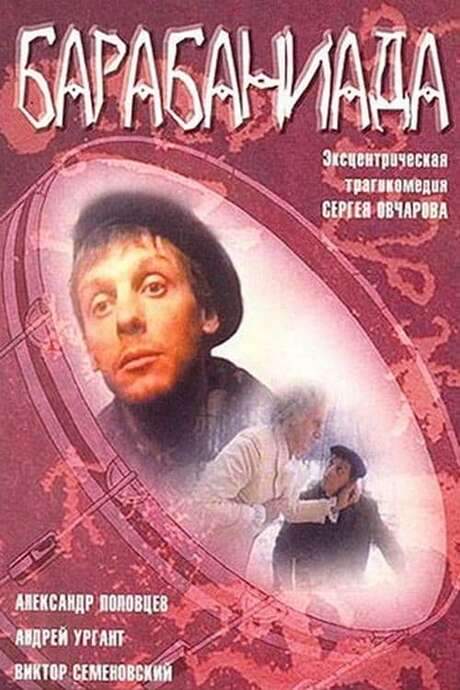



Drumroll Plot Summary
Read the complete plot summary and ending explained for Drumroll (1993). From turning points to emotional moments, uncover what really happened and why it matters.
In the depths of a cold winter, a funeral sets off an uncanny chain of events. At the ceremony, a dazzling, instrument-laden gift arrives—a large Stradivarius drum that seems to resonate with something beyond the ordinary. The drummer who performs with the ensemble soon discovers that the drum is not just an object, but a vehicle for a life of its own. As nightly rhythms spill from the drum, the bond between player and instrument tightens in a way that makes parting impossible, and the drummer is compelled to abandon his hostel and embark on a wandering journey.
Across the sprawling borders of the new post-Soviet space, the traveler carries only the drum as his tether to the world. Customs checks, shifting identities, and the relentless grind of movement erase most of his belongings, leaving him with nothing but the drum and a growing sense that the rhythm it carries may be his only steady companion. In the subterranean pulse of the city, the drummer tries to earn a living by tapping out coins in the subway; yet the money he earns slips away—taken by young, athletic youths, then by a policeman—and the sense of belonging slips further from reach. A diner encounter changes the day: a patient waitress shrouds the drum with a tablecloth, turning the shared act of eating into a strange, communal scene where food from others’ plates finds its way to him. A chance encounter with a pie and a kind, hungry young woman leads to an invitation into a modest home, where a mat is laid beside the door for the drum’s resting place.
The following morning brings a new energy as the drummer attempts to craft music anew, but life at home intrudes in improbable ways—the mundane embrace of a washing machine set inside the drum by his domestic partner. Escaping that suffocating scene, he seeks refuge among a sprawling dumping ground, a liminal universe where the homeless survive among discarded things, and where his world narrows to life inside the drum itself. The dump’s routines are interrupted by police raids, and wariness and grit rub shoulders with small acts of mercy. A delegation of French homeless people arrives, accompanied by officials, turning the two communities into a shared microcosm of cross-border humanity. They exchange stories, swap gifts, and toast in a makeshift harmony; the drummer keeps time beside a Black French colleague who answers his rhythms with his own, and a spark of friendship blooms. Before parting, the Frenchman invites the drummer to visit, hinting at a wider world beyond the dump’s fence.
Soon the drum travels again, now as a passport to a foreign land. A foreign passport is issued, and the drummer travels abroad, returning home with bags full of purchases only to be robbed at the airport. The harshness of loss lands him back on the streets, now colder and more determined than before, a winter of homelessness pressing in from all sides. In a moment of frustration and fury, the drum is shattered, its pieces scattered like memories that refuse to stay whole.
The film closes not with a tidy resolution but with a mockumentary-style newsreel that playfully muses on the origins of drums, imagining ancient peoples fashioning instruments from dinosaur skins. The ending leaves the viewer with a wry, almost folkloric reflection on music, migration, and the stubborn, stubbornly human impulse to create rhythm—even when the world seems to fall apart around us.
Drumroll Timeline
Follow the complete movie timeline of Drumroll (1993) with every major event in chronological order. Great for understanding complex plots and story progression.
Funeral gift of the Stradivarius drum
At the funeral, the specter of the deceased presents a large Stradivarius drum to the drummer in the ensemble. The gift is enigmatic and unsettling, changing the mood of the ceremony. The drummer senses an inexplicable bond forming with the instrument, foreshadowing trouble ahead.
Drum takes on a will of its own
Over time the drum begins to behave as an independent creature. The drummer cannot part with it, and nightly playing binds him to the instrument. The drum's grip pushes him to leave the hostel and set off on a journey.
Crossing post-Soviet borders
The drummer travels across several borders of the newly formed post-Soviet states. After contact with customs officers, he is left with nothing but the drum. His belongings are stripped away, leaving the drum as his sole possession.
Subway money and trouble
In the subway, crowds give money to beggars, and the drummer stands with the drum. Young people in athletic wear extort his money, triggering a shootout; the remaining cash is confiscated by a policeman. The scene shows the drummer's increasing vulnerability in urban life.
Diner with no money
The drummer goes to a diner while penniless. A waitress covers the drum with a tablecloth, and food from other people's plates somehow gets served to him. The waitress's small gesture highlights the drum's odd influence on everyday life.
Pie, a lure, and a home next to the door
On the street, a pie draws a young woman who feeds the drummer. She then brings him home and places a mat next to the door for the drum, signaling a temporary sanctuary in an unfamiliar life.
Girlfriend's washing machine inside the drum
The drummer tries to compose music the next day, but his mundane girlfriend, absorbed by daily life, installs a washing machine inside the drum. He escapes from her and seeks shelter in a vast dumping ground where the homeless live, living inside the drum.
Raids, exchange of wisdom between homeless groups
Police raids periodically disrupt the dump, and a delegation of French homeless arrives with officials. The two groups exchange wisdom, sit at a festive table, and exchange gifts. The drummer plays his drum while his Black French colleague accompanies him; at parting, the French man invites him to visit.
Passport abroad and theft
Soon the drummer is issued a foreign passport and flies abroad. He returns with a large load of purchases, but is robbed at the airport. He ends up homeless again, sleeping on the street in winter.
Breaking the drum
In a fit of anger he breaks the drum into small pieces. The once guiding instrument is shattered, symbolizing the collapse of his mobility and identity.
Mockumentary ending
The film ends with a mockumentary newsreel explaining how ancient people made the first drums from dinosaur skins. The drum's strange journey concludes with a retrospective on humanity's relationship with rhythm.
Drumroll Characters
Explore all characters from Drumroll (1993). Get detailed profiles with their roles, arcs, and key relationships explained.
The Drummer
A talented yet obsessive musician whose life centers on a Stradivarius drum. His attachment drives a restless journey across borders, leaving him vulnerable and increasingly detached from ordinary life. The drum's supposed autonomy tests his loyalty to music and to himself.
Waitress
A diner worker who briefly becomes an unintended ally by covering the drum with a tablecloth, causing the drummer to receive food from others’ plates. Her action reveals a mix of ordinary compassion and social blind spots, while she remains distant from the drummer’s deeper quest.
Girlfriend
The drummer's mundane partner who embodies everyday life and domestic practicality. She arranges a washing machine inside the drum, illustrating how ordinary routines can constrain or distract from artistic obsession.
French Colleague
A Black French homeless musician who plays along with the drummer. He represents cross-cultural exchange and mutual support within marginalized communities, offering a bridge between two worlds.
Drumroll Settings
Learn where and when Drumroll (1993) takes place. Explore the film’s settings, era, and how they shape the narrative.
Time period
Early 1990s post-Soviet era
The narrative unfolds over a single winter in the wake of the Soviet Union's dissolution, when borders were redefined and economies collapsed. It captures a time of social upheaval and transition, where individuals drift between makeshift homes and ambiguous loyalties.
Location
Hostel, Subway, Diner, Dump/landfill, Border crossings
A bleak urban tapestry unfolds across a hostel, crowded subway tunnels, a busy diner, and a vast dumping ground where the homeless live. The action moves across borders between newly formed post-Soviet states, highlighting fragile economies and shifting identities. The environments feel cold and indifferent, mirroring the drummer's restless journey from place to place.
Drumroll Themes
Discover the main themes in Drumroll (1993). Analyze the deeper meanings, emotional layers, and social commentary behind the film.
🥁
Obsession
The drummer's attachment to the Stradivarius drum grows beyond music, turning the instrument into a coercive companion. The drum seems to take on a life of its own, guiding the journey and isolating him from ordinary life. The film uses this obsession to explore loyalty, control, and what art demands from its creator.
🧭
Displacement
Across borders and a city dump, the drummer becomes a wanderer, stripped of property and identity. His trek through post-Soviet spaces highlights how borders, poverty, and social systems can push a person into exile. The journey becomes a search for belonging and stability amid a changing landscape.
🏚️
Marginalization
Homelessness and social invisibility sit at the center of the story, showing how those on the margins navigate cold streets and crowded cities. The narrative contrasts rough, practical survival with the fragility of dignity. The drum's keeper is constantly reminded that society often overlooks the living and the dead alike.
🤝
Cross-cultural Exchange
Even among disparate communities, people share wisdom and music, crossing cultural lines between Russian and French homeless groups. The drummer's collaboration with a Black French colleague reveals a universal language of rhythm and friendship. The mockumentary-style ending frames the origins of percussion in timeless terms, underscoring art's transnational reach.

Coming soon on iOS and Android
The Plot Explained Mobile App
From blockbusters to hidden gems — dive into movie stories anytime, anywhere. Save your favorites, discover plots faster, and never miss a twist again.
Sign up to be the first to know when we launch. Your email stays private — always.
Explore the mobile appDrumroll Spoiler-Free Summary
Discover the spoiler-free summary of Drumroll (1993). Get a concise overview without any spoilers.
In a frost‑bitten corner of the former Soviet Union, a funeral becomes the unlikely catalyst for a strange gift: a massive Stradivarius drum that seems to hum with its own secret life. The film opens on this surreal exchange, setting a tone that blends bleak realism with grotesque fantasy, where the ordinary and the uncanny pulse together like the drumbeats themselves. The world is a sprawling, post‑communist landscape where borders are porous, stations echo with the clatter of underground rails, and even the most mundane spaces—hostels, diners, and landfill sites—turn into stages for a darkly comic rite of passage.
At the heart of this wandering tale is drummer, a marginal musician whose existence is already defined by transience. When the drum arrives, it becomes more than an instrument; it is a companion, an anchor, and an inexplicable passport that draws him into a meandering odyssey across the cracked remnants of a once‑unified territory. His relationship with the drum is intimate and absurd, a bond that turns every footstep into a rhythm and every pause into a question. Through his eyes, the audience encounters a mosaic of encounters—subway performers, strangers sharing a table, and a community of the dispossessed—each rendered with a blend of melancholy and sly humor that underscores the film’s tragicomic core.
The film’s style is unapologetically eclectic, swapping stark, wintry vistas for cramped, cluttered interiors, and sprinkling the narrative with mock‑documentary flourishes that tease at the mythic origins of percussion. This tonal elasticity keeps the story both grounded in a gritty, post‑Soviet reality and afloat on a tide of whimsical speculation, inviting viewers to wonder whether rhythm is a survival tool, a cultural relic, or simply the stubborn human impulse to make noise when everything else falls silent.
Featured on this page

What's After the Movie?
Not sure whether to stay after the credits? Find out!
Check out our other apps:

SAT Sphere
Build confidence for the Digital SAT.

Mori Atlas
Discover wild places worth protecting.

Luntero
Search smarter for a home in Amsterdam.

Plot Explained
Unravel movie endings and hidden clues.

Pokechamp
Dive into Pokémon data and battle logic.

Driving Theory
Get ready for your European theory test.

Movie Dust
Plan your next cinema trip with ease.

Musemap
Find art and culture as you travel.

Selkobase
Compare credentials before committing.

Local Manual
Turn an unfamiliar country into practical next steps.

Lernavi
Compare school systems before your next move.

GymRoam
Find a workout stop wherever your plans take you.
Explore Our Movie Platform
New Movie Releases (2026)
Famous Movie Actors
Top Film Production Studios
Movie Plot Summaries & Endings
Major Movie Awards & Winners
Best Concert Films & Music Documentaries
Movie Collections and Curated Lists
© 2026 What's After the Movie. All rights reserved.
Privacy Policy