
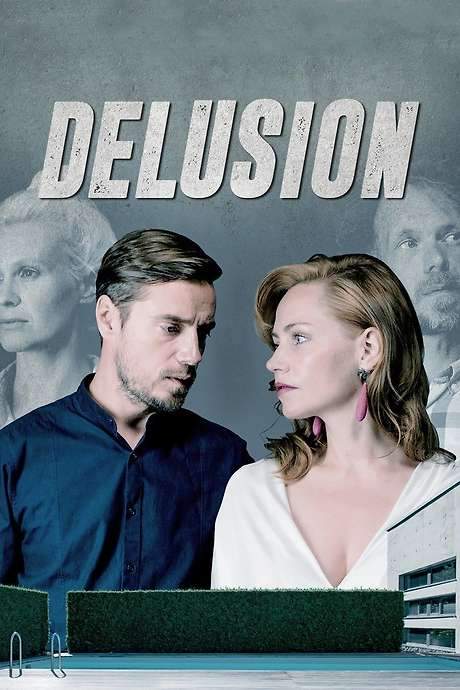
What Is Delusion About?
The premise of Delusion in 299 words, with nothing given away. The full story follows below.
In the quiet outskirts of a restless city, Anna and Juhan retreat to a friend’s isolated summer house, hoping the secluded setting will give them the space to weigh a burdensome decision. The house, perched against a horizon of open fields, feels both a sanctuary and a container for the unspoken tensions that have lingered between them. As a storm rolls in, the wind seems to echo the unsettled thoughts that have driven them here, setting a tone of fragile calm broken only by the occasional crack of thunder.
When a drenched couple arrives, convinced that the weather‑worn dwelling is theirs, the strangers’ mistaken claim turns the house into a stage for an awkward charade. Rather than correcting the misunderstanding, Anna and Juhan allow the illusion to persist, a choice that subtly reshapes the power dynamics within the cramped rooms. Their silence becomes a quiet manipulation, and the shared meals and forced hospitality reveal hidden layers of resentment, longing, and the thin veneer of civility that holds the temporary truce together.
The film moves at a patient, observant pace, letting everyday rituals—cooking, washing dishes, lingering glances—build an intimate atmosphere that feels both ordinary and uncanny. Light filters through rain‑spattered windows, casting shifting shadows that mirror the characters’ internal uncertainties. Dialogue is sparse, and much of the tension resides in what is left unsaid, inviting the audience to listen to the soft rustle of anxiety as it weaves through the cracked walls.
Through this tightly framed domestic tableau, the story explores how solitude can amplify perception, how a simple act of deception can surface long‑dormant bitterness, and how the line between hospitality and control blurs when refuge is offered under a stormy sky. The mood remains contemplative, a slow‑burning study of human fragility that lingers long after the rain stops.
What Happens in Delusion?
The complete story of Delusion, from the first scene to the last, in 764 words (about 3 minutes). Spoilers throughout.
Spoilers ahead
A woman who keeps a diary and baskets of small, everyday rituals becomes the center of a quietly unsettling story. After writing about a string of failed romances, she meets Yu Wenle on the street, a man who seems to resemble the “him” from her diary. Without hesitation she invites him home, cooks for him, and finds herself falling in love, even as the ordinary rhythm of her life begins to tilt. The film moves with a patient, observant pace, letting small details accumulate into a mood that feels both intimate and uncanny.
In the first third, everything appears normal on the surface, yet an undercurrent of strangeness threads through the scenes. The heroine’s demeanor drifts between moments that feel like fleeting amnesia and stretches that resemble sleepwalking, as if she, and perhaps the world around her, are half-remembered dreams. She lives largely in solitude: her family and colleagues rarely appear, and her interactions with the outside world feel tentative. Her daily life becomes a ritual of cooking, crafting puppets, and writing in her diary, punctuated by long periods of quiet, almost trance-like reflection. The atmosphere invites the viewer to sense that longing for companionship has begun to blur with fear, and loneliness sits at the heart of her experience. A guiding voice-over quietly suggests that modern life can breed paranoia when loneliness and anxiety turn inward, producing a fog of doubts and, in extreme cases, a fragile grip on reality.
The film expands beyond a single figure to reveal three intertwined threads, each centered on a different professional: a psychologist, a writer, and a police officer. The psychologist, Li Yulin, attends to a patient who is convinced they are being followed by an anonymous, shadowy organization. The writer, Lin Zichen, works on a novel about delusion itself, and as he writes, the boundary between what is real and what is imagined begins to blur in his own life. The police officer, Li Wei, investigates a string of bizarre murders, tracing clues that seem to loop back to the realm of delusions and insisted interpretations of reality. As the stories unfold, they begin to overlap in ways that raise questions about who is watching whom and why certain patterns recur.
As these strands converge, a startling and unsettling truth emerges: the narratives around Lin Zichen’s novel and Li Wei’s investigations are connected to a vast psychological experiment. The lines between fiction and reality start to dissolve, and the characters—along with the audience—are pulled into a vortex where perception shifts and what one believes might be, in fact, an orchestrated manipulation. The film slowly reveals that the very act of telling a story, diagnosing a mind, and pursuing a crime is enveloped in a larger experiment that tests how easily fear, doubt, and imagination can be weaponized. The boundaries between what is real and what is imagined blur more and more, leaving the trio of protagonists entwined in a complex, uneasy relationship with truth itself.
Throughout the narrative, the mood remains contemplative and precise, choosing suggestion over sensationalism while encouraging readers to examine their own susceptibility to solitude and suspicion. The pacing sustains a steady tension, letting the audience dwell on quiet moments—a glance, a stray sentence, a diary entry—before revealing how these pieces fit into a larger, unsettling design. The film does not rush toward loud revelations; instead, it invites viewers to observe how fear can knit itself into memory and how personal narratives can be co-opted into experiments that seek to alter perception on a grand scale.
In the shadows and silences of the story, the Neighbour Woman [Laine Mägi] and the Neighbour Man [Andres Lepik] appear intermittently, offering brief, human touches amid the larger questions of mind and reality. Their presence grounds the film in a lived, domestic space, reminding us that even when minds are being probed by unseen forces, everyday life continues, with its own small dramas and concerns. These moments of ordinary contact serve as counterpoint to the larger inquiry into delusion, reality, and control, highlighting how vulnerability and care can exist side by side with manipulation and doubt.
Ultimately, the film presents a provocative meditation on loneliness, perception, and the power of storytelling to shape what we accept as real. It asks whether our most intimate experiences can be influenced—or even manufactured—by unseen forces, and it challenges us to consider how much of what we believe rests on the fragile ground of memory and interpretation. The result is a nuanced, haunting meditation that remains faithful to its core questions while offering rich, layered storytelling that rewards patient viewing.
Delusion Timeline: Every Key Event in Order
12 key events in the order they happen, from “Diary-driven loneliness” to “Ambiguous ending”. 12 events name a place, across 11 locations.
- 1
Diary-driven loneliness
The heroine's life centers on writing in her diary, cooking for no one, and long stretches of solitary days. Her days drift into odd amnesia-like episodes and sleepwalking moods that hint at a fragile grip on reality. A narrator voice-over frames the narrative around loneliness, anxiety, and the seeds of paranoia that can bloom into schizophrenia.
When:Opening Where:Her apartment
- 2
Meeting the diary's 'him' on the street
On a street, she encounters Yu Wenle, who resembles the 'him' from her diary. She disregards his relationship status and brings him home, cooking for him and gradually falling in love. This encounter marks the escalation of her personal romance and potential slide into delusion.
When:Opening to early Where:Street; home
- 3
First third: normal yet uncanny atmosphere
In the film's opening third, life seems normal but carries a disquieting air. Her demeanor shifts into moments of amnesia or sleepwalking as she longs for love but has no one to give it to. She stays largely alone, with brief exchanges with neighbor Leung Loh Sze and no family or colleagues visible.
When:Early to mid Where:Home; nearby street
- 4
Voice-over about paranoia
A voice-over explains that modern people can fall prey to paranoia caused by loneliness and anxiety, sometimes leading to hallucinations or schizophrenia. The idea anchors the film's exploration of perception versus reality. The heroine's inner life is cast as a potential delusion rather than external threat.
When:Opening to mid Where:Narrative voice-over, montage sequences
- 5
Li Yulin tends a delusional patient
Psychologist Li Yulin treats a patient who believes they are being followed by a mysterious organization. The case probes how belief can feel as real as any external danger. This clinical thread echoes the film's broader questions about reality and control.
When:Mid Where:Clinic
- 6
Lin Zichen writes about delusion
Writer Lin Zichen works on a novel about delusion, and as he writes, the line between his fiction and reality begins to blur. The act of storytelling starts to pull him into the same psychic landscape the patient describes. His creative process becomes a lens to examine perception.
When:Mid to late Where:Writer's study
- 7
Li Wei investigates bizarre murders
Police officer Li Wei investigates a series of bizarre murders that seem linked to delusional patients. Clues from the crime scenes mirror the patterns seen in Li Yulin's patient and Lin Zichen's writing. The investigation expands the narrative beyond a single character to a network of minds.
When:Mid to late Where:Police precinct / crime scenes
- 8
Convergence begins
As the three stories progress, Li Yulin's case, Lin Zichen's novel, and Li Wei's murder cases begin to intersect. Shared themes and overlapping clues reveal a common mechanism behind the delusions, hinting at manipulation or a larger scheme. The borders between professional spheres and personal reality grow blurry.
When:Mid to late Where:Various locations, converging
- 9
Revelation: a psychological experiment
The narrative culminates in the revelation that a massive psychological experiment underpins Lin Zichen's book and Li Wei's cases. The experiment's architecture explains the coincidences and the pervasive sense of being watched. The film reframes its own events as constructed phenomena rather than random occurrences.
When:Late Where:Hidden facility / research lab
- 10
Reality and delusion collapse into a vortex
Boundaries between reality and delusion collapse, pulling the trio into a vortex where perception outruns fact. They confront how the experiment has shaped their thoughts, choices, and sense of self. The line between observer and subject dissolves.
When:Late Where:Mental space / blurred reality
- 11
Diary as a thread across the mystery
The diary entries echo through the convergence, suggesting the heroine's inner life may be both influenced by and feeding the experiment's dynamics. Her isolation and longing become data points in the larger design. The film ties her personal longing to the overarching illusion being manipulated.
When:Late Where:Her apartment
- 12
Ambiguous ending
The film leaves the fate of the lovers and investigators unsettled, with questions about genuineness, control, and the possibility of escape from the experiment. Viewers are invited to ponder what is real and what is manufactured in a world where minds can be engineered. The final image lingers in uncertainty.
When:Finale Where:Unspecified
Who Are the Main Characters in Delusion?
5 characters, among them The Heroine (Charlene Choi), Yu Wenle and Li Yulin: who each one is and the part they play in the story.
- TH
The Heroine (Charlene Choi)
A diary-keeping woman who longs for love and drifts between clarity and confusion. Her routine of cooking, puppet-making, and writing in her diary is punctuated by moments that feel like amnesia or sleepwalking, revealing a fragile grip on reality and a deep sense of loneliness.
- 💭 Diary
- 🧠 Troubled mind
- 💔 Love longing
- YW
Yu Wenle
A man who resembles the 'him' in the heroine's diary, and whom she brings home. His presence unsettles her sense of self and accelerates a descent into conflicting feelings between fantasy and reality.
- 💘 Love interest
- 🧩 Enigmatic
- LY
Li Yulin
A psychologist treating delusional patients, including someone convinced they are followed by a mysterious organization. Li Yulin's case studies mirror the heroine's experiences and contribute to the film's questioning of truth.
- 🧠 Psychologist
- 🧩 Case study
- LZ
Lin Zichen
A writer drafting a novel about delusion, whose fiction increasingly bleeds into reality. His creative process becomes a mirror for the central mystery as lines between truth and story blur.
- 🖊️ Writer
- 🌀 Imagination
- LW
Li Wei
A police officer investigating a series of bizarre murders. His inquiry uncovers links to delusional patients and unsettled clues that map onto the other stories.
- 🕵️ Detective
- 🧭 Investigation
Where and When Is Delusion Set?
Delusion is set in Urban city, Apartment building, Psychological clinic and Police station (Present day). Here is why the time and place matter to the story.
When
Present day
The story unfolds in the present, reflecting current urban anxieties: isolation, paranoia, and the fragile line between reality and fantasy. Everyday routines—diaries, casual encounters, and investigative work—drive the tension. The time setting emphasizes immediacy and psychological unease in a modern city.
Where
Urban city, Apartment building, Psychological clinic, Police station
Set in a contemporary cityscape centered on a lonely protagonist's apartment and surrounding neighborhoods. The film moves through her home, the nearby stairwell conversations with neighbors, and encounters that shift between mundane life and unsettling episodes. The intertwined narratives also visit a psychologist's clinic and law enforcement spaces, underscoring a modern urban atmosphere.
- 🏙️ Urban setting
- 🧠 Psychological thriller
- 🏢 Apartment building
What Are the Themes of Delusion?
4 ideas the story keeps returning to, among them Delusion, Loneliness and Reality vs Illusion.
-
01
Delusion
Delusion drives the plot as characters confuse diary-inspired fantasies with real events. The heroine's longing for love blends with amnesia-like episodes and sleepwalking, triggering a loop of unreliability. As three narratives intersect, the boundary between what's real and imagined becomes increasingly unstable.
-
02
Loneliness
Loneliness is the quiet engine of paranoia, pushing the characters toward intrapsychic misreadings and vague threats. The diary becomes a substitute for connection, and the absence of trusted relationships intensifies the sense of being watched. The film uses solitary spaces—apartments and empty streets—to heighten unease.
-
03
Reality vs Illusion
Reality and illusion spiral into each other as Lin Zichen's writing and Li Wei's investigation pull the threads together. The audience is asked to question what is genuine as clues from delusional patients appear in unexpected places. The resolution reveals a larger psychological experiment behind both fiction and crime.
-
04
Interconnection
Three lives—psychologist, writer, and detective—move toward a shared truth, showing how personal narratives shape collective reality. The film uses parallel storylines to illustrate how imagination, diagnosis, and investigation influence one another. The convergence exposes how perception governs truth.
What Kind of Film Is Delusion?
Tense in tone, with slow pacing and a complex story, going by the plot summary.
- Tone
- Tense
- Pacing
- Slow
- Story
- Complex
- Intensity
- Medium
- Ending
- Ambiguous
A slow, observant, and uncanny psychological drama that explores the fragile nature of reality through intertwining narratives, creating a steady tension and a lingering sense of doubt.
- contemplative
- uncanny
- quietly unsettling
- dreamlike
- anxious
- lonely
- psychological experiment
- loneliness and anxiety
- perception vs reality
- storytelling
Content notes: psychological manipulation.
Quiz
How well do you remember Delusion? Test yourself on the story.
