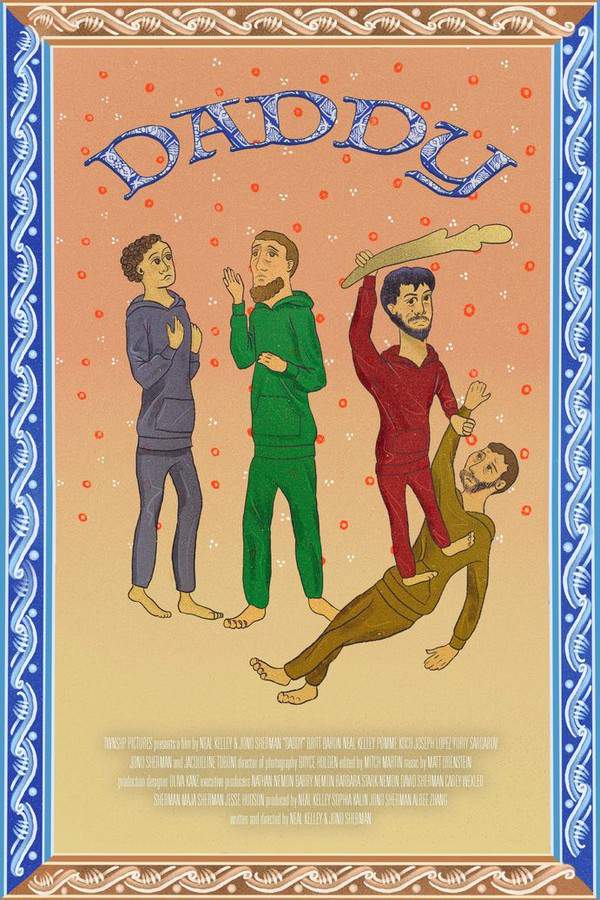
Daddy 2016


Directed by

Gerald McCullouch
Made by

Breaking Glass Pictures
Where to Watch Daddy
See current US streaming, rental, and purchase options for Daddy (2016) via JustWatch.

Bloodstream
HD
Fawesome
HD
Hoopla
SD
Filmzie
HD
Tubi TV
SD
Amazon Video
SD
Apple TV Store
HD Streaming availability powered by 
Daddy Plot Summary
Read the complete plot summary and ending explained for Daddy (2016). From turning points to emotional moments, uncover what really happened and why it matters.
Against the backdrop of Mumbai’s fading textile mills in the 1960s and late 1970s, a generation of unemployed youths finds quick money not in honest work but in matka-gambling. At the center is Arun Gawli, who, along with his friends Rama Naik and Babu Reshim, forms a pragmatic gang that seeks to outpace poverty through organized risk and bold moves. What starts as a desperate hustle gradually threads itself into a larger web of crime, drawing Gawli deeper as he is swept up after a murder and taken under the wing of Maqsood Bhai.
As the trio test their limits, ideological clashes and shifting power dynamics push them into a broader conflict that goes beyond mere cash-and-crime. The story follows how ambition, loyalty, and survival collide within their ranks, reshaping their loyalties and their futures. Amid this volatile landscape, Gawli’s personal life adds another layer to the tension: he marries his beloved Zubeida Mujawar, whose urging to abandon crime plants a seed of reform in him. For a while, it seems possible that he might leave the criminal world behind and pursue a cleaner path.
Yet violence soon interrupts any notion of a peaceful exit. Rama’s death in a brutal police encounter becomes a pivotal turning point, propelling Gawli to assume leadership of their Dagdi-based gang. He grows convinced that Maqsood Bhai engineered Rama’s demise, and this suspicion ignites a savage gang war that intensifies the struggle for dominance. Throughout this upheaval, a tenacious police officer, Vijaykar Nitin, closes in with a single aim: to bring Gawli to justice at any cost.
What unfolds is a complex portrait of a notorious figure whose life oscillates between crime and power. The narrative traces the arc of one of India’s most feared gangsters as he makes an improbable move into the realm of politics, a transformation that earns him the moniker of “Daddy.” The tale invites reflection on how a life spent navigating violence and cunning can open doors to influence and authority, while also highlighting the costs paid by those around him and the communities caught in the crossfire. In the end, the story remains focused on the evolution of a man who rises from the shadows of crime to shape the public stage, all while the shadows of his past continue to loom large.
Daddy Timeline
Follow the complete movie timeline of Daddy (2016) with every major event in chronological order. Great for understanding complex plots and story progression.
Economic collapse of Mumbai's mills pushes youth toward crime
In the 1960s, Mumbai's textile mills shut down one after another, leaving thousands unemployed. Arun Gawli, along with friends Rama Naik and Babu Reshim, turns to matka gambling to earn quick money. They then form their own gang to protect their profits and extend their influence.
Gawli forms his first gang with Rama Naik and Babu Reshim
From the profits of gambling, they establish a small power base in the city's underworld. They recruit friends and begin taking on rival groups. Early operations are brazen and set the tone for the gang's rise.
Gawli comes under the wing of Maqsood Bhai after a murder
A murder committed by Gawli brings him to the attention of Maqsood Bhai, a seasoned gang leader. Impressed or opportunistic, Maqsood takes Gawli under his wing, offering protection and scope for expansion. The alliance widens the network and deepens the power dynamic.
Ideological clashes spark a growing rift with Maqsood Bhai
As they rise, Gawli and Maqsood clash over strategy and control, turning their alliance into a rift. The two factions feud over territory, money, and influence. The relationship that started with mentorship evolves into open confrontation.
Gawli marries Zubeida Mujawar and contemplates reform
Gawli marries his sweetheart Zubeida Mujawar, who urges him to leave crime and seek a lawful path. The marriage signals a personal turning point as he considers leaving the criminal world behind. Yet the weight of his empire pulls him back toward power.
Rama Naik is killed in a brutal police encounter
Rama Naik's killing in a brutal police encounter becomes a turning point for Gawli and his gang. The loss sharpens loyalties and hardens resolve within the organization. Gawli suspects Maqsood engineered Rama's death, fueling suspicions and revenge.
Gawli takes charge of the Dagdi gang and base
With Rama dead, Gawli seizes control of the Dagdi-based gang and positions himself as the new leader. The Dagdi Camp becomes the operational hub for their expanding activities. He consolidates power while facing his first major test of leadership.
Gawli suspects Maqsood engineered Rama's killing; a full-blown gang war begins
Convinced Maqsood orchestrated Rama's killing, Gawli initiates a brutal feud as both sides mobilize crews. Violence escalates and territorial lines are redrawn as the war tightens its grip on Mumbai's underworld. The conflict reveals the ruthlessness that defines their era.
Cop Vijaykar Nitin closes in on Gawli
A determined cop named Vijaykar Nitin relentlessly pursues Gawli, hoping to bring him to justice. The investigation adds legality pressure and complicates gang operations. Public scrutiny rises as the net tightens around the gangster.
Dagdi gang fights Maqsood's faction as the war widens
The conflict expands beyond personal enmity into a wider gang war, with rival factions enlisting followers and fighting for control of territory and resources. Loyalties shift as the conflict drags on amidst continued violence. The Dagdi faction and Maqsood's group endure a period of intense confrontation.
Gawli's political entry and the birth of the 'Daddy' persona
As years pass, Gawli transitions from crime to politics, leveraging his influence to win a platform of legitimacy. The move earns him the nickname 'Daddy' and reshapes his public image from gangster to politician. The lines between crime and politics blur as power shifts hands.
Legacy and impact: one of India's feared gangsters becomes a political figure
The final arc shows how a feared gangster navigates a complex political landscape, leaving a controversial legacy. His journey from the Dagdi camps to the corridors of power illustrates the uneasy ties between crime and politics in Mumbai. The story underscores the enduring power of a crime boss who becomes a political force.
Daddy Characters
Explore all characters from Daddy (2016). Get detailed profiles with their roles, arcs, and key relationships explained.
Arun Gawli
Arun Gawli starts as an unemployed youth drawn into matka gambling with friends. He grows into a gang leader after being mentored by Maqsood Bhai, navigating loyalty, money, and violence. His arc blends ruthless pragmatism with a flicker of yearning to reform, especially after marrying Zubeida. The narrative shows how ambition can empower and imprison a man in a world where power is everything.
Rama Naik
Rama Naik is a close friend who pushes Arun into the dangerous world of matka gambling and crime. He helps build the early gang’s identity but is killed in a brutal police encounter, signaling the brutal cost of their rise. His fate sparks the first major conflict and plants seeds of a destructive rivalry. Rama’s ambition and loyalty drive much of the early arc.
Babu Reshim
Babu Reshim is another friend who co-founds the gang and shares a commitment to the risky path they've chosen. He embodies loyalty and practical risk-taking in a world where trust is scarce. His role helps solidify the gang’s early structure before the power battles intensify.
Maqsood Bhai
Maqsood Bhai acts as the mentor who takes Arun under his wing, shaping the gang’s tactics and ambitions. He becomes a rival as power shifts, fueling the cycle of betrayal and warfare. His influence drives the gang’s expansion and the brutal code of the era.
Zubeida Mujawar
Zubeida Mujawar is Arun’s sweetheart, who urges him toward a cleaner life. She embodies a counterpoint to the gangster’s violence, offering moral pressure and emotional support. Her presence underscores the tension between personal loyalty and criminal loyalty.
Vijaykar Nitin
Vijaykar Nitin is the dedicated cop who pursues Arun relentlessly, representing law and order. His pursuit adds pressure to the gang’s operations and heightens the stakes of every decision. He embodies the clockwork pursuit of justice in a city where crime often eclipses it.
Daddy Settings
Learn where and when Daddy (2016) takes place. Explore the film’s settings, era, and how they shape the narrative.
Time period
1960s to late 1970s
The narrative spans a period of Mumbai’s upheaval: from the 1960s through the late 1970s, when industrial decline and unemployment push people toward crime. Matka gambling and turf wars become common as gangs vie for control. Police pressure and shifting loyalties define the era, laying the groundwork for a gangster’s entry into politics.
Location
Mumbai, Dagdi Chawl
The story unfolds in Mumbai, with Dagdi Chawl as the gang’s base. The city’s textile mills are shutting down, driving unemployed youths toward quick-money schemes and crime. Narrow lanes and crowded tenements create a claustrophobic urban backdrop where loyalties fracture and violence is a constant threat.
Daddy Themes
Discover the main themes in Daddy (2016). Analyze the deeper meanings, emotional layers, and social commentary behind the film.
⚔️
Power Struggle
The film centers on how power is won, shared, and contested within a growing gang. Rival leaders jockey for control, forging alliances and betraying each other to expand influence. Violence, fear, and charisma become tools to consolidate authority within Mumbai’s underworld. The arc shows how criminal power reshapes the city’s social order.
❤️
Love & Crime
Zubeida’s influence creates a tension between personal loyalty and criminal ambition. She hints at a cleaner life, offering moral grounding, but the pull of power and gang loyalty often overrides that possibility. The romance reveals how relationships can both soften and harden a gangster’s path. This theme explores the limits of reform amid a ruthless milieu.
🏛️
Political Rise
The story tracks the transformation from hoodlum to politician, showing how criminal networks leverage their power to enter public life. It highlights the blurred lines between crime, governance, and influence, culminating in the protagonist’s controversial leap into politics. The arc examines how illicit authority can translate into legitimate power, and the costs of that transition.

Coming soon on iOS and Android
The Plot Explained Mobile App
From blockbusters to hidden gems — dive into movie stories anytime, anywhere. Save your favorites, discover plots faster, and never miss a twist again.
Sign up to be the first to know when we launch. Your email stays private — always.
Explore the mobile appDaddy Spoiler-Free Summary
Discover the spoiler-free summary of Daddy (2016). Get a concise overview without any spoilers.
In the waning days of Mumbai’s once‑thriving textile era, the city’s streets pulse with the restless energy of a generation left adrift. Factories shutter one after another, and the promise of steady work dissolves into a haze of uncertainty. Against this backdrop, the film captures a gritty, atmospheric portrait of a metropolis caught between the fading glow of its industrial past and the restless stirrings of a new, untamed underworld.
Arun Gawli arrives as a charismatic survivor, a young man shaped by the loss of familiar rhythms and driven by a fierce desire to stake his claim in a world that has suddenly opened up to risk. He moves among a close‑knit circle of friends—Rama Naik and Babu Reshim—who share his hunger for quick success and whose camaraderie offers both support and subtle pressure. Their conversations echo the restless optimism of a time when possibilities feel both boundless and precarious.
When Maqsood Bhai steps into the picture, a seasoned figure whose presence hints at deeper, shadowed currents, Arun finds himself drawn into a complex dance of loyalty, ambition, and unspoken codes. The film layers this tension with the gentle, hopeful influence of Zubeida Mujawar, a partner whose quiet insistence urges Arun toward a different kind of future, suggesting that love might yet temper the allure of power. Meanwhile, a determined police officer, Vijaykar Nitin, circles the periphery, embodying the law’s steady, watchful gaze.
The tone weaves together the raw buzz of street‑level ambition with an undercurrent of looming consequence, inviting viewers to sense the magnetic pull between survival and morality. Through evocative cinematography and a soundtrack that mirrors the city’s heartbeat, the story asks what it means to forge identity amid turmoil, and whether the foundations we build can ever truly withstand the shifting sands of change.
Featured on this page

What's After the Movie?
Not sure whether to stay after the credits? Find out!
Check out our other apps:

SAT Sphere
Build confidence for the Digital SAT.

Mori Atlas
Discover wild places worth protecting.

Luntero
Search smarter for a home in Amsterdam.

Plot Explained
Unravel movie endings and hidden clues.

Pokechamp
Dive into Pokémon data and battle logic.

Driving Theory
Get ready for your European theory test.

Movie Dust
Plan your next cinema trip with ease.

Musemap
Find art and culture as you travel.

Selkobase
Compare credentials before committing.

Local Manual
Turn an unfamiliar country into practical next steps.

Lernavi
Compare school systems before your next move.

GymRoam
Find a workout stop wherever your plans take you.
Explore Our Movie Platform
New Movie Releases (2026)
Famous Movie Actors
Top Film Production Studios
Movie Plot Summaries & Endings
Major Movie Awards & Winners
Best Concert Films & Music Documentaries
Movie Collections and Curated Lists
© 2026 What's After the Movie. All rights reserved.
Privacy Policy