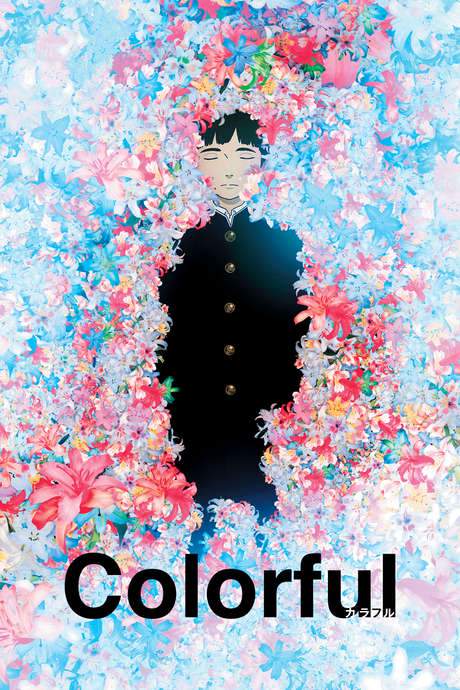
Colorful 2010

Directed by

Keiichi Hara
Made by

Sunrise
Colorful Plot Summary
Read the complete plot summary and ending explained for Colorful (2010). From turning points to emotional moments, uncover what really happened and why it matters.
In the poignant story of What’s After the Movie, a soul finds itself at a train station, told that it is “lucky” and will be given another chance at life, despite its initial reluctance to accept it. This soul is transplanted into the body of Makoto Kobayashi (kazato-tomizawa), a 14-year-old boy who has recently taken his own life by an overdose. Supervised by a neutral spirit named Purapura, represented as a small boy, the soul is tasked with uncovering the primary sin or mistake made in its past life before the six-month limit to live anew runs out.
Throughout this period, the soul must also uncover why Makoto chose to end his life, learning details about his troubled past while discovering how to embrace the potential of this second chance. It soon becomes clear that Makoto harbors deep resentment toward his family, and the story explores these complex feelings. He despises his father, who is an underdog at work and often overwhelmed by unpaid overtime. Similarly, he resents his mother — portrayed by Kumiko Aso — for her affair with a dance instructor, a secret her son profoundly disapproves of and which his father appears oblivious to. His older brother Mitsuru, played by Akiko Yajima, has given up on him because of Makoto’s moodiness, and Makoto feels isolated, with no meaningful friends at school.
Makoto’s observations deepen when he discovers that a girl named Hiroka — who is also voiced by Akina Minami — sells sex to older men to afford luxury items, reflecting the harsh realities some youth face. Meanwhile, Shoko Sano (aoi-miyazaki) from Makoto’s class becomes suspicious of his strange behavior, emphasizing how alienated Makoto feels from his peers. An unsettling encounter with delinquents leaves him beaten and mugged, further deepening his sense of despair. However, Shoko, troubled by Makoto’s behavior, later visits him at home, but Makoto, overwhelmed and scared, drives her away.
Throughout this emotional journey, Purapura explains that Makoto’s life is ticking toward its inevitable end — that his “real” death will occur once the six months pass. Yet, amid these struggles, Makoto experiences a turning point. He befriends Saotome (jingi-irie), a classmate who accepts outcasts and treats everyone equally. This friendship allows Makoto to glimpse the possibility of happiness and contentment for the first time. They begin studying for their high school entrance exams together, finding purpose and hope in their plans.
Makoto’s family situation remains complicated. His brother Mitsuru, fearing Makoto’s future and their financial struggles, considers postponing his college entrance exams to help fund private school tuition for Makoto. However, Makoto, with the support of his parents, chooses to attend Tamegawa High, a public school, confirming his desire to follow his own path, even against his family’s expectations. His heartfelt declaration, driven by the desire to attend school with his new friend, eventually convinces his family to support his choice.
As the story approaches its conclusion, Makoto has a final encounter with Purapura. During this meeting, he learns the truth: that the soul he inhabits is himself from his past life, and his real mistake was his own suicide — an act he now recognizes as his greatest error. Purapura reassures him that he will continue living but also reveals that his memories of the spirit world and Purapura will be erased. This erasure is meant to help Makoto live without the burden of old guilt and regrets. Before his memories fade, Purapura offers this heartfelt advice: “Live a colorful life.” Makoto’s journey ends with this message of hope and renewal, emphasizing the importance of embracing life despite the pain and mistakes of the past.
This story beautifully explores themes of redemption, the complexity of family relationships, and the possibility of finding meaning in life even after immense suffering.
Colorful Timeline
Follow the complete movie timeline of Colorful (2010) with every major event in chronological order. Great for understanding complex plots and story progression.
Introduction at the train station of death
A dejected soul arrives at the train station to death, where it is informed that it is 'lucky' and has another chance at life. The soul is reluctant to return but is given the opportunity to be reborn, with a six-month time limit to resolve its past mistakes. It is then transported into the body of a 14-year-old boy named Makoto Kobayashi who has recently committed suicide.
Awakening in Makoto's body
The soul finds itself inhabiting Makoto Kobayashi, a troubled teenager who had recently overdosed on pills. Makoto's body is unfamiliar, and he begins to navigate life from a new perspective under the watch of the spirit Purapura. The initial days involve Makoto struggling with his new identity and the circumstances of his death.
Discovery of family discontent
Makoto, now in his new body, learns that he greatly dislikes his family, especially his father, who works long unpaid overtime, and his mother, who had an affair. He also discovers that his brother Mitsuru has given up on him due to his moodiness and social isolation. These revelations deepen Makoto's feelings of alienation.
Encounter with Hiroka
Makoto finds out that Hiroka, a girl he fancies, sells sex to older men to afford luxuries. This knowledge shocks him, revealing troubling aspects of her life and the environment Makoto is part of. It causes him to reevaluate his perceptions of his classmates and their struggles.
Suspicion from Shoko
A girl from Makoto's class, Shoko, becomes suspicious of Makoto's strange behavior. Makoto tries to avoid her, but her suspicions add to his anxiety about blending in and understanding himself better. Their interactions hint at the social pressures he faces.
Mugging and confrontation
Makoto is mugged and beaten by delinquents, which leaves him shaken and more aware of his vulnerability. Shoko later visits him at his house but is scared off by his behavior, emphasizing his social isolation and the difficulty of forming trust.
Friendship with Saotome
Makoto befriends Saotome, a boy in his class who accepts outcasts and treats them as equals. This friendship allows Makoto to experience happiness and see the joy of life for the first time, bringing a new perspective to his second chance.
Studying and future plans
Makoto and Saotome begin studying for high school entrance exams, which surprisingly rekindles Makoto's ambitions. Makoto decides to attend Tamegawa High, choosing a path aligned with his newfound desire for a better life.
Family conflict over education
Mitsuru announces he will postpone his college entrance exams to help the family afford private school for Makoto, but Makoto declines, insisting he wants to attend a public school with Saotome. His emotional plea convinces his family to accept his decision.
Realization of the past mistake
As his six-month deadline nears, Makoto meets with Purapura for a final time and uncovers that his greatest mistake was his own suicide in his past life. This revelation brings clarity to his second chance at life and the importance of living fully.
Purapura's farewell and memory wiping
Purapura informs Makoto that he will continue living but will have his memories of the spirit world erased, so he does not remember his second chance. Before erasing memories, Purapura advises him to live a vibrant and meaningful life.
Colorful Characters
Explore all characters from Colorful (2010). Get detailed profiles with their roles, arcs, and key relationships explained.
Makoto Kobayashi
A troubled 14-year-old boy who has just committed suicide, Makoto is placed in a new body to relive life and understand his past. He is initially detached and resentful but gradually finds joy and purpose through new friendships and self-awareness.
Shoko Sano
A curious girl from Makoto's class who becomes suspicious of his unusual behavior. She is perceptive and caring, representing innocence and the possibility of genuine connection amidst turmoil.
Mitsuru Kobayashi
Makoto's older brother who is academically struggling and appears resigned to his circumstances. His decision to postpone college shows his selfless nature and desire to help his family financially.
Purapura
A neutral spirit that oversees Makoto's journey, serving as a guide and confidant. It helps him reflect on his life and eventually understands the significance of forgiveness and living fully.
Colorful Settings
Learn where and when Colorful (2010) takes place. Explore the film’s settings, era, and how they shape the narrative.
Time period
Contemporary (present day)
The events unfold in the present day, capturing the modern-day challenges faced by teenagers and their families in Japan. This period features societal pressures, school life, and familial expectations that influence the characters' decisions and struggles.
Location
Tokyo, Japan
The movie is set in Tokyo, Japan, a bustling metropolis known for its vibrant city life, modern skyscrapers, and cultural landmarks. The city provides a contemporary backdrop for the story's themes of adolescence, family struggles, and self-discovery, reflecting both the struggles and hopes of everyday Japanese life.
Colorful Themes
Discover the main themes in Colorful (2010). Analyze the deeper meanings, emotional layers, and social commentary behind the film.
🎨
Self-Discovery
The film explores the journey of self-discovery as the protagonist seeks to understand his past mistakes and find meaning in life. It emphasizes personal growth, forgiveness, and the importance of living a vibrant, colorful life after overcoming despair.
🌀
Redemption
Redemption is a core theme, highlighting the possibility of change and second chances. The protagonist's journey from regret to acceptance underscores the idea that understanding and compassion can lead to personal redemption, even after profound mistakes.

Coming soon on iOS and Android
The Plot Explained Mobile App
From blockbusters to hidden gems — dive into movie stories anytime, anywhere. Save your favorites, discover plots faster, and never miss a twist again.
Sign up to be the first to know when we launch. Your email stays private — always.
Explore the mobile appColorful Spoiler-Free Summary
Discover the spoiler-free summary of Colorful (2010). Get a concise overview without any spoilers.
In a world where the line between the living and the unseen blurs at the edge of a midnight train platform, a weary spirit arrives at a station that marks the end of all journeys. There, an enigmatic overseer informs the newcomer that, contrary to expectation, a second chance is being granted. The spirit is transplanted into the body of a fourteen‑year‑old boy, Makoto Kobayashi, who has just stepped away from his own life. Watching over this uneasy rebirth is a neutral, child‑like guide named Purapura, whose calm presence hints at both mystery and purpose.
The arrangement comes with a ticking condition: the borrowed life will only endure for a limited span, and within that window the occupant must uncover the greatest error that led to his previous demise. This quest is less about solving a mystery and more about confronting the weight of forgotten regrets, while learning to navigate the everyday rhythms of adolescence—school, family, and the subtle currents of social life. The tone balances delicate melancholy with an undercurrent of quiet hope, inviting the audience to wonder what it truly means to be “lucky” when given another shot at existence.
Set against a contemporary Japanese backdrop, the story blends ordinary teenage concerns with an ethereal, almost meditative atmosphere. The interplay between Makoto’s tentative steps into a world he once abandoned and Purapura’s gentle, impartial guidance creates a dynamic that feels both intimate and universal. As the clock ticks, the film asks viewers to consider how a single soul might rediscover meaning, confront lingering shadows, and ultimately choose to paint the remaining days with color, even before the final revelation arrives.
Featured on this page

What's After the Movie?
Not sure whether to stay after the credits? Find out!
Check out our other apps:

SAT Sphere
Build confidence for the Digital SAT.

Mori Atlas
Discover wild places worth protecting.

Luntero
Search smarter for a home in Amsterdam.

Plot Explained
Unravel movie endings and hidden clues.

Pokechamp
Dive into Pokémon data and battle logic.

Driving Theory
Get ready for your European theory test.

Movie Dust
Plan your next cinema trip with ease.

Musemap
Find art and culture as you travel.

Selkobase
Compare credentials before committing.

Local Manual
Turn an unfamiliar country into practical next steps.

Lernavi
Compare school systems before your next move.

GymRoam
Find a workout stop wherever your plans take you.
Explore Our Movie Platform
New Movie Releases (2026)
Famous Movie Actors
Top Film Production Studios
Movie Plot Summaries & Endings
Major Movie Awards & Winners
Best Concert Films & Music Documentaries
Movie Collections and Curated Lists
© 2026 What's After the Movie. All rights reserved.
Privacy Policy