
Closer to God 2014


Directed by
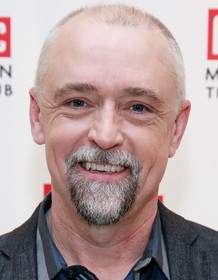
David Alford
Made by

LC Pictures
Where to Watch Closer to God
See current US streaming, rental, and purchase options for Closer to God (2014) via JustWatch.

Amazon Prime Video
HD
Amazon Prime Video with Ads
HD
Fawesome
HD
Amazon Prime Video Free with Ads
HD
Fandango at Home Free
HD
Pluto TV
SD
Tubi TV
SD
Amazon Video
SD
Apple TV Store
HD Fandango At Home
SD
Google Play Movies
SD
YouTube
SD Streaming availability powered by 
Closer to God Plot Summary
Read the complete plot summary and ending explained for Closer to God (2014). From turning points to emotional moments, uncover what really happened and why it matters.
Dr. Victor Reed, Jeremy Childs, is a humorlessly dedicated biological scientist who keeps a privately funded genetic laboratory tucked away on a locked floor of a hospital. We first meet him as he delivers Elizabeth, the first infant of her kind, to the world. He reluctantly, and cryptically, announces this breakthrough to the public, refusing to name anyone involved in the baby’s conception or birth besides himself, and resisting any framing that would depict Elizabeth as a normal child. The response is immediate and heated: a media onslaught, moral outrage from religious conservatives who see cloning as an affront to God and nature, and a chorus of observers who point to the tremendous medical promise such science could unlock. The debate is loud, messy, and personal, but the public fury eventually pushes government authorities to begin criminal charges against Reed.
The outcry puts pressure on authorities to press criminal charges against Reed. To protect the baby, he moves Elizabeth from the hospital lab to his gated country estate, where his wife, Claire, is already fed up with his relentless work and neglect of their own family, including their two preschool daughters. The arrangement intensifies tension at home, and the transition is watched with growing concern by Laura, [Emily Landham], the lab assistant who has serious ethical and safety worries about the doctor’s plans for his experimental progeny. The news leaks out from Laura and provokes even more intense scrutiny and protest.
Meanwhile, danger also enters the household in a more personal form. The couple who work there, Mary and Richard, are charged with caring for an older child—an ominous reminder of a less successful, earlier cloning attempt. Kept in barred quarters away from the main building and largely unseen until the end, this older child, Ethan, embodies the unforeseen consequences of hubris in the lab.
As protests mount and the public debate over science intensifies, the hidden danger behind the doors erupts. The older clone, now violent and distorted, finally escapes his confinement and goes on a rampage through the estate, unleashing fear and forcing Reed to confront the ethical price of his pursuit. The climactic reel shakes the household, with law enforcement closing in and the moral line between discovery and responsibility growing increasingly blurred. The story lingers on questions of family, duty, and what it means to push the boundaries of life itself, leaving viewers to ponder how far science should go when curiosity collides with faith, safety, and humanity.
Closer to God Timeline
Follow the complete movie timeline of Closer to God (2014) with every major event in chronological order. Great for understanding complex plots and story progression.
Birth of Elizabeth, the first of her kind
Dr. Victor Reed delivers Elizabeth, the first infant of her kind, to the world from the hospital lab. He cryptically announces the breakthrough to the public, refusing to name anyone involved beyond himself and resisting framing Elizabeth as a normal child. The public reaction mixes awe with controversy as the media questions ethics and safety.
Public announcement and media backlash
Reed makes a reluctant public reveal of the cloning breakthrough, triggering a fevered media onslaught. Religious conservatives decry the work as an affront to God and nature, while others see potential medical promise. The debate grows loud and personal, prefiguring official scrutiny.
Government authorities move toward charges
Following the uproar, government officials initiate criminal charges against Reed for his actions. The case intensifies public debate about safety, ethics, and the legitimacy of private laboratories within medical institutions. Reed remains cryptic, insisting on accountability only to his own standards.
Elizabeth relocated to the gated estate
To shield the baby, Reed moves Elizabeth from the hospital lab to his gated country estate. Claire, Reed's wife, is fed up with his relentless work and neglect of family life, hinting at deeper strains in their marriage. The move marks a shift from public scrutiny to a more private, tense home life.
Tension at home escalates
The household fractures under pressure: Claire's resentment grows as Reed's obsession dominates family time and care for Elizabeth. Their two preschool daughters sense the strain, adding to the emotional toll. The situation deepens the moral stakes of Reed's pursuit.
Laura raises safety and ethics concerns
Laura, the lab assistant, voices serious concerns about safety and the ethics of the project. Her warnings go unheeded at first, but news leaks begin to spread, drawing more scrutiny and protests. The tension between scientific ambition and ethical boundaries becomes more public.
Ethan: the older, ominous clone
The couple Mary and Richard care for an older child—an aborted predecessor cloning attempt—kept away from the main building. Ethan embodies the perils of hubris and the unforeseen consequences of their experiments. He remains largely unseen, a looming threat in barred quarters.
Confinement and concealment deepen
Ethan is kept in barred quarters, isolated from others, locked away from the main house. The secret keeps leaking, fueling anxiety among staff and family. The presence of a violent, hidden clone adds a chilling layer to the unfolding drama.
Protests mount as danger emerges
Protests around the estate intensify the pressure on Reed and his project. The hidden danger behind the doors begins to erupt, setting the stage for a dramatic confrontation. Public fear and curiosity collide with Reed's stubborn resolve.
Ethan escapes and rampages
The older clone, now violent and distorted, breaks free from confinement and wreaks havoc across the estate. The chaos forces Reed to confront the grim ethical price of his scientific pursuit. Law enforcement closes in as the situation spirals out of control.
Climax: moral lines blur
As law enforcement tightens its grip, the line between discovery and responsibility becomes increasingly blurred. Reed faces the consequences of pushing life beyond natural bounds. The family is drawn into a collapsing moral universe as fear overrides trust.
Aftermath: questions about science and humanity
The story closes with lingering questions about the limits of scientific ambition, the duties of a parent, and what it means to play God. The family contemplates safety, faith, and the boundary between curiosity and humanity. Viewers are left to ponder how far science should go.
Closer to God Characters
Explore all characters from Closer to God (2014). Get detailed profiles with their roles, arcs, and key relationships explained.
Dr. Victor Reed
An intensely focused biological scientist who hides a privately funded genetic lab on a locked floor of a hospital. He announces a breakthrough with Elizabeth but resists naming others involved or framing Elizabeth as a normal child. His single-minded pursuit triggers public fury, media scrutiny, and potential criminal charges. He must confront the ethical price of his work as events unfold.
Elizabeth
The first infant of her kind, whose existence sparks the ethical and political upheaval surrounding the experiment. To protect her, she is moved from the hospital lab to a gated estate, making her life the focal point of the controversy. Her presence raises questions about what it means to bring a cloned life into the world.
Claire Reed
Victor Reed’s wife, already fed up with his relentless work and neglect of their family. She embodies domestic strain and moral concern as the private cost of the public scientific debate grows. Her perspective anchors the personal side of the story, highlighting the impact on loved ones.
Laura
The lab assistant who raises serious ethical and safety worries about the doctor’s plans. Her concerns contribute to the pressure on authorities and the public debate. Laura’s actions help illuminate the potential dangers of unchecked experimentation.
Mary
One of the couple who care for an older child kept in confinement, representing the human consequences of the lab’s secret work. Her role underscores the hidden labor behind high-stakes scientific experiments.
Richard
Mary’s partner in caregiving and a key figure in managing the household’s day-to-day realities amidst the ethical storm surrounding the cloning project.
Ethan (younger clone)
A younger clone whose existence represents the ongoing potential and risk of the project. His presence inside the estate highlights the intimate human dimensions of the experiment.
Ethan (older clone)
The older clone who escapes confinement and goes on a rampage, embodying the dangerous consequences of hubris in scientific experimentation.
Protester
A representative voice in the public outcry against cloning, illustrating the social and moral turmoil sparked by the breakthrough.
Protestor
Another public critic who participates in demonstrations and reflects the broad spectrum of reaction to the cloning project.
Closer to God Settings
Learn where and when Closer to God (2014) takes place. Explore the film’s settings, era, and how they shape the narrative.
Location
Hospital laboratory, Gated country estate
The story shifts between a high-security hospital lab where a secretive genetic experiment begins and a secluded gated estate where Elizabeth is kept for protection. The hospital setting embodies public scrutiny, ethical conflict, and the push of scientific boundaries. The estate underscores privacy, control, and the personal cost of pursuing groundbreaking biology.
Closer to God Themes
Discover the main themes in Closer to God (2014). Analyze the deeper meanings, emotional layers, and social commentary behind the film.
🧬
Clone Ethics
Cloning raises essential questions about what it means to create life and who owns that life. The film centers Elizabeth's existence to explore whether medical promise justifies moral risk. Public scrutiny, religious objections, and political pressure collide, showing how ethics can be sidelined by debate and fear. The narrative suggests that science without ethical guardrails can damage families, communities, and trust in medicine.
⚖️
Hubris and Consequences
Victor Reed’s relentless pursuit showcases the dangers of unchecked ambition. The escaped older clone embodies the unpredictable fallout of pushing biology beyond safe boundaries. Legal charges and media scrutiny reflect a society grappling with how to regulate powerful technologies. The story asks what responsibility science owes to its subjects when curiosity becomes danger.
🏠
Family and Duty
Family life is strained as work dominates Reed’s attention and secrecy erodes trust. Claire’s frustration and the two preschool daughters highlight the personal cost of scientific obsession. The lab’s secrecy collides with the public’s desire for transparency, complicating loyalties. In the end, the film weighs duty to loved ones against duty to discovery.

Coming soon on iOS and Android
The Plot Explained Mobile App
From blockbusters to hidden gems — dive into movie stories anytime, anywhere. Save your favorites, discover plots faster, and never miss a twist again.
Sign up to be the first to know when we launch. Your email stays private — always.
Explore the mobile appCloser to God Spoiler-Free Summary
Discover the spoiler-free summary of Closer to God (2014). Get a concise overview without any spoilers.
In a near‑future where cutting‑edge genetics whisper promises of miracles, a solitary laboratory hidden deep within a hospital’s locked floor becomes the birthplace of the unprecedented. Victor Reed, a humor‑less, obsessively meticulous biologist, oversees the quiet arrival of a newborn who is the first of her kind—a human clone. The moment the world learns of this quiet miracle, the fragile veil of secrecy shatters, unleashing a wave of media frenzy, religious outcry, and legal uncertainty that threatens to eclipse the scientific triumph itself.
The pressure forces Victor to relocate his charge to a secluded country estate, a fortified haven that doubles as his family home. There, his wife Claire—already weary of his all‑consuming devotion to his work—juggles the demands of their two young daughters with the unsettling presence of the cloned infant. Claire’s reluctant maternal curiosity clashes with the ever‑growing tension inside the walls, as the family’s ordinary life is strained under the weight of an extraordinary secret.
Within the estate’s hushed corridors, the staff wrestle with their own moral dilemmas. Laura, the lab assistant who first leaked the announcement, embodies the uneasy conscience of those who question the ethics of playing god. Her presence hints at deeper uncertainties, while the very architecture of the home—gated, guarded, and isolated—mirrors the precarious balance between scientific ambition and societal backlash. Whispers of an earlier, less successful attempt linger in the background, suggesting that the estate is already home to hidden complexities.
Against this backdrop of stark clinical precision and raw emotional turbulence, the film cultivates a mood of quiet dread tempered by awe. It asks whether humanity can responsibly steward the power to recreate life, and what happens when the pursuit of knowledge collides with the world’s entrenched beliefs. The story teeters on the edge of wonder and danger, inviting viewers to contemplate the cost of reaching ever closer to the divine.
Featured on this page

What's After the Movie?
Not sure whether to stay after the credits? Find out!
Check out our other apps:

SAT Sphere
Build confidence for the Digital SAT.

Mori Atlas
Discover wild places worth protecting.

Luntero
Search smarter for a home in Amsterdam.

Plot Explained
Unravel movie endings and hidden clues.

Pokechamp
Dive into Pokémon data and battle logic.

Driving Theory
Get ready for your European theory test.

Movie Dust
Plan your next cinema trip with ease.

Musemap
Find art and culture as you travel.

Selkobase
Compare credentials before committing.

Local Manual
Turn an unfamiliar country into practical next steps.

Lernavi
Compare school systems before your next move.

GymRoam
Find a workout stop wherever your plans take you.
Explore Our Movie Platform
New Movie Releases (2026)
Famous Movie Actors
Top Film Production Studios
Movie Plot Summaries & Endings
Major Movie Awards & Winners
Best Concert Films & Music Documentaries
Movie Collections and Curated Lists
© 2026 What's After the Movie. All rights reserved.
Privacy Policy