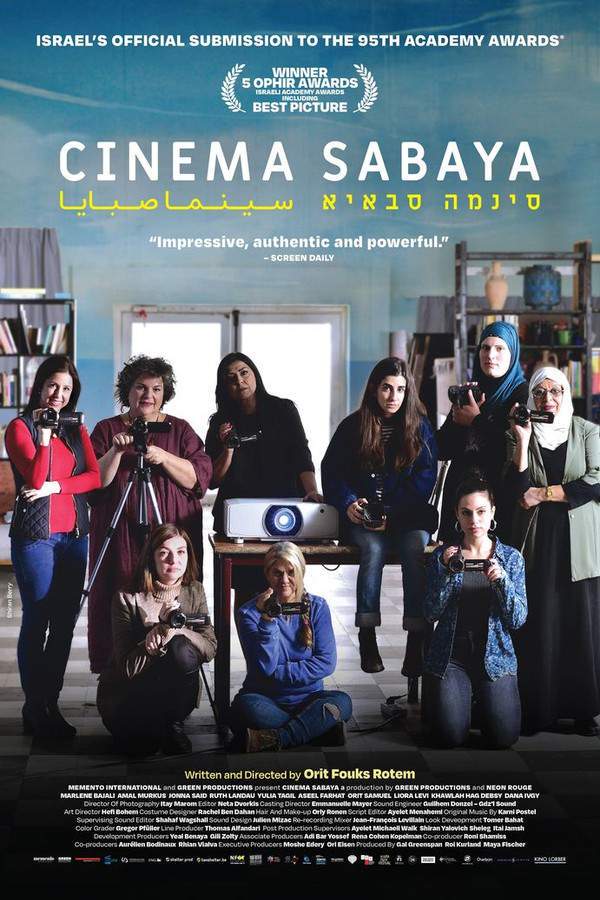
Cinema Sabaya 2023

Directed by

Orit Fouks Rotem
Made by
Kino Lorber
Where to Watch Cinema Sabaya
See current US streaming, rental, and purchase options for Cinema Sabaya (2023) via JustWatch.







Cinema Sabaya Plot Summary
Read the complete plot summary and ending explained for Cinema Sabaya (2023). From turning points to emotional moments, uncover what really happened and why it matters.
A diverse group of Arab and Jewish women comes together at a community center in a small town to participate in a video workshop led by Rona, a passionate young filmmaker from Tel Aviv. Through the medium of film, Rona guides these women to capture and share their personal stories, allowing them to express their experiences and emotions. As the women, including Nasrin, Nahed, Souad, Lubna, Carmela, Awatef, Eti, Gila, and Yelena, present their footage, they confront their deeply held beliefs and challenge the societal stereotypes that often divide them.
As the workshop progresses, the walls built by prejudice and misunderstanding start to crumble, and the women form a unique and powerful connection. Their shared experiences of motherhood, love, and the everyday challenges of being women in a strife-ridden world create a space of solidarity and support. The film, Cinema Sabaya, beautifully illustrates how art can serve as a bridge, fostering empathy and collaboration among individuals from disparate backgrounds.
Written and directed by Orit Fouks Rotem, who drew inspiration from her own experiences as a teacher, the film balances poignant discussions with the joy and laughter that emerge from this unlikely sisterhood. Cinema Sabaya has garnered critical acclaim, winning five Ophir Awards, including Best Picture and Best Director, and has been selected as Israel’s official submission for the 95th Academy Awards. This heartfelt narrative stands as a testament to the transforming power of creativity and community.
Cinema Sabaya Timeline
Follow the complete movie timeline of Cinema Sabaya (2023) with every major event in chronological order. Great for understanding complex plots and story progression.
Introduction of Rona
Rona, a passionate young filmmaker from Tel Aviv, arrives at the community center to lead a video workshop. Her excitement about using film as a medium encourages the women to share their stories and express their emotions.
Gathering of Participants
A diverse group of Arab and Jewish women gathers at the community center to participate in the workshop. Among them are Nasrin, Nahed, Souad, Lubna, Carmela, Awatef, Eti, Gila, and Yelena, each bringing their unique backgrounds and experiences.
Exploration of Personal Stories
As the workshop unfolds, Rona guides the participants in exploring their personal stories. They begin filming their lives, capturing moments of joy, struggle, and the day-to-day challenges they face as women in a complex world.
Confronting Stereotypes
The women present their footage, leading to discussions that challenge societal stereotypes. This sharing of experiences allows them to confront deeply held beliefs about each other's cultures.
Building Connections
As the walls of prejudice and misunderstanding begin to crumble, the women form profound connections. Their common experiences of motherhood and love foster a sense of solidarity and support among them.
Creating Empathy through Art
The workshop becomes a space where art serves as a bridge between the participants. Through their films, they learn to empathize with one another's struggles and triumphs, building a unique sisterhood.
Personal Growth
Each woman undergoes personal growth as they reflect on their lives and articulate their stories through film. This process allows them to reclaim their narratives and challenge their own biases.
Joy and Laughter
Throughout the workshop, moments of joy and laughter emerge among the women. These shared light-hearted experiences contrast with the heavier conversations and deepen their bond.
Final Screening
The workshop culminates in a final screening of their films. This event serves as both a celebration of their hard work and a powerful moment of shared vulnerability as they watch each other's stories unfold.
Impact of the Workshop
The women reflect on the impact of the workshop on their lives. They express gratitude for the connections formed and the insights gained, acknowledging the transformative power of creativity.
Critical Acclaim
As the film, Cinema Sabaya, is completed, it garners critical acclaim. It wins five Ophir Awards, including Best Picture and Best Director, showcasing the success of the workshop's impact.
Submission for Academy Awards
Cinema Sabaya is selected as Israel's official submission for the 95th Academy Awards. This recognition highlights the film's significance and the stories of the women involved in the workshop.
Legacy of Empowerment
The narrative of Cinema Sabaya stands as a testament to empowerment through community and creativity. The participants' experiences resonate beyond the workshop, inspiring others to challenge divides and foster unity.
Inspiration from Orit Fouks Rotem
Written and directed by Orit Fouks Rotem, the film is inspired by her own experiences as a teacher. Her vision brings forth the joys and struggles of connecting diverse communities through art.
Cinema Sabaya Characters
Explore all characters from Cinema Sabaya (2023). Get detailed profiles with their roles, arcs, and key relationships explained.
Rona (Dana Ivgy)
Rona is a passionate young filmmaker from Tel Aviv who leads the video workshop. Her drive to empower the women through storytelling reflects her dedication to art as a means of expression and connection. Rona's character represents the bridge between different cultures, as she encourages openness and dialogue.
Nasrin (Amal Murkus)
Nasrin brings her unique voice and perspective to the group, contributing to the diversity of experiences shared in the workshop. Her character enhances the narrative by showcasing the complexities of identity and belonging in a multicultural society.
Nahed (Aseel Farhat)
Nahed represents the challenges and triumphs that women face in their daily lives. Through her storytelling, she reveals the personal struggles and resilience that define her character, contributing to the overall theme of empowerment.
Souad (Joanna Said)
Souad's character embodies the depth of emotional experiences and the power of sharing them. Her courage to reveal personal stories adds richness to the workshop, fostering a climate of trust within the group.
Lubna (Khawlah Hag-Debsy)
Lubna's presence in the workshop showcases the importance of community among women and the ways they support one another. Her contributions highlight the shared experiences of motherhood and the joys and challenges it brings.
Cinema Sabaya Settings
Learn where and when Cinema Sabaya (2023) takes place. Explore the film’s settings, era, and how they shape the narrative.
Time period
The film does not specify a concrete time period, allowing the themes of societal division and personal growth to resonate universally. The contemporary setting reflects ongoing issues of prejudice and the quest for understanding in today's world.
Location
Community Center, Small Town
The story unfolds in a community center located in a small town, serving as a hub for various social activities and workshops. This setting is crucial as it brings together a diverse group of women, fostering interaction and understanding among them. The center symbolizes a space where barriers can be broken down and connections formed.
Cinema Sabaya Themes
Discover the main themes in Cinema Sabaya (2023). Analyze the deeper meanings, emotional layers, and social commentary behind the film.
🎥
Empowerment
Empowerment is a central theme of *Cinema Sabaya*, as the women use filmmaking as a means to express their stories and gain confidence. By sharing their personal experiences, they confront stereotypes and challenge societal norms. The film showcases the transformative power of art in empowering individuals from different backgrounds.
🤝
Solidarity
The theme of solidarity emerges as the women form bonds through their shared experiences. Despite their diverse backgrounds, their collective journey in the workshop fosters friendship and mutual support. This highlights the importance of community and collaboration in overcoming divisions.
🕊️
Understanding
Understanding is depicted through the interactions between the women as they confront their biases and learn from one another. The film illustrates how empathy plays a crucial role in bridging gaps between different cultural perspectives and fostering harmony.

Coming soon on iOS and Android
The Plot Explained Mobile App
From blockbusters to hidden gems — dive into movie stories anytime, anywhere. Save your favorites, discover plots faster, and never miss a twist again.
Sign up to be the first to know when we launch. Your email stays private — always.
Explore the mobile appCinema Sabaya Spoiler-Free Summary
Discover the spoiler-free summary of Cinema Sabaya (2023). Get a concise overview without any spoilers.
In a quiet, multicultural town the rhythm of daily life is punctuated by the soft hum of a community center where a modest video workshop gathers an unlikely group of women. The catalyst is a passionate young filmmaker, Rona, whose enthusiasm for storytelling transforms a simple classroom into a crucible for honest expression. Her camera becomes a gentle probe, inviting participants to step beyond routine conversation and glimpse the lives hidden behind familiar faces.
Among the participants are mothers, daughters, and wives whose varied backgrounds color the room with a rich tapestry of experience. Nasrin, a steadfast Arab mother, shares her hopes for the future of her children, while Nahed, a spirited teenager, offers a fresh, restless perspective. Souad brings the quiet strength of a caregiver, and Lubna adds the tenderness of a widow finding new purpose. On the Jewish side, Carmela—a schoolteacher—conveys the weight of generational narratives, and Awatef—a small‑business owner—speaks with the humor of everyday hustle. Eti, a nurse, and Gila, an artist, weave their professional insights into personal anecdotes, and Yelena, a recent immigrant, reveals the subtle challenges of navigating a new culture. Together they form a chorus of voices that, though rooted in distinct traditions, echo similar sentiments of love, loss, and resilience.
The tone of the gathering is intimate yet buoyant, balanced between moments of quiet reflection and spontaneous laughter. The workshop’s structure encourages vulnerability; each woman’s footage becomes a mirror, reflecting not only her own story but also the shared humanity that underlies cultural differences. The light that filters through the center’s windows seems to capture the tentative optimism that builds as preconceptions begin to soften.
As the cameras roll, the atmosphere shifts from cautious observation to collaborative creation. The film itself feels like a living document—a mosaic of personal narratives stitched together by the simple act of being seen. In this space, art serves as a bridge, inviting participants and viewers alike to contemplate the possibilities that arise when empathy is nurtured through shared storytelling.
Featured on this page

What's After the Movie?
Not sure whether to stay after the credits? Find out!
Check out our other apps:

SAT Sphere
Build confidence for the Digital SAT.

Mori Atlas
Discover wild places worth protecting.

Luntero
Search smarter for a home in Amsterdam.

Plot Explained
Unravel movie endings and hidden clues.

Pokechamp
Dive into Pokémon data and battle logic.

Driving Theory
Get ready for your European theory test.

Movie Dust
Plan your next cinema trip with ease.

Musemap
Find art and culture as you travel.

Selkobase
Compare credentials before committing.

Local Manual
Turn an unfamiliar country into practical next steps.

Lernavi
Compare school systems before your next move.

GymRoam
Find a workout stop wherever your plans take you.
Explore Our Movie Platform
New Movie Releases (2026)
Famous Movie Actors
Top Film Production Studios
Movie Plot Summaries & Endings
Major Movie Awards & Winners
Best Concert Films & Music Documentaries
Movie Collections and Curated Lists
© 2026 What's After the Movie. All rights reserved.
Privacy Policy