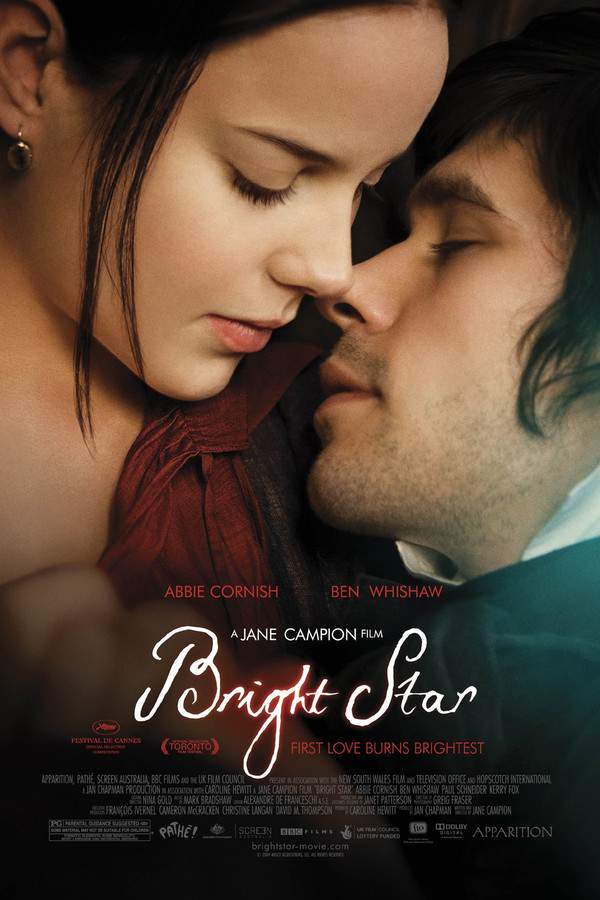
What Is Bright Star About?
The premise of Bright Star in 312 words, with nothing given away. The full story follows below.
In the winter‑kissed streets of 1818 London, a world of soot‑gray houses and bustling salons breathes with the promise of art and the weight of expectation. The city’s elegant parlors and cramped lodgings coexist, framing a society where reputation is a currency and the line between public accolade and private yearning is razor‑thin. The film’s tone is intimate and painterly, inviting the audience to feel the hush of candlelight over poetry drafts and the restless energy of fashionable gatherings, all underscored by a lingering sense that beauty often walks hand‑in‑hand with fragility.
At the heart of this world is the aspiring poet John Keats, a young man whose reserved demeanor masks a tumultuous inner life, and the vivacious, fashion‑forward Fanny Brawne, whose spirited confidence lights the shadows of his solitude. Their first encounters ripple with quiet tension: his cool, contemplative nature contrasts with her buoyant, flirtatious charm, setting the stage for a connection that feels both inevitable and profoundly disruptive to the routines they each know.
As their paths continue to cross, the film gently unfolds the delicate dance of courtship amid the strictures of class, gender, and financial uncertainty. Their growing affection becomes a well‑kept secret, a whispered promise that fuels their creative impulses and sharpens their longing. The story lingers on the way poetry and desire intertwine, suggesting that each line written and each glance shared carries the weight of something larger than themselves—an artistic fire that both illuminates and endangers.
The atmosphere remains suffused with both hope and a quiet foreboding, as the characters navigate the inevitable clash between personal passion and the external forces that seek to contain it. In this richly textured portrait of love and ambition, the audience is invited to sense the beauty of a romance that sparkles against the backdrop of a society ever‑watchful, ever‑influencing the destiny of those who dare to love fiercely.
What Happens in Bright Star?
The complete story of Bright Star, from the first scene to the last, in 477 words (about 2 minutes). Spoilers throughout. Names in the text link to 3 cast member pages.
Spoilers ahead
In 1818 Hampstead, the stylish Fanny Brawne, Abbie Cornish, is introduced to the aspiring poet John Keats, Ben Whishaw, through the Dilke family. The Dilkes occupy one half of a double house, while Charles Brown, Paul Schneider, occupies the other half as Keats’s friend, housemate, and writing collaborator. The film sets up a quiet tension between Fanny’s buoyant, flirtatious energy and Keats’s cool, reserved temperament, a contrast that slowly fans into a deep, life-altering connection.
Fanny’s pursuit begins after her siblings Samuel and Toots obtain Keats’s book of poetry, Endymion, and she tries to engage the poet’s interest. Her efforts feel one-sided until he witnesses her share in his sorrow for the loss of his brother, Tom. Under the warmth of a Christmas visit to the Brawne household, Keats begins to loosen, offering her poetry lessons that reveal a mutual attraction, even as he remains wary. The mother’s wary observation adds a somber layer to the budding romance: Mr. Keats knows he cannot like you, he has no living and no income.
It is only after Fanny receives a valentine card from Brown that Keats confronts the potential of a relationship more openly, asking if they are lovers. Brown sent the card in jest, but he also warns Keats that Fanny is a flirt playing a game, and the words sting. Hurt, Fanny ends their lessons, and the couple’s path grows uncertain. The Dilkes move to Westminster in the spring, leaving the Brawnes with the house’s other half and six months’ rent, but the family’s doors remain open to the couple. Soon they resume their connection and fall deeply in love, keeping their feelings largely private as they navigate social expectations and Keats’s precarious finances. They secretly become engaged, a vow whispered away from prying eyes.
Keats’s health declines with the winter, and tubercular coughs tighten their circle. He spends weeks in retreat to recover, while friends rally to fund a winter in Italy, hoping a warmer climate might ease his illness. Yet life’s practicalities complicate the plan: Brown departs, entangled in other matters, and Keats must arrange a place in London for the summer before the final journey. Eventually, the poet is taken in by the Brawne family again as his condition fluctuates. As his book achieves moderate success, Fanny’s mother grants her blessing for marriage upon Keats’s return from Italy. The two share a tearful, intimate farewell the night before he leaves.
Keats travels to Italy, where he dies the following February from complications tied to his illness, echoing the fate of his brother Tom. The film’s closing moments linger on Fanny, who cuts her hair, dresses in black, and walks the snowy paths Keats walked with her in mind. There, she speaks the enduring love he wrote for her, Bright Star, as a testament to a love that endured beyond illness, separation, and time.
Bright Star Timeline: Every Key Event in Order
15 key events in the order they happen, from “First meeting in Hampstead” to “Final mourning on snowy paths”. 15 events name a place, across 8 locations.
- 1
First meeting in Hampstead
In 1818, Fanny Brawne is introduced to the poet John Keats through the Dilke family. Keats is aloof, while Fanny's lively charm draws his attention. This initial meeting plants the seeds of a growing connection.
When:1818 Where:Hampstead
- 2
Fanny's pursuit of Endymion
Fanny's siblings obtain Keats's book Endymion, which triggers her pursuit. Keats initially rebuffs her advances and keeps his distance. Their early exchanges are courteous but restrained.
When:Late 1818 Where:Hampstead
- 3
Keats sees Fanny's grief and opens up
Keats witnesses Fanny's grief for his brother Tom, a moment that begins to melt his reserve. He starts engaging more with her and sharing time together. Their growing closeness hints at a deeper bond.
When:Winter 1818-1819 Where:Hampstead
- 4
Christmas lessons and growing attraction
During Christmas with the Brawne family, Keats gives Fanny poetry lessons. Their conversations reveal a mutual attraction and a shared love of poetry. The emotional connection deepens despite their caution.
When:December 1818 Where:Brawne family home, Hampstead
- 5
Mum's warning about prospects
Fanny's mother voices concern that Keats has no real income or living, questioning the viability of a match. The family worries about financial security and social acceptance. The tension tests their budding romance.
When:Spring 1819 Where:Hampstead
- 6
Valentine and a test of trust
A valentine card from Brown triggers a confrontation; Keats questions whether Fanny's intentions are serious. Brown warns that Fanny may be playing a flirtatious game. Hurt, Fanny ends their lessons and withdraws.
When:Spring 1819 Where:Hampstead
- 7
The Dilkes move to Westminster
In the spring, the Dilkes move to Westminster, leaving the Brawnes with half of the house and six months' rent. The change alters their daily lives and the pace of their relationship. Keats and Fanny begin to navigate a new living arrangement.
When:Spring 1819 Where:Westminster, London
- 8
Romance rekindled and deepening love
Keats and Fanny resume their interaction and fall deeply in love. They spend time together, reading and sharing poems, letting their feelings grow openly. The romance becomes a central part of their lives.
When:Spring-Summer 1819 Where:Hampstead/Westminster, London
- 9
Summer departure and heartbreak
Keats and Brown depart for a summer holiday to earn money, leaving Fanny heartbroken. Keats continues to write love letters that keep the connection alive. The separation tests the strength of their bond.
When:Summer 1819 Where:London and countryside
- 10
Autumn engagement and family concerns
When autumn arrives, Fanny's mother voices worries about potential suitors, but Fanny and Keats secretly become engaged. They shelter their commitment from public scrutiny while planning a future together. Their secret engagement marks a deeper vow.
When:Autumn 1819 Where:London
Show the other 5 events of Bright Star Hide the last 5 events
- 11
Keats contracts tuberculosis and begins recovery
Keats contracts tuberculosis the following winter and spends weeks recovering. Friends raise funds to enable him to winter in Italy for a milder climate. The illness casts a pall over their plans but binds them closer.
When:Winter 1819-1820 Where:London
- 12
Italy plan, Brown's setback, and summer shelter
Brown impregnates a maid and cannot accompany Keats to Italy, forcing him to stay in London for the summer. Keats finds accommodation with the Brawnes after an illness relapse. Friends continue raising funds for his next winter in Italy.
When:Summer 1820 Where:London
- 13
Poetry success, blessing, and farewell
Keats's book sells with moderate success, providing some financial relief. Fanny's mother ultimately blesses the idea of marriage after he returns from Italy. The couple shares a tearful goodnight on the eve of his departure.
When:Late 1820 Where:London
- 14
Keats dies in Italy
Keats travels to Italy for treatment and dies there in February from tuberculosis complications. His death echoes the fate of his brother Tom. The romance ends with his passing, marking the poet's death.
When:February 1821 Where:Italy
- 15
Final mourning on snowy paths
In the film's closing moments, Fanny cuts her hair, dons black, and walks the snowy paths Keats had walked. She recites his love sonnet Bright Star, expressing grief and enduring devotion. The scene encapsulates the lasting memory of their romance.
When:Post-February 1821 Where:Hampstead Heath, London
Who Are the Main Characters in Bright Star?
3 characters, among them Fanny Brawne (Abbie Cornish), John Keats (Ben Whishaw) and Charles Brown (Paul Schneider): who each one is and the part they play in the story. Every profile links to the actor’s page.
-

Fanny Brawne (Abbie Cornish)
Played by Abbie Cornish
A flirtatious, spirited young woman who pursues Keats with persistence. She moves from teasing to devotion, ultimately entering an engaged, passionate romance while navigating maternal concerns and social expectations. Her heartbreak over misunderstandings and Brown’s provocations deepens her resolve and loyalty.
- 💘 Romantic
- 👒 Flirtatious
- ⚖️ Social constraints
- ✉️ Letters and mourning
-

John Keats (Ben Whishaw)
Played by Ben Whishaw
A gifted poet who is initially aloof but opens up to Fanny as their bond grows. His illness and precarious finances shape his decisions, including a winter departure for Italy. He invests in love and art, leaving an enduring literary legacy through his letters and sonnets.
- ✒️ Poet
- 🕊️ Reserved
- 💔 Romantic
- 🗺️ Artist
-

Charles Brown (Paul Schneider)
Played by Paul Schneider
Keats’s friend and housemate, who carries a playful but occasionally sharp wit. He teases and challenges Keats about Fanny, warns him of her flirting, and accompanies the pair on travels, before distancing himself due to personal circumstances.
- 🎭 Friend
- ⚡ Miscommunications
- 💬 Messenger
Where and When Is Bright Star Set?
Bright Star is set in Hampstead, London, Westminster and Italy (1818–1821). Here is why the time and place matter to the story.
When
1818–1821
The film unfolds during the Romantic era in post-Napoleonic Britain, beginning in 1818 and culminating with Keats’s death in 1821. It portrays a society where art, love, and propriety collide, shaping the choices of lovers who lack wealth and status. The timeline includes intimate seasons such as Christmas and the Italian voyage that frame their romance and its ultimate tragedy.
Where
Hampstead, London, Westminster, Italy
Set in early 19th-century London, the story centers on the Hampstead home shared by the Dilkes and the Brawnes. Hampstead represents a fashionable social circle where Keats, a rising poet, and Fanny Brawne intersect. The action also moves to Westminster as the families relocate, and later follows London’s streets and Christmas gatherings that shape their relationship.
- ❄️ 19th-century London
- 🏛️ Romantic drama
- 🎨 Literary-inspired
What Are the Themes of Bright Star?
4 ideas the story keeps returning to, among them Romance, Illness and Societal Constraints.
-
01
Romance
A quiet, consuming romance drives the narrative as Fanny and Keats navigate a wary social landscape to find each other. Their courtship moves from playful exchanges to deep, committed love, even as appearances and money threaten their bond. The romance is tempered by misunderstandings, jealous expressions, and the sting of lost opportunities. Letters and spoken promises become their lasting connection.
-
02
Illness
Keats's tuberculosis casts a long shadow over their time together, shaping decisions about travel, income, and health. The illness imposes urgency, prompting winter journeys and the need to seek warmer climates. The prospect of Italy frames their plans and sacrifices, underscoring the fragility of life and love. The disease ultimately claims Keats, adding a poignant weight to the romance.
-
03
Societal Constraints
Class expectations and economic realities dictate the couple's prospects, with families probing intentions and suitability. Fanny’s mother voices practical concerns about wealth and status, limiting romantic possibilities. The story shows how social conventions can threaten genuine affection, even as love endures.
-
04
Art & Inspiration
Poetry and letters are the lifeblood of the relationship, with Keats sharing his work and teaching Fanny through verse. The creative exchange binds them, elevating their romance beyond ordinary life. The film frames love as a catalyst for art and a testament to personal resilience.
What Kind of Film Is Bright Star?
Melancholic in tone, with slow pacing and a straightforward story, going by the plot summary.
- Tone
- Melancholic
- Pacing
- Slow
- Story
- Straightforward
- Intensity
- Medium
- Ending
- Sad
A tender and melancholic period drama that quietly charts the development of a forbidden romance between a poet and his muse, building a sense of gentle passion and profound loss against the backdrop of societal constraints and terminal illness.
- yearning
- melancholic
- tender
- quiet
- romantic
- gentle
- forbidden love
- creative inspiration
- grief and loss
- social conventions
Content notes: terminal illness, death of a loved one.
Quiz
How well do you remember Bright Star? Test yourself on the story.
Where to Watch Bright Star
Rent or buy it from Amazon Video and Apple TV Store. US availability and prices from JustWatch.





Streaming availability in the US, powered by