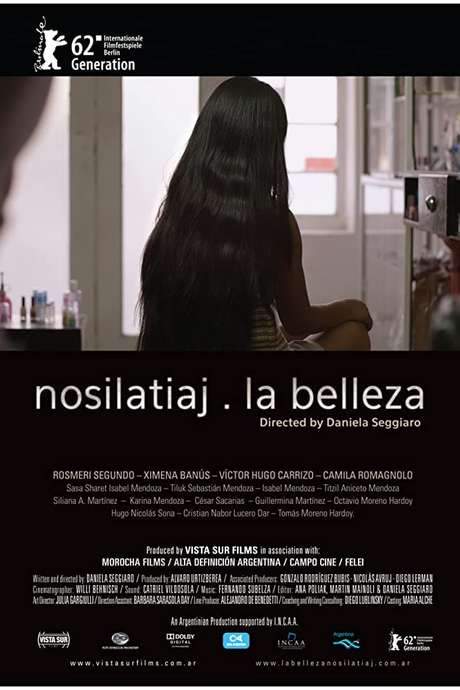
Beauty 2012

Directed by

Daniela Seggiaro
Made by

HD Argentina
Beauty Plot Summary
Read the complete plot summary and ending explained for Beauty (2012). From turning points to emotional moments, uncover what really happened and why it matters.
In a quiet, meticulously observed drama set in the Argentine North, Yolanda—a Wichi girl who narrates in her native language—persists through a coming‑of‑age story that blends family, culture, and small miracles. The tale unfolds in a criollo village where 16-year-old Yolanda lives a life defined by hard work and quiet resilience, having grown up after her parents split up. She has spent time in the service of a 43-year-old woman named Sara, with whom she shares a surprisingly close bond despite the uneven power dynamics of the situation. The household is crowded and bustling, and Yolanda’s presence is a stable, gentle constant as Sara juggles responsibilities, dreams, and the realities of a tight budget.
Sara, full of hope and fatigue in equal measure, takes on the task of organizing a grand event for her only daughter, Antonella. The party would be a Sweet Sixteen—an occasion that shines with color, music, and expectations—yet the process reveals Sara’s loneliness, the friction with her husband who lives in another village, and the restless energy of four sons who never stop testing limits. Yolanda, quiet and reliable, becomes a pillar in this household: her steady presence helps keep the fragile balance intact even as the family fears they cannot meet the grand ambitions of the party. This web of relationships is gently drawn as Yolanda carries out ordinary chores while absorbing the unspoken lessons of care, duty, and connection.
From her roots, Yolanda clings to memories that anchor her during moments of upheaval: the long hair given by her grandmother at birth, a symbol of cultural identity and personal history; and the occasional visits from her mother, Guillermina, who brings small gifts from the monte and sage advice about navigating relationships with employers. The grandmother’s influence is echoed through [Isabel Ruarte], who appears as Yolanda’s Grandmother in the family tapestry, and the family’s elders model a sense of belonging that stands in contrast to the shifting modern world. The father figure in Yolanda’s life, [Titzil Aniceto Mendoza], is present but not always available, while the grandfather [Tiluk Sebastian Mendoza] and the grandmother’s wisdom cast a quiet, enduring influence over Yolanda’s worldview.
One day, Sara takes the girls to the hairdresser, a momentous ritual for Yolanda who has never cut her hair before and is anxious about trusting this unfamiliar, intimate act. The scissors become a threshold, and the moment they fall, Yolanda’s hair is suddenly shorter. The loss of her hair triggers a deep sadness, and Sara—caught between regret and the desire to protect her family’s fragile happiness—feels the weight of a mistake that has touched the core of Yolanda’s identity. Antonella, in contrast, is gripped by a fear that blends superstition with awe as she witnesses the change in her domestic world.
To repair the rift and restore balance, Sara hires Amilcar, a local boy who has known Yolanda since childhood. Amilcar’s presence is not just practical; his easy companionship and shared memories begin to soften Yolanda’s hurt and offer a path back to feeling at home. The bond between Yolanda and her hair deepens as she discovers a hidden box containing the braid—an emblem of her roots—and ritually nods to the tradition that keeps her culture alive even as she negotiates a new life inside the house. The braid, carefully kept, becomes a tangible link to who she is and where she comes from.
Guilt gnaws at Sara, who is determined to repair the damage. She brings Yolanda back to the hairdresser for a second, transformative moment: a hair perm that softens not just the texture but the emotional edge of Yolanda’s pain. Antonella seeks refuge in religious mysticism, allowing her fear to be faced in a ritualized, almost meditative way, as if faith and dance could coexist with the more practical demands of a party that must go on.
When the long‑awaited day arrives, Antonella emerges in public ready to perform her Spanish dance, and Yolanda’s world tilts as she discovers that Antonella has made the braid a hidden extension of her own hair—an intimate, teenage secret woven into the costume. The revelation reframes the memory of the night: the party becomes a turning point, the moment when Yolanda’s understanding of beauty, family, and belonging shifts from mere endurance to a personal assertion of identity.
As the night ends and the monte calls softly in the distance, Yolanda’s voice—still anchored in Wichi Lhämtes—offers a reflective coda. She recounts, in her own language, the things she treasures most about her culture and worldview. The closing lines celebrate language, memory, and the sense that one’s people and land shape how the world is perceived. The narration leaves the audience with a quiet sense of continuity: a life richly rooted in tradition, openly confronted with change, and always moving toward a future where one’s place in the world is affirmed.
- Yolanda begins the story with a calm, intimate voice that grounds every moment in cultural memory.
- Antonella anchors the party’s dream with a blend of youth, performance, and vulnerability.
- Amilcar steps into the household as a gentle catalyst who helps Yolanda reclaim her footing.
- Guillermina and Guillermina Mother symbolize the intergenerational ties that shape Yolanda’s choices.
- The familial witnesses of Yolanda’s world—the grandparents and father—appear through characters portrayed by Tiluk Sebastian Mendoza, Isabel Ruarte, and Titzil Aniceto Mendoza.
- Other figures who color the backdrop of this intimate drama include Marcelo Cioffi, Anibal Jose Alfaro, Miriam Diaz, Jova Elsa Cruz, Javier Flores, Andrea Dardun, and Paula Ferrer, each contributing to the texture of everyday life in Yolanda’s world.
This reimagined, longer version preserves the core events and relationships of the original while extending the emotional texture and cultural specifics that define Yolanda’s journey.
Beauty Timeline
Follow the complete movie timeline of Beauty (2012) with every major event in chronological order. Great for understanding complex plots and story progression.
Yolanda tells her story in the community setting
Yolanda narrates her life in her native Wichi language and in a criollo village. She is 16 and lives in the Argentine North. She recalls her parents splitting up and her role as a maid for Sara, a woman who acts as her employer and guardian.
Guillermina visits with advice and gifts
Guillermina, the mother of Yolanda, visits and shares advice about dealing with employers. She urges Yolanda to value her roots and to maintain a balance between work and culture. She also brings gifts from the monte as a reminder of home.
Sara plans the quinceanera
Sara plans the quinceanera for the only daughter with illusion and sacrifice while the criollo family remains large and finances are tight. The four other sons are a constant nuisance and money is scarce. Yolanda stays close, helping with preparations and keeping the household running.
Hairdresser visit and first haircut
Sara takes Yolanda and the girls to the hairdresser as part of the preparations. Yolanda fears cutting her hair but she trusts Sara. The hairdresser cuts her hair very short, catching Yolanda by surprise.
Yolanda falls into sadness after haircut
Yolanda is overwhelmed with sadness and feels her old support slipping away. Sara worries about losing the person she relies on at home. Antonella experiences a supernatural fear about what has happened.
Amilcar arrives to help around the house
Sara hires Amilcar to assist with household tasks. His pleasant presence brings comfort and his memories of childhood help Yolanda cope. Yolanda begins to recover from the sadness with his support.
Yolanda reconnects with her braid and culture
Yolanda finds her hair tied away in a box and quietly ritualizes the braid. The braid represents a link to her native culture and a grandmother gift. This ritual helps her regain a sense of identity and strength.
Sara resolves to repair the mistake
Guilt leads Sara to take action to fix the cut. She arranges to return Yolanda to the hairdresser and has her hair permed to restore a more acceptable look. The act marks a turning point in their relationship.
The party day arrives
Antonella prepares to perform her Spanish dance at the quinceanera. Yolanda watches with a mix of pride and sadness as the event unfolds. The family gathers to celebrate despite the tensions and expectations.
Reveal of the braid extension
During the celebration, the braid of Yolanda is worn as an extension for Antonellas hair as part of the costume. She realizes the braid is a precious gift and a link to her culture. This moment deepens her emotional connection to her roots.
Yolanda runs away from the party
That night, Yolanda runs off from the party and flees back toward her community. She resolves never to return to her employer under the current arrangement. The escape marks a turning point in her path toward home.
Final voiceover celebrates culture
The film closes with Yolanda speaking in her native language, listing what she cherishes about her culture. She highlights language, community and her worldview. The voiceover seals her new sense of identity and outlook.
Beauty Characters
Explore all characters from Beauty (2012). Get detailed profiles with their roles, arcs, and key relationships explained.
Yolanda (child) — Sasa Sharet Isabel Mendoza
A 16-year-old girl from a Wichí community who navigates two worlds: her indigenous roots and the creole household she works in. Quiet, resilient, and deeply attached to her hair as a gift from her grandmother, she keeps alive memories of monte and family stories. Her presence anchors the family's sense of responsibility and cultural memory.
Yolanda — Rosmeri Segundo
The same character as an older narrator, reflecting on her childhood and the events that shaped her. The voiceover recollects the monte, the braid, and the bonds formed with Sara and Antonella. Her perspective frames the film's memory and cultural persistence.
Antonella — Camila Romagnolo
Sara's only daughter and the focus of the party preparations. She embodies hope and social aspiration within a tight budget. Her character navigates affection, pressure, and the moment of unveiling during the quince celebration.
Amilcar — Cesar Sacarias
A local boy hired to help at the house; his presence brings warmth and childhood memories that ease Yolanda's distress. He serves as a bridge between the two cultures and seasons of life in the village.
Guillermina — Guillermina Martinez
A maternal figure in Yolanda's life, offering guidance and care within the creole household. She embodies tradition and maternal concern as the family navigates their finances and responsibilities.
Guillermina Mother — Karina Mendoza
Guillermina's motherly role, contributing advice and gifts when visiting, representing the older generation's connection to the monte and to Yolanda's upbringing.
Yolanda's Grandmother — Isabel Ruarte
The elder who gifted Yolanda her long hair at birth, a symbol of cultural continuity and blessing that anchors Yolanda's identity.
Yolanda's Grandfather — Tiluk Sebastian Mendoza
A memory figure who preserves the stories of the monte and the Wichí heritage, guiding Yolanda's sensibilities through quiet presence.
Yolanda's Father — Titzil Aniceto Mendoza
A peripheral paternal figure whose absence shapes Yolanda's sense of belonging and dependence on her mother's care and the community's resilience.
Beauty Settings
Learn where and when Beauty (2012) takes place. Explore the film’s settings, era, and how they shape the narrative.
Location
Argentinean North, criollo village, monte woods
The action unfolds in a humble criollo village in the Argentinean North, where Wichí language and customs remain part of daily life. The surrounding monte (woods) and a close-knit community shape everyday routines. The setting highlights a social mix between families, work in homes, and community rituals around celebrations.
Beauty Themes
Discover the main themes in Beauty (2012). Analyze the deeper meanings, emotional layers, and social commentary behind the film.
🪶
Identity
Yolanda's story centers on cultural memory and language as a source of identity. Her Wichí Lhämtes narration and heirloom hair symbolize a living link to ancestors. The film shows how tradition persists within a changing social landscape. Through family dynamics and community rituals, personal identity remains a thread tying past to present.
💔
Family
Family is depicted as both support and pressure. Sara's attempt to give Antonella a memorable quince party reveals economic strain and social expectations. Yolanda's relationships with her employers reveal tenderness alongside power imbalances. Intergenerational dynamics reveal duty, care, and affection amid hardship.
✂️
Hair
Hair functions as a tangible link to culture and memory. Yolanda's haircut marks a moment of vulnerability and change, while her braid and later perm symbolize reclaiming belonging. The hair ritual helps her reconnect with her roots and the grandmother who gave this gift. The scene shows how appearances can mirror inner healing and cultural continuity.

Coming soon on iOS and Android
The Plot Explained Mobile App
From blockbusters to hidden gems — dive into movie stories anytime, anywhere. Save your favorites, discover plots faster, and never miss a twist again.
Sign up to be the first to know when we launch. Your email stays private — always.
Explore the mobile appBeauty Spoiler-Free Summary
Discover the spoiler-free summary of Beauty (2012). Get a concise overview without any spoilers.
In the dusty, sun‑kissed foothills of northern Argentina, a quiet household becomes the stage for a delicate cultural exchange. Yolanda, a sixteen‑year‑old Wichí girl, narrates her own story in the lilting tones of her native Wichí Lhämtes, offering a lyrical perspective on life among a modest criollo family. Employed as a maid by the kindly but often overwhelmed Sara, whose world revolves around keeping her many children and a looming coming‑of‑age celebration together, Yolanda moves through the house with a gentle, unspoken resilience.
The film paints a vivid portrait of two intertwined worlds: the rhythmic, earth‑bound traditions of Yolanda’s indigenous community and the bustling, hopeful aspirations of the criollo household. Central to Yolanda’s identity is a cascade of long hair—a gift from her grandmother that symbolizes beauty, connection, and cultural memory. When an unforeseen haircut occurs without her consent, the alteration reverberates far beyond a simple change in appearance, hinting at deeper tensions between personal agency and the expectations of those around her.
Within the cramped rooms and the surrounding monte, the narrative swells with the sounds of language, song, and the quiet rituals that bind each character to their past. Guillermina, Yolanda’s mother, appears sporadically, offering gifts and advice that echo the values of the forest, while the teenage Antonella, Sara’s daughter, rehearses Spanish dances in anticipation of her birthday fête. A newcomer, Amilcar, drifts into the household, bringing with him the carefree energy of childhood memories that subtly influence the delicate balance within the home.
Through its restrained visual style and intimate voice‑over, the film invites viewers to contemplate how identity, beauty, and belonging can shift when the threads that hold them together are unexpectedly altered. The atmosphere lingers between hopeful anticipation and quiet melancholy, leaving a lingering curiosity about how Yolanda’s journey will unfold amidst the overlapping worlds of her heritage and the criollo life she inhabits.
Featured on this page

What's After the Movie?
Not sure whether to stay after the credits? Find out!
Check out our other apps:

SAT Sphere
Build confidence for the Digital SAT.

Mori Atlas
Discover wild places worth protecting.

Luntero
Search smarter for a home in Amsterdam.

Plot Explained
Unravel movie endings and hidden clues.

Pokechamp
Dive into Pokémon data and battle logic.

Driving Theory
Get ready for your European theory test.

Movie Dust
Plan your next cinema trip with ease.

Musemap
Find art and culture as you travel.

Selkobase
Compare credentials before committing.

Local Manual
Turn an unfamiliar country into practical next steps.

Lernavi
Compare school systems before your next move.

GymRoam
Find a workout stop wherever your plans take you.
Explore Our Movie Platform
New Movie Releases (2026)
Famous Movie Actors
Top Film Production Studios
Movie Plot Summaries & Endings
Major Movie Awards & Winners
Best Concert Films & Music Documentaries
Movie Collections and Curated Lists
© 2026 What's After the Movie. All rights reserved.
Privacy Policy