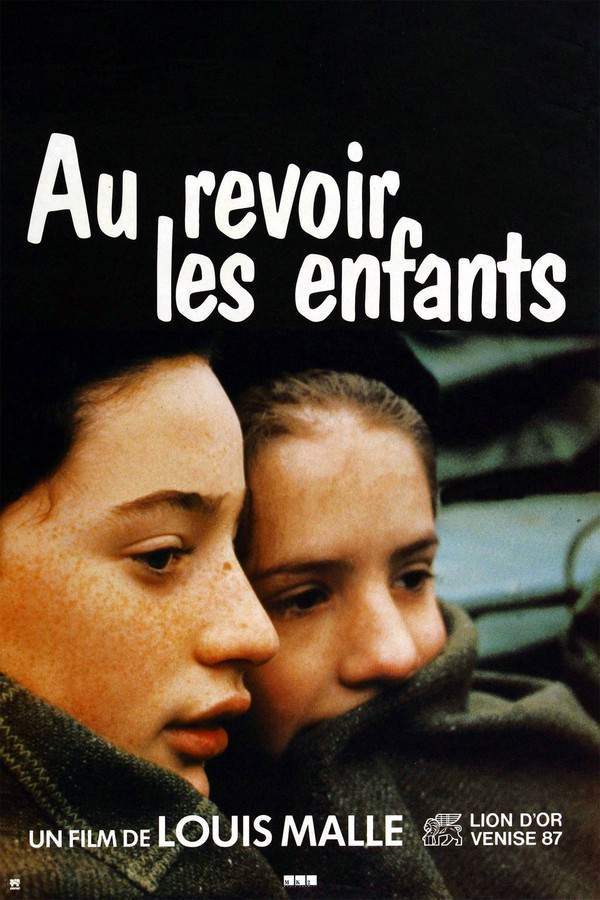
Au Revoir les Enfants 1988


Directed by

Louis Malle
Made by

MK2 Diffusion
Where to Watch Au Revoir les Enfants
See current US streaming, rental, and purchase options for Au Revoir les Enfants (1988) via JustWatch.

Criterion Channel
HD
HBO Max
HD
HBO Max Amazon Channel
HD
Fandango At Home
SD Streaming availability powered by 
Au Revoir les Enfants Plot Summary
Read the complete plot summary and ending explained for Au Revoir les Enfants (1988). From turning points to emotional moments, uncover what really happened and why it matters.
During the winter of 1943-44, Julien Quentin, a student returning to his Carmelite boarding school in occupied France, attempts to project a tough demeanor to his peers. However, beneath this façade lies a deeply pampered boy who longs for his mother’s presence. As he settles back into the mundane routine of school life, things take an unexpected turn with the arrival of three new students. One of them is Jean Bonnet, who shares Julien’s age. Initially, Julien and his classmates look down on Jean, who struggles socially but possesses remarkable talent in mathematics and piano.
One night, Julien awakens to find Jean wearing a kippah, engaged in Hebrew prayers. Driven by curiosity, Julien explores Jean’s locker and uncovers his true identity—Kippelstein. This revelation comes alongside learning that Père Jean, the headmaster played by François Berléand, has heroically chosen to offer secret sanctuary to hunted Jews.
After a playful treasure hunt, a friendship blossoms between Julien and Jean. The bond strengthens when Julien, during a visit from his mother, invites Jean to join them for lunch at a fancy restaurant since Jean’s own parents could not attend. The atmosphere at the table shifts dramatically when Julien’s father is discussed. Upon hearing Julien’s brother question their father’s allegiance to Marshal Pétain, Madame Quentin insists, “No one is anymore.” The meal takes a distressing turn when the Milice arrive, attempting to expel a Jewish diner. In a moment of defiance, Julien’s brother refers to them as “Collabos,” inciting the wrath of the Milice commander, who retorts, “We serve France, madam. He insulted us.” When a Wehrmacht officer orders the Milice to leave, they comply, albeit begrudgingly. Madame Quentin remarks on the dignity of the Jewish diner, expressing her neutrality towards Jews but revealing her disdain for socialist politician Léon Blum.
Troubles arise when Joseph, the school’s assistant cook, is caught selling food supplies on the black market. He implicates several students, including Julien and his brother, François. Despite his anguish over the injustice, Père Jean chooses not to expel the students, concerned about the ramifications for their affluent families.
As January 1944 arrives with an icy chill, a Gestapo raid targets the school in search of Jean Kippelstein. In a moment of unintended betrayal, Julien inadvertently reveals Jean’s location. While chaos ensues as the Jewish boys are hunted, Julien confronts Joseph, who justifies his act of treachery by saying, “Don’t act so pious. There’s a war going on, kid.” Julien, filled with disgust, hastily departs. He and Jean engage in their habitual book exchange as they prepare to leave, marking a poignant farewell amidst the school’s closure.
When the students are gathered in the courtyard, a Gestapo officer denounces Père Jean’s noble deeds, labeling the French as weak. A heart-wrenching farewell unfolds as Père Jean, trailed by the Jewish boys, is escorted away. As he passes through the students, they call out, “Au revoir, mon père!” He stops, turns slightly, and with a reassuring voice responds, “Au revoir, les enfants! À bientôt!” Jean is the final one to exit through the garden’s metal gate, offering Julien a brief, wistful glance, which Julien shyly acknowledges with a wave.
The film concludes with an older Julien reflecting on the events of that fateful January morning. He shares the somber reality that Bonnet, Negus, and Dupre perished in Auschwitz, while Père Jean met his fate at Mauthausen. Although over 40 years have passed, Julien asserts that those haunting memories will remain engraved in his mind until the end of his days.
Au Revoir les Enfants Timeline
Follow the complete movie timeline of Au Revoir les Enfants (1988) with every major event in chronological order. Great for understanding complex plots and story progression.
Return to Boarding School
Julien Quentin returns to his Carmelite boarding school in occupied France during the winter of 1943-44. As he steps back into the school, he tries to project a tough demeanor to hide his longing for his mother and the comforts of home.
Arrival of New Students
The routine of the school is disrupted with the arrival of three new students, including Jean Bonnet. Initially, he is looked down upon by Julien and his peers, despite having impressive talents in mathematics and piano.
Discovery of Jean's Secret
One night, Julien awakes to find Jean in prayer, wearing a kippah. Driven by curiosity, he investigates Jean's locker and discovers his true identity as Kippelstein, realizing the implications of their friendship in a time of danger.
Père Jean's Secret Sanctuary
Julien learns that Père Jean, the headmaster, is offering secret sanctuary to hunted Jews. This revelation underscores the moral complexities and risks faced by those living in occupied France, as their actions could have dire consequences.
Lunch with Julien's Mother
During a visit from his mother, Julien invites Jean to join them for lunch at a fancy restaurant. The atmosphere shifts dramatically as discussions about Julien's father's political stance lead to tensions, emphasizing the societal pressures of the time.
The Milice Arrives
Tensions escalate when the Milice arrive at the restaurant, attempting to expel a Jewish diner. Julien's brother's fearless remarks provoke the Milice commander, highlighting the resistance and defiance present among some members of society in response to the oppressive regime.
Joseph's Betrayal
Troubles arise when Joseph, the school's assistant cook, gets caught selling food supplies on the black market, implicating several students. Despite the injustice, Père Jean decides against expelling the students, showing his compassion for their backgrounds.
Gestapo Raid
In January 1944, the school faces a terrifying Gestapo raid searching for Jean Kippelstein. Julien inadvertently reveals Jean's location in a moment of chaos, leading to a frantic atmosphere as Jewish boys are pursued amidst the heart-wrenching circumstances.
Confrontation with Joseph
After the raid, Julien confronts Joseph about his betrayal. Joseph's justification reveals the desperation of survival in wartime, leading Julien to reflect on the complexities of human behavior under duress.
Final Farewell
As the students gather in the courtyard, a Gestapo officer condemns Père Jean's actions, while the Jewish boys prepare for their departure. A poignant farewell follows as Père Jean is led away, offering a touching moment between him and the students.
Julien's Reflection
The film concludes with an older Julien reflecting on the tragic events from the January raid. He shares the painful truth that his friends, Bonnet, Negus, and Dupre, perished in Auschwitz, while Père Jean was lost to Mauthausen, leaving a haunting imprint on his life.
Memories Endure
Julien expresses that, although decades have passed, the memories of those pivotal moments during the war will remain imprinted in his mind until the end. This serves as a sobering reminder of the impact of history on personal lives.
Au Revoir les Enfants Characters
Explore all characters from Au Revoir les Enfants (1988). Get detailed profiles with their roles, arcs, and key relationships explained.
Julien Quentin
Julien is a complex character who struggles to balance his tough exterior with his inner vulnerability. As a privileged boy, he yearns for his mother's affection while grappling with the newfound friendship with Jean. His character evolves through significant moral dilemmas, ultimately demonstrating growth in understanding and empathy.
Jean Bonnet (Kippelstein)
Jean, also known as Kippelstein, represents innocence endangered by the realities of war. Initially socially awkward, he has remarkable talents that draw Julien in, leading to a deep friendship. His struggle for acceptance and identity amidst persecution adds depth to his character, making his plight even more tragic.
Père Jean
Père Jean serves as a protector and moral compass for the boys at the school. His bravery in sheltering Jewish students showcases his commitment to humanity over societal norms. He embodies the spirit of resistance and sacrifice, leaving a profound impact on the lives of Julien and Jean.
Au Revoir les Enfants Settings
Learn where and when Au Revoir les Enfants (1988) takes place. Explore the film’s settings, era, and how they shape the narrative.
Time period
1943-44
The events of the movie take place during the winter of 1943-44, a critical time in World War II when Nazi occupation was at its peak. It's a period marked by fear, betrayal, and the resistance of individuals risking their lives to protect others. This time frame profoundly affects the students at the school, shaping their experiences and interactions.
Location
Carmelite boarding school, France
The movie is set in a Carmelite boarding school located in occupied France during World War II. This school serves as a significant backdrop where friendships form and secrets unfold, reflecting the tension of the era. It is a place where innocence is challenged, and the realities of war encroach upon the lives of young boys.
Au Revoir les Enfants Themes
Discover the main themes in Au Revoir les Enfants (1988). Analyze the deeper meanings, emotional layers, and social commentary behind the film.
🤝
Friendship
At its core, the movie explores the theme of friendship amid adversity. The bond between Julien and Jean showcases how genuine connections can form even in the darkest times. Their relationship evolves from initial prejudice to deep loyalty, illustrating the power of compassion across cultural divides.
⚖️
Injustice
Injustice is a prevailing theme, as seen through the students' interactions with authority and the tragic fate of Jewish characters. The film highlights the moral dilemmas faced by individuals during wartime, questioning loyalty and self-preservation against the backdrop of societal cruelty. Characters grapple with the consequences of betrayal and the cost of inaction.
🕊️
Loss
Loss permeates the narrative, culminating in the heart-wrenching fates of Jean and Père Jean. The film poignantly illustrates how war severs bonds and takes away innocent lives, leading to a lasting impact on those who survive. Julien's reflection at the end underscores the enduring grief that comes with remembering lost friends.

Coming soon on iOS and Android
The Plot Explained Mobile App
From blockbusters to hidden gems — dive into movie stories anytime, anywhere. Save your favorites, discover plots faster, and never miss a twist again.
Sign up to be the first to know when we launch. Your email stays private — always.
Explore the mobile appAu Revoir les Enfants Spoiler-Free Summary
Discover the spoiler-free summary of Au Revoir les Enfants (1988). Get a concise overview without any spoilers.
In the winter of 1943, a modest Carmelite boarding school sits tucked away in occupied France, its stone corridors echoing with the quiet rhythms of study and prayer. The world beyond its walls is bruised by war, yet the school tries to preserve a fragile sense of normalcy, its routines a thin veil over the unsettling uncertainty that hangs in the air. Light filters through high windows, casting long shadows that hint at the hidden tensions beneath the surface, while the cold season adds a crisp, almost austere beauty to the otherwise somber landscape.
At the heart of this closed community is Julien, a young boy who projects a rugged front to fit in with his peers but secretly longs for the comfort of his mother’s presence. His world is abruptly altered by the arrival of three unfamiliar classmates, most notably Jean, a quiet newcomer whose reserved demeanor masks an inner life that draws Julien’s curiosity. A tender, uneasy friendship begins to blossom as the two boys share books, music, and moments of quiet rebellion against the constraints of their environment. Overseeing the school is Père Jean, the compassionate headmaster whose steady guidance offers a moral compass amid the growing pressures of the occupation.
The film settles into a tone that is both lyrical and restrained, blending the innocence of childhood with the grim reality of a nation at war. Conversations are laced with unspoken questions about loyalty, identity, and the cost of silence, while the daily rituals of the school become a backdrop for a deeper exploration of human connection. As Julien navigates his own doubts and the subtle clues about his new friend, the story invites viewers to contemplate how ordinary lives are reshaped by extraordinary circumstances, all without ever losing the fragile hope that persists in the coldest of winters.
Movies with Similar Twists and Themes
Uncover films that echo the narrative beats, emotional arcs, or dramatic twists of the one you're exploring. These recommendations are handpicked based on story depth, thematic resonance, and spoiler-worthy moments — perfect for fans who crave more of the same intrigue.



Featured on this page

What's After the Movie?
Not sure whether to stay after the credits? Find out!
Check out our other apps:

SAT Sphere
Build confidence for the Digital SAT.

Mori Atlas
Discover wild places worth protecting.

Luntero
Search smarter for a home in Amsterdam.

Plot Explained
Unravel movie endings and hidden clues.

Pokechamp
Dive into Pokémon data and battle logic.

Driving Theory
Get ready for your European theory test.

Movie Dust
Plan your next cinema trip with ease.

Musemap
Find art and culture as you travel.

Selkobase
Compare credentials before committing.

Local Manual
Turn an unfamiliar country into practical next steps.

Lernavi
Compare school systems before your next move.

GymRoam
Find a workout stop wherever your plans take you.
Explore Our Movie Platform
New Movie Releases (2026)
Famous Movie Actors
Top Film Production Studios
Movie Plot Summaries & Endings
Major Movie Awards & Winners
Best Concert Films & Music Documentaries
Movie Collections and Curated Lists
© 2026 What's After the Movie. All rights reserved.
Privacy Policy