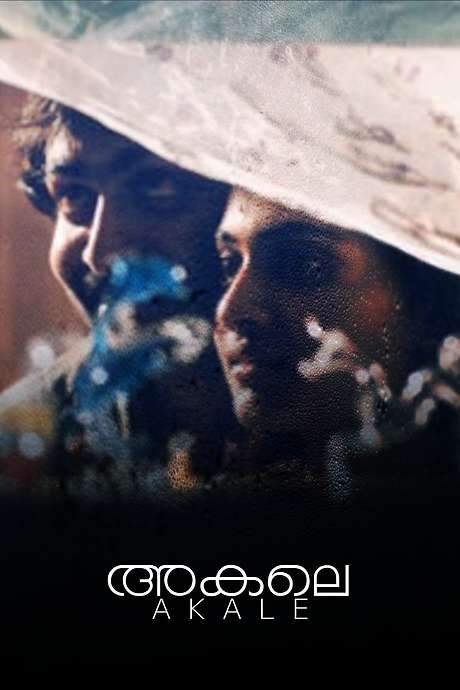
Akale 2004

Directed by

Shyamaprasad
Made by

Kolath Films, INC.
Akale Plot Summary
Read the complete plot summary and ending explained for Akale (2004). From turning points to emotional moments, uncover what really happened and why it matters.
The film opens with Neil, a writer toiling at the edge of success, bidding farewell to his partner Kamala as she urges him to devote himself to his craft. She hints at leaving him, accusing him of selfishness and a lifelong preoccupation with his own life, and even blames him for their daughter’s absence. Neil, who carries a quiet ache inside, admits that he’s long carried a sense of self-reproach. Just as the weight of the moment settles, he spots a familiar face at the edge of the ferry and is suddenly overwhelmed by a flood of memories that pulls him back into the past. The film shifts into a slowly unfolding flashback, tethered to the promise of Rose—his sister, a fragile, slightly handicapped girl who inhabits a world of glass figurines and private loneliness.
In this earlier Kerala, Neil is a troubled youth working as a low-wage clerk, harboring dreams of becoming a writer. He lives with his mother, Margaret, whose possessive love and fear for the family’s future color every action, and with his sister Rose, who is shy and self-protectively withdrawn. Their father, a Portuguese sailor, left long ago, leaving the family to wrestle with memory and mendacity. Rose’s world revolves around the delicate glass figurines that fill her showcase, each piece a mirror of her own sense of being different, quiet, and longing for a place where she belongs. The mother’s concerns mount as she polices Rose’s chores and dreams for her, insisting that Rose’s tenderness and age demand a path other than the home—one that might lead toward marriage.
One day, Margaret discovers Rose’s secret life of study and solitary time, including a failed attempt at a typewriting class. This leads to a stern confrontation that reveals Margaret’s deep-seated fears: a mother who wants to protect her daughter by steering her away from vulnerability—even if it means curtailing Rose’s other talents. In a later moment of conflict, Neil’s carefree attitude fuels a volatile clash with his mother, the tension exploding into a storm that shatters a glass figurine and fractures the fragile harmony of the home. Yet forgiveness flickers when Neil returns home drunk and presents Rose with a magic scarf from a late-night show, a token meant to bring life to her figurines and to soothe the ache of her isolation. Rose’s eyes light up with a renewed sense of possibility, and the bond within the family softens, if only briefly.
That night, Margaret, recognizing the power of Rose’s hidden talents, suggests cultivating them while imagining a future for Rose. She orchestrates a dinner plan for Rose, hoping a fine, handsome young man might enter Rose’s life. Neil invites a co-worker, Freddy, to the home for a meal, and Margaret, reveling in old memories of Goa and youth, dresses up in a gown and talks of the days when life seemed more abundant. Rose is coaxed into participating, even though she feels reticent about meeting the guest. The dinner triggers a tender memory in Rose of a past crush on Freddy, a dancer of both artistry and athletic grace, and the two begin to reconnect in a moment of shared history.
As the evening unfolds, young Rose and Freddy discover a quiet, mutual understanding, and a dance spills onto the living room as they listen to a community song drifting from the outside dance hall. Rose, once bound by fear and the weight of expectations, finds in Freddy’s presence a chance to redefine herself. The unicorn, a key symbol in Rose’s world, becomes a focal point of her renewed sense of self: Freddy’s accidental brushing of the table sends the unicorn’s horn tumbling to the floor, a moment that Rose interprets as a sign of joining the larger world with others who accept her oddity as a strength. Freddy’s later revelation that he is engaged to Betty shatters the moment of possibility, leaving Rose and her family stunned and heartbroken. Margaret, stung by the news, accuses Neil of deceiving them, though Neil remains unaware of Freddy’s engagement. The dinner ends in strain, and a fight erupts—Neil storms out, and the fragile circle around Rose begins to fracture. The hopeful possibility dissolves into a painful truth: Freddy is spoken for elsewhere, and the dream of Rose’s happy future fades.
The film returns to the present, where Neil recognizes Freddy on the ferry and decides to confront the past by bringing him to meet his aging mother. The encounter is bittersweet: Margaret, now older and more frail, finds comfort in Freddy and Betty’s presence as they visit. Freddy’s daughters present her with flowers, a simple gesture that softens the room. Margaret explains that after Neil’s departure, Rose was admitted to a mental asylum near Madurai, where she lived in withdrawal until a nervous breakdown finally claimed her. Neil experiences a wave of pain rather than guilt, feeling the weight of Rose’s life and death more as a memory he must honor than as a responsibility he can repair. He writes her story as a tribute, imagining her spirit guiding him toward light from beyond.
The film closes with the family gathered for a quiet dinner, a final image where Rose’s portrait sits in the distance and a magical scarf seems to drift and come alive, a subtle sign that memory itself can give life to the past. The memory of Rose, and the fragile dream of acceptance she represents, lingers as Neil continues to write, seeking solace in the act of storytelling and in the belief that art can keep a loved one’s memory vibrant, even after the world has moved on.
Akale Timeline
Follow the complete movie timeline of Akale (2004) with every major event in chronological order. Great for understanding complex plots and story progression.
Present farewell to Kamala triggers memory
Neil bids farewell to Kamala, who plans to leave him. He reveals his intention to write about Rose for a publisher. The moment triggers a flood of memories and the narrative shifts into a flashback.
Neil's childhood and family in Kerala
Neil lives in Kerala with his Anglo-Indian family. He is a troubled youth who works as a low-wage clerk while dreaming of becoming a writer. His sister Rose is handicapped and sheltered by their possessive mother Margaret. The father is absent, setting the stage for Rose's isolation.
Margaret's overprotectiveness and Rose's fragility
Margaret hates Neil's carefree attitude and worries about Rose's future. She forbids Rose from doing household chores and suggests she must be married off. The family is tight but strained as the father remains missing. Rose grows more fragile and isolated.
Rose's truancy and Margaret's discovery
The next day Margaret finds Neil with adult novels and scolds him harshly. The clash exposes the depth of their tensions and foreshadows later conflicts. Rose watches with pity as the family spirals. The scene shows how control and desire clash in the household.
Neil's night out and the magic scarf
Neil returns drunk after a Magic Show and tries to soothe Rose with a magic scarf that supposedly can give life to her glass figurines. He also breaks one of Rose's precious figurines, shattering her fragile world. The scarf becomes a symbolic gesture of care, bridging his guilt and Rose's longing for enchantment.
Reconciliation and Rose's future plan
The next day Neil and Margaret reconcile and admit their fears for Rose. Margaret asks Neil to bring a fine young man for Rose to meet, hinting at an arranged future. Neil invites his co-worker Freddy to dinner, hoping to secure a match. Rose steels herself for the social performance that follows.
Dinner with Freddy and Rose's past
Freddy arrives for dinner and a long-ago connection with Rose returns. A flashback reveals Rose's lonely childhood and Freddy recalling her as Blue Rose. Rose shows her glass figurines and especially the unicorn, explaining its difference mirrors her own. Freddy and Rose share a quiet dance to a community song.
Freddy's engagement and Margaret's humiliation
The unicorn's horn is knocked off during the evening, symbolizing a fragile moment of hope. Freddy reveals he is engaged to another girl named Betty, devastating Rose. Margaret chastises Neil and Neil storms out, taking the broken pieces of their plans with him. The family reels from the sudden loss of Rose's potential future.
Neil recognizes Freddy on the ferry
Back in the present, Neil recognizes Freddy on a ferry and decides to pursue him. He takes Freddy and his family to visit an ailing Margaret, seeking closure. The encounter reveals the lingering wounds of the past for everyone involved. The scene links the present to the unfinished history with Rose.
Visit to Margaret and Rose's fate
The reunion with Margaret is tempered as she recognizes Freddy and Betty. She explains that after Neil left, Rose was admitted to a mental asylum near Madurai and lived withdrawn there. After a brief improvement, Rose suffered a nervous breakdown and died. Neil feels pain rather than guilt and resolves to tell Rose's story.
Neil writes Rose's story
Neil finishes writing Rose's story, giving her memory a voice beyond her years. The act of writing becomes a way to immortalize her life and experiences. The narrative frame suggests that memories can breathe life into the dead.
Final image: the scarf brings memory to life
In the final dinner scene, Rose's picture appears in the distance while a magic scarf floats and animates the memories. The scarf acts as a bridge between life and memory, suggesting Rose's spirit endures in Neil's storytelling. The film ends on a note of remembrance and the enduring power of memory.
Akale Characters
Explore all characters from Akale (2004). Get detailed profiles with their roles, arcs, and key relationships explained.
Neil D'Costa (Prithviraj Sukumaran)
A restless writer who works as a factory clerk and longs to write full-time. He wrestles with self-doubt and emotional distance, often clashing with his mother while trying to champion Rose’s needs. His memories and imagination drive the narrative, shaping his view of family and destiny.
Rosemary D'Costa (Geethu Mohandas)
Rose is slightly handicapped and socially withdrawn, finding solace in her glass figurines. She embodies sensitivity and longing, slowly breaking out of isolation through affection and meaningful interactions, as her world blends realism with fantasy.
Margaret D'Costa (Sheela)
A possessive mother who fears for her daughter's future and pushes Rose toward marriage. Her suspicions and control reflect traditional pressures, even as she reveals deeper fears about her children’s futures and the cost of neglecting their talents.
Freddy Evans (Tom George Kolath)
Neil’s coworker and Rose’s former classmate who reappears as a potential suitor. His involvement rekindles old memories and highlights the fragility of happiness; ultimately, he is revealed to be engaged to someone else, affecting Rose and the family deeply.
Kamala D'Costa (Sreelekha Mitra)
Neil's partner who decides to leave, accusing him of selfishness and neglect. Her departure intensifies the film’s exploration of responsibility, loyalty, and the consequences of not devoting time to family.
Akale Settings
Learn where and when Akale (2004) takes place. Explore the film’s settings, era, and how they shape the narrative.
Location
Kerala, India, Madurai, India, Goa, India
The film is rooted in Kerala, portraying an Anglo-Indian family's life in a coastal setting rich with cultural blend and social expectations. It also references a Mental Asylum near Madurai where Rose is later treated, and nostalgic recollections of Goa highlight the family’s past affluence and mobility that shape their dynamics.
Akale Themes
Discover the main themes in Akale (2004). Analyze the deeper meanings, emotional layers, and social commentary behind the film.
💫
Identity
Rose's difference and Neil's longing form the core of the narrative, with the unicorn symbolizing a quest for belonging. The story frames personal identity through memory, longing, and how others perceive us. It questions whether self-worth is defined by inner truth or societal roles.
💔
Family & Loss
Tensions within the family—Margaret’s protectiveness, Neil’s guilt, and Rose’s fragility—drive the plot and consequences of choices made under pressure. Kamala’s departure marks a turning point that underscores the cost of unresolved grief. The film shows how memory can sustain love amid loss.
🎭
Memory & Illusion
Neil’s storytelling reframes Rose’s life, blending memory with illusion through symbolic moments like the magic scarf. Rose’s glass figurines mirror an inner world that struggles for expression, while memory both comforts and distorts reality. The narrative blurs what is remembered with what is imagined.
🎨
Art & Growth
Art—writing, glasswork, and dance—serves as a healing conduit. Freddy’s encouragement nudges Rose toward self-belief, transforming difference into strength. The unicorn’s revival symbolizes how individuality can become a source of connection rather than isolation.

Coming soon on iOS and Android
The Plot Explained Mobile App
From blockbusters to hidden gems — dive into movie stories anytime, anywhere. Save your favorites, discover plots faster, and never miss a twist again.
Sign up to be the first to know when we launch. Your email stays private — always.
Explore the mobile appAkale Spoiler-Free Summary
Discover the spoiler-free summary of Akale (2004). Get a concise overview without any spoilers.
In a quiet Kerala household, Margaret carries a quiet determination to secure a future for her daughter, a gentle soul whose world is woven from glass figurines and subtle quirks. The family home is a place where delicate beauty and constrained ambition coexist, hinting at a tender yet uneasy balance between protection and the yearning for something beyond the familiar walls. Margaret’s dream is that her daughter will find a partner who can see past the fragility and offer a shared path, a hope that quietly shapes the rhythm of everyday life.
Neil, Margaret’s older child, drifts between the pressure of his own creative aspirations and the weight of familial expectations. As a writer on the cusp of recognition, he grapples with a persistent sense of self‑reproach, feeling both drawn to his craft and tethered to the unresolved tensions at home. His relationship with his mother oscillates between affection and friction, each exchange revealing layers of longing, resentment, and the unspoken desire to be understood beyond his own pursuits.
Rose, the quietly resilient sister, inhabits a world that is at once intimate and isolated. Her delicate talents and unique perspective are both celebrated and guarded, as Margaret navigates the fine line between sheltering her and encouraging autonomy. The atmosphere of the film is permeated by a lyrical melancholy, where simple domestic scenes echo larger questions about love, acceptance, and the sacrifices made in the name of family.
Through understated performances and a richly textured setting, the story invites viewers into a contemplative space where hopes are tenderly whispered, dreams linger like the glow of a fading lantern, and the act of storytelling itself becomes a bridge between memory and possibility.
Featured on this page

What's After the Movie?
Not sure whether to stay after the credits? Find out!
Check out our other apps:

SAT Sphere
Build confidence for the Digital SAT.

Mori Atlas
Discover wild places worth protecting.

Luntero
Search smarter for a home in Amsterdam.

Plot Explained
Unravel movie endings and hidden clues.

Pokechamp
Dive into Pokémon data and battle logic.

Driving Theory
Get ready for your European theory test.

Movie Dust
Plan your next cinema trip with ease.

Musemap
Find art and culture as you travel.

Selkobase
Compare credentials before committing.

Local Manual
Turn an unfamiliar country into practical next steps.

Lernavi
Compare school systems before your next move.

GymRoam
Find a workout stop wherever your plans take you.
Explore Our Movie Platform
New Movie Releases (2026)
Famous Movie Actors
Top Film Production Studios
Movie Plot Summaries & Endings
Major Movie Awards & Winners
Best Concert Films & Music Documentaries
Movie Collections and Curated Lists
© 2026 What's After the Movie. All rights reserved.
Privacy Policy