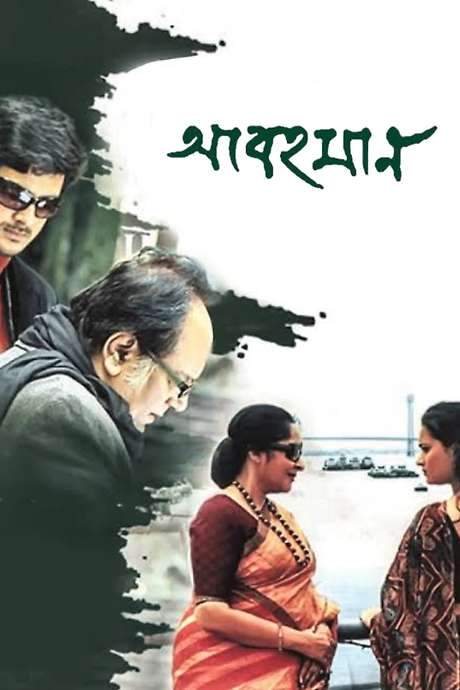
Abohomaan 2009
Directed by

Sudeshna Roy
Made by

Reliance Entertainment
Where to Watch Abohomaan
See current US streaming, rental, and purchase options for Abohomaan (2009) via JustWatch.

Streaming availability powered by 
Abohomaan Plot Summary
Read the complete plot summary and ending explained for Abohomaan (2009). From turning points to emotional moments, uncover what really happened and why it matters.
In the film, Aniket, a distinguished filmmaker from Bengal, played by Dipankar Dey, shares a deep connection with his wife Deepti, portrayed by Mamata Shankar, an actress who once sacrificed her career for love and marriage. Together, with their only son Apratim, played by Jisshu Sengupta, they form a seemingly perfect family. Their lives take a complex turn when Aniket auditions a young actress named Shikha, performed by Ananya Chatterjee. Shikha bears an eerie resemblance to a young Deepti, which ignites a series of emotional and psychological challenges.
Deepti, with her unwavering enthusiasm, begins to coach Shikha for her husband’s upcoming film. As she mentors her, Shikha begins to resemble the woman Deepti once was in her youth, capturing Aniket’s attention and affection in ways that threaten their family’s stability. Despite the appearance of love between Aniket and Shikha, the film reveals that her presence is more of a muse for Aniket than a true romantic interest. Her talent, spontaneity, and vibrant personality captured his admiration in a way that brought to mind his wife Deepti, whom he affectionately called Sreemoti—the name originally given to her. Deepti later passed this nickname on to Shikha, further blurring the lines between admiration and love.
Throughout the story, there are layers of emotional depth and subtle symbolism. Aniket’s perspective makes it clear that his feelings for Shikha are intertwined with his memories and idealizations of Deepti, blurring the boundaries between love, obsession, and artistic inspiration. In a poignant moment towards the end of the movie, as Aniket’s health deteriorates, he yearns to see Sreemoti again, believing her to be present — this time embodied by Deepti, who appears before him in his last moments. His desire to see her reflects the complex nature of his love, which transcends the physical and touches the realm of memory and longing.
The film draws parallels to the relationship between the renowned theater director Girish Chandra Ghosh and the legendary actress [Binodini Dasi], emphasizing the themes of love, loss, and the passing of time. There is also an element of inevitable repetition or inheritance of flawed relationships, as seen when Apratim, the son, lies to his wife just as his father did, suggesting that the cycle of hidden truths and unspoken emotions persists across generations. The story’s title, “Abohomaan,” signifies the idea of something being carried over or inherited, underscoring the recurring patterns that shape the characters’ lives.
Overall, the movie explores the intricate layers of love, memory, identity, and the artistic soul, emphasizing how past relationships cast long shadows on the present. It’s a profound narrative that questions the thin line between admiration and obsession, and between love and loss, leaving viewers pondering the true nature of devotion and the enduring influence of the past.
Abohomaan Timeline
Follow the complete movie timeline of Abohomaan (2009) with every major event in chronological order. Great for understanding complex plots and story progression.
Introduction of Aniket and Deepti
The film introduces Aniket, a renowned Bengal filmmaker, and Deepti, an actress who sacrificed her career for love and marriage. They are portrayed as a perfect family, highlighting their deep bond and successful careers. Their relationship and mutual respect set the foundation for the story's emotional depth.
Casting of Shikha
Aniket auditions a young actress, Shikha, who bears an uncanny resemblance to Deepti in her youth. Deepti enthusiastically coaches Shikha in acting for Aniket’s film, eager to prepare her for the role. This marks the beginning of Shikha's uncanny likeness and her growing influence on the family dynamics.
Shikha Becomes the Muse
As Shikha trains and performs, she becomes more like the young Deepti, embodying the spirit of Deepti’s earlier self. Aniket is mesmerized by her acting skills and spontaneity, seeing her as a Muse and a reincarnation of Sreemoti, the name he originally gave to Deepti. This deepening admiration sets the stage for future emotional conflicts.
Aniket's Growing Attraction
Aniket’s admiration for Shikha intensifies, and he begins to develop feelings for her, even though she is close in age to his son. His love becomes complex, rooted in her acting talent and resemblance to Deepti, blurring the lines between affection, admiration, and desire. Deepti remains supportive yet increasingly aware of the subtle changes.
Revelation of the Muse’s Identity
Towards the end of the story, it is revealed that Aniket’s love for Shikha was rooted in his romanticized perception of Sreemoti, Deepti's youthful self. Despite her success as an actress under the name Sreemoti, Aniket always referred to her as Sikha, indicating an emotional connection rooted in his past love and memories.
Deepti's Sacrifice
Deepti, having sacrificed her career for her marriage and family, witnesses the emotional turmoil caused by her husband's obsession with Shikha. Her silent suffering highlights the emotional complexities and sacrifices involved in their relationship, emphasizing the depth of her love and sacrifice.
Aniket’s Final Moments
As Aniket nears the end of his life, he expresses a desire to see Sreemoti, the youthful image of Deepti and Shikha. When Deepti appears, it symbolizes his longing to reconnect with his past love, revealing that his affection was more for the idealized image of Sreemoti than his actual wife.
Themes of Love and Memory
The film explores complex themes of love, memory, and idealization, connecting Aniket’s relationship with Shikha and Deepti to the legendary ties between theater director Girish Chandra Ghosh and actress Binodini Dasi. It reflects on how love and admiration can transcend time and reality.
Lie and Deception
Apratim, the son, lies to his wife in a manner similar to his father, mirroring the伝ated deception and emotional concealment in the family. This recurring pattern suggests a cycle of misunderstandings and hidden truths affecting their relationships.
Abohomaan – The Legacy of Love
The storyline subtly indicates that the love and emotional struggles are carried over through generations, symbolized by the shared relationships and secrets within the family. The term 'Abohomaan' suggests a legacy of love and deception passed down, blurring reality and memory.
Abohomaan Characters
Explore all characters from Abohomaan (2009). Get detailed profiles with their roles, arcs, and key relationships explained.
Aniket
A renowned filmmaker whose deep connection to his art and past love shapes his emotional journey. He struggles with aging, lost love, and the idealization of his wife and muse, revealing his internal conflicts and search for meaning.
Deepti
An accomplished actress and Aniket’s wife who sacrificed her career for love. Her character embodies sacrifice, devotion, and the complexities of maintaining her identity amidst her familial and artistic commitments.
Shikha (Sreemoti)
A talented young actress resembling Deepti in her youth, she serves as a muse for Aniket. Her evolving resemblance and popularity symbolize youthful charm and the transformative power of performance.
Abohomaan Settings
Learn where and when Abohomaan (2009) takes place. Explore the film’s settings, era, and how they shape the narrative.
Time period
Contemporary
The story takes place in the modern era, highlighting themes of love, aging, and artistic legacy. The contemporary setting allows for reflections on societal expectations and personal relationships within the backdrop of Indian cinematic and theatrical history.
Location
Bengal, India
The movie is set in Bengal, a region renowned for its rich cultural heritage, arts, and cinema. Bengal has historically been a center for creative arts, including theater and filmmaking. The setting reflects the traditional and artistic atmosphere central to the story.
Abohomaan Themes
Discover the main themes in Abohomaan (2009). Analyze the deeper meanings, emotional layers, and social commentary behind the film.
🎭
Art & Identity
The film explores the connection between art and personal identity, illustrating how artistic personas can influence real-life relationships. It delves into the emotional complexities of love, memory, and the idealization of youthful beauty, emphasizing the power of performance and perception.
👴🏼
Aging & Memory
Central to the narrative is the theme of aging and the nostalgia for a bygone era. The story examines how aging impacts personal relationships and artistic pursuits, as well as the longing to recapture youthful aspirations and memories.

Coming soon on iOS and Android
The Plot Explained Mobile App
From blockbusters to hidden gems — dive into movie stories anytime, anywhere. Save your favorites, discover plots faster, and never miss a twist again.
Sign up to be the first to know when we launch. Your email stays private — always.
Explore the mobile appAbohomaan Spoiler-Free Summary
Discover the spoiler-free summary of Abohomaan (2009). Get a concise overview without any spoilers.
In the quiet corridors of Bengali cinema, a seasoned filmmaker navigates the delicate interplay between art and personal life. The world he inhabits is one of reverent tradition and restless creativity, where every frame carries the weight of memory and the promise of new expression. Light filters through studio windows, casting both shadows and hope across the set, setting a tone that is both lyrical and introspective.
Aniket is a respected director whose career is as distinguished as the films he crafts. At his side stands Deepti, an actress who once stepped away from the spotlight to nurture their marriage and raise their only son. Their bond, built on decades of shared passions and sacrifices, exudes a gentle, almost nostalgic warmth, yet beneath the surface lies the unspoken tension of dreams deferred. Together they form a family that appears harmonious, anchored by love and the unifying rhythm of creative pursuit.
When a fresh talent arrives, Shikha—a young actress whose presence echoes the youthful vigor of Deepti’s early years—becomes the focal point of Aniket’s newest project. Deepti, eager and supportive, takes on the role of mentor, guiding Shikha through the intricacies of performance. This mentorship sparks a subtle shift, as the director’s attention flickers between admiration for his wife’s past self and the vibrant spark of the newcomer, hinting at an undercurrent of jealousy and unarticulated desire.
The film sways between the tender intimacy of familial ties and the restless pulse of artistic inspiration. With their son Apratim observing the dynamics, the story contemplates how memories reverberate across generations, and how the line between reverence and obsession can blur. In this richly textured atmosphere, the audience is invited to linger on the unsaid, feeling the pull of past loves and the inevitable echo of the creative soul.
Featured on this page

What's After the Movie?
Not sure whether to stay after the credits? Find out!
Check out our other apps:

SAT Sphere
Build confidence for the Digital SAT.

Mori Atlas
Discover wild places worth protecting.

Luntero
Search smarter for a home in Amsterdam.

Plot Explained
Unravel movie endings and hidden clues.

Pokechamp
Dive into Pokémon data and battle logic.

Driving Theory
Get ready for your European theory test.

Movie Dust
Plan your next cinema trip with ease.

Musemap
Find art and culture as you travel.

Selkobase
Compare credentials before committing.

Local Manual
Turn an unfamiliar country into practical next steps.

Lernavi
Compare school systems before your next move.

GymRoam
Find a workout stop wherever your plans take you.
Explore Our Movie Platform
New Movie Releases (2026)
Famous Movie Actors
Top Film Production Studios
Movie Plot Summaries & Endings
Major Movie Awards & Winners
Best Concert Films & Music Documentaries
Movie Collections and Curated Lists
© 2026 What's After the Movie. All rights reserved.
Privacy Policy