
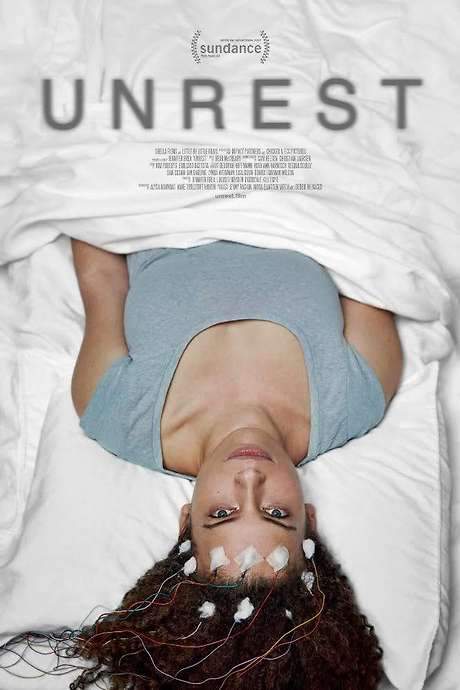
What Is Unrest About?
The premise of Unrest in 342 words, with nothing given away. The full story follows below.
Unrest opens with a startling image: a young woman crawling across a floor, unable to stand, her body betrayed by a fever that never seemed to leave. That woman is Jennifer Brea, once a promising PhD student at Harvard whose life took an abrupt, disorienting turn when illness struck at twenty-eight. As doctors waver between uncertainty and disbelief, insisting her symptoms might be psychological, Brea refuses to accept silence as an answer. With a camera as her only steady companion, she begins recording herself — a private testament that soon becomes something far larger.
What unfolds is a documentary that treats illness not as a medical chart but as a deeply human experience, mapping the isolation, frustration, and strange resilience of those living inside a body that no longer cooperates. The film’s emotional center rests on the intimate spaces of bedrooms, hospital corridors, and computer screens, where Brea’s search for validation leads her to four other families scattered across the world. Each carries their own version of the same haunting mystery: a debilitating condition that medicine has struggled to name, let alone cure. Their stories, glimpsed through tender and unflinching footage, suggest a shared language of suffering that transcends borders.
Interwoven with these personal narratives are glimpses into laboratories and research institutions, where scientists speak with cautious urgency about the gaps in funding and understanding that have left an entire community in the shadows. The documentary carries a quiet but persistent sense of injustice, giving voice not only to Brea but to the broader community she discovers online and offline. Her husband, Omar Wasow, appears alongside her as both anchor and witness, grounding the journey in the rhythms of a marriage tested by something neither could have anticipated.
Stylistically, Unrest balances the clinical with the deeply personal, weaving together video diaries, intimate family moments, and broader social observation. There is no neat resolution promised here — instead, the film cultivates a sense of mounting awareness, of questions layered upon questions, and of a quiet revolution beginning to stir among those long ignored.
What Happens in Unrest?
The complete story of Unrest, from the first scene to the last, in 463 words (about 2 minutes). Spoilers throughout. Names in the text link to 3 cast member pages.
Spoilers ahead
This poignant documentary chronicles the harrowing journey of Jennifer Brea, a brilliant PhD student at Harvard University whose life took a drastic turn when she suddenly fell ill at the age of 28. As her condition deteriorated, Jennifer Brea found herself trapped in a frustrating cycle with medical professionals; her symptoms were progressively worsening, yet she was initially disbelieved by doctors who dismissively attributed her debilitating physical state to mere stress.
In an effort to provide undeniable evidence of her decline, she began recording a video diary to demonstrate the actual severity of her illness to her medical providers. This intimate project eventually evolved into the broader documentary, Unrest. The film opens with a stark, heartbreaking image of Brea crawling across the floor, completely unable to walk. After a long and arduous struggle for recognition, she finally receives a formal diagnosis of myalgic encephalomyelitis/chronic fatigue syndrome (ME/CFS).
Seeking clarity and community, she and her husband, Omar Wasow, turned to the internet to search for answers. Through these online channels, they connected with a global network of others suffering from the same mysterious ailment. The film highlights the devastating social toll of the disease, featuring a woman in the United States who was abandoned by her husband because he believed her illness was purely psychological. The couple only managed to reconcile after their own daughter developed ME, which served as the undeniable proof the father needed to believe in the reality of the condition.
The documentary further explores the global tragedy of ME/CFS through several other cases:
- In Denmark, a young girl is forcibly taken by police to a psychiatric hospital against her will because authorities wrongly suspected her parents were nurturing her illness.
- The film introduces the son of geneticist Ron Davis, showing a period where the young man had been unable to speak for an entire year due to the progression of the disease.
- In the United Kingdom, a young woman is shown suffering from severe osteoporosis, a direct result of being bedbound and unable to leave her room for several years.
Throughout the narrative, the film integrates expert interviews with various scientists and immunologists who discuss the systemic failures of the medical community. They highlight the critically limited research funding available for ME/CFS. The experts suggest that this lack of support is due to two primary factors: the complex, difficult-to-understand nature of the symptoms and a systemic bias, as the vast majority of those suffering from ME are women.
The film concludes by depicting the 2016 #MillionsMissing protests, a global movement that sought to bring visibility to the unseen. These protests served as a powerful call for increased awareness, better medical research, and genuine support for ME patients worldwide who had been ignored by the healthcare system for far too long.
Unrest Timeline: Every Key Event in Order
15 key events in the order they happen, from “Life as a Harvard PhD Student” to “#MillionsMissing Protests”. 5 events name a place, across 5 locations.
- 1
Life as a Harvard PhD Student
Jennifer Brea is working towards her PhD at Harvard, building a promising academic career and an optimistic future. Her life appears to follow the path of a driven, successful young scholar before anything changes.
Where:Harvard University
- 2
A Mysterious Illness Strikes
At the age of 28, Jennifer Brea suddenly falls ill with a mysterious condition that no one can yet explain. This marks the beginning of a long and difficult medical journey that will redefine her life.
When:At age 28
- 3
Progressive Deterioration
Brea's condition grows progressively worse as her symptoms intensify over time. She experiences increasing physical limitations that make even basic everyday tasks more and more difficult to manage.
- 4
Dismissed by Doctors
Brea seeks medical help but is repeatedly disbelieved by the doctors she consults. Her symptoms are attributed to stress rather than being recognized as a genuine physical illness.
- 5
The Video Diary Begins
To demonstrate the severity of her illness to her doctors, Brea starts recording a personal video diary. This intimate documentation eventually grows into the Unrest documentary itself.
- 6
Crawling on the Floor
The documentary opens with a powerful shot of Brea crawling on the floor, unable to walk. This visceral image immediately communicates the devastating physical impact of her condition.
- 7
A Name for the Illness
After a long period of uncertainty, Brea finally receives a diagnosis of myalgic encephalomyelitis/chronic fatigue syndrome (ME/CFS). The diagnosis provides meaningful validation after years of being dismissed by the medical community.
- 8
Searching for Answers Online
Brea and her husband Omar Wasow turn to the internet to search for answers about her condition. Their online research together becomes a crucial tool in understanding a poorly understood illness.
- 9
Connecting with Other Patients
Through the internet, Brea connects with other people around the world who suffer from the same illness. These connections reveal a global community of patients and form the backbone of the documentary's wider perspective.
- 10
A Marriage Tested by Disbelief
In the United States, a woman with ME is left by her husband, who insists that her illness is psychological rather than physical. The couple only reconciles after their daughter also develops ME, which finally convinces the father of the illness's reality.
Where:United States
Show the other 5 events of Unrest Hide the last 5 events
- 11
Forced Hospitalization in Denmark
In Denmark, a girl suffering from the illness is taken by police into a psychiatric hospital against her will. Authorities believed that her parents were nurturing her illness rather than that it was genuine.
Where:Denmark
- 12
Ron Davis's Family Struggle
The son of geneticist Ron Davis is shown having been unable to speak for an entire year due to the illness. Even the family of a leading scientist is not spared from the devastating effects of ME.
- 13
Bedbound in the UK
In the United Kingdom, a young woman who has been unable to leave her bed for years develops osteoporosis. Her story demonstrates the severe long-term physical consequences of being bedbound with ME.
Where:United Kingdom
- 14
Scientists Sound the Alarm
The documentary features interviews with scientists and immunologists discussing the limited research funding available for ME. They attribute the neglect to the difficult-to-understand nature of the symptoms and to the fact that most patients are women.
- 15
#MillionsMissing Protests
The documentary culminates with the 2016 #MillionsMissing protests, which advocated for increased awareness and support for ME patients globally. The demonstrations represent a powerful moment of collective visibility for patients who are often confined out of sight.
When:2016 Where:Global
Who Are the Main Characters in Unrest?
3 characters, among them Jennifer Brea, Omar Wasow and Ron Davis: who each one is and the part they play in the story. Every profile links to the actor’s page.
- JB
Jennifer Brea
Played by Jennifer Brea
Jennifer is a former PhD student diagnosed with ME/CFS, who courageously shares her personal journey through illness. Her determination is showcased through her video diary, voicing the often unheard struggles of those with chronic fatigue. She embodies resilience, advocating not only for herself but also for others facing similar battles.
- 💪 Advocacy
- 📖 Personal Journey
- 🎓 Academic Background
- OW
Omar Wasow
Played by Omar Wasow
Omar is Jennifer's supportive husband, deeply involved in her journey through illness. His role highlights the emotional labor and companionship essential for chronic illness sufferers. His experiences interweave personal devotion with advocacy, portraying the impact of chronic illness on families.
- ❤️ Support
- 👨👩👦 Family
- 👥 Caregiver
- RD
Ron Davis
Played by Ron Davis
Ron is a geneticist whose son is significantly affected by ME/CFS, showcasing the direct impact of the illness on families in the scientific community. His involvement provides a unique perspective on the intersection of personal experience and scientific inquiry, emphasizing the need for more research and understanding of the disease.
- 🔬 Science
- 👪 Family Impact
- 📉 Research Funding
Where and When Is Unrest Set?
Unrest is set in United States, Denmark and United Kingdom (21st century). Here is why the time and place matter to the story.
When
21st century
The documentary is set in the 21st century, a period marked by significant advancements in medical research yet grappling with many health issues remaining poorly understood. This era has seen an increased awareness of chronic illnesses like ME/CFS, despite ongoing challenges in gaining recognition and support for affected individuals.
Where
United States, Denmark, United Kingdom
The film takes viewers through various locations significant to the experiences of those suffering from ME/CFS. In the United States, the narrative explores the struggles faced by patients and their families, highlighting a profound disconnect between illness and belief. Denmark and the UK are also depicted as places where individuals face both medical and societal challenges related to their conditions.
- 🌍 Locations
- 🎥 Documentary
What Are the Themes of Unrest?
3 ideas the story keeps returning to, among them Chronic Illness, Community & Support and Awareness & Activism.
-
01
Chronic Illness
Unrest explores the harrowing realities of chronic illness, particularly myalgic encephalomyelitis/chronic fatigue syndrome (ME/CFS). The documentary sheds light on the emotional and physical toll of being misunderstood by the medical community. It emphasizes the importance of awareness, research, and the lived experiences of those battling unseen health challenges.
-
02
Community & Support
The film highlights the strength of community among ME/CFS patients. As Jennifer connects with others who share similar struggles, the narrative underscores the power of mutual support and advocacy. This theme resonates with the importance of visibility and collective action in facing societal and medical skepticism.
-
03
Awareness & Activism
Unrest showcases the growing activism surrounding ME/CFS, culminating in the #MillionsMissing protests. This theme reflects the fight for recognition and resources, signaling a demand for fundamental change in how chronic illnesses are perceived and treated globally. The documentary advocates for increased funding and research, highlighting the vital role of activism in health equity.
What Kind of Film Is Unrest?
Dark in tone, with steady pacing and a moderate story, going by the plot summary.
- Tone
- Dark
- Pacing
- Steady
- Story
- Moderate
- Intensity
- High
- Ending
- Mixed
A sobering documentary that immerses viewers in the painful reality of chronic illness, following patients fighting to be believed by a dismissive medical system while building a quiet movement for recognition.
- heavy
- sober
- introspective
- oppressive
- earnest
- gripping
- chronic illness
- medical gaslighting
- advocacy
- disability
Content notes: chronic illness depictions, forced institutionalization, medical neglect and gaslighting, graphic medical imagery.
Quiz
How well do you remember Unrest? Test yourself on the story.
