You Came Along 1945


War hero pilot Bob Collins embarks on a war‑bond selling tour with two comrades and the reluctant chaperone Ivy Hotchkiss. Cheerful and charming, Bob romances a different girl in each town. After a series of comic mishaps, Bob and Ivy begin a playful fling, insisting it’s “just fun up in the air,” until Ivy discovers a deeper reason why their relationship cannot go further.


Does You Came Along have end credit scenes?
No!
You Came Along does not have end credit scenes. You can leave when the credits roll.
Meet the Full Cast and Actors of You Came Along
Explore the complete cast of You Came Along, including both lead and supporting actors. Learn who plays each character, discover their past roles and achievements, and find out what makes this ensemble cast stand out in the world of film and television.

Rhys Williams
Col. Stubbs
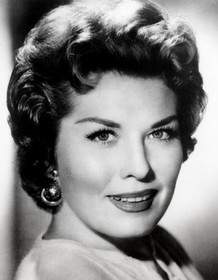
Jean Willes
Showgirl (uncredited)

Will Wright
Col. Dale V. Armstrong (uncredited)
Julie Bishop
Mrs. Taylor
Don DeFore
Captain W. Anders
Robert Cummings
Maj. Bob Collins
Kim Hunter
Frances Hotchkiss
Franklin Pangborn
Hotel Clerk
Ruth Roman
Gloria Revere (uncredited)
Charles Drake
Lt. R. Janoschek
Frank Faylen
Bellboy (uncredited)
Howard Freeman
Drunk
Minor Watson
Uncle Jack
Lizabeth Scott
Ivy Hotchkiss
Helen Forrest
Singer
Bess Flowers
Dinner Guest (uncredited)
Lester Dorr
Reporter (uncredited)
James Millican
Lt. Cmdr. George Nelson (uncredited)
Andrew Tombes
Drunk
Rex Lease
Airport Attendant (uncredited)
Georges Renavent
Headwater (uncredited)
Hugh Beaumont
Army Chaplain at Funeral (uncredited)
Reed Howes
Officer on Dance Floor (uncredited)
Robert Sully
Bill Allen
Marjorie Woodworth
Carol Dix (uncredited)
External Links and Streaming Options
Discover where to watch You Came Along online, including streaming platforms, rental options, and official sources. Compare reviews, ratings, and in-depth movie information across sites like IMDb, TMDb, Wikipedia or Box Office Mojo.





Take the Ultimate You Came Along Movie Quiz
Challenge your knowledge of You Came Along with this fun and interactive movie quiz. Test yourself on key plot points, iconic characters, hidden details, and memorable moments to see how well you really know the film.
You Came Along Quiz: Test your knowledge of the 1945 film *You Came Along*, its characters, plot points, and memorable moments.
Which actress portrays Ivy Hotchkiss in the film?
Full Plot Summary and Ending Explained for You Came Along
Read the complete plot summary of You Came Along, including all major events, twists, and the full ending explained in detail. Explore key characters, themes, hidden meanings, and everything you need to understand the story from beginning to end.
Major Robert “Bob” Collins, Robert Cummings, Captain W. “Shakespeare” Anders, Don DeFore, and Lieutenant R. “Handsome” Janoschek, Charles Drake, are three decorated USAAF officers returning to Washington, D.C. after a demanding European tour. The story follows their cross-country war-bond publicity trip, which is supposed to be a routine assignment, but quickly turns into something more personal and revealing. The trio expects to be escorted by a chaperone named “I. V. Hotchkiss” from the Treasury Department, only to meet a handsome twist: Ivy Hotchkiss, Lizabeth Scott, a young woman who has stepped into the role because her boss was injured in a car accident. Bob, who is initially skeptical of Ivy’s authority, worries that the chaperone might cramp their freedom; yet Ivy maintains her composure and insists on managing the group with firm but courteous control.
From the moment Ivy asserts herself in the briefing room, her practical wit and steely calm begin to soften Bob’s initially patronizing attitude. The press conferences at the airport set a running joke about the idea of “wolves” in the group, but Ivy responds with a sharp retort that she does not fit the expected damsel stereotype: > “But I don’t happen to be Little Red Riding Hood.” This line signals that Ivy is determined to steer the three officers through the tour without getting tripped up by bureaucratic or romantic misunderstandings. On the flight to Boston, Ivy’s role shifts from strict supervisor to a more nuanced companion, and Bob starts calling her “Hotcha” in a grudging, affectionate way while the dynamics among the men and their dates begin to blur.
In Boston, the bond drive takes an unexpected turn as the officers quietly slip away for a bit of nightlife, and Ivy must bring them back from a nightclub where they mingle with showgirls. The mood darkens when a mix-up at the hotel leads Bob to undress in Ivy’s room, with Ivy waking up to the sight of him in his underwear. The moment is played for humor, but it also foreshadows the deeper emotional complications to come as the trip progresses. Shakespeare and Handsome, in a moment of camaraderie and vulnerability, reveal injuries they’ve kept from Bob, which adds to the sense that this voyage is about more than a publicity stunt—it’s about facing real-life hazards and the fragility of life itself.
As the journey continues to Chicago, the three officers attend a fashion show and later enjoy a nightclub, where a sense of affection and competition tangles among the group. The plot thickens when Ivy and Shakespeare share a moment, and Handsome’s insistence on claiming an “Anonymous” dress helps to underscore their evolving relationships. A cinematic note arrives in Seattle when Ivy and Shakespeare sit in a café, and Ivy unexpectedly sings “Out of Nowhere” while she accompanies herself on the piano. It is here that a chance encounter with a flight surgeon, Col. Stubbs, Rhys Williams, changes everything. Stubbs remembers treating an unnamed Air Force officer for leukemia and, through a bit of theater, implies that the patient may be Bob—an implication that Ivy pieces together. She begins to understand why her three male companions have been so reluctant to leave Bob’s side: they fear he may be facing a terminal prognosis, and they want to shield him from the truth for as long as they can.
The journey pivots again in Riverside, California, at the Mission Inn Fliers’ Chapel, where Ivy’s sister Frances Hotchkiss, Kim Hunter, marries a naval aviator named Bill Allen, [Robert Sully](/actor/robert-sully, symbolizing a vow to seize life fully in the face of danger and separation. The wedding scene crystallizes Ivy’s resolve to embrace love with Bob, and she and Bob vow to live life to the fullest for as long as they can. The couple settles into a home on Long Island, close to the air base where Shakespeare, Handsome, and Bob will be stationed, signaling a future where they can be near one another despite the demands of war.
But the truth behind Bob’s fate remains unspoken for now. As Bob prepares to depart for overseas duty—his assignment sending him toward London—Bob and Ivy share a poignant farewell moment, only to realize that Ivy is being kept in the dark about the exact realities of Bob’s situation. Bob’s path ultimately leads toward a London destination, a detail that Ivy does not fully trust to be accurate. The tension between truth and loyalty intensifies, and Ivy’s devotion to Bob compels her to maintain appearances even as the deception grows more intricate.
In the hours that follow, Ivy navigates a delicate balance between hope and grief. She receives letters bearing a British address, routed through a confidant of Bob in England, and she clings to a fantasy that the messages may be real. When Shakespeare and Handsome drop by for an outing, Ivy finally receives a telegram announcing Bob’s death at Walter Reed Hospital, a devastating report that reframes the entire journey in retrospect. The funeral rites for Bob are a solemn reminder of the cost of war and the personal losses behind every public milestone. Yet even in mourning, the trio maintains a bond, and the shared toast to Bob becomes a quiet testament to their friendship and to the memory of a man who loved life.
In the film’s final, melancholic beat, Ivy’s quiet resilience is unmistakable. After the funeral, the three men revisit Ivy’s home, and the sound of an approaching aircraft stirs a strange moment of connection. Ivy senses Bob’s presence, almost as if his voice rings out from the heavens, a final echo that lends both comfort and ache to her memories. The movie ends not with a simple reconciliation or a tidy ending, but with a nuanced meditation on love, courage, and the way grief can shape the choices we make when faced with an uncertain future. The narrative treats its wartime setting with a grounded, human tone, presenting a world where romance, duty, and vulnerability intersect in a way that feels both earnest and enduring.
This story builds its emotional arc through intimate character moments as much as through the larger wartime backdrop. Ivy’s steady leadership and warmth ground the more impulsive impulses of the three officers, and the eventual marriage between Ivy and Bob—and Bob’s untimely death—frames a poignant meditation on living fully in the shadow of loss. The result is a wartime romance that blends humor, danger, and tenderness into a cohesive, bittersweet portrait of a generation navigating love and duty in extraordinary times.

Coming soon on iOS and Android
The Plot Explained Mobile App
From blockbusters to hidden gems — dive into movie stories anytime, anywhere. Save your favorites, discover plots faster, and never miss a twist again.
Sign up to be the first to know when we launch. Your email stays private — always.
Explore the mobile appDiscover Film Music Concerts Near You – Live Orchestras Performing Iconic Movie Soundtracks
Immerse yourself in the magic of cinema with live orchestral performances of your favorite film scores. From sweeping Hollywood blockbusters and animated classics to epic fantasy soundtracks, our curated listings connect you to upcoming film music events worldwide.
Explore concert film screenings paired with full orchestra concerts, read detailed event information, and secure your tickets for unforgettable evenings celebrating legendary composers like John Williams, Hans Zimmer, and more.


You Came Along Other Names and Titles
Explore the various alternative titles, translations, and other names used for You Came Along across different regions and languages. Understand how the film is marketed and recognized worldwide.
Quick Links: Summary, Cast, Ratings, More

What's After the Movie?
Not sure whether to stay after the credits? Find out!
Check out our other apps:

SAT Sphere
Build confidence for the Digital SAT.

Mori Atlas
Discover wild places worth protecting.

Luntero
Search smarter for a home in Amsterdam.

Plot Explained
Unravel movie endings and hidden clues.

Pokechamp
Dive into Pokémon data and battle logic.

Driving Theory
Get ready for your European theory test.

Movie Dust
Plan your next cinema trip with ease.

Musemap
Find art and culture as you travel.

Selkobase
Compare credentials before committing.

Local Manual
Turn an unfamiliar country into practical next steps.

Lernavi
Compare school systems before your next move.

GymRoam
Find a workout stop wherever your plans take you.
Explore Our Movie Platform
New Movie Releases (2026)
Famous Movie Actors
Top Film Production Studios
Movie Plot Summaries & Endings
Major Movie Awards & Winners
Best Concert Films & Music Documentaries
Movie Collections and Curated Lists
© 2026 What's After the Movie. All rights reserved.
Privacy Policy