!W.A.R.: !Women Art Revolution 2010


Spanning four decades, the documentary weaves intimate interviews, provocative artworks, and rare archival film and video to examine how feminist artists used their practice to confront discrimination and violence. It shows how the Feminist Art Revolution reshaped contemporary art and culture.


Does !W.A.R.: !Women Art Revolution have end credit scenes?
No!
!W.A.R.: !Women Art Revolution does not have end credit scenes. You can leave when the credits roll.
Where to Watch !W.A.R.: !Women Art Revolution
See current US streaming, rental, and purchase options for !W.A.R.: !Women Art Revolution (2010) via JustWatch.



Streaming availability powered by 
Meet the Full Cast and Actors of !W.A.R.: !Women Art Revolution
Explore the complete cast of !W.A.R.: !Women Art Revolution, including both lead and supporting actors. Learn who plays each character, discover their past roles and achievements, and find out what makes this ensemble cast stand out in the world of film and television.
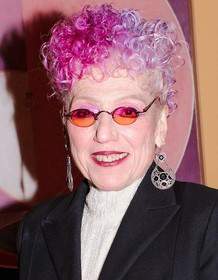
Judy Chicago
Self

Miranda July
Self
Tammy Rae Carland
Self
Judith Baca
Self
Eleanor Antin
Herself
Lynn Hershman-Leeson
Herself
Janine Antoni
Herself
Alexandra Chowaniec
Self
Claire Daigle
Self
Beatriz da Costa
Self
Sheila Levrant de Bretteville
Self
Mary Beth Edelson
Self
Howard Fox
Self
RoseLee Goldberg
Self
Harmony Hammond
Self
B. Ruby Rich
Self
Carolee Schneemann
Herself
Barbara T. Smith
Self
External Links and Streaming Options
Discover where to watch !W.A.R.: !Women Art Revolution online, including streaming platforms, rental options, and official sources. Compare reviews, ratings, and in-depth movie information across sites like IMDb, TMDb or Letterboxd.



Take the Ultimate !W.A.R.: !Women Art Revolution Movie Quiz
Challenge your knowledge of !W.A.R.: !Women Art Revolution with this fun and interactive movie quiz. Test yourself on key plot points, iconic characters, hidden details, and memorable moments to see how well you really know the film.
Women Art Revolution (2010) Quiz: A comprehensive quiz exploring the history, key figures, and pivotal moments of the feminist art movement depicted in the documentary W.A.R.: Women Art Revolution.
What does W.A.R. stand for in the context of the 1960s feminist art movement?
Full Plot Summary and Ending Explained for !W.A.R.: !Women Art Revolution
Read the complete plot summary of !W.A.R.: !Women Art Revolution, including all major events, twists, and the full ending explained in detail. Explore key characters, themes, hidden meanings, and everything you need to understand the story from beginning to end.
In the 1960s, a group of women artists came together to form W.A.R. (Women Artists in Revolution), a coalition created in response to the widespread marginalization and devaluation of art created by women. During this era, many women found it difficult to even name three notable female artists, highlighting how overlooked their contributions were within the dominant art scene. This movement surged in the wake of a turbulent social climate—just a year after the Summer of Love in 1968—when America was still embroiled in the Vietnam War, and various civil rights, Black Power, and free speech protests were simmering beneath the surface. The Women’s Liberation movement was beginning its rise, aiming to challenge norms and demand recognition for women’s voices in all spheres, including art.
One key figure during this time was Lynn Hershman, who was a student at Berkeley. Driven by a desire to document her experiences, she borrowed a camera and captured moments that reflected the social upheavals around her. Her work intersected art and activism when she documented a feminist protest at the 1968 Miss American Pageant, where feminists paraded a foul-smelling vapor near the runway—an act symbolizing resistance to beauty standards imposed on women. Hershman’s belief that art and politics were becoming inseparable was reinforced through her participation in a weeklong series of protests against the Vietnam War, where artists sought to use their craft not just for aesthetic purposes but as a means of social change.
During this period, Judy Chicago, formerly Judy Cohen-Gerowitz, was inspired by the Black Panthers and the struggles for racial and gender equality. Like many women artists of her time, she felt isolated in a field dominated by white male figures. The art world was largely silent on pressing political issues, and minimalism—the dominant trend—focused on purity and form, often stripping away politics and context in favor of pure aesthetics. Barbara Hammer and other women artists began to push back against this aesthetic impasse, advocating for art that reflected their realities.
The social unrest of the late 1960s and early 1970s—marked by incidents like the Kent State shootings and Nixon’s escalation of the Vietnam War—sparked a more confrontational approach among artists. Performance art became a powerful vehicle for activism, as seen in Adrien Piper’s increasingly urgent and direct works. Meanwhile, Howard Fox recounted how white artists withdrew their works from prestigious shows in protest of exclusionary practices, leading to contentious debates about representation. Feminist artists responded by organizing their own exhibitions and establishing new spaces, such as A.I.R. Gallery, the first cooperative gallery dedicated to women’s art, located in Soho.
Throughout this movement, feminism challenged the longstanding objectification and stereotypical portrayals of women in media and art. Performance art was instrumental in this endeavor, allowing women artists to use their bodies as tools to express critique, anger, and their identities. Artists like Eleanor Antin and Carolee Schneemann used body art and provocative performances to confront societal expectations and express female sexuality and vulnerability. For example, Antin presented 184 nude photographs of herself, boldly rejecting conventional standards of beauty, while Martha Rosler critiqued how women were measured against imposed ideals.
The feminist movement also birthed iconic works, most notably Judy Chicago’s The Dinner Party, an art installation honoring women of achievement through 39 place settings. Its opening in San Francisco in 1979 symbolized a celebration of women’s history and collective identity, blending poetry, performance, and collaboration. Women also took to the streets, displaying art in storefronts and organizing protests to draw media attention on issues like rape, violence, and inequality. Artists like Suzanne Lacy utilized public art to combat societal apathy and promote activism.
However, the movement faced setbacks in the 1980s, with the election of Ronald Reagan and the rejection of gender equality initiatives. Major institutions, including the Museum of Modern Art, proved resistant, often excluding women and people of color. In response, groups like the Guerilla Girls adopted humor and anonymity—wearing gorilla masks—to protest ongoing exclusion and discrimination within the art world, producing reports and exposing the disparity. Marcia Tucker, a pioneering curator, made attempts to influence institutional change as the first woman curator at the Whitney Museum, but faced significant barriers and was ultimately dismissed.
Feminist artists used their work and platforms to confront sexism head-on. Displaying their bodies in bold, provocative performances, they challenged traditional notions of femininity and power. Eleanor Antin, for instance, created works featuring her own body, while Ana Mendieta used earth art, blood, and performance to explore violence and female vulnerability. One of Mendieta’s most tragic stories was her death—falling from a window at the hands of her husband, Carl Andre, a minimalist sculptor who faced widespread controversy and neglect from the art community afterward. Artists also questioned how media perpetuated idealized images of women, often ignoring the complex realities of female identities.
Judy Chicago’s The Dinner Party and Lynn Hershman’s experimental media works helped redefine feminist art, emphasizing collaboration, history, and empowerment. Chicago’s masterpiece, showcasing women of achievement from Western civilization, was an emblem of collective female history, celebrated with poetry and performance at its debut. Meanwhile, Hershman’s innovative art often involved personal diaries and fictional narratives, exploring alienation, identity, and the unconscious.
Despite setbacks, the movement laid the groundwork for greater visibility and recognition of women artists today. Exhibitions like WACK! and institutions such as the Women’s Action Coalition worked tirelessly to document, preserve, and promote feminist art. Over the decades, feminism’s influence has persisted, though many contemporary women artists see their connection to the movement as both empowering and limiting, reflecting ongoing debates about feminism’s role within the art world.
Lynn Hershman emphasizes that the history captured in her documentary is just a fragment of the broader story—much remains undocumented and unexplored. The movement successfully challenged long-standing biases and opened doors for future generations. The achievements of pioneers like Judy Chicago, Barbara Hammer, and Eleanor Antin laid a foundation that continues to support women’s expanding opportunities in art. Today, museums and galleries are gradually becoming more inclusive, and feminist principles still resonate, inspiring artists to push boundaries and redefine what women’s art can be.
This documentary highlights that the struggles, protests, and innovations of the feminist art movement leave an enduring legacy—marking a decisive shift toward equality and recognition in the cultural landscape.

Coming soon on iOS and Android
The Plot Explained Mobile App
From blockbusters to hidden gems — dive into movie stories anytime, anywhere. Save your favorites, discover plots faster, and never miss a twist again.
Sign up to be the first to know when we launch. Your email stays private — always.
Explore the mobile appWatch Trailers, Clips & Behind-the-Scenes for !W.A.R.: !Women Art Revolution
Watch official trailers, exclusive clips, cast interviews, and behind-the-scenes footage from !W.A.R.: !Women Art Revolution. Dive deeper into the making of the film, its standout moments, and key production insights.
!W.A.R.: !Women Art Revolution Other Names and Titles
Explore the various alternative titles, translations, and other names used for !W.A.R.: !Women Art Revolution across different regions and languages. Understand how the film is marketed and recognized worldwide.
Quick Links: Summary, Cast, Ratings, More

What's After the Movie?
Not sure whether to stay after the credits? Find out!
Check out our other apps:

SAT Sphere
Build confidence for the Digital SAT.

Mori Atlas
Discover wild places worth protecting.

Luntero
Search smarter for a home in Amsterdam.

Plot Explained
Unravel movie endings and hidden clues.

Pokechamp
Dive into Pokémon data and battle logic.

Driving Theory
Get ready for your European theory test.

Movie Dust
Plan your next cinema trip with ease.

Musemap
Find art and culture as you travel.

Selkobase
Compare credentials before committing.

Local Manual
Turn an unfamiliar country into practical next steps.

Lernavi
Compare school systems before your next move.

GymRoam
Find a workout stop wherever your plans take you.
Explore Our Movie Platform
New Movie Releases (2026)
Famous Movie Actors
Top Film Production Studios
Movie Plot Summaries & Endings
Major Movie Awards & Winners
Best Concert Films & Music Documentaries
Movie Collections and Curated Lists
© 2026 What's After the Movie. All rights reserved.
Privacy Policy