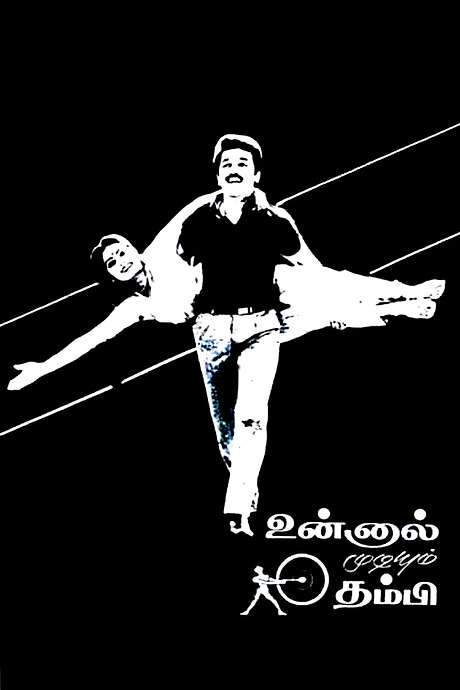
Unnal Mudiyum Thambi 1988

Defying his orthodox Carnatic musician father, the young son champions social causes, using his voice and determination to raise awareness. Though initially opposed, he gradually wins the confidence of local residents, inspiring self‑reflection and community consciousness across neighboring villages.

Defying his orthodox Carnatic musician father, the young son champions social causes, using his voice and determination to raise awareness. Though initially opposed, he gradually wins the confidence of local residents, inspiring self‑reflection and community consciousness across neighboring villages.

Does Unnal Mudiyum Thambi have end credit scenes?

No!

Unnal Mudiyum Thambi does not have end credit scenes. You can leave when the credits roll.

Meet the Full Cast and Actors of Unnal Mudiyum Thambi

Explore the complete cast of Unnal Mudiyum Thambi, including both lead and supporting actors. Learn who plays each character, discover their past roles and achievements, and find out what makes this ensemble cast stand out in the world of film and television.


Take the Ultimate Unnal Mudiyum Thambi Movie Quiz

Challenge your knowledge of Unnal Mudiyum Thambi with this fun and interactive movie quiz. Test yourself on key plot points, iconic characters, hidden details, and memorable moments to see how well you really know the film.


Unnal Mudiyum Thambi Quiz: Test your knowledge of the 1988 Tamil film *Unnal Mudiyum Thambi* with these ten questions ranging from easy to challenging.

Who portrays the protagonist Udayamoorthy in the film?

Full Plot Summary and Ending Explained for Unnal Mudiyum Thambi

See more

Read the complete plot summary of Unnal Mudiyum Thambi, including all major events, twists, and the full ending explained in detail. Explore key characters, themes, hidden meanings, and everything you need to understand the story from beginning to end.


A car rolls into the village, and out steps the infamous “Bloody” MP, V. K. Ramasamy. He is struck by how spotless and orderly the community appears, a place where old bad habits like drinking are openly shunned. The people credit the transformation to a young man named Udayamoorthy, Kamal Haasan. Curious to know how a single person could spark such a change, the MP asks for the story, and a lengthy flashback unfolds.

In his adolescence, Udayamoorthy comes from a privileged background, yet a pivotal memory sticks with him. He watches an old, blind beggar woman struggle to pick up a banana tossed aside by a passerby. A kind old man steps in to help, and he tells the proud youngster to always lend a hand to those in need. That moment—the beggar’s struggle and the elder’s advice—stirs something in him, planting the seeds of a future commitment to others.

As an adult, Udayamoorthy is bright and mischievous, always ready with a prank or two that annoys his father, the stern but devout Carnatic musician Bilahari Marthandam Pillai, Gemini Ganesan. Pillai’s elder son is mute and must learn to play the nadhaswaram, a detail that underscores a household where discipline and tradition run deep. A fierce exchange follows when Pillai tells him it would be better to die than live irresponsibly, a rebuke that stings the young man. The next day, the hall bears witness to a staged tragedy—Udayamoorthy pretends to hang himself as part of another prank—an act that shatters Angayarkanni, Manorama, who feels he has not been raised properly. The moment becomes a turning point: Udayamoorthy reevaluates his life and resolves to devote himself to the service of others, inspired by memories of a temple incident and the sight of an old gardener who longs to contribute to society.

His new sense of purpose leads him to cross paths with social injustices in everyday life. In a government office, he witnesses a woman protesting a rejection of her job application for a teaching post because caste and religion weren’t stated on the form; he sees her again later in a theater, where she defends herself against a thug. This woman, Lalithakamalam, Seetha, embodies secular ideals that resonate with him, and the pair grows close. Their shared commitment to justice attracts him further, and he finds it difficult to focus on his music when he hears the cries of a night beggar—an imbalance that his mentor would never tolerate. Lalithakamalam’s courage and worldview draw him toward a serious relationship, even as Pillai remains wary of a future that could detach him from his singing and his lineage.

The bond between Udayamoorthy and Lalitha is tested when Pillai objects to the relationship, especially as Udayamoorthy’s growing empathy leads him to reject social norms that keep people apart—such as caste. Pillai also brings in Charukesi, Ramesh Aravind, as a potential new disciple, arguing that Udayamoorthy should embrace humanity over blind devotion to music. The clash boils over, and Udayamoorthy leaves home, determined to prove that he can chart a path that honors both his art and his duties to society.

On the road, he encounters the harsh reality of the village’s drinking problem in a stark way. He learns about the man who died because he couldn’t receive timely help due to neglect and the failure of the state to provide compensation. He sees many men sunk in alcohol, with their children forced to work to pay for their fathers’ habits, rather than going to school. This searing observation strengthens his resolve to launch reform, even at personal cost.

Amaidhi Puratchi Iyyakam (Silent Revolution Movement) becomes his vehicle for change. Lalitha becomes his partner in leading the movement, which begins with inspiring wives to protest their husbands’ drinking and expands into a broader push for social responsibility. The liquor shops are shut down, and the community starts to respond to the idea that responsible living is a shared duty. The drunkards—frustrated and threatened by the movement—try to derail Udayamoorthy’s wedding to Lalitha by promising to quit drinking if the union is called off. He agrees to delay the marriage, sacrificing his personal happiness for the greater good, and the village’s respect for him grows even stronger.

Hearing the full story, the MP is moved and lends official support to bring the reforms to light in government circles. Udayamoorthy’s reputation spreads, and he receives recognition as a transformative figure who has steered his village onto a virtuous path, even earning a prestigious national honor from the prime minister: the title of Best Indian. In a poignant moment, Pillai comes to recognize the depth of his son’s achievement and, in a twist of family pride, declares that Pillai is Udayamoorthy’s father—emphasizing the bond that underpins the change—and finally gives his blessing for the union with Lalitha. The village’s reform, the couple’s love, and the reconciliation with Pillai bring the story to a hopeful close, underscoring a message that perseverance, compassion, and unity can reshape a community from within.

Uncover the Details: Timeline, Characters, Themes, and Beyond!

Mobile App Preview

Coming soon on iOS and Android

The Plot Explained Mobile App

From blockbusters to hidden gems — dive into movie stories anytime, anywhere. Save your favorites, discover plots faster, and never miss a twist again.

Sign up to be the first to know when we launch. Your email stays private — always.

Explore the mobile app

Watch Trailers, Clips & Behind-the-Scenes for Unnal Mudiyum Thambi

See more

Watch official trailers, exclusive clips, cast interviews, and behind-the-scenes footage from Unnal Mudiyum Thambi. Dive deeper into the making of the film, its standout moments, and key production insights.


Unnal Mudiyum Thambi | Ilayaraja Hit Song | Tamil Movie Video Song HD

Unnal Mudiyum Thambi Themes and Keywords

Discover the central themes, ideas, and keywords that define the movie’s story, tone, and message. Analyze the film’s deeper meanings, genre influences, and recurring concepts.


father son conflictindian classical musicsingermusicianfather son relationshipremakecarnatic music
Movie Wiki CTA - Movie Book

Unlock the World of Movies with Our Comprehensive Wiki

Dive into our Movie Wiki for in-depth film encyclopedia entries, including cast biographies, production trivia, plot synopses, behind-the-scenes facts, and thematic analyses. Whether you’re researching iconic directors, exploring genre histories, or discovering hidden easter eggs, our expertly curated movie database has everything you need to fuel your cinematic passion.

Movie Wiki CTA - Green Blue Wave

Similar Movies To Unnal Mudiyum Thambi You Should Know About

Browse a curated list of movies similar in genre, tone, characters, or story structure. Discover new titles like the one you're watching, perfect for fans of related plots, vibes, or cinematic styles.


© 2026 What's After the Movie. All rights reserved.

Privacy Policy