Unknown: Cave of Bones 2023


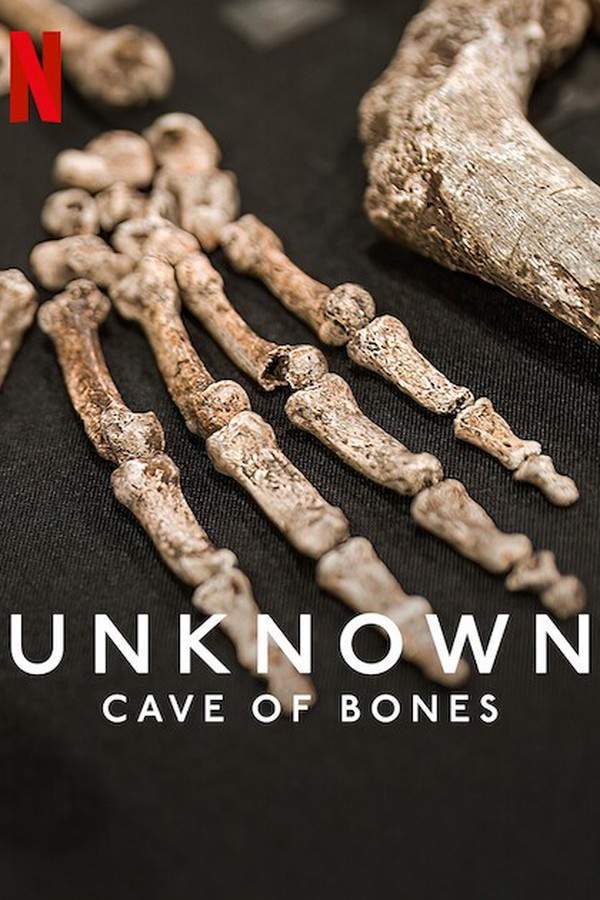
In South Africa's Cradle of Humankind, paleontologist Lee Berger discovers a remarkable fossil site, considered the oldest non-human graveyard ever found. His team’s investigation of the ancient remains reveals sophisticated burial rituals, prompting a significant shift in our understanding of hominid evolution. The findings challenge existing beliefs about the origins of ritualistic behavior and raise fundamental questions about human history and the development of consciousness.


Does Unknown: Cave of Bones have end credit scenes?
No!
Unknown: Cave of Bones does not have end credit scenes. You can leave when the credits roll.
Where to Watch Unknown: Cave of Bones
See current US streaming, rental, and purchase options for Unknown: Cave of Bones (2023) via JustWatch.


Streaming availability powered by 
Meet the Full Cast and Actors of Unknown: Cave of Bones
Explore the complete cast of Unknown: Cave of Bones, including both lead and supporting actors. Learn who plays each character, discover their past roles and achievements, and find out what makes this ensemble cast stand out in the world of film and television.
No actors found
External Links and Streaming Options
Discover where to watch Unknown: Cave of Bones online, including streaming platforms, rental options, and official sources. Compare reviews, ratings, and in-depth movie information across sites like IMDb, TMDb, Wikipedia or Rotten Tomatoes.









Ratings and Reviews for Unknown: Cave of Bones
See how Unknown: Cave of Bones is rated across major platforms like IMDb, Metacritic, and TMDb. Compare audience scores and critic reviews to understand where Unknown: Cave of Bones stands among top-rated movies in its genre.

The Movie Echo Score
Unknown: Cave of Bones presents a visually engaging exploration of early hominid discoveries, yet its narrative wrestles with speculative leaps and uneven pacing. Reviewers commend the striking cinematography and evocative soundtrack, while noting that the documentary often favors emotional dramatization over rigorous scientific explanation. The resulting experience is compelling for viewers interested in prehistory, but may leave those seeking deeper analysis wanting more substance.
The Movie Echo Score Breakdown for Unknown: Cave of Bones

Art & Craft
In terms of direction and visual craftsmanship, the documentary delivers polished cinematography, atmospheric lighting, and purposeful editing that highlight the cave environment. Critics and users alike praise the animation and music for enhancing the immersive quality. However, occasional rushed sequencing slightly detracts from the otherwise refined presentation. Overall, the art and craft are strong and contribute significantly to the film's impact.

Character & Emotion
When it comes to character depth, the featured scientists are portrayed with sincere enthusiasm, creating moments of genuine emotional resonance. Some reviewers find their on‑screen presence engaging, while others criticize occasional cheesiness and over‑emphasis on personal reactions. The balance between authentic expertise and dramatized portrayal results in a mixed impression of character effectiveness.

Story & Flow
Storywise, the documentary weaves together excavation footage, expert commentary, and speculative narrative threads. Viewers appreciate the originality of the subject and moments of compelling revelation, yet many note uneven pacing and a tendency toward conjecture that disrupts coherence. The structure therefore offers both intrigue and occasional narrative lapses.

Sensory Experience
Sensory experience stands out as a highlight, with a rich soundtrack, detailed sound design, and striking visual style that accentuate the mystery of the cave. Both critics and audiences commend the harmonious blend of music and imagery, which sustains immersion despite occasional narrative shortcomings.

Rewatch Factor
Rewatch factor is moderate; the documentary’s novel discoveries and visual appeal invite repeat viewings for enthusiasts, while the prevalence of speculation and emotional focus may diminish lasting appeal for some. Consequently, the film offers a respectable but not overwhelming impetus for multiple viewings.


75%
TOMATOMETER

58%
User Score

6.7 /10
IMDb Rating

74
%
User Score

3.3
From 1 fan rating

3.75/5
From 4 fan ratings
Take the Ultimate Unknown: Cave of Bones Movie Quiz
Challenge your knowledge of Unknown: Cave of Bones with this fun and interactive movie quiz. Test yourself on key plot points, iconic characters, hidden details, and memorable moments to see how well you really know the film.
Exploring the Depths of Homo Naledi: Test your knowledge about the groundbreaking discovery and insights into the world of Homo Naledi as depicted in the movie Unknown: Cave of Bones.
Who led the expedition in the Rising Star Mines?
Full Plot Summary and Ending Explained for Unknown: Cave of Bones
Read the complete plot summary of Unknown: Cave of Bones, including all major events, twists, and the full ending explained in detail. Explore key characters, themes, hidden meanings, and everything you need to understand the story from beginning to end.
Expedition carried out in the Rising Star Mines of the Malmani Dolomites in South Africa led to remarkable discoveries. Paleontologist and National Geographic explorer in residence, Lee Berger, was summoned to spearhead a mission to unlock the mysteries concealed within these interconnected caves. His team’s groundbreaking work resulted in the unearthing of over a thousand specimens belonging to a previously unknown species, now termed Homo Naledi.
In 2013, as Lee Berger took charge of the excavation in the Rising Star Cave System, the discoveries made would ultimately reshape paleoanthropological understandings globally. Typically, finding just a few bones at a site is considered monumental; however, this team stumbled upon more than 1,500 bone fragments from 15 individuals, all from one species. The excitement among the experts was palpable as they realized they stood on the brink of an astonishing revelation that could entirely overhaul humanity’s understanding of its origins.
To bolster the team, Augustin Fuentes, an evolutionary anthropologist, was invited to join the expedition, for Lee Berger knew that a multitude of experts was essential for such an unprecedented discovery. Little did they know the astonishing secrets hidden within the cave system. The bones they excavated dated back approximately 250,000 years, fascinating the researchers as they ventured deeper into the cave in hopes of envisioning the form and lifestyle of Homo Naledi.
The cave consisted of three distinct sections: the initial command center chamber, a narrow point known as the Dragon’s Back, and a 12-meter vertical chute. The tightness of the chute was daunting, potentially causing even the slimmest of men to feel claustrophobic. Ultimately, it led to the innermost chamber, called Dinaledi, which held the promise of the most significant secrets.
Despite having previously declared he wouldn’t attempt to navigate the chute, the allure proved too strong for Lee Berger, who eventually embarked down into the depths nearly eight years after the start of their excavation, seeking firsthand the wonders other geologists had described. Neither Lee Berger nor Augustin Fuentes anticipated the realization that their newfound fossil species could exhibit intricate behaviors akin to early human practices. Upon discovery, the team found evidence of a cluster of bones buried in the soil; this suggested that Homo Naledi partook in burial practices, challenging everything they previously understood about prehistoric human behaviors.
Traditionally, only modern humans had been known to practice burial rituals. The implications of such findings were staggering and would necessitate a reevaluation of historical practices. Before their findings, the oldest documented human burials outside Africa, from two cave sites in Israel, dated back to 100,000 years. The Homo Naledi, however, had engaged in these rituals much earlier. The very idea of burial signifies a profound understanding of loss and the social fabric that binds communities; the realization that Naledi may have had a belief in the afterlife added further complexity to their existence.
Concerning the doubts cast by skeptics suggesting that the small size of the Naledi’s brain inhibited their capacity for ritual, the excavators connected their findings to a broader philosophical question: What does it mean to be human? The notion that Homo Naledi buried their dead suggests they harbored feelings toward their dead and possibly enacted rituals to honor them.
Alongside these revelations, the team revealed evidence suggesting that a fire was utilized for cooking within the Dragon’s Back chamber, essential for navigating the pitch-black depths of the caves. Speculating how the Naledi might have collectively transported the deceased into the Dinaledi chamber, the team imagined a coordinated, communal effort necessitating fire and tools. It became a poignant consideration that love and companionship might have been motivating factors during these burials.
Adding another layer to their discoveries, the team excavated the skeleton of a child encased within a stone block, using a plaster jacket for extraction. This revelation led to yet another astonishing find; alongside the child’s remains lay a tool carved from rock, indicating that Homo Naledi not only engaged in daily tasks but perhaps even possessed a belief in an afterlife.
As the team endeavored to reconstruct their findings and visualize what Homo Naledi may have physically resembled, they concluded that these ancestors had a humanoid structure, characterized by protruding jaws, elongated arms, and distinctive flat noses. Despite their similarities to modern humans, they displayed unique differences that set them apart, emphasizing their evolutionary significance.
Emerging as a part of the Homo genus, Homo Naledi perplexingly possessed a significantly smaller brain—only about a third the size of modern humans’. Eventually, in a pivotal moment during the film, Lee Berger ventured down the chute, discovering wall carvings that suggested Homo Naledi possessed the intellect required to create art. This discovery sent ripples through the paleoanthropological community, with Berger moved to tears, overwhelmed by the revelations unfolding before him.
From their artistry to their potential spirituality, evidence accumulated suggested that Homo Naledi did indeed possess rudimentary culture, pointing towards concepts like religion, death, and possibly even an understanding of the afterlife. One could only wonder what additional revelations might still lie hidden within the Earth’s ancient past.

Coming soon on iOS and Android
The Plot Explained Mobile App
From blockbusters to hidden gems — dive into movie stories anytime, anywhere. Save your favorites, discover plots faster, and never miss a twist again.
Sign up to be the first to know when we launch. Your email stays private — always.
Explore the mobile appWatch Trailers, Clips & Behind-the-Scenes for Unknown: Cave of Bones
Watch official trailers, exclusive clips, cast interviews, and behind-the-scenes footage from Unknown: Cave of Bones. Dive deeper into the making of the film, its standout moments, and key production insights.
Unknown: Cave of Bones Themes and Keywords
Discover the central themes, ideas, and keywords that define the movie’s story, tone, and message. Analyze the film’s deeper meanings, genre influences, and recurring concepts.
Unknown: Cave of Bones Other Names and Titles
Explore the various alternative titles, translations, and other names used for Unknown: Cave of Bones across different regions and languages. Understand how the film is marketed and recognized worldwide.
Similar Movies To Unknown: Cave of Bones You Should Know About
Browse a curated list of movies similar in genre, tone, characters, or story structure. Discover new titles like the one you're watching, perfect for fans of related plots, vibes, or cinematic styles.




Quick Links: Summary, Cast, Ratings, More

What's After the Movie?
Not sure whether to stay after the credits? Find out!
Check out our other apps:

SAT Sphere
Build confidence for the Digital SAT.

Mori Atlas
Discover wild places worth protecting.

Luntero
Search smarter for a home in Amsterdam.

Plot Explained
Unravel movie endings and hidden clues.

Pokechamp
Dive into Pokémon data and battle logic.

Driving Theory
Get ready for your European theory test.

Movie Dust
Plan your next cinema trip with ease.

Musemap
Find art and culture as you travel.

Selkobase
Compare credentials before committing.

Local Manual
Turn an unfamiliar country into practical next steps.

Lernavi
Compare school systems before your next move.

GymRoam
Find a workout stop wherever your plans take you.
Explore Our Movie Platform
New Movie Releases (2026)
Famous Movie Actors
Top Film Production Studios
Movie Plot Summaries & Endings
Major Movie Awards & Winners
Best Concert Films & Music Documentaries
Movie Collections and Curated Lists
© 2026 What's After the Movie. All rights reserved.
Privacy Policy