Twisted Nerve 1968


Martin Durnley, raised by an infantilizing mother, a resentful stepfather and an institutionalized brother with Down’s syndrome, escapes his oppressive home by adopting an imaginary child persona, Georgie. After being caught stealing in a department store, he befriends a sympathetic customer, but the relationship turns into a disturbing obsession.


Does Twisted Nerve have end credit scenes?
No!
Twisted Nerve does not have end credit scenes. You can leave when the credits roll.
Meet the Full Cast and Actors of Twisted Nerve
Explore the complete cast of Twisted Nerve, including both lead and supporting actors. Learn who plays each character, discover their past roles and achievements, and find out what makes this ensemble cast stand out in the world of film and television.
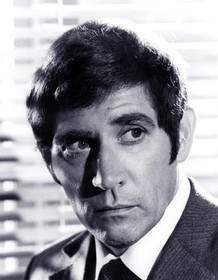
Frank Finlay
Henry Durnley

Barry Foster
Gerry Henderson

Billie Whitelaw
Joan Harper

Salmaan Peerzada
Shashie Kadir

Hayley Mills
Susan Harper

Richard Davies
'Taffy' Evans
Christian Roberts
Philip Harvey
Timothy Bateson
Mr. Groom
Timothy West
Superintendant Dakin
Thorley Walters
Sir John Forrester
Hywel Bennett
Martin (Georgie) Durnley
Marianne Stone
Store Detective
Gretchen Franklin
Clarkie
Phyllis Calvert
Enid Durnley
Basil Dignam
Doctor
Russell Napier
Professor Fuller
External Links and Streaming Options
Discover where to watch Twisted Nerve online, including streaming platforms, rental options, and official sources. Compare reviews, ratings, and in-depth movie information across sites like IMDb, TMDb, Wikipedia or Letterboxd.





Take the Ultimate Twisted Nerve Movie Quiz
Challenge your knowledge of Twisted Nerve with this fun and interactive movie quiz. Test yourself on key plot points, iconic characters, hidden details, and memorable moments to see how well you really know the film.
Twisted Nerve (1968) Quiz: Test your knowledge of the 1968 British thriller "Twisted Nerve", covering its characters, plot twists, and key details.
What is the name the protagonist adopts when he pretends to have a learning disability?
Full Plot Summary and Ending Explained for Twisted Nerve
Read the complete plot summary of Twisted Nerve, including all major events, twists, and the full ending explained in detail. Explore key characters, themes, hidden meanings, and everything you need to understand the story from beginning to end.
Martin plays catch with his older brother Pete, who has learning difficulties and has been sent to live in a special boarding school in London, by their mother, Enid Durnley. The father died years before, and their mother has a new life with her new husband, a wealthy banker. The school’s physician, Doctor, believes that Pete cannot be expected to live much longer. This fragile family landscape casts a quiet shadow over Martin’s days, where small acts of mischief hint at a deeper unease beneath his calm exterior.
In a shop, [Martin] sees Susan Harper purchase a toy. As she leaves, Martin follows after having pocketed a toy duck. Two store detectives ask them to return to the manager’s office. The detectives assert that Martin and Susan were working together to steal the toy. [Susan Harper] says she has never met Martin. The moment splits the room: is it a mere coincidence, or the start of a dangerous, unspoken bond between two young people who come to learn that appearances can be deceiving?
When questioned by the manager, [Martin] presents himself as mentally challenged, and calls himself “Georgie”. Now disbelieving in a link between them, the manager asks Susan for her address, and Martin makes a mental note when she offers it. Sympathetic to him, [Susan Harper] pays for Martin’s toy, a small act of kindness that will thread their fates together in unexpected ways. The exchange seeds a complex relationship built on uncertainty, miscommunication, and a shared sense of vulnerability.
[Martin] returns home and finds his parents arguing in the parlour, over his lack of interest in life, his unusual behaviour and the duck incident. In his room, now behaving as “Georgie”, he rocks in a rocking chair while smiling in the mirror and caressing a stuffed animal. The rocking motion of the chair is smashing a photo of his Henry Durnley, his stepfather, whose stern expectations clash with Martin’s restless inner world. The home turn brittle as the boundaries between boy and boy’s imagined self blur, and the house holds its breath for what might come next.
The next day, [Susan Harper] goes to the library, where she keeps an after-school job. [Martin] approaches [Susan Harper], who recognises him as Georgie. [Martin] says that he followed her, and pays her back for the toy. Before leaving, [Susan Harper] lends him The Jungle Book, a gift that becomes a touchstone in their fragile connection and a small window into a shared, secret world they scarcely understand.
[Martin] has a dispute with his stepfather, who insists he travel to Australia. [Martin] refuses and returns to his room. [Martin] stares in the mirror, bare-chested, and caresses himself. There are male bodybuilding magazines on his dresser. A frustrated Martin eventually smashes the mirror, breaking not just glass but the illusion that he is simply a child playing at adulthood. The tension inside him continues to boil just beneath the surface, waiting for the moment it will spill over.
[Martin] sets in motion a plan to leave home, pretending to go to France. He then shows up at [Susan Harper]‘s mother’s house, where she rents rooms. Presenting himself as Georgie, he gains sympathy both from [Susan Harper] and her mother, Joan Harper, who let him stay. The act of slipping into another life becomes a dangerous masquerade, as Martin tests the boundaries of trust and fear with the two women who become entwined in his fate.
One night, Martin steals scissors, leaves, and stabs his stepfather to death after the latter leaves a dinner party. The police investigate the murder and seek Martin for questioning. The act is swift and brutal, a decisive break from the past that will force everyone involved to confront the truth about who Martin is—and what his repressed feelings might have unleashed.
Days later, Martin invites himself to tag along with Susan who is going for a swim at a country lake. There, Martin attempts to kiss Susan, who refuses his advances. Later at home, Susan searches Martin’s room while cleaning and discovers books hidden in a drawer that a person with learning difficulties would not read or understand, as well as a book titled Know Yourself from Your Handwriting, in which signatures in the blank pages read ‘Martin Durnley’. The discovery raises questions about his identity and the extent to which he has lived a double life, blending the lines between patient and perpetrator, self and mask.
[Susan Harper] begins investigating Martin, talks with his mother, and realises that the two brothers are one and the same after seeing a photograph of Martin at the house. She seeks out more information, trying to piece together a life that seems to have two distinct paths converging in one troubled mind. Her curiosity grows as she encounters the oddities that surround Martin’s actions and the quiet, creeping danger he carries with him.
She visits her friend Shashie Kadir at a hospital where he works to question him about split personalities. The hospital corridors become a backdrop for moral inquiry, as Shashie offers insights into what mental fragmentation can look like in a life that has not yet found a steady ground.
At [Susan Harper]‘s house, Martin begins losing control over himself while suspecting that Susan may know who he really is. When Susan’s neglected and unsuspecting mother attempts to sexually arouse Martin, he kills her with a hatchet, and the room seems to close in around Susan as she realizes the terrifying truth of Martin’s dual life. The moment is a devastating collision of desire, fear, and a hidden danger that had been quietly growing beneath the surface for years.
When Susan arrives home, Martin holds her captive in his room after revealing his true persona. He forces Susan to undress so he can sexually fondle her, while her mother’s body is found in the woodshed by Gerry Henderson, one of the “paying guests,” who calls the police while Shashie Kadir learns the truth about Martin and races to the house to rescue Susan. The chase is on, and the revelation of the truth becomes a race against time as the police close in and the fragile balance of the household shatters.
The police arrive and burst into Susan’s room as Martin fires three times at his reflection in the mirror. While being taken away, he claims that he is Georgie and has killed Martin, a testament to a mind that cannot separate the self from the act. Martin is confined in a cell at a mental hospital, ranting over his lost love Susan, a man who believed he could ride the line between two lives but found only a single, tragic ending.

Coming soon on iOS and Android
The Plot Explained Mobile App
From blockbusters to hidden gems — dive into movie stories anytime, anywhere. Save your favorites, discover plots faster, and never miss a twist again.
Sign up to be the first to know when we launch. Your email stays private — always.
Explore the mobile appWatch Trailers, Clips & Behind-the-Scenes for Twisted Nerve
Watch official trailers, exclusive clips, cast interviews, and behind-the-scenes footage from Twisted Nerve. Dive deeper into the making of the film, its standout moments, and key production insights.
Cars Featured in Twisted Nerve
Explore all cars featured in Twisted Nerve, including their makes, models, scenes they appear in, and their significance to the plot. A must-read for car enthusiasts and movie buffs alike.
Twisted Nerve Themes and Keywords
Discover the central themes, ideas, and keywords that define the movie’s story, tone, and message. Analyze the film’s deeper meanings, genre influences, and recurring concepts.
Twisted Nerve Other Names and Titles
Explore the various alternative titles, translations, and other names used for Twisted Nerve across different regions and languages. Understand how the film is marketed and recognized worldwide.
Similar Movies To Twisted Nerve You Should Know About
Browse a curated list of movies similar in genre, tone, characters, or story structure. Discover new titles like the one you're watching, perfect for fans of related plots, vibes, or cinematic styles.








Quick Links: Summary, Cast, Ratings, More

What's After the Movie?
Not sure whether to stay after the credits? Find out!
Check out our other apps:

SAT Sphere
Build confidence for the Digital SAT.

Mori Atlas
Discover wild places worth protecting.

Luntero
Search smarter for a home in Amsterdam.

Plot Explained
Unravel movie endings and hidden clues.

Pokechamp
Dive into Pokémon data and battle logic.

Driving Theory
Get ready for your European theory test.

Movie Dust
Plan your next cinema trip with ease.

Musemap
Find art and culture as you travel.

Selkobase
Compare credentials before committing.

Local Manual
Turn an unfamiliar country into practical next steps.

Lernavi
Compare school systems before your next move.

GymRoam
Find a workout stop wherever your plans take you.
Explore Our Movie Platform
New Movie Releases (2026)
Famous Movie Actors
Top Film Production Studios
Movie Plot Summaries & Endings
Major Movie Awards & Winners
Best Concert Films & Music Documentaries
Movie Collections and Curated Lists
© 2026 What's After the Movie. All rights reserved.
Privacy Policy