The Swedish Connection 2026


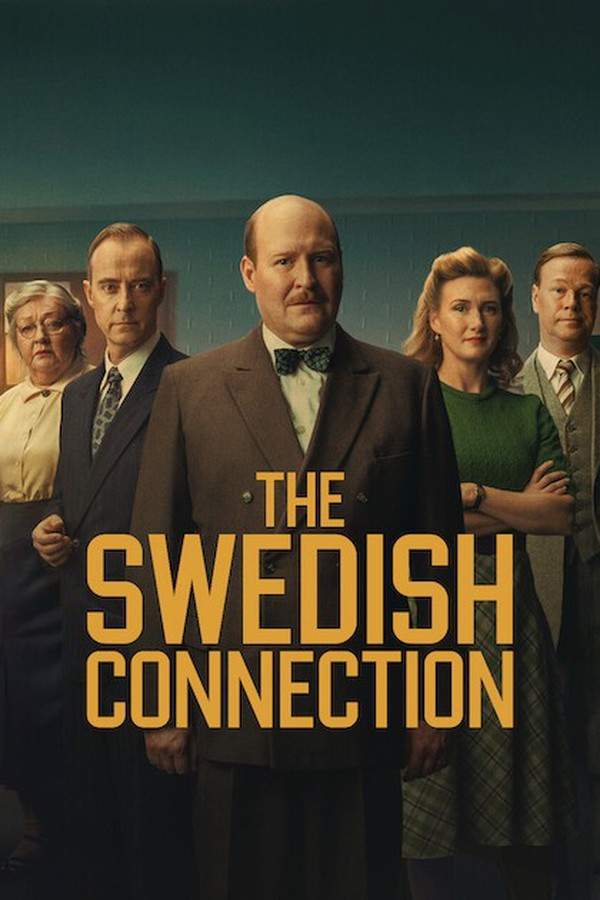
Swedish Foreign Ministry bureaucrat Gösta Engzell, largely overlooked during World II, organized covert operations that saved thousands of refugees and turned Sweden’s neutral stance into a moral force. By defying diplomatic conventions, his daring humanitarian work challenged the status quo and forged a lasting legacy of compassion.


Does The Swedish Connection have end credit scenes?
No!
The Swedish Connection does not have end credit scenes. You can leave when the credits roll.
Where to Watch The Swedish Connection
See current US streaming, rental, and purchase options for The Swedish Connection (2026) via JustWatch.


Streaming availability powered by 
Meet the Full Cast and Actors of The Swedish Connection
Explore the complete cast of The Swedish Connection, including both lead and supporting actors. Learn who plays each character, discover their past roles and achievements, and find out what makes this ensemble cast stand out in the world of film and television.
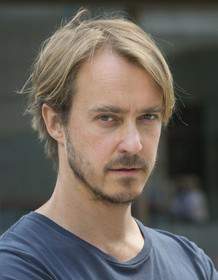
Jonas Karlsson
Staffan Söderström

Christoffer Nordenrot
Dag Hammarskjöld
Sissela Benn
Rut Vogl
Oscar Töringe
Nils Erik Eklund
Marianne Mörck
Stina Johansson
Marcus Olsson
Loa Falkman
Marcus Ehrenpreis
Richard Ulfsäter
Erik Von Post
Jonas Malmsjö
Svante Hellstedt
Figge Norling
Claes Westring
Johan Glans
Göran Von Otter
Henrik Dorsin
Gösta Engzell
Olle Jansson
Christian Günther
Simon Norrthon
Robert Paulsson
Stefan Gödicke
Arvid Richert
Carl Jacobson
Magnus Hallonsten
Robert Beyer
Heinrich Himmler
Per Lasson
Per-Albin Hansson
Joshua Seelenbinder
Adolf Eichmann
Eva Westerling
Mrs. Jönsson
Paul Schröder
Martin Luther
External Links and Streaming Options
Discover where to watch The Swedish Connection online, including streaming platforms, rental options, and official sources. Compare reviews, ratings, and in-depth movie information across sites like IMDb, Wikipedia, Rotten Tomatoes or Metacritic.






Full Plot Summary and Ending Explained for The Swedish Connection
Read the complete plot summary of The Swedish Connection, including all major events, twists, and the full ending explained in detail. Explore key characters, themes, hidden meanings, and everything you need to understand the story from beginning to end.
Gösta Engzell, a mid‑level diplomat who works in a dim basement, becomes the focal point of Sweden’s wartime dilemma in 1942. While the country proclaims neutrality, the government quietly bows to German demands and enforces press censorship to avoid provocation. Engzell oversees a flood of asylum requests from Jews, a daunting task that tests his devotion to mercy against the chilly calculus of politics. His new secretary, Rut Vogl, brings a human spark to the department, but both are soon met with resistance from the cabinet secretary and Staffan Söderström, Engzell’s blunt, ambitious superior. The atmosphere is tense: a Swedish consul in Oslo whispers of a Jewish detainee, and Engzell is told to stay quiet about it, even as the chorus of silence grows louder.
On a journey through information and conscience, a train‑ride in Poland brings another figure into view—Göran von Otter—a Swedish diplomat who learns the grim reality of the Final Solution from Kurt Gerstein, whose abhorrence of genocide contrasts starkly with the political pressures around him. Rut urges the office to help as many Norwegian Jews as possible, and Engzell, initially cautious, softens his stance after overhearing Söderström discuss the genocide and after a personal moment—the image of a child reading The Little Match Girl at bedtime. A door of possibility opens as Engzell’s team begins sifting through roughly 7,000 asylum requests, searching for anyone with a Swedish thread in their story. They identify about 150 cases that truly connect to Sweden, starting with weaker claims and moving toward more consequential ones.
Among the early cases is the Bondy family in Prague, a mother’s Jewish identity paired with a Swedish stepfather, a situation that seems ripe for a humanitarian precedent but is immediately rebuffed by German authorities. As the pressure builds, Engzell and his colleagues discover a much larger, looming catastrophe: hundreds of Norwegian Jews are being rounded up and snatched into death camps. Engzell’s initial attempts to involve the press are rebuffed by Söderström, but a sympathetic censor—Nils Erik Eklund—allows a controlled trickle of reporting. Public outcry grows until Prime Minister Per Albin Hansson—Per-Albin Hansson—demands to know who is steering Sweden’s Jewish issue; Söderström reluctantly concedes that Engzell is driving the process, a turning point that empowers further action.
With the political footing established, Engzell’s diplomacy bears fruit. Some Norwegian Jews with Swedish connections are released, and he pushes for the admission of 100 more, proposing an unofficial approach to avoid angering Germany while saving lives. In parallel, Göran von Otter negotiates for the Bondy twins, and Engzell facilitates a delicate workaround to reach them. Yet the road remains perilous: the twins’ fate could pivot at any moment, and a last‑ditch visit to their guardians in Copenhagen reveals a cruel delay—the twins do not arrive as hoped. As the plan shifts, Rut travels deeper into the maze of visa rules and identity papers. A Jewish passport stamp becomes a target, and she narrowly evades exposure by seeking sanctuary within the Swedish embassy in Copenhagen, a moment that tests loyalty, courage, and trust.
From there, Engzell pursues a sweeping policy shift. He and Dag Hammarskjöld — Dag Hammarskjöld — strike a discreet alliance with exiled Danish minister Johan C. W. Kruse to circumvent a law that would require the Swedish Jewish community to bear the financial burden of incoming refugees. When Söderström fights back, Engzell counters by publicly announcing the revocation of the visa requirement for Jewish immigrants, a bold move that redefines Sweden’s wartime stance. The country’s shores begin to open: Sweden earns international praise for sheltering Jews from Denmark, and the film highlights how the broader rescue effort by others who later become famous—like Raoul Wallenberg—was built on the groundwork laid by Engzell’s team, who pioneered the provisional visa process that would save countless lives, including the Bondy twins, whose new photographs mark a hopeful turn.
As the film unfolds toward its historical echo, the weight of responsibility settles on the shoulders of those who chose to act. Engzell’s approach draws praise and complications in equal measure: Söderström is maneuvered toward Moscow by senior leadership in the wake of the publicity, while Rut completes her arc by returning to Sweden, bearing witness to a world slowly waking to the truth of what happened. The narrative closes with a reflective nod to the broader rescue effort, underscoring how a small bureaucratic floor in Stockholm became a conduit for thousands of lives saved—lives that would one day be remembered in the testimonies of survivors and the chronicles of history.

Coming soon on iOS and Android
The Plot Explained Mobile App
From blockbusters to hidden gems — dive into movie stories anytime, anywhere. Save your favorites, discover plots faster, and never miss a twist again.
Sign up to be the first to know when we launch. Your email stays private — always.
Explore the mobile appDiscover Film Music Concerts Near You – Live Orchestras Performing Iconic Movie Soundtracks
Immerse yourself in the magic of cinema with live orchestral performances of your favorite film scores. From sweeping Hollywood blockbusters and animated classics to epic fantasy soundtracks, our curated listings connect you to upcoming film music events worldwide.
Explore concert film screenings paired with full orchestra concerts, read detailed event information, and secure your tickets for unforgettable evenings celebrating legendary composers like John Williams, Hans Zimmer, and more.


The Swedish Connection Other Names and Titles
Explore the various alternative titles, translations, and other names used for The Swedish Connection across different regions and languages. Understand how the film is marketed and recognized worldwide.
Quick Links: Summary, Cast, Ratings, More

What's After the Movie?
Not sure whether to stay after the credits? Find out!
Check out our other apps:

SAT Sphere
Build confidence for the Digital SAT.

Mori Atlas
Discover wild places worth protecting.

Luntero
Search smarter for a home in Amsterdam.

Plot Explained
Unravel movie endings and hidden clues.

Pokechamp
Dive into Pokémon data and battle logic.

Driving Theory
Get ready for your European theory test.

Movie Dust
Plan your next cinema trip with ease.

Musemap
Find art and culture as you travel.

Selkobase
Compare credentials before committing.

Local Manual
Turn an unfamiliar country into practical next steps.

Lernavi
Compare school systems before your next move.

GymRoam
Find a workout stop wherever your plans take you.
Explore Our Movie Platform
New Movie Releases (2026)
Famous Movie Actors
Top Film Production Studios
Movie Plot Summaries & Endings
Major Movie Awards & Winners
Best Concert Films & Music Documentaries
Movie Collections and Curated Lists
© 2026 What's After the Movie. All rights reserved.
Privacy Policy